
“Holding two truths is not just about holding someone else’s truth that you don’t like; it’s about knowing we also have a truth, and we get to hold that, too. It takes discipline and practice to be able to hold both truths without needing an answer—and without losing ourselves along the way.” Kai Cheng Thom
Below is an excerpt from Writing Love Letters to Monsters, an archived Tricycle interview with Kai Cheng Thom. For the full article, see tricycle.org/article/kai-cheng-thom-interview
Writing Love Letters to Monsters
What does it mean to love the people—and the parts of ourselves—that we do not believe are worthy of love?
Interview excerpts with Kai Cheng Thom by Sarah Fleming AUG 09, 2023
When writer Kai Cheng Thom felt like the world was collapsing, she posed a question to herself: What happens when we imagine loving the people—and the parts of ourselves—that we do not believe are worthy of love?
Over the course of her career, Thom has worked as an activist, sex worker, psychotherapist, conflict mediator, and community healer. In each of these roles, she has witnessed both our essential goodness and the violence that we are capable of.
As a way of reckoning with our sacredness and our potential to cause harm, she began writing love letters—to ancestors and exes, to her past and future selves, to those who have harmed her and those she has harmed, and to everyone she believed was beyond saving. “I needed to know that I could love them,” she writes, “because that meant I could still love myself—as hopeless and lost as I had become.”
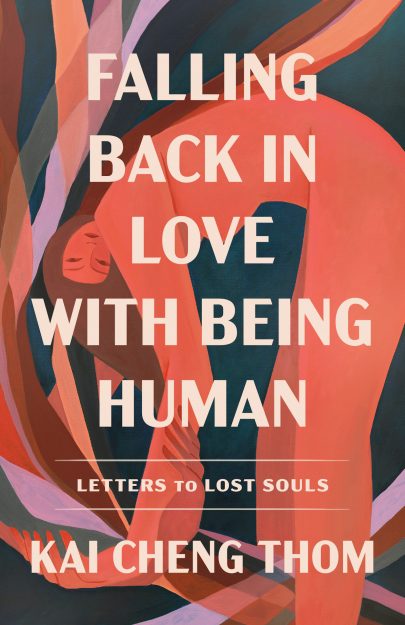
The result, Falling Back in Love with Being Human: Letters to Lost Souls, is Thom’s “act of prayer in a collapsing world”—a spell to summon the language to help her fall back in love with herself and the people around her. Tricycle sat down with Thom to discuss the Buddhist rituals that inform her work, how writing helps her to hold seemingly contradictory truths, and what it means to choose love as a daily practice.
Throughout the book, you explore what it means to love others and the parts of ourselves that we might consider monstrous, and you define a monster as a creature made of the truth that no one else dares to speak. How did you come to this notion of what it means to be a monster, and how have you reclaimed the monstrous? In the Western psychological tradition, Carl Jung wrote about the monsters within us, and he took a lot of inspiration from Buddhism and Hinduism. In thinking about the monstrous, I draw from Jung’s work, as well as different understandings of demons in Buddhist spirituality, especially practices of looking for the demons inside ourselves and learning to sit with them.
On a more personal level, I was raised evangelical Christian, and like many queer and trans people, I grew up being told that I was full of sin and that queer people were sinful monsters. Homophobia and transphobia were really present in my day-to-day. I was trying to repress the sin inside of me, and at the same time, I loved and longed for the sin outside me. I think this happens to us often: we desire the monstrous even as we fear it.
This can be complicated. Queerness is something beautiful that has been labeled as monstrous, but some things classified as monstrous are truly dangerous, like anger and rage. Our monsters need space to live and breathe, and if we’re not careful with them, they can result in harm and abuse.
You’ve mentioned your evangelical upbringing, and many of the letters in the book have a liturgical rhythm to them. How have you reclaimed liturgies and practices from a tradition that harmed you? There’s beauty in every monster and wisdom in every beast. The beast of evangelical Christianity is full of beauty, and its liturgy is something that I love, and Jesus is actually someone that I love. The part of Christianity that has stuck with me, beyond all of the pageantry, is the concept of grace. In Christianity, grace is the idea that we are all full of sin, but we can receive divine love anyway. I just love that. I don’t know if there is a God out there, but I think that human beings can offer one another divine love even in light of all that we’ve done wrong. I want to keep that idea around forever.
Are there any Buddhist rituals or practices that have particularly influenced you? There is a Tibetan Buddhist meditation about sitting and visualizing our demons and just being there and saying hello. That’s a practice that I will always love. But the Buddhist worldview that informs my life the most is the idea that paradox is where enlightenment is born—it’s not about resolving or conquering paradox by choosing one side; rather, it’s in the tension of more than one truth being true that a new wisdom arises. I think it’s so important to allow more than one thing to be true, especially when we’re talking about the nature of good and evil and people who may have harmed us.
Does writing help you to hold multiple truths? Definitely. In writing, I get to put both truths onto the page and then see if there is any new wisdom that arises, and then that wisdom becomes the basis of the poem. Language allows me to be in the chaos of competing truths and to give that chaos form, which is another paradox. Language gives form to the chaos of our internal experience and then somehow makes it more beautiful and bearable.
In the final letter, you write about your practice of choosing love. So what does it look like to choose love on a daily basis? There are many spiritual practices centered on choosing love, like lovingkindness meditation. But I think on the day-to-day level, choosing love is about resisting the spirit of panic and fear. One thing I’ve learned from my work in mediation and dialogue facilitation is that we need to be very careful about our tendency toward othering and monster-making. When we’re in groups, it can be so easy to get caught up in the spirit of panic. At the heart of panic is deep fear, and this fear can lead to toxic and possibly dangerous situations.
It can be so scary to live in the world. Choosing love is about choosing courage: the courage to take a relational risk that is meaningful. Maybe there’s someone in your community that you’re irritated by or that you disagree with. Actually choosing love might mean starting a conversation with them. I often think about the tragedies that occur when we say that our fear and our right to feel comfortable legitimizes or strengthens the call for the restriction on others’ freedom of others. Choosing love is about saying that it’s OK for me to be a little bit scared or uncomfortable so that we can all be free.
What are you hoping readers will take away from the book? I hope that people who read the book might feel inspired to put it into practice. One important lesson from Buddhist practice is that falling back in love doesn’t really work if we are trying to fall back in love with other people first. Generally, it’s more sustainable if we start with ourselves. If we just try to love the oppressor without loving ourselves first, then we run the risk of internalizing our own oppression or gaslighting ourselves. It must begin with self-love, falling back in love with ourselves, and then we can fall back in love with others. Of course, it’s not linear—it’s a cycle we go through over and over again.
A lot of people react to my work with fear, and I get that. But holding two truths is not just about holding someone else’s truth that you don’t like; it’s about knowing we also have a truth, and we get to hold that, too. It takes discipline and practice to be able to hold both truths without needing an answer—and without losing ourselves along the way.
Sarah Fleming is Tricycle‘s audio editor.
Kai Cheng Thom is a writer, performance artist, and community healer based in Toronto. Her most recent book is Falling Back in Love with Being Human: Love Letters to Lost Souls.
 Life Matters
Brilliant and beautiful. Patrick, stop adding to my reading list, dude! 😉
LikeLiked by 2 people
Thank you for reading and your humorous comment, Camilla Wells Paynter. 🙂
LikeLiked by 1 person