Tag Archives: Richard Rohr

It’s So Very Dark in Here

When darkness affects everything, we think, speak and do, it’s advisable to face it and not avoid it.

Today’s meditation from the CAC’s founder, Richard Rohr, helps us learn from, rather than shirk from, darkness.

A few highlights are offered below as breadcrumbs to entice you to read the full blog here: https://cac.org/daily-meditations/two-sides-of-darkness/

Two Sides of Darkness

  • Experiences of darkness are good and necessary teachers. They are not to be avoided, denied, run from, or explained away.
  • There’s a darkness where we are led by our own stupidity, our own sin (the illusion of separation), our own selfishness, by living out of the false or separate self. We have to work our way back out of this kind of darkness with brutal honesty, confession, surrender, forgiveness, apology, and restitution. It may feel simultaneously like dying and being liberated.  
  • But there’s another darkness that we’re led into by God, grace, and the nature of life itself. … This is where transformation happens. 
  • Periods of seemingly fruitless darkness may in fact highlight all the ways we rob ourselves of wisdom by clinging to the light. Who grows by only looking on the bright side of things?

https://cac.org/daily-meditations/two-sides-of-darkness/

We Too Suffer, Die and Rise Anew

Below is today’s message from the Center for Action and Contemplation. In it, Richard Rohr explains how we miss the message if we focus on religion versus the natural life cycle of … life.

Hope you enjoy a couple of highlights from Richard Rohr’s Easter message:

An Example for Us All

Monday, April 21, 2025  

We got into trouble when we made the person and the message of Jesus into a formal religion, whereby we had an object of worship; then we had to have a priesthood, formal rules and rituals. I’m not saying we should throw those things out, but once we emphasize cult and moral code, we have a religion. When we emphasize experience, unitive experience, we have the world Jesus is moving around in. Once we made Jesus into a form of religion, we projected the whole message onto him alone. He died, he suffered, he rose from the dead, he ascended and returned to God. We thought that by celebrating these wonderful feasts like Easter that this somehow meant that we were members of the club.    …………

Easter is the great feast of the triumph of universal grace, the triumph of universal salvation, not just the salvation of the body of Jesus. What we’re talking about creates a people of hope, and a culture of hope that doesn’t slip into cynicism and despair. Easter is saying, we don’t need to go there. Love is going to win. Life is going to win. Grace is going to win. Hallelujah! 

Spiritual Bypassing or Contemplation – Another Helpful Richard Rohr Teaching

I have sought comfort in faith traditions and psychology my entire life; sometimes for healing and sometimes for hiding. Below is a repost of today’s daily meditation from Richard Rohr of the Center for Action and Contemplation. As he often does, Rohr helps me better understand how to heal myself versus hide behind the fantasy of my own little relationship with an imaginary Lord Protector.

But first, here’s a quick definition of the term spiritual bypassing:

Spiritual bypassing is a “tendency to use spiritual ideas and practices to sidestep or avoid facing unresolved emotional issues, psychological wounds, and unfinished developmental tasks”. The term was introduced in the mid 1980s by John Welwood, a Buddhist teacher and psychotherapist.” (See en.wikipedia.org/wiki/Spiritual_bypass)

————————————————————————————————————————-

Contemplation: A Path to Compassion

Friday, March 28, 2025

Father Richard reminds us that regular contemplative practice is not an end in and of itself, but for the sake of solidarity with the suffering of the world:   

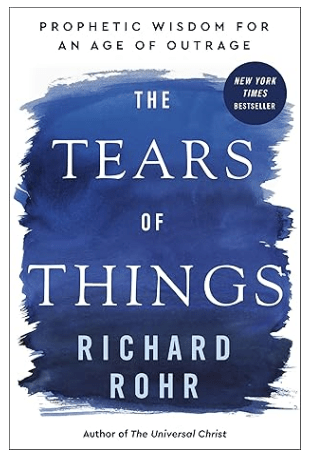
One of the main works of contemplation is detaching from the ego, from the self, from impure motivations of success or power, money or control. That will never stop, but it isn’t really that meaningful unless that detachment is accompanied by an attachment.  What do we find after all the months and years we’ve been practicing some form of contemplation or meditation? Do we have an increased attachment, sympathy, empathy, and compassion for what I call in The Tears of Things the suffering of the world? For the women of Gaza, the children of Ukraine, the starving people of Africa, the poorest of the poor, and all those marginalized in the United States and around the world? If the emptiness of “letting go” is not pretty soon filled up by “holding on” to some kind of deep solidarity with the suffering of the world, I don’t know that it’s Christian contemplation or even meaningful contemplation at all. It seems we’re simply back into private spirituality again.   

We’ve spent much of our history of contemplation seeking individually pure motivation. That’s a real temptation, but are we really going to spend the years ahead seeking only to be motivated to love Jesus on some private level? What does it even mean to love Jesus? What is the positive act of love? When we are in silent meditation or prayer, that’s what we’re praying is growing inside of us. As we let go of false motivations, and false, ego-based concerns, we’ve got to pray, hope, and desire for an increase in compassion, in caring, in solidarity with human suffering.   

I believe that’s what the cross means. The raised arms of Jesus are an act of solidarity and compassion with the human situation. So, as we sit in silence this morning and every morning, let’s pray that’s what we’re praying for: an increase in compassion by letting go of false purity codes and agendas, which we think make us holy or worthy of God’s love. It doesn’t matter if we have perfect motivation or a perfect practice. What is motivating us? Instead of perfection, let’s look for growth. Ultimately, we only see that growth over time as we grow in communion with those who suffer, grow in solidarity with human and beyond-human pain, and with the tears of things.  cac.org/daily-meditations

store.cac.org

Mass Hysteria and The Way of Tears

Yesterday, thousands of people, including my granddaughter, daughter, son-in-law and me, were part of an emotional stampede exiting a Dallas Convention Center thought to be attacked by a mass shooter. It turned out to be something far less threatening, yet there were many injuries and even more tears as parents tried to find their children during a contagious outbreak of mass hysteria. For more information see this news article: https://www.wfaa.com/article/news/local/dallas-county/downtown-dallas-texas-nca-cheerleader-competition-incident/287-5e8610ef-5b74-425e-b02f-da3d0f8f165a

I’m not a person that cries or screams but I still feel deep emotions, especially when many around me are overwhelmed with an existential fear for their children and themselves. During such crises, I get very focused on how to stay calm, how to collect loved ones and a safe place. Or, in other words, how to stay in the present moment and “make the main thing the main thing.” Fortunately, no one in our family was physically hurt and there were only a few cuts and scratches to my granddaughter’s team members incurred during their rush to safety. We are grateful for all of this.

Shakespeare wrote, “all’s well that ends well.” Julian of Norwich said, that ultimately, “all shall be well.” And of special comfort to me, Richard Rohr wrote the words shared below in his daily message: https://cac.org/daily-meditations/the-way-of-tears/

The Way of Tears Sunday, March 2, 2025

In his book The Tears of Things, Father Richard Rohr describes the path of tears as one that leads to sympathy with suffering and communion with reality.   

Are we the only animal that cries and sheds tears as an emotional response? It seems so, but what function do they serve for us? Jesus says we should be happy if we can weep (Luke 6:21), but why? Tears seem to appear in situations of sadness, happiness, awe, and fear—and usually come unbidden. What is their free message to us and to those who observe them? Has humanity gotten the message yet? Whatever it is, it’s surely a message too deep for words.  

In the first book of Virgil’s Aeneid (line 462), the hero Aeneas gazes at a mural depicting a battle of the Trojan War and the deaths of his friends and countrymen. He’s so moved with sorrow at the tragedy of it all that he speaks of “the tears of things” (lacrimae rerum). As Seamus Heaney translates it, “There are tears at the heart of things”—at the heart of our human experience. [1] Only tears can move both Aeneas and us beyond our deserved and paralyzing anger at evil, death, and injustice without losing the deep legitimacy of that anger.  

This phrase “the tears of things” has continued to be quoted and requoted in many contexts over centuries. We find it on war memorials, in poetry, in the music of Franz Liszt, and in Pope Francis’ recent encyclical letter Fratelli Tutti. (I myself remember it because of a haggard, bent-over Latin teacher who would often enter the classroom moaning “Lacrimae rerum” several times before he began quizzing us.) 

Because the phrase has no prepositions in Latin, it allows two meanings at the same time: Virgil seems to be saying that there are both “tears in things” and “tears for things.” And each of these tears leads to the other. Though translators often feel compelled to choose one or the other meaning, I believe the poet implies it is both.  

There’s an inherent sadness and tragedy in almost all situations: in our relationships, our mistakes, our failures large and small, and even our victories. We must develop a very real empathy for this reality, knowing that we cannot fully fix things, entirely change them, or make them to our liking. This “way of tears,” and the deep vulnerability that it expresses, is opposed to our normal ways of seeking control through willpower, commandment, force, retribution, and violence. Instead, we begin in a state of empathy with and for things and people and events, which just might be the opposite of judgmentalism. It’s hard to be on the attack when you are weeping.  

Prophets and mystics recognize what most of us do not—that all things have tears and all things deserve tears. The sympathy that wells up when we weep can be life changing, too, drawing us out of ourselves and into communion with those around us.  

References:  
[1] Seamus Heaney, shared in a 2008 essay broadcast on BBC Radio 3 as part of the Greek and Latin Voices series.  

Adapted from Richard Rohr, The Tears of Things: Prophetic Wisdom for an Age of Outrage (Convergent, 2025), 96, 3–4. 


Postscript: I wish you and yours a calm, safe and loving day today and in the days to come.

Our Thoughts Don’t Make It True

Am I separate from the gloating MAGA hat wearer?

Check out today’s post from the Center for Action and Contemplation: The Pain of Separateness (cac.org/daily-meditations/the-pain-of-separateness/)

Highlights include:

  1. “When we’re separate, everything becomes about protecting and defending ourselves. It can consume our lives.” 
  2. “Whenever we do anything unloving, at that moment, we’re out of union.”
  3. “Whatever separates us from one another—nationality, religion, ethnicity, economics, language—are all just accidentals that will all pass away.”
  4. “Every time we do something with respect, with love, with sympathy, with compassion, with caring, with service, we are operating in union.” 

THREE GOODNESSES – Richard Rohr

“the great thawing of all logic, reason, and worthiness”

Below is today’s reminder of the power of forgiveness from Richard Rohr and the Center for Action and Contemplation.


Three Goodnesses 

Among the most powerful of human experiences is to give or to receive forgiveness. When we forgive, we choose the goodness of others over their faults, we experience God’s goodness flowing through ourselves, and we also experience our own goodness in a way that surprises us.

We are still living in a world of meritocracy, of quid-pro-quo thinking, of performance and behavior that earns an award. Forgiveness is the great thawing of all logic, reason, and worthiness. It is a melting into the mystery of God as unearned love, unmerited grace, the humility and powerlessness of a Divine Lover.  

Without forgiveness, there will be no future.

People formed by such love are indestructible. Forgiveness might just be the very best description of what God’s goodness engenders in humanity. [2]   

Read this meditation on cac.org.
 
[1] Adapted from Richard Rohr, The Wisdom Pattern: Order, Disorder, Reorder (Cincinnati, OH: Franciscan Media, 2001, 2020), 155, 158–159, 162. 

[2] Adapted from Richard Rohr, The Universal Christ: How a Forgotten Reality Can Change Everything We See, Hope for, and Believe (New York: Convergent, 2019, 2021), 72. 

Order, Disorder, Reorder – Richard Rohr

I have experienced three major disorders in my life, to-date. With each I have gone on to experience three reorders. I know, I know, I should have learned the whole lesson the first time, right?

Unfortunately, some of us, especially me, are slow learners. We need to learn life lessons the harder way, it seems.

Fortunately, Richard Rohr and the Center for Action and Contemplation have some helpful advice to offer. Below is today’s daily meditation.

May we all learn (or relearn?) a life lesson today.

Richard Rohr’s Daily Meditations – from the Center for Action and Contemplation
Order, Disorder, Reorder

 
Richard Rohr shares his paradigm for the transformative process of spiritual maturity: 

It seems quite clear that we grow spiritually by passing beyond some perfect Order, through an often painful and seemingly unnecessary Disorder to an enlightened Reorder or “resurrection.” This is the “pattern that connects” and solidifies our relationship with everything around us.  

ORDER: At this first stage, if we are granted it (and not all are), we feel innocent and safe. Everything is basically good. It is our “first naïveté.” Those who try to stay in this first satisfying explanation of “how things should be” tend to refuse and avoid any confusion, conflict, inconsistencies, or suffering. Disorder or change is always to be avoided, the ego believes, so let’s just hunker down and pretend that my status quo is entirely good, should be good for everybody, and is always “true” and even the only truth.   

DISORDER: At some point in our lives, we will be deeply disappointed by what we were originally taught, by where our choices have led us, or by the seemingly random tragedies that take place in all our lives. There will be a death, a disease, a disruption to our normal way of thinking or being in the world. It is necessary if any real growth is to occur.  

This is the Disorder stage, or what we call from the Adam and Eve story the “fall.” Some people try to return to the original Order and do not accept reality, which prevents them from further growth. Others, especially today, seem to have given up and decided that “there is no universal order,” or at least no order to which they will submit. That’s the postmodern stance, which distrusts all grand narratives, including often any notions of reason, a common human nature, social progress, universal human norms, absolute truth, and objective reality. Permanent residence in this stage tends to make people rather negative and cynical, usually angry, and quite opinionated and dogmatic as they search for some solid ground. [1]  

REORDER: Only in the final Reorder stage can darkness and light coexist, can paradox be okay. We are finally at home in the only world that ever existed. This is true and contemplative knowing. Here death is a part of life, and failure is a part of victory. Opposites collide and unite, and everything belongs. [2]  

At the Reorder stage, we come to that true inner authority where I know something, and the only nature of the knowing is that it is okay because God is in every moment no matter what happens. Nothing needs to be excluded. I can live and work with all of it because apparently God can. For some unbelievable reason, contrary to logic and common sense, everything belongs. [3]  

Read this meditation on cac.org.
 
[1] Adapted from Richard Rohr, The Universal Christ: How a Forgotten Reality Can Change Everything We See, Hope for, and Believe (New York: Convergent, 2019, 2021), 247–249. See also “Disorder: Stage Two of a Three-Part Journey,” Daily Meditations, August 16, 2020. 

[2] Adapted from Richard Rohr, Everything Belongs: The Gift of Contemplative Prayer (New York: Crossroad, 1999, 2003), 159. 

[3] Adapted from Richard Rohr, How Do We Get Everything to Belong? (Albuquerque, NM: Center for Action and Contemplation, 2005).   

Hitting Rock Bottom Can Develop Patience and Humility

My lifetime mantra was adopted from Yogi Bear. I just wanted to be “smarter than the average bear.” (See http://www.unfinishedman.com/smarter-than-the-average-bear/)

I’ve recently learned the hard way that my ignorance and greed are a powerful combination to bring me “back to earth” and, better yet, all the way to “rock bottom.”

Below is a recent post from the Center for Action and Contemplation which informs us that patience and humility are possible when we face our addictions and acknowledge our failings and what must change in our lives to overcome them.

May Richard Rohr’s words below bring some comfort and inspiration today.

Richard Rohr has learned from alcoholics and the Twelve Steps that it’s when we hit rock bottom that we realize how our suffering and God’s suffering are connected: 

Only those who have tried to breathe under water know how important breathing really is—and will never take it for granted again. They are the ones who do not take shipwreck or drowning lightly, the ones who can name “healing” correctly, the ones who know what they have been saved from, and the only ones who develop the patience and humility to ask the right questions of God and of themselves.  

It seems only the survivors know the full terror of the passage, the arms that held them through it all, and the power of the obstacles that were overcome. All they can do is thank God they made it through! For the rest of us, it is mere speculation, salvation theories, and “theology.”  

Those who have passed over to healing and sobriety eventually find a much bigger world of endurance, meaning, hope, self-esteem, deeper and true desire, and, most especially, a bottomless pool of love, both within and without. The Eastern fathers of the church called this transformation theosis, or the process of the divinization of the human person. This deep transformation is not achieved by magic, miracles, or priestcraft, but by a “vital spiritual experience” that is available to all human beings. It leads to an emotional sobriety, an immense freedom, a natural compassion, and a sense of divine union that is the deepest and most universal meaning of that much-used word salvation. Only those who have passed over know the real meaning of that word—and that it is not just a word at all. 

It is at precisely this point that the suffering God and a suffering soul can meet. It is at this point that human suffering makes spiritual sense, not to the rational mind, the logical mind, or even the “just and fair” mind, but to the logic of the soul, which I would state in this way:  

Suffering people can love and trust a suffering God.  
Only a suffering God can “save” suffering people.    

Reference:  
Adapted from Richard Rohr, Breathing under Water: Spirituality and the Twelve Steps (Cincinnati, OH: Franciscan Media, 2011, 2021), 116–119.  

Facing the Hurt

Facing the hurt and rediscovering mercy. Today’s post from the Center for Action and Contemplation quotes Anne Lamott and Richard Rohr as they speak to Step 8 of the Twelve Steps:

“Made a list of all persons we had harmed and became willing to make amends to them all.”

Facing the Hurt 

If you are bringing your gift to the altar, and there remember that your brother or sister has anything against you, go first and be reconciled to him or her, and then come back and present your gift. Matthew 5:23–24 

Made a list of all persons we had harmed, and became willing to make amends to them all.   
—Step 8 of the Twelve Steps 

Father Richard names the importance of acknowledging wrong and harm, while trusting in the gift of grace: 

Despite the higher economy of grace and mercy lived and taught by Jesus, he didn’t entirely throw out the lower economy of merit or “satisfaction.” They build on one another, and the lower by itself is inadequate to life’s truly great tasks—love, forgiveness, endurance of unjust suffering, and death itself. When we move to more mature stages of love and transformation, we don’t jump over earlier stages. We must go back and rectify earlier wrongs. Otherwise, there may be no healing or open future for us—or for those we have hurt.  

God fully forgives us, but the impact or “karma” of our mistakes remains, and we must still go back and repair the bonds we’ve broken. Otherwise, others may not be able to forgive us, nor will we likely forgive ourselves. “Amazing grace” is not a way to avoid honest human relationships. Rather, it’s a way to redo them—but now, gracefully—for the liberation of both sides. Nothing just goes away in the spiritual world; all must be reconciled and accounted for. [1]  

Anne Lamott recounts how her son held her accountable after she posted insensitive comments online, and reflects on experiencing mercy

[My son] asked me to apologize publicly. I didn’t want to, because the hundreds of people who attacked me were so vicious…. My son said that this was not the point. The point was that I had done something beneath me that had hurt a lot of people, and that I needed to make things right.  

We talked on the phone about this and he said: “I love you, but you were wrong. You did an awful thing. Please apologize. I’m not going to let this go. And I won’t let you go, either.” He was in tears. I was sick to my stomach.  

Later he sent an e-mail: “You need to do the right thing, Mom. I love you.”   

I wrote to the public that I was deeply, unambiguously sorry, even though I secretly still felt misunderstood…. I did this imperfectly, the best I could, admitting I was wrong. I expressed contrition. It was awful.  

My son was grateful, but distant for a time…. Extending mercy had cost him, and extending mercy to myself cost me even more deeply, and it grew us both, my having screwed up on such a big stage. It taught me that mercy is a cloak that will wrap around you and protect you…. It can help you rest and breathe again for the time being, which is all we ever have. [2]  

References:  
[1] Selected from Richard RohrBreathing under Water: Spirituality and the Twelve Steps, 10th anniv. ed.(Cincinnati, OH: Franciscan Media, 2011,2021), 65. 

[2] Anne LamottHallelujah Anyway: Rediscovering Mercy (New York: Riverhead Books, 2017), 41–42. 

cac.org/daily-meditations/facing-the-hurt/

Light by Which We See

Here’s a message that’s very important to me and hopefully helpful to you or someone you know:

  • “Begin honest shadowboxing” even if it initially “make us miserable.”
  • Step 4 of the Twelve Steps can lead to “awareness and compassion” for self and others, and
  • Avoid “vengeance on the self.”

Below is today’s meditation from Richard Rohr and the Center for Action and Contemplation from Richard’s book Breathing Under Water: Spirituality and the Twelve Steps


store.cac.org/products/breathing-under-water-tenth-anniversary-edition

Light by Which We See 

Thursday, July 18, 2024

Made a searching and fearless moral inventory of ourselves.
Step 4 of the Twelve Steps  

Father Richard helps us understand that a moral inventory or “shadow work” is a necessary part of the spiritual life: 

I am convinced that some people are driven to addictions to quiet their constant inner critic, but it only gives them another thing to hate about themselves. What a vicious cycle! Moral scrutiny is not to discover how good or bad we are and regain some moral high ground, but to begin some honest “shadowboxing” which is at the heart of all spiritual awakening. Yes, “the truth will set you free” as Jesus says (John 8:32), but first it tends to make us miserable.  

People only come to deeper consciousness by intentional struggles with contradictions, conflicts, inconsistencies, inner confusions, and what the biblical tradition calls “sin” or moral failure. The goal is actually not the perfect avoidance of all sin, which isn’t possible anyway (see 1 John 1:8–9; Romans 5:12), but the struggle itself, and the encounter and wisdom that come from it. Law and failure create the foil, which creates the conflict, which leads to a very different kind of victory than any of us expected. Not perfect moral victory, not moral superiority, but luminosity of awareness and compassion for the world. After thirty years in “perfect” recovery, alcoholics are still imperfect and still alcoholic, and they know it, which makes all the difference. 

So shadowboxing, a “searching and fearless moral inventory,” is for the sake of truth, humility, and generosity of spirit, not vengeance on the self or some kind of complete victory. And while seeing and naming our actual faults allows us to grow and change, it may be experienced as an even greater gift by those around us.  

Our shadow self is not our evil self. It is just that part of us that we do not want to see, our unacceptable self by reason of nature, nurture, and choice. That bit of denial is what allows us to do evil and cruel things—without recognizing them as evil or cruel. Ongoing shadowboxing is absolutely necessary because we all have a well-denied shadow self. We all have that which we cannot see, will not see, dare not see. It would destroy our public and personal self-image.  

Jesus says, “Take the log out of your own eye first, and then you will see clearly enough to take the splinter out of your brother’s or sister’s eye” (Matthew 7:5). Step 4 is about dealing with our own log first, so we can stop blaming, accusing, and denying, and thus displacing the problem. It’s about seeing truthfully and fully. Note that Jesus does not just praise good moral behavior or criticize immoral behavior, as we might expect. Instead, he talks about something caught in the eye. He knows that if we see rightly, the actions and behavior will eventually take care of themselves. 

Reference:  
Selected from Richard Rohr, Breathing under Water: Spirituality and the Twelve Steps, 10th anniv. ed.(Cincinnati, OH: Franciscan Media, 2011,2021), 29, 30–31, 31–32.