
I’m approaching a milestone birthday, and my thoughts today are about aging. Synchronistical, there’s an archived Tricycle article that offers much reassurance on this very topic.
See excerpts below from Douglas Penick’s article. For the full article see: tricycle.org/magazine/buddhism-aging/
The Magic & Mystery of Aging
Old age as preparation for perfect awakening
There are many discussions of how the young should manage the old, but there is not much discussion of how it feels for the old to find the same mind continuing, its clarity and curiosity.
Buddhaghosa, the great 5th-century Theravada Buddhist investigator of mind, wrote:
Aging has the characteristic of maturing (ripening) material instances. Its function is to lead on to death.
Aging is the basis for the bodily and mental suffering that arises owing to many conditions such as leadenness in all the limbs, decline and warping of the faculties, vanishing of youth, undermining of strength, loss of memory and intelligence, contempt on the part of others, and so on.
Hence it is said:
With leadenness in every limb,
With every faculty declining,
With vanishing of youthfulness,
With memory and wit grown dim,
With strength now drained by undermining,
With growing unattractiveness to spouse and kin,
To [spouse] and family and then
With dotage coming on, what pain
Alike of body and of mind
A mortal must expect to find!
Since aging all of this will bring,
Aging is well named suffering.—The Path of Purification, trans. Bikkhu Nanamoli
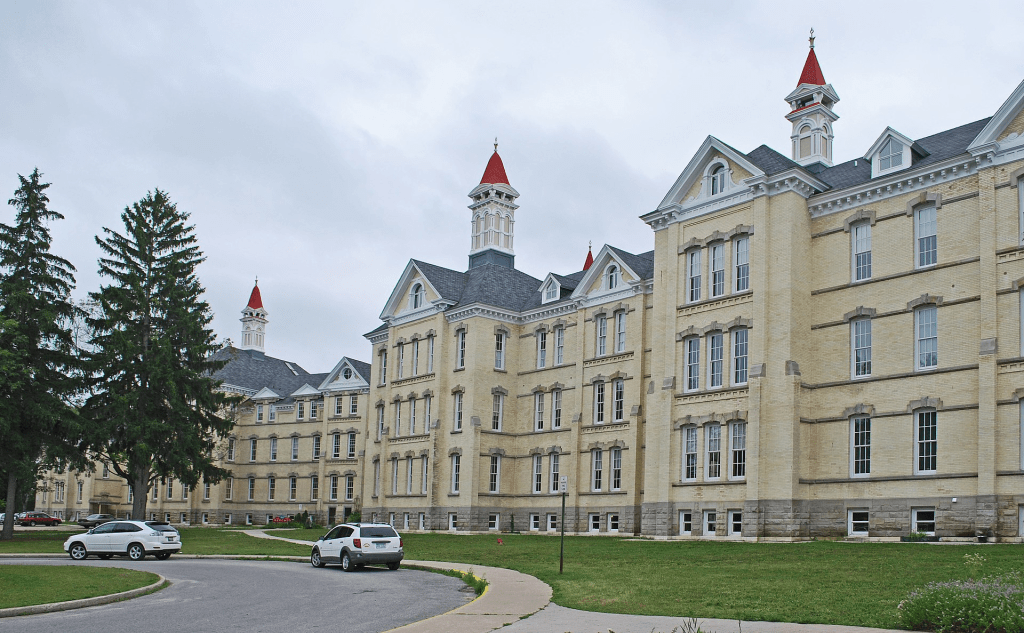
If you are reading this, your chances of ending up in a nursing home are just short of 50/50. That is to say, 4 out of 10 of Tricycle’s readers are likely to end their lives in institutional care. But as Meg Federico wrote, people have to make the most difficult decisions, plans concerning the last years of their lives, at a time they are least capable of doing so. Nonetheless, we will age, and something will happen to us. Atul Gawande, a distinguished surgeon and commentator on the care of the aged, describes the likely situation in which we who live in the Western post-industrial world will find ourselves:
The waning days of our lives are given over to treatments that addle our brains and sap our bodies of a sliver’s chance of benefit. They are spent in institutions—nursing homes and intensive care units—where regimens, anonymous routines cut us off from all the things that matter to us in life. Our reluctance to honestly examine the experience of aging and dying has increased the harm we inflict on people and denied them the comforts they most need. Lacking a coherent view of how people might live successfully all the way to their very end, we have allowed our fates to be controlled by the imperatives of medicine, technology, and strangers.
—Being Mortal
“Old age. It’s a secret, a kind of hidden magic. It’s right there, this practice, and no one sees it. We’re being shown, given. It is how our lives actually work. What we are told we should not cling to is actually naturally being stripped away. . . . Resistance is not possible or only creates more confusion, pain.”
We see our body as a noun, an entity with fixed properties and functions. And because we tend to look at ourselves this way, when various qualities of our body change during the aging process, this is unpleasant; when our body cannot function as it used to, we are distraught, lost. If, however, we see our body as a verb, a combination of properties and functions constantly in motion, then it’s very different.
Dogen Zenji said: “When the world ends, and the fires blaze unobstructedly through everything, and all falls to ruin, we just follow circumstance.” (Trans. Kidder Smith)
Like light in air, we cannot stop,
Every instant dissolves.
Awakening is not something we make happen
Awakening happens without reference point
Without boundary.
Like light in air
Moments do not stop in one self or an other.
Dissolving
Reforming
Awakening breaks open in the experience of whatever and all.
Here’s Dogen again:
Greatly awakening has no beginning or end, returning to confusion had no beginning or end. Why? It just goes off everywhere, while the worlds are being destroyed.” (Trans. Kidder Smith)
Douglas Penick is a longtime Buddhist practitioner and has published three Gesar of Ling episodes. His books include the recent essay collection T The Age of Waiting, adapted from Tricycle articles, and the upcoming The Oceans of Cruelty.

 Life Matters