Tricycle’s online magazine offers a provocative article which discusses two key questions: Why love what you will lose? and What else is there to love?
Below is a highlight from this worthy article. To read the entire article see the link at the bottom of this post.
Suffering is, strangely, both sickness and medicine, impossible to tease apart in the end. … That we suffer and share this great fact of impermanence together is profound medicine in itself, a medicine that releases compassion, love, connectedness, and forgiveness as the healing source.
The brief Lions Roar article below is much more than an American jazz singer, Bobby McFerrin lyric: Don’t Worry, Be Happy.
I highly recommend this piece written by Karen Maezen Miller. See excerpts below:
An Angry Person with a Zen Practice
by Karen Maezen Miller
I wasn’t an angry person until I became a Zen Buddhist. Sure, I yelled. I slammed things. I broke things. But I wouldn’t have called myself angry. It was always another person making me angry. How was that my fault?
But there was hope because I was an angry person with a Zen practice.
No one makes us feel, think, or do anything except as we allow.
Anger comes from our attachments.
We don’t get our way all the time, and besides, even when we do, it doesn’t last.
The wisdom of impermanence shows us the way to work with anger, that is, to not work with it at all.
Without my ruminations and reactions, anger does what all sensations do. It goes away by itself, providing I don’t chase after it.
One more thing has changed my relationship with anger: admitting it. When I feel myself getting angry around others, I try my best to say, “I’m angry right now.”Spoken, the words by themselves are safe. Unspoken, they smolder into fire and brimstone.
These days, though I still get angry, I’m no longer afraid of my anger. I don’t try to hide or avoid it. I remind myself not to rationalize it, justify it, or react in anger. I let it be, and then I let it be gone.
Ceramics, Zen, and the true purpose of Zen in the arts (and the arts in Zen) By Reverend Cristina Moon APR 25, 2024
The thing about approaching the arts through Zen is that, by looking at any art as more than just an art but as a Way, you start to see how the state of your mind, body, and spirit is reflected in everything you do. The product of your art is a snapshot of the state of your mind in the moments of creation.
All of the rich and varied feedback that’s a part of Zen training told me the same thing. Because of my habits and attachments, I was far from my True Self. I was already me, of course, and perfectly so, but also just a little off.
Nakazato Sensei likes to chide other potters, saying, “Everyone thinks they’re an artist.” Instead of trying to make art, he says, we should just make things that are useful. And we should make lots of them.
I can see clearly that my sensitivity and strength in handling the clay has grown.
As time passes, I continue to see myself reflected back in these small plates, which is to say that they are more straight, upright, sturdy, and striking—but still have a lot of room for improvement.
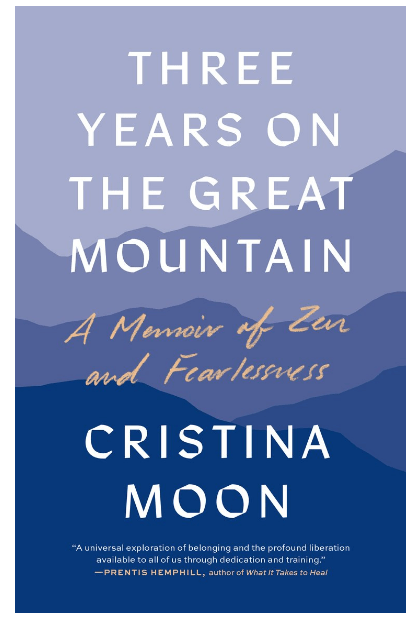
Reverend Cristina Moon lives and trains at Daihonzan Chozen-ji in Honolulu. Her first book, Three Years on the Great Mountain: A Memoir of Zen and Fearlessness, about her first three years living and training at Chozen-ji, is being published by Shambhala Publications on June 18, 2024. Available for pre-order now. Moon’s writings can be found at http://www.cristinamoon.com
For some it’s the belief in an all-powerful, all-knowing God, who cares about our lives.
For others it’s about a better way to live, through morality, devotions, spiritual practices; prayer, meditation. Be the aim union with divinity, greater connection to others, to live more fully in the moment
Any practice is based on the premise that there is a better way to live than the way we are living now.
If zen is a religion it’s the religion of getting up in the morning and brushing our teeth. It’s the religion of ordinary things, stripped of fantasy and exposed to stark truth.
Zen is making up our minds that since we are here anyway, living life, we may as well do it well.
“With Ch’an, I better understand myself, my mission in time and space. No drama and dharma are what I seek; decent and solid is my true face.
When change is where we live, from dyana to zazen I count, at least to five; breath to body to kindness, twelve links and paramount.
The flower tells me no fixed formula to finding a peaceful moon. Observer and observed, no mind; full, half, Burmese, or kneeling rune.
Lying down or walking; all are healing. Breathing from belly my half-smile arises. I hear One Love in every sone. Zazen, kinhin, and chanting surprises:
plan, do, check, act through all my days, kaizen by point or by the whole. I ask why at least five times to comfort any painful earhole.
To love thee with smiles and tears and breath, I fondly count till my counting ends and love Thee better through birth and death.”
*With a nod to Elizabeth Barrett Browning’s “Sonnet 43“
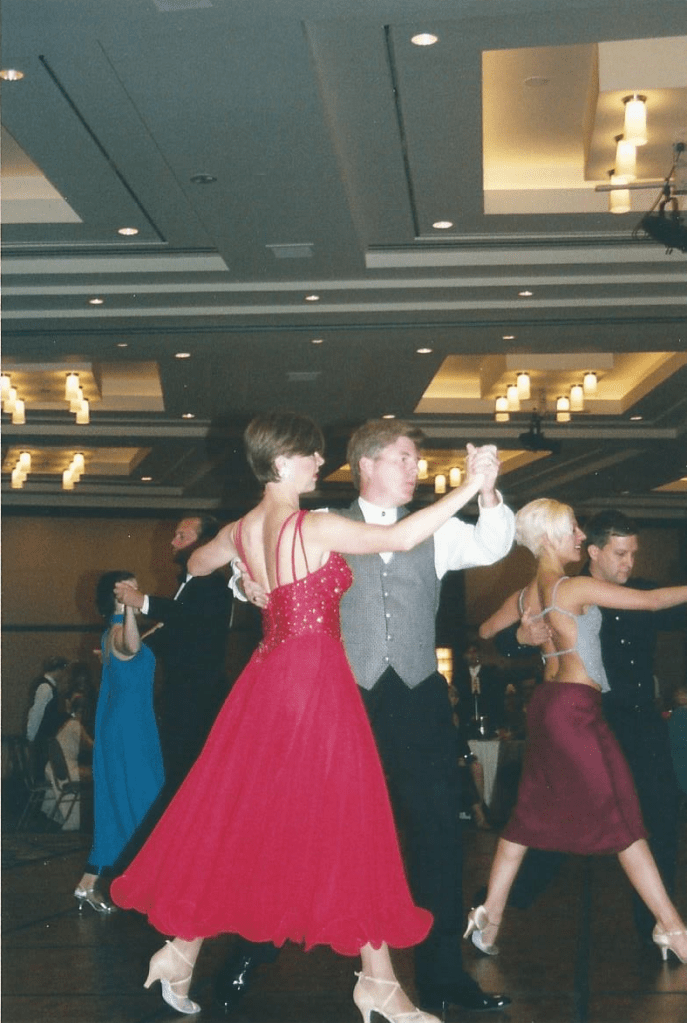
“Can we separate the dancer from the dance? Can we know and be known?
Reciprocal motion is how we live, breathing in and breathing out. Embracing the dance is tasting the food inside and outside of us.
What if there is no inner and outer? Only one, once again.
If we do not join the dance, if we do not dare to learn the steps, Oh, what an impoverished life we will live, missing out on a real embrace.
Let us sacrifice the known for the power to move more joyfully, more skillfully. Conscious presence, the floor is our friend, we are balanced alone and together.
We are the dancer and the dance. We are the path, we are the Zen.”


 Life Matters