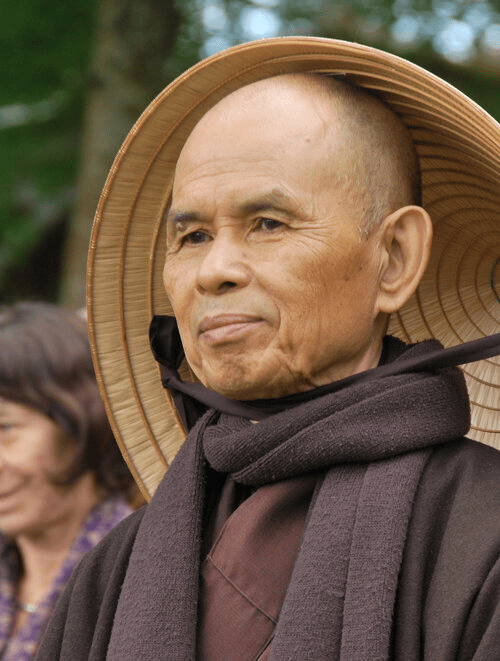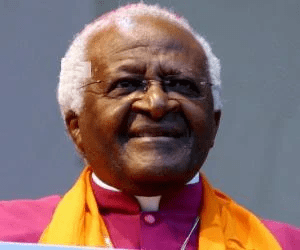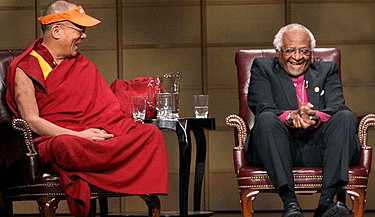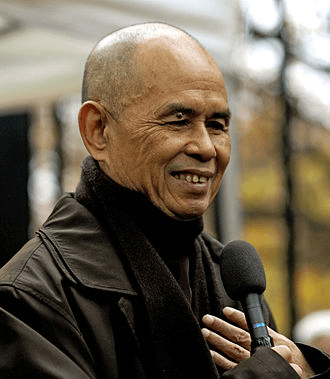
Since 1994, October 5 has been a day for commemorating teachers. Today we focus on “appreciating, assessing and improving the educators of the world.” https://en.wikipedia.org/wiki/World_Teachers’_Day
As the 27th verse of the Tao Te Ching reminds us:
“These are the paths to enlightenment. Those who arrive at their destination teach those who are still on the path, while those still on the path are sources of wisdom for their teachers.” See Tao Te Ching – A New Translation & Commentary by Ralph Alan Dale (c) 2002, p.55
A humble haiku response: World Teachers’ Day
We learn then we teach
consciously or not – our life
is our lesson plan
What My Teachers Taught Me About Teaching – Edutopia
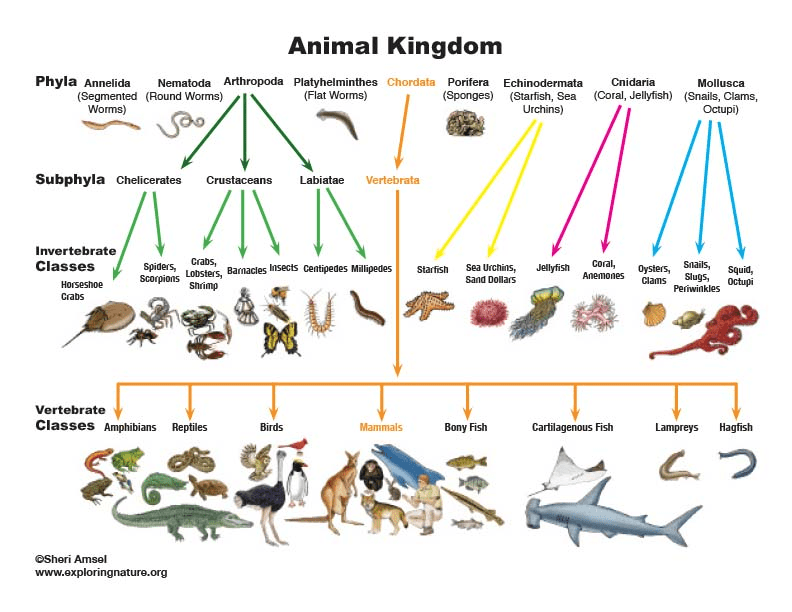
“World Animal Day dates as far back as 1925 when Heinrich Zimmermann organized the first celebration in Berlin. Zimmermann, the publisher of a German animal lovers’ magazine, “Man and Dog,” launched the event to raise awareness and improve the welfare of animals. The date of October 4 is also known as the feast day of Saint Francis of Assisi, the patron Saint of animals.” See https://spiritoftheholidays.org/animal-holidays/world-animal-day/
As highlighted in a 2020 announcement, there are (at least) “seven acts of kindness to animals” we can consider:
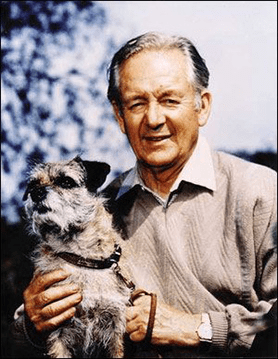
James Alfred Wight (3 October 1916 – 23 February 1995), better known by his pen name James Herriot, was a British veterinary surgeon and author.
“He is best known for writing a series of eight books set in the 1930s–1950s Yorkshire Dales about veterinary practice, animals, and their owners, which began with If Only They Could Talk, first published in 1970. Over the decades, the series of books has sold some 60 million copies.
“Wight’s obituary confirmed his modesty and preference to stay away from the public eye. “It doesn’t give me any kick at all,” he once said. “It’s not my world. I wouldn’t be happy there. I wouldn’t give up being a vet if I had a million pounds. I’m too fond of animals.” By 1995, some 50 million of the James Herriot books had been sold. Wight was well aware that clients were unimpressed with the fame that accompanied a best-selling author. “If a farmer calls me with a sick animal, he couldn’t care less if I were George Bernard Shaw,” Wight once said. See “James Herriot Dies at 78; Wrote ‘All Creatures Great and Small'”. The Buffalo News. 24 February 1995. Retrieved 3 March 2021.
Today’s humble haiku – Happy Birthday James (Wight) Herriot
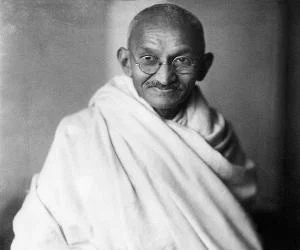
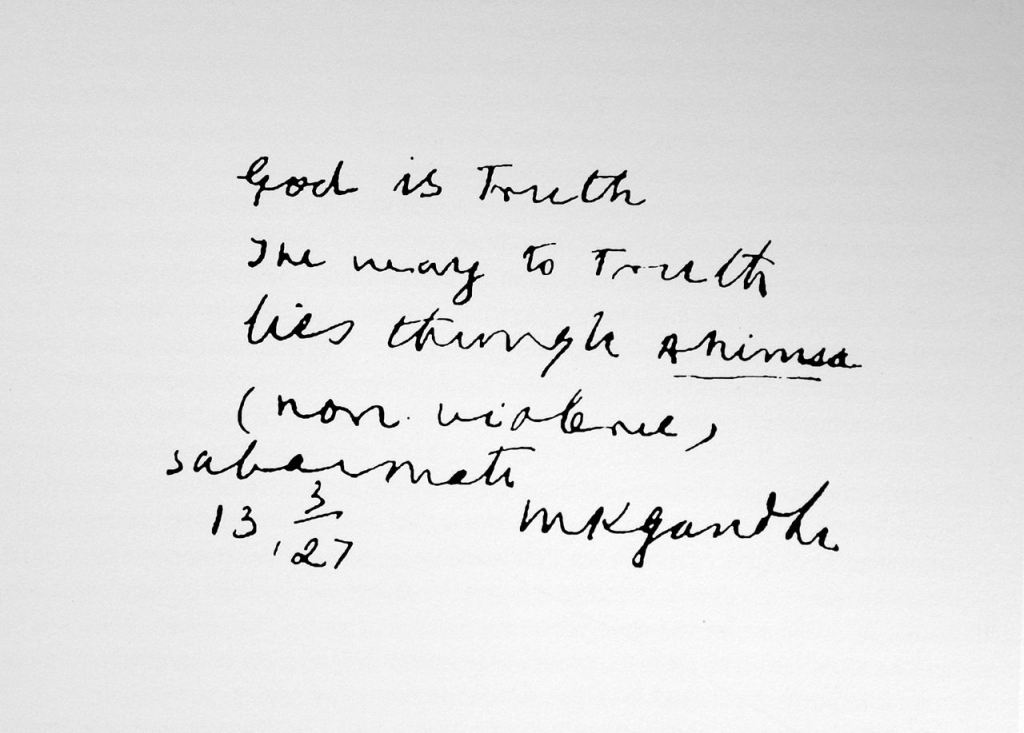
Known as the “Father of the Nation” of India, Mohandas Gandhi was also called Mahatma (Great Soul) or Bapu (Papa). Gandhi’s birthday, 2 October, is celebrated in India as a national holiday, and worldwide as the International Day of Nonviolence.
“Gandhi grew up in a Hindu and Jain religious atmosphere … which were his primary influences, but he was also influenced by his personal reflections and literature of Hindu Bhakti saints, Advaita Vedanta, Islam, Buddhism, Christianity, and thinkers such as Tolstoy, Ruskin and Thoreau… At age 57 he declared himself to be Advaitist Hindu in his religious persuasion but added that he supported Dvaitist viewpoints and religious pluralism.” (See https://en.wikipedia.org/wiki/Mahatma_Gandhi)
And here’s a provocative poem from “the Bard of the Yukon“:
My Guardian Angel by Robert William Service
When looking back I dimly see The trails my feet have trod, Some hand divine, it seems to me, Has pulled the strings with God; Some angel form has lifeward leaned When hope for me was past; Some love sublime has intervened To save me at the last.
For look you! I was born a fool, Damnation was my fate; My lot to drivel and to drool, Egregious and frutrate. But in the deep of my despair, When dark my doom was writ, Some saving hand was always there to pull me from the Pit.
A Guardian Angel – how absurd! I scoff at Power Divine. And yet . . . a someone spoke the word That willed me from the swine. And yet, despite my scorn of prayer, My lack of love or friend, I know a Presence will be there, To save me at the end.
Climate change is on top of discussions once more. Tyhoon Karding (international name Noru) has just devastated many of our provinces. Residential areas and farms were damaged.
Aerial inspection of Bulacan, Nueva Ecija and Tarlac which were affected by the super typhoon Karding. September 26, 2022. (KJ Rosale/PPA POOL)From The Manila Times
It’s not only in the recent times that the Philippines is visited by typhoons. But the typhoons are gettimg stronger. It used to be that we feared storm signal number 3, now we get signal number 4, even 5. Flooding brought by typhoons occurs more often.
I leave to the experts the explanations on why some countries are more vulnerable than others.
Two factors are our landform and our geographical location . We are an archipelago located beside the North West Pacific basin which is the most active basin on earth for storms to form.
Known as the Little Flower who practiced the Little Way, Marie Françoise-Thérèse Martin was born in Alencon, Orne, France and died twenty-four years later in Lisieux, France. In her very short life, cut short due to tuberculosis, she composed her autobiography, The Story of a Soul, which, after extensive editing, went on to become a highly circulated publication. (See https://en.wikipedia.org/wiki/Therese_of_Lisieux)
Singer/songwriter Billy Joel released his hit song “Only the Good Die Young” in 1977. His lyrics may provide a hint of the significant influence of the Little Flower on young Catholic women of the 20th Century.
For her part, St. Therese wrote:
“I will seek out a means of getting to Heaven by a little way – very short and very straight little way that is wholly new. We live in an age of inventions; nowadays the rich need not trouble to climb the stairs, they have lifts (elevators) instead. Well, I mean to try and find a lift by which I may be raised unto God, for I am too tiny to climb the steep stairway of perfection. […] Thine Arms, then, O Jesus, are the lift which must raise me up even unto Heaven. To get there I need not grow. On the contrary, I must remain little, I must become still less.”
Saint Thérèse de Lisieux (2012). The Story of a Soul (L’Histoire d’une Âme). The Autobiography of St. Therese of Lisieux with Additional Writings and Sayings of St. Therese.
My humble haiku response is: Happy Day, St. Therese
Jalāl al-Dīn Muḥammad Rūmī, more popularly known simply as Rumi, was born on this day in 1207 in present-day Afghanistan. He later died on December 17, 1273 in present-day Turkey. He was a 13th-century Persian poet and Sufi Mystic. Rumi’s influence transcends national borders and ethnic divisions. His poems have been widely translated into many of the world’s languages and he has been described as the “most popular poet” and the “best selling poet” in the United States. (See https://en.wikipedia.org/wiki/Rumi)
Rumi was a firm believer in the use of music, poetry, and dance as a means of approaching God. His poetry is divided into common themes: mystical, passion, and life and death. Madonna and Philip Glass are among his many admirers: Madonna recorded readings of Rumi’s poetry, and Glass’s “Monsters of Grace” is based on Rumi’s art. (See https://nationaltoday.com/rumi-day/)
Rumi’s poetry speaks of love which infuses the world. Rumi’s longing and desire to attain the ideal of Love is evident in this excerpt from his book the Masnavi:
“I died to the mineral state and became a plant.
I died to the vegetal state and reached animality.
I died to the animal state and became a man,
Then what should I fear? I have never become less from dying.”
The end of September brings us to the feast of St. Michael and All Angels which is known as Michaelmas in England, and this first autumn term in many schools and universities is still called the Michaelmas term. The Archangel Michael is traditionally thought of as the Captain of the Heavenly Host, and, following an image from the book of Revelation, is often shown standing on a dragon, an image of Satan subdued and bound by the strength of Heaven. He is also shown with a drawn sword, or a spear and a pair of scales or balances, for he represents, truth, discernment, the light and energy of intellect, to cut through tangles and confusion, to set us free to discern and choose. He is celebrated and revered in all three Monotheistic religions. There is a good, full account…
Confucius, or Master Kong, was born on September 28, 551 BCE and lived for nearly 72 years before dying in 479 BCE. Known as a philosopher and master teacher, Confucius presented himself as a “transmitter who invented nothing” yet considered himself a transmitter of values which emphasized personal and governmental morality, correctness of social relationships, justice, kindness, and sincerity.
“His teachings require examination and context to be understood. A good example is found in this famous anecdote:
廄焚。子退朝,曰:傷人乎?不問馬。
When the stables were burnt down, on returning from court Confucius said, “Was anyone hurt?” He did not ask about the horses.
By not asking about the horses, Confucius demonstrates that the sage values human beings over property (which animals seem to represent in this example); readers are led to reflect on whether their response would follow Confucius’s and to pursue self-improvement if it would not have.” (See https://en.wikipedia.org/wiki/Confucius)