Lynn J. Kelly references Cheri Huber to explain how Mindfulness helps us during these crazy times.
May their words bring us comfort and guidance.
Lynn J. Kelly references Cheri Huber to explain how Mindfulness helps us during these crazy times.
May their words bring us comfort and guidance.
Lynn J Kelly shares her appreciation for mindful walking and the guidance offered by Zen Master Thich Nhat Hanh in her blog post linked below. I have also found this practice especially helpful in times of high stress or overwhelming feelings. Moving slowly can be especially calming when your body needs to “walk off” whatever pain is being experienced in the moment.
May we walk mindfully for ourselves and for those who are not able to walk at this time.
Lynn J Kelly shares another insightful blog post on how we can be mindful throughout the day in all our postures. Check it out at the link below.

Lynn J. Kelly offers us some alternative New Year’s goals for consideration.
Some marriage counselors like to ask their clients, “Do you want to be right or in relationship?” This Socratic method approach suggests that “being right” may be more difficult and lonelier than you might initially think. In addition, being in relationship may not always include being “right.”
Below are two references that have crossed my desk today. The first is a is a Tricycle article on Zen Ethics which includes a second reference, the poem, “A Place Where We Are Right,” by the Israeli poet Yehudi Amichai.
May you find one or more of these words of wisdom helpful in your daily discernment.
—————————————–
“A Place Where We Are Right,” a poem by the Israeli poet Yehudi Amichai, shows this consequence perfectly:
From the place where we are right
Flowers will never grow
In the spring.
The place where we are right
Is hard and trampled
Like a yard.
But doubts and loves
Dig up the world
Like a mole, a plow.
And a whisper will be heard in the place
Where the ruined
House once stood.
(from The Selected Poetry of Yehudi Amichai, translation by Chana Bloch and Stephen Mitchell, University of California Press, 1996, used with permission of the translators)
Lynn J Kelly offers another helpful blogpost on how and why we might meditate. I encourage you to check out her link below for all of her mindfulness offerings.

Here’s a quick explanation of people to avoid: the taker, the talker, the flatterer, and the reckless from Lynn J Kelly. See picture above and link below. Thank you, Lynn.

http://www.amazon.com/Bearded-Man-Bus-Immigrants-Privilege/
A friend and Buddhist mentor, Daniel L. Smith, has written a new book: Bearded Man On A Bus and it’s the perfect book for me right now as I live out my new life as a recovering romantic. His book is filled with wandering wisdom and gave me some fresh insights for my life journey. Specifically:
My thanks to author Daniel L. Smith who approved the sharing of his words above. If you’d like to read more of his “wanderer’s spiritual journey … a collection (of) hopeful poems, possibly, because life continues, nothing is permanent, and breathing is such a fundamental right to exploring the conditions necessary for happiness in all humans, regardless of origin, journey, or destination.” check out his book available on Amazon.
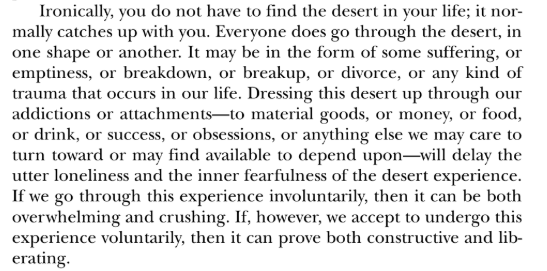
We all need refuge from overwhelming times. Some people hide behind watching TV, overeating or overdrinking, or spending time with people doing things that may hurt us in the long term.
Today, Lynn J Kelly, an Australian American practicing Buddhist, offers another option that may be of some interest to you. See her blogpost below:
Posted on October 5, 2025 by lynnjkelly
One “becomes a Buddhist” by sincerely taking refuge in the Buddha, Dhamma, and Sangha. This is only meaningful if we have some sense of what that means. When we are afraid or unhappy, where do we go? Most of us take refuge in the ordinary comforts of our lives – music, on-line entertainment, TV, food, reading, friends or family, or some activity that we find absorbing. From the Pali canon:
They go to many a refuge,
Those who have been struck by fear;
They go to mountains and forests,
To parks and trees and shrines.
(Dhammapada 188, translated by John Kelly)
However, these refuges only offer temporary relief.
When we take refuge in the triple gem (Buddha, Dhamma, Sangha), we are saying that when things get rough, we look to:
Many of us started looking into the Buddha’s path with only a vague hope that it might help us become less confused. We naturally want to minimize suffering for ourselves and others, but how to go about that can be mysterious.
Committing to the Buddha’s path takes time. It generally requires some motivation (suffering?) and some inspiration, through reading or hearing about the Buddha’s teachings. But it’s only by taking up and trying out the Buddha’s instructions in our own lives that we develop faith – faith in the possibility of awakening, faith that the Buddha himself and many others have tasted the freedom he points to. For example, the teachings on how generosity and ethical behavior affect our mind state, if put into practice, will quickly produce results in our experience.
The thought of meditating can be a stumbling block for new practitioners. Remember that nothing special is meant to happen. We could think of it simply as a short period of unplugging from our normal inputs. We find a way to set worries aside and relax for 20 minutes or so, usually by training the attention on the breath or some other neutral object. If we accept whatever energy is in our body and mind, as it is in the present moment, we may find that it changes and is gradually replaced with a relatively steadier mind state. In this way, step by step, we learn to live fully in the present, whatever it contains.
Below are highlights from another beautiful reminder from Lynn J Kelly:
Posted on August 10, 2025 by lynnjkelly
Because of our emphasis on individualism rather than community, gratitude is easily overlooked as an important element of a satisfying life.
A life without gratitude is a joyless life. If we don’t have anything to be grateful about, our life is a dreary plane. …
Many of us have had fortunate lives, but although we have been born in fortunate places we can tend to take a lot for granted. We have privileges and benefits, and a much better life than a good portion of people in the world can ever hope to expect. There’s a lot to be grateful for … (from https://dhammatalks.net/Books3/Ajahn_Sumedho_Gratitude_to_Parents.htm)
In addition, practicing gratitude is a direct cure for self-obsession. Are we ready to give up the idea that we are the most important person in the world? If we spend some time every day appreciating others in our lives, it loosens the chains of self-importance.
Within Buddhist thinking on virtue, there are things we ought to refrain from doing, and things we ought to deliberately do. We refrain from harming other sentient beings; we support the safety and growth of other lives. This training is the basis for Buddhist ethics and cannot be skipped over. As with generosity and gratitude, understanding them is insufficient as a foundation for practice. To grow in the Dhamma, we need to continuously nourish and strengthen these skillful qualities in ourselves.