Category Archives: psychology

The Tears of Things

I’m feeling sad today – how ’bout you?

Richard Rohr, in his book published last year (see book cover below), says it so well:

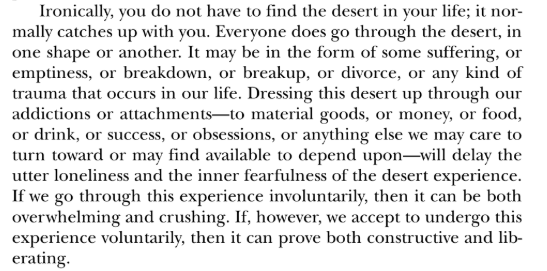
“There is an inherent sadness and tragedy in almost all situations: in our relationships, our mistakes, our failures large and small, and even our victories. We must develop a very real empathy for this reality, knowing that we cannot fully fix things, entirely change them, or make them to our liking …. all things have tears and all things deserve tears.” p.4 of The Tears of Things by Richard Rohr (c) 2025.

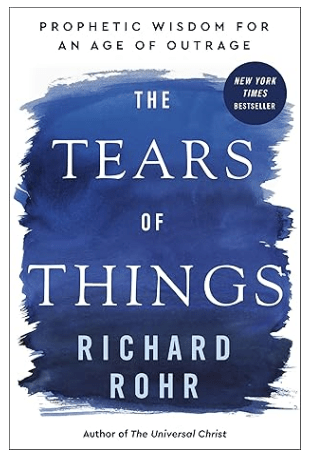
The Tears of Things: Prophetic Wisdom for an Age of Outrage: Rohr, Richard: 9780593735817: Amazon.com: Books

Fortunately, I’m also recalling the Buddha’s metta (loving-kindness) prayer: “May we be happy … may we be well … may we be safe … may we live with ease.”

Now if I can only hold the feelings of sadness and loving-kindness simultaneously. How ’bout you?

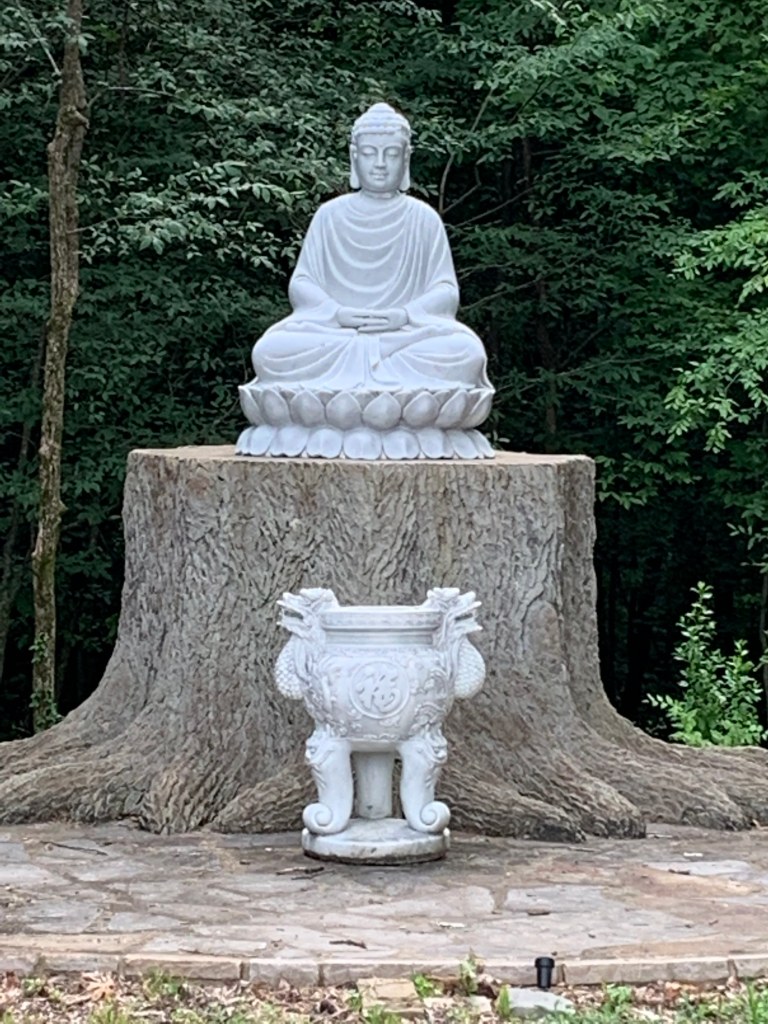
Picture taken by author at Magnolia Grove Monastery in Batesville, MS

Pain Management & Mindfulness

A couple of years ago, I became deaf in one ear. It was bizarre and lasted for six weeks before improvement began. With the help of modern medicine and mindfulness I fully regained my hearing.

The procedure that led to improvement involved shots into my ear which required me not to twitch or move in any way as the needle was inserted. I did not look forward to the weekly shots, but I knew I needed to endure them in order to have any hope of my hearing returning to normal.

I share this, fortunately temporary, condition because mindfulness helped me enter the doctor’s office and accept the procedure that was coming. Through breath awareness and recalling the Five Remembrances, I was able to still my body and accept the medical procedure.

Below is a link to Lynn J Kelly’s blog where she shares what she has learned about pain management and mindfulness. I think you’ll find it interesting.

Refuge in What? Repost from Lynn J Kelly

We all need refuge from overwhelming times. Some people hide behind watching TV, overeating or overdrinking, or spending time with people doing things that may hurt us in the long term.

Today, Lynn J Kelly, an Australian American practicing Buddhist, offers another option that may be of some interest to you. See her blogpost below:


Refuge in What?

Posted on October 5, 2025 by lynnjkelly

One “becomes a Buddhist” by sincerely taking refuge in the Buddha, Dhamma, and Sangha. This is only meaningful if we have some sense of what that means. When we are afraid or unhappy, where do we go? Most of us take refuge in the ordinary comforts of our lives – music, on-line entertainment, TV, food, reading, friends or family, or some activity that we find absorbing. From the Pali canon:

They go to many a refuge,
Those who have been struck by fear;
They go to mountains and forests,
To parks and trees and shrines.
(Dhammapada 188, translated by John Kelly)

However, these refuges only offer temporary relief.

When we take refuge in the triple gem (Buddha, Dhamma, Sangha), we are saying that when things get rough, we look to:

  1. the Buddha as an embodiment of the potential for awakening in all humans (including ourselves);
  2. to the Dhamma as the body of the Buddha’s teachings on reality as we can experience it; and
  3. to the Sangha, the worldwide, time-spanning community of serious practitioners of the Buddha’s path.

Many of us started looking into the Buddha’s path with only a vague hope that it might help us become less confused. We naturally want to minimize suffering for ourselves and others, but how to go about that can be mysterious.

Committing to the Buddha’s path takes time. It generally requires some motivation (suffering?) and some inspiration, through reading or hearing about the Buddha’s teachings. But it’s only by taking up and trying out the Buddha’s instructions in our own lives that we develop faith – faith in the possibility of awakening, faith that the Buddha himself and many others have tasted the freedom he points to. For example, the teachings on how generosity and ethical behavior affect our mind state, if put into practice, will quickly produce results in our experience.

The thought of meditating can be a stumbling block for new practitioners. Remember that nothing special is meant to happen. We could think of it simply as a short period of unplugging from our normal inputs. We find a way to set worries aside and relax for 20 minutes or so, usually by training the attention on the breath or some other neutral object. If we accept whatever energy is in our body and mind, as it is in the present moment, we may find that it changes and is gradually replaced with a relatively steadier mind state. In this way, step by step, we learn to live fully in the present, whatever it contains.

Essential Gratitude Repost

Below are highlights from another beautiful reminder from Lynn J Kelly:

Essential Gratitude

Posted on August 10, 2025 by lynnjkelly

Because of our emphasis on individualism rather than community, gratitude is easily overlooked as an important element of a satisfying life.

A life without gratitude is a joyless life. If we don’t have anything to be grateful about, our life is a dreary plane. …

Many of us have had fortunate lives, but although we have been born in fortunate places we can tend to take a lot for granted. We have privileges and benefits, and a much better life than a good portion of people in the world can ever hope to expect. There’s a lot to be grateful for … (from https://dhammatalks.net/Books3/Ajahn_Sumedho_Gratitude_to_Parents.htm)

In addition, practicing gratitude is a direct cure for self-obsession. Are we ready to give up the idea that we are the most important person in the world? If we spend some time every day appreciating others in our lives, it loosens the chains of self-importance.

Within Buddhist thinking on virtue, there are things we ought to refrain from doing, and things we ought to deliberately do. We refrain from harming other sentient beings; we support the safety and growth of other lives. This training is the basis for Buddhist ethics and cannot be skipped over. As with generosity and gratitude, understanding them is insufficient as a foundation for practice. To grow in the Dhamma, we need to continuously nourish and strengthen these skillful qualities in ourselves.