Lynn J Kelly offers another helpful blogpost on how and why we might meditate. I encourage you to check out her link below for all of her mindfulness offerings.
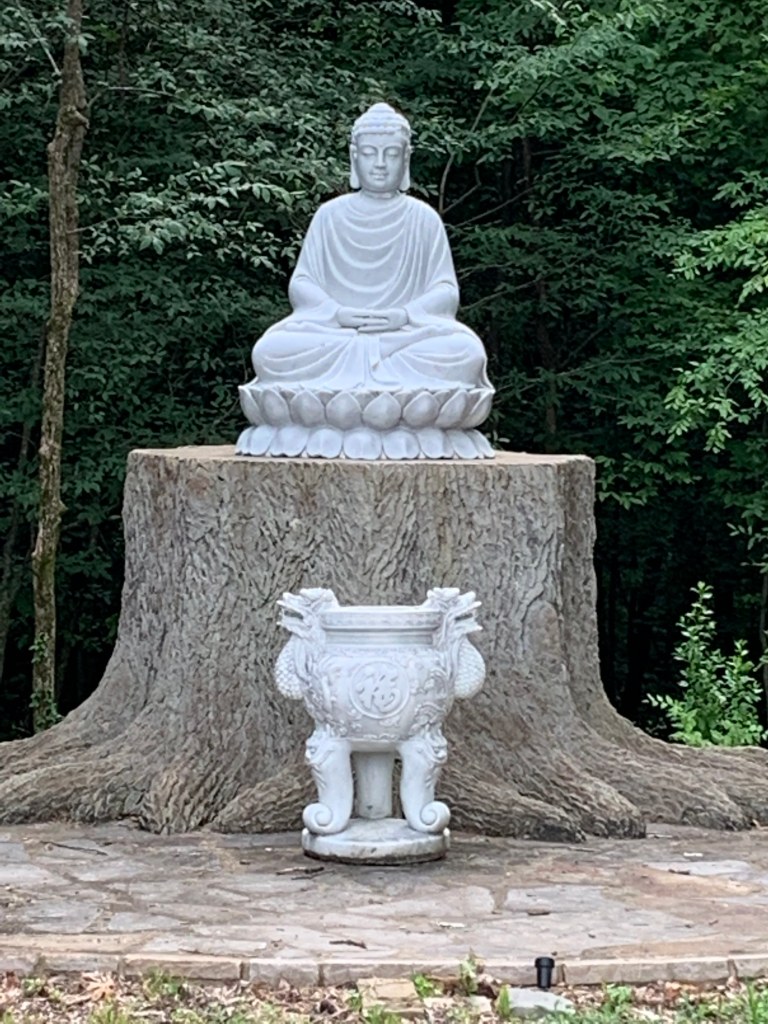
Here’s a quick explanation of people to avoid: the taker, the talker, the flatterer, and the reckless from Lynn J Kelly. See picture above and link below. Thank you, Lynn.
A friend and Buddhist mentor, Daniel L. Smith, has written a new book: Bearded Man On A Bus and it’s the perfect book for me right now as I live out my new life as a recovering romantic. His book is filled with wandering wisdom and gave me some fresh insights for my life journey. Specifically:
“Trailways red and white – and – lost all over” p.9
“Backwoods Alabama – born here, raised here, still feels she doesn’t belong.” p.31
“Wondering if enough is sufficient, if enough is in the right direction, if enough means loving just one person, enough? P.41
“Wrens migrating after the storm, down from Ontario for the summer; unaware of the tumult a world away.” p.75
“She sits in front of her all too honest mirror, as a thousand times before, one thought away from last week’s fantasy, another from this week’s fleeting memory, just one ahead of the nothingness, she fears.” p.82
“Tonight you end right quick, right here at table, Momma stirs her sauce with a long knife.” p.88
“Toils and tears of some creator we see as absent, but intuit in the present moment, moss underfoot or sandy shore, we find forgiveness in the sky.“ p.92
“Yet, it’s communion we’re really after, isn’t it? Not conversation, not community, but true communion at source – all light and insight.” p.99
“It is difficult, this staying in tenderness,this wanting to be” p.102
“What follows in the darkness, all a fantasy anyway, there’s not much real about any of it, but she, she goes on and on, almost as if there is no beginning and no end” p.107
My thanks to author Daniel L. Smith who approved the sharing of his words above. If you’d like to read more of his“wanderer’s spiritual journey … a collection (of) hopeful poems, possibly, because life continues, nothing is permanent, and breathing is such a fundamental right to exploring the conditions necessary for happiness in all humans, regardless of origin, journey, or destination.” check out his book available on Amazon.
We all need refuge from overwhelming times. Some people hide behind watching TV, overeating or overdrinking, or spending time with people doing things that may hurt us in the long term.
Today, Lynn J Kelly, an Australian American practicing Buddhist, offers another option that may be of some interest to you. See her blogpost below:
One “becomes a Buddhist” by sincerely taking refuge in the Buddha, Dhamma, and Sangha. This is only meaningful if we have some sense of what that means. When we are afraid or unhappy, where do we go? Most of us take refuge in the ordinary comforts of our lives – music, on-line entertainment, TV, food, reading, friends or family, or some activity that we find absorbing. From the Pali canon:
They go to many a refuge, Those who have been struck by fear; They go to mountains and forests, To parks and trees and shrines. (Dhammapada 188, translated by John Kelly)
However, these refuges only offer temporary relief.
When we take refuge in the triple gem (Buddha, Dhamma, Sangha), we are saying that when things get rough, we look to:
the Buddha as an embodiment of the potential for awakening in all humans (including ourselves);
to the Dhamma as the body of the Buddha’s teachings on reality as we can experience it; and
to the Sangha, the worldwide, time-spanning community of serious practitioners of the Buddha’s path.
Many of us started looking into the Buddha’s path with only a vague hope that it might help us become less confused. We naturally want to minimize suffering for ourselves and others, but how to go about that can be mysterious.
Committing to the Buddha’s path takes time. It generally requires some motivation (suffering?) and some inspiration, through reading or hearing about the Buddha’s teachings. But it’s only by taking up and trying out the Buddha’s instructions in our own lives that we develop faith – faith in the possibility of awakening, faith that the Buddha himself and many others have tasted the freedom he points to. For example, the teachings on how generosity and ethical behavior affect our mind state, if put into practice, will quickly produce results in our experience.
The thought of meditating can be a stumbling block for new practitioners. Remember that nothing special is meant to happen. We could think of it simply as a short period of unplugging from our normal inputs. We find a way to set worries aside and relax for 20 minutes or so, usually by training the attention on the breath or some other neutral object. If we accept whatever energy is in our body and mind, as it is in the present moment, we may find that it changes and is gradually replaced with a relatively steadier mind state. In this way, step by step, we learn to live fully in the present, whatever it contains.
Because of our emphasis on individualism rather than community, gratitude is easily overlooked as an important element of a satisfying life.
A life without gratitude is a joyless life. If we don’t have anything to be grateful about, our life is a dreary plane. …
Many of us have had fortunate lives, but although we have been born in fortunate places we can tend to take a lot for granted. We have privileges and benefits, and a much better life than a good portion of people in the world can ever hope to expect. There’s a lot to be grateful for … (from https://dhammatalks.net/Books3/Ajahn_Sumedho_Gratitude_to_Parents.htm)
In addition, practicing gratitude is a direct cure for self-obsession. Are we ready to give up the idea that we are the most important person in the world? If we spend some time every day appreciating others in our lives, it loosens the chains of self-importance.
Within Buddhist thinking on virtue, there are things we ought to refrain from doing, and things we ought to deliberately do. We refrain from harming other sentient beings; we support the safety and growth of other lives. This training is the basis for Buddhist ethics and cannot be skipped over. As with generosity and gratitude, understanding them is insufficient as a foundation for practice. To grow in the Dhamma, we need to continuously nourish and strengthen these skillful qualities in ourselves.
One of the senior monks in the Ajahn Chah lineage said that Buddha talked about dāna[giving] first because if someone didn’t understand the value of basic generosity, they weren’t even teachable. If we don’t have a sense of its significance, and don’t have some degree of maturity in our experience of it, then other forms of practice—sīla, bhāvana, mettā—won’t even get off the ground. There has to be a malleability of heart, a softness, a diminished self-absorption, before the engines can even get started! And this softness is developed largely through our increasingly mature direct experience of dāna.
Giving as a ritual is not the same as giving as practice. There can be various motives for giving, and many of them have to do with varieties of clinging. We cling to the idea of what is expected of us, or what would “look good”, or we give to relieve a feeling of guilt, or even because we think it will produce a better afterlife. But there is a higher motivation that we can tap into, one that moves us away from any form of clinging.
(from Gloria Taraniya Ambrosia) There’s a wonderful story in the Vināya (Mahāvagga 8:15) about a very generous laywoman who lived at the time of the Buddha. As the story goes, she wanted to give a large gift to the community—lifetime gifts of food, clothing and medicinal requisites. Before agreeing to receive this offering, the Buddha asked Visakha why she wanted to make such a generous offering.
Her reply may surprise you. She said that when she sees the monks and nuns she will know that they are wearing robes made out of the cloth that she offered, etc., and it will make her very happy. Thus, her mind will be calm and her meditation will go well. As if to say, “Yes, that’s the right answer,” the Buddha accepted her gift.
So we can give to make our minds peaceful and happy. This may sound like a selfish motive – we want to be happy – but this sort of happiness comes from profound unselfishness, which feels entirely different from building up our self-image. Is this happening without our noticing it? Do we overlook this subtle and beautiful feeling?
Only we know what is in our minds and hearts, and we can track whether we are producing the kind of mental peace that is the foundation for wisdom or the product of a satisfied ego. Mindfulness is essential to discern this difference, but once we see it, we are naturally inclined to pursue a wholesome path.
Experiences of darkness are good and necessary teachers. They are not to be avoided, denied, run from, or explained away.
There’s a darkness where we are led by our own stupidity, our own sin (the illusion of separation), our own selfishness, by living out of the false or separate self. We have to work our way back out of this kind of darkness with brutal honesty, confession, surrender, forgiveness, apology, and restitution. It may feel simultaneously like dying and being liberated.
But there’s another darkness that we’re led into by God, grace, and the nature of life itself.… This is where transformation happens.
Periods of seemingly fruitless darkness may in fact highlight all the ways we rob ourselves of wisdom by clinging to the light. Who grows by only looking on the bright side of things?
Patience has always been a challenge for me. Lynn J Kelly’s blog post today (see link below) helps me better understand how my impatience is a form of anger which I would be much better off without.
“Have patience with all things but first of all with yourself.” – Francis de Sales
Spiritual zombie and spiritual bypassing are two terms that describe how we might “hide” during times of great challenge. Two articles have been especially helpful for me to better understand these concepts. The first is Hold to the Center from Tricycle Magazine and the second comes from Very Well Mind and is titled Spiritual Bypassing as a Defense Mechanism.
Some quick highlights and links to the full articles are offered below:
Roshi Wendy Egyoku Nakao, abbot emeritus and teacher for the Zen Center of Los Angeles, wrote an enlightening article in the Summer of 2017 for Tricycle Magazine. Her words still have much to offer us some eight years later.
Roshi Nakao reminds us, both gently and provocatively, that when times are tough we should be careful to not turn into spiritual zombies. Specifically, she said:
“To hold to the center is not about becoming a spiritual zombie; it is about living the fullness of your own humanity. You are alive, so be fully alive.”
Additional advice includes:
“The Three Tenets, which are Not-Knowing, Bearing Witness, and Taking Action, as an effective way to hold to the center in any given situation.”
“Spiritual bypassing is a way of hiding behind spirituality or spiritual practices. It prevents people from acknowledging what they are feeling and distances them from both themselves and others. Some examples of spiritual bypassing include:
Avoiding feelings of anger
Believing in your own spiritual superiority as a way to hide from insecurities
Believing that traumatic events must serve as “learning experiences” or that there is a silver lining behind every negative experience
Believing that spiritual practices such as meditation or prayer are always positive
Extremely high, often unattainable, idealism
Feelings of detachment
Focusing only on spirituality and ignoring the present
Only focusing on the positive or being overly optimistic
Projecting your own negative feelings onto others
Pretending that things are fine when they are clearly not
Thinking that people can overcome their problems through positive thinking
The Center for Action and Contemplation puts the spotlight on our shadow this week and today’s thought-provoking article comes from author and spiritual director, Ruth Haley Barton. She does a wonderful job of capturing the fear of exposure when she says:
“We thought we had kept it fairly well hidden. We thought we could manage it or at least keep its destructive nature fairly private, but now here it is—out there for all to see—and it is wreaking havoc on our attempts to accomplish something good.”
Check out the full article below and at cac.org/daily-meditations/surprised-by-our-shadow/