Category Archives: Wisdom

Writing Love Letters to Monsters

Holding two truths is not just about holding someone else’s truth that you don’t like; it’s about knowing we also have a truth, and we get to hold that, too. It takes discipline and practice to be able to hold both truths without needing an answer—and without losing ourselves along the way.Kai Cheng Thom

Below is an excerpt from Writing Love Letters to Monsters, an archived Tricycle interview with Kai Cheng Thom. For the full article, see tricycle.org/article/kai-cheng-thom-interview

Writing Love Letters to Monsters

What does it mean to love the people—and the parts of ourselves—that we do not believe are worthy of love?

Interview excerpts with Kai Cheng Thom by Sarah Fleming  AUG 09, 2023

When writer Kai Cheng Thom felt like the world was collapsing, she posed a question to herself: What happens when we imagine loving the people—and the parts of ourselves—that we do not believe are worthy of love?

Over the course of her career, Thom has worked as an activist, sex worker, psychotherapist, conflict mediator, and community healer. In each of these roles, she has witnessed both our essential goodness and the violence that we are capable of.

As a way of reckoning with our sacredness and our potential to cause harm, she began writing love letters—to ancestors and exes, to her past and future selves, to those who have harmed her and those she has harmed, and to everyone she believed was beyond saving. “I needed to know that I could love them,” she writes, “because that meant I could still love myself—as hopeless and lost as I had become.”

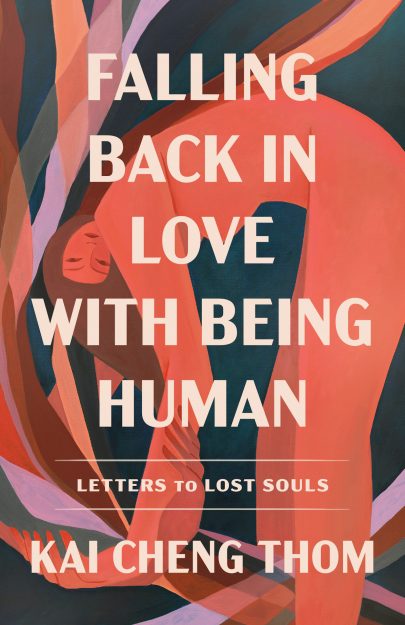
The result, Falling Back in Love with Being Human: Letters to Lost Souls, is Thom’s “act of prayer in a collapsing world”—a spell to summon the language to help her fall back in love with herself and the people around her. Tricycle sat down with Thom to discuss the Buddhist rituals that inform her work, how writing helps her to hold seemingly contradictory truths, and what it means to choose love as a daily practice.

Throughout the book, you explore what it means to love others and the parts of ourselves that we might consider monstrous, and you define a monster as a creature made of the truth that no one else dares to speak. How did you come to this notion of what it means to be a monster, and how have you reclaimed the monstrous? In the Western psychological tradition, Carl Jung wrote about the monsters within us, and he took a lot of inspiration from Buddhism and Hinduism. In thinking about the monstrous, I draw from Jung’s work, as well as different understandings of demons in Buddhist spirituality, especially practices of looking for the demons inside ourselves and learning to sit with them.

On a more personal level, I was raised evangelical Christian, and like many queer and trans people, I grew up being told that I was full of sin and that queer people were sinful monsters. Homophobia and transphobia were really present in my day-to-day. I was trying to repress the sin inside of me, and at the same time, I loved and longed for the sin outside me. I think this happens to us often: we desire the monstrous even as we fear it.

This can be complicated. Queerness is something beautiful that has been labeled as monstrous, but some things classified as monstrous are truly dangerous, like anger and rage. Our monsters need space to live and breathe, and if we’re not careful with them, they can result in harm and abuse.

You’ve mentioned your evangelical upbringing, and many of the letters in the book have a liturgical rhythm to them. How have you reclaimed liturgies and practices from a tradition that harmed you? There’s beauty in every monster and wisdom in every beast. The beast of evangelical Christianity is full of beauty, and its liturgy is something that I love, and Jesus is actually someone that I love. The part of Christianity that has stuck with me, beyond all of the pageantry, is the concept of grace. In Christianity, grace is the idea that we are all full of sin, but we can receive divine love anyway. I just love that. I don’t know if there is a God out there, but I think that human beings can offer one another divine love even in light of all that we’ve done wrong. I want to keep that idea around forever.

Are there any Buddhist rituals or practices that have particularly influenced you? There is a Tibetan Buddhist meditation about sitting and visualizing our demons and just being there and saying hello. That’s a practice that I will always love. But the Buddhist worldview that informs my life the most is the idea that paradox is where enlightenment is born—it’s not about resolving or conquering paradox by choosing one side; rather, it’s in the tension of more than one truth being true that a new wisdom arises. I think it’s so important to allow more than one thing to be true, especially when we’re talking about the nature of good and evil and people who may have harmed us.

Does writing help you to hold multiple truths? Definitely. In writing, I get to put both truths onto the page and then see if there is any new wisdom that arises, and then that wisdom becomes the basis of the poem. Language allows me to be in the chaos of competing truths and to give that chaos form, which is another paradox. Language gives form to the chaos of our internal experience and then somehow makes it more beautiful and bearable.

In the final letter, you write about your practice of choosing love. So what does it look like to choose love on a daily basis? There are many spiritual practices centered on choosing love, like lovingkindness meditation. But I think on the day-to-day level, choosing love is about resisting the spirit of panic and fear. One thing I’ve learned from my work in mediation and dialogue facilitation is that we need to be very careful about our tendency toward othering and monster-making. When we’re in groups, it can be so easy to get caught up in the spirit of panic. At the heart of panic is deep fear, and this fear can lead to toxic and possibly dangerous situations.

It can be so scary to live in the world. Choosing love is about choosing courage: the courage to take a relational risk that is meaningful. Maybe there’s someone in your community that you’re irritated by or that you disagree with. Actually choosing love might mean starting a conversation with them. I often think about the tragedies that occur when we say that our fear and our right to feel comfortable legitimizes or strengthens the call for the restriction on others’ freedom of others. Choosing love is about saying that it’s OK for me to be a little bit scared or uncomfortable so that we can all be free.

What are you hoping readers will take away from the book? I hope that people who read the book might feel inspired to put it into practice. One important lesson from Buddhist practice is that falling back in love doesn’t really work if we are trying to fall back in love with other people first. Generally, it’s more sustainable if we start with ourselves. If we just try to love the oppressor without loving ourselves first, then we run the risk of internalizing our own oppression or gaslighting ourselves. It must begin with self-love, falling back in love with ourselves, and then we can fall back in love with others. Of course, it’s not linear—it’s a cycle we go through over and over again.

A lot of people react to my work with fear, and I get that. But holding two truths is not just about holding someone else’s truth that you don’t like; it’s about knowing we also have a truth, and we get to hold that, too. It takes discipline and practice to be able to hold both truths without needing an answer—and without losing ourselves along the way.

kai cheng thom interview

Sarah Fleming is Tricycle‘s audio editor.
Kai Cheng Thom is a writer, performance artist, and community healer based in Toronto. Her most recent book is Falling Back in Love with Being Human: Love Letters to Lost Souls

The Terror Within

Below is an excerpt of the archived article from Tricycle: The Terror Within.

It reminds us to release our terrors and stop hiding from our fears.

Thank you, Zenju Earthlyn Manuel, for your words of compassion and wisdom.

For the full article see: tricycle.org/article/zenju-earthlyn-manuel-fear/

The Terror Within

Fear and anxiety builds up over a lifetime, but we can release our terrors moment by moment.

By Zenju Earthlyn Manuel 

“The stories my parents told of the South and race relations brought even more terror. And on an unforgettable night in 1966, right in Inglewood, California, a cross was burned on our front lawn. Why do I mention these things? I share them to demonstrate how fear and anxiety can accumulate over a lifespan. Most of us are unaware of the extent of the fear that we carry. Fear builds upon itself, or more precisely, fear creates more fear. As a result, our accumulated fear becomes a deep-seated terror that is challenging to uproot. If we view fear as terror—as a pervasive human condition rather than one bound to singular events, and incidents—we are more likely to feel the urgency of attending to it. We constantly speak of terrorism in the world, but we don’t necessarily acknowledge the terror that has invaded our inner worlds. Instead, we present ourselves as brave or courageous.

Many of us are afraid of fear, and afraid of admitting, even to ourselves, that we feel it. We push back the visceral body experience of fear so effectively we think we have eliminated the fear itself. However, if we look around or within, we find that fear is often hidden and masked: the person who appears to be the center of the party might well be a person who fears her own invisibility or rejection. Perhaps the person who conducts eloquent presentations at the workplace is in fact afraid of losing his job. The person that espouses to be an ally may be conquering some kind of fear within. The longer we mask our fear the more we experience the terror of our inauthenticity—perhaps creating chronic anxiety and despair. An ongoing red alert sounds off in response to threats that the terror we mask might be exposed. We might even say that the terror, as in the outer world, can become systemic within us. We become our own terrorist. 

We try many strategies to eliminate this feeling of terror by rearranging our external lives like furniture in our house. If I changed the way I look, I’d be less afraid; if I had more money to maintain a particular appearance, I’d be less afraid. If I live in a particular city or neighborhood, I’d be less afraid. But all of these strategies are bound to fail. At some point we need to confront the terror from within.

In my experience … first we need to unmask the fear; we need to let go of pretending we have no fear. If we pretend to be unafraid, we look as if we are disinterested or disconnected from everyone and everything.

Once I was getting ready for a television interview, the very first of many about a book I had just published in 1998. On my way to the studio, fear rode my back like a monkey. Thoughts ran rapid, and each one amounted to “I am not enough.” In the guest room, I met a famous civil rights attorney waiting for his time to be interviewed. He smiled and assured me all would go well. Clearly, he had seen my lack of breath and stiff movements. My terror was visible, and I was embarrassed. I realized in that moment that for most my life I had made great efforts at appearing calm while being completely terrified. Luckily, it turned out that once the cameras began to roll and my interview started, I found myself speaking from the heart about what was important to me; the adrenaline subsided and I was no longer afraid. Of course, when the cameras were turned off, the fear resumed. This time, it was a different fear—the fear of what I had said instead of what I was going to say.

How can we continue to release terror? Surely, it doesn’t work to try to unload the entire mass of fear inside at once. We can release terror moment by moment, bit by bit. In meditation we learn to cultivate and stretch the moments of being unencumbered, those places of non-suffering. We can experience the state of non-suffering with each breath, moment by moment, breathing in and breathing out. In meditation we feel the fear without having to do anything about it in the moment. We simply breathe. There is no past or future. We are not harming or being harmed. The terror within is being attended to in a gentle way. There may be tears or trembling. We are alive.

Buddha taught that there are five primary mental conditions that can impede our practice of meditation or mindfulness. My study of these conditions shed light on unacknowledged fear in my life. I could see that fear is embedded within each hindrance: 

  1. Sensual desire: Living with parents who were considered poor, I promised myself never to be poor. Therefore, my intense desire for material gain was expressed at the expense of my true happiness.  The fear of “not having,” and striving to “have,” fueled an illusionary fear of never having a satisfied life. The very quest for riches contributed to the inner poverty and loneliness that terrified me. In meditation, both the hindrance of desire and the attendant dissatisfaction are easily accessible. With a single breath, we can notice the fear that arises with sensual desire. On the out breath, such a fear can be released with care and gentleness. Each breath decreases the intensity of the fear.
  2. Ill will: Most of my life, the exclusion based on race, gender, and sexual orientation has brought forth rage. To say the least, I have had an enormous share of not being the chosen one. For many years I found it much easier to be enraged than to go beneath the rage to the fear that I would not ever belong or fit in with others in this society. A rage fueled by my very embodiment separated me from others, causing a cycle of more fear, alienation, and rage. Through paying attention to the breath in meditation, I was able to pause the cycle.
  3. Sloth and torpor (lifelessness): In a dull-minded state it is almost impossible to detect fear enmeshed with the dullness. Within the cloud of what Buddhists call sloth and torpor there is often the fear of taking action or the fear of not succeeding if one did take action. For years, I regretfully worked for others for fear of not being capable of manifesting my own dreams and visions. I remained on jobs while experiencing boredom and feeling constantly “tired.” In the slowing down and stillness of meditation, I saw my unacknowledged fear. I could see that I was afraid that others would not be interested in what I had to offer. In breathing in and out, I could begin to release the illusion that I was an inferior being (or superior one for that matter). In such a letting go of illusion, the entangled fear inside my lifelessness was released giving way to enthusiasm and clear visioning for my life.
  4. Restlessness and remorse: When I am restless, I meet life fearing that there is constant danger ahead, as if everything is a crisis or something is happening out of my control. Fear is enmeshed with restlessness and remorse. If I act on the restlessness, then remorse—compounded by regret and self-loathing—is guaranteed. When I’ve spoken from such restlessness, anxious to prevent some imagined harm, I’ve said words that have sometimes harmed others—I’ve found that I cannot be both restless and skillful. In meditation, we are invited to still the waters of our lives. We quiet the mind, releasing conjured stories and fantasies. When the waters are still long enough, we see our reflection. Once I’ve seen my restless and remorseful self in meditation, I can begin to release the restlessness and entangled fear, lessening the likelihood of later remorse.
  5. Doubt: Doubt is a distrust of what we sense in life. Distrust creates fear. … Eventually, I noticed the liberation occurring in my life and the fear of my new path washed away. Once I understood and trusted the teachings, I had something on which to build conviction—something to stand on during life’s inevitable waves of fear.  

While working with the hindrances, we may not eliminate fear. But it is possible to reduce fear by first recognizing it as part of the make-up of living beings. In my own life, once I understood that it was okay to be afraid, the healing began. The wisdom in my bones came alive and I became aware in the midst of fear and anxiety that the mind and body were begging to purge the terror within.

Meditation assists me in seeing the roots of the emotions, and that all emotions are old. When I notice terror rising to the surface, I note, “I am in the past.” Then, I ask, “What is going on here, right now?” When I am angry or enraged, I know to say, “I am terrified of something.” I refrain from being ashamed of experiencing these emotions. Only through acknowledging and releasing blind emotions can I experience the inner unencumbered and harmonious being that is always present despite the suffering.

We cannot fully practice any call for liberation without our lives being fully exposed. There is no hiding.” 

Learn more from Zenju in her Dharma Talk: It’s Beyond Me: Freedom from Managing Your Life.

Reprinted by permission from Inquiring Mind, Fall 2012 (Vol. 29 #1). © 2012 by Inquiring Mind.

[This story was first published in 2015]

Zenju Earthlyn Manuel is a Zen priest, author, and artist based in New Mexico. Her most recent book is The Shamanic Bones of Zen: Revealing the Ancestral Spirit and Mystical Heart of a Sacred Tradition.

We Will Not Cancel Us

Today’s post from the Center for Action and Contemplation includes an excerpt from adrienne maree brown’s book We Will Not Cancel Us: And Other Dreams of Transformative Justice (Chico, CA: AK Press, 2020), 76–77.

There’s great compassion and wisdom in her words below. May we not cancel ourselves and one another. …

Writer and activist adrienne maree brown normalizes making mistakes and working towards accountability instead of “canceling” others:  

“We will tell each other we hurt people, and who. We will tell each other why, and who hurt us and how. We will tell each other what we will do to heal ourselves and heal the wounds in our wake. We will be accountable, rigorous in our accountability, all of us unlearning, all of us crawling towards dignity. We will learn to set and hold boundaries, communicate without manipulation, give and receive consent, ask for help, love our shadows without letting them rule our relationships, and remember we are of earth, of miracle, of a whole, of a massive river—love, life, life, love.  

We all have work to do. Our work is in the light. We have no perfect moral ground to stand on, shaped as we are by this toxic complex time. We may not have time, or emotional capacity, to walk each path together. We are all flailing in the unknown at the moment, terrified, stretched beyond ourselves, ashamed, realizing the future is in our hands. We must all do our work. Be accountable and go heal, simultaneously, continuously. It’s never too late. 

We will not cancel us. If we give up this strategy [of canceling], we will learn together the other strategies that will ultimately help us break these cycles, liberate future generations from the burden of our shared and private pain, leaving nothing unspeakable in our bones, no shame in our dirt.  

Each of us is precious. We, together, must break every cycle that makes us forget this.”

For the full post see: cac.org/daily-meditations/confession-not-cancellation/

Light by Which We See

Here’s a message that’s very important to me and hopefully helpful to you or someone you know:

  • “Begin honest shadowboxing” even if it initially “make us miserable.”
  • Step 4 of the Twelve Steps can lead to “awareness and compassion” for self and others, and
  • Avoid “vengeance on the self.”

Below is today’s meditation from Richard Rohr and the Center for Action and Contemplation from Richard’s book Breathing Under Water: Spirituality and the Twelve Steps


store.cac.org/products/breathing-under-water-tenth-anniversary-edition

Light by Which We See 

Thursday, July 18, 2024

Made a searching and fearless moral inventory of ourselves.
Step 4 of the Twelve Steps  

Father Richard helps us understand that a moral inventory or “shadow work” is a necessary part of the spiritual life: 

I am convinced that some people are driven to addictions to quiet their constant inner critic, but it only gives them another thing to hate about themselves. What a vicious cycle! Moral scrutiny is not to discover how good or bad we are and regain some moral high ground, but to begin some honest “shadowboxing” which is at the heart of all spiritual awakening. Yes, “the truth will set you free” as Jesus says (John 8:32), but first it tends to make us miserable.  

People only come to deeper consciousness by intentional struggles with contradictions, conflicts, inconsistencies, inner confusions, and what the biblical tradition calls “sin” or moral failure. The goal is actually not the perfect avoidance of all sin, which isn’t possible anyway (see 1 John 1:8–9; Romans 5:12), but the struggle itself, and the encounter and wisdom that come from it. Law and failure create the foil, which creates the conflict, which leads to a very different kind of victory than any of us expected. Not perfect moral victory, not moral superiority, but luminosity of awareness and compassion for the world. After thirty years in “perfect” recovery, alcoholics are still imperfect and still alcoholic, and they know it, which makes all the difference. 

So shadowboxing, a “searching and fearless moral inventory,” is for the sake of truth, humility, and generosity of spirit, not vengeance on the self or some kind of complete victory. And while seeing and naming our actual faults allows us to grow and change, it may be experienced as an even greater gift by those around us.  

Our shadow self is not our evil self. It is just that part of us that we do not want to see, our unacceptable self by reason of nature, nurture, and choice. That bit of denial is what allows us to do evil and cruel things—without recognizing them as evil or cruel. Ongoing shadowboxing is absolutely necessary because we all have a well-denied shadow self. We all have that which we cannot see, will not see, dare not see. It would destroy our public and personal self-image.  

Jesus says, “Take the log out of your own eye first, and then you will see clearly enough to take the splinter out of your brother’s or sister’s eye” (Matthew 7:5). Step 4 is about dealing with our own log first, so we can stop blaming, accusing, and denying, and thus displacing the problem. It’s about seeing truthfully and fully. Note that Jesus does not just praise good moral behavior or criticize immoral behavior, as we might expect. Instead, he talks about something caught in the eye. He knows that if we see rightly, the actions and behavior will eventually take care of themselves. 

Reference:  
Selected from Richard Rohr, Breathing under Water: Spirituality and the Twelve Steps, 10th anniv. ed.(Cincinnati, OH: Franciscan Media, 2011,2021), 29, 30–31, 31–32. 

The Grace of Powerlessness

Richard Rohr and Rami Shapiro offer more inverted wisdom about radical freedom and addiction recovery below.

The Grace of Powerlessness

cac.org/daily-meditations/the-grace-of-powerlessness/

Monday, July 15, 2024

I cannot understand my own behavior. I fail to carry out the very things I want to do and find myself doing the very things I hate … for although the will to do what is good is in me, the power to do it is not. —Romans 7:15, 18 

Admitted we were powerless over alcohol—that our lives had become unmanageable.
—Step 1 of the Twelve Steps 

Father Richard affirms the essential and difficult task of admitting our own powerlessness: 

As many teachers of the Twelve Steps have said, the first Step is probably the hardest, most denied, and most avoided. Letting go isn’t in anybody’s program for happiness, and yet all mature spirituality is about letting go and unlearning.  

Jesus used the metaphors of a “grain of wheat” (John 12:24) or a “branch cut off from the vine” (John 15:2) to describe the arrogant ego. Paul used the unfortunate word “flesh,” which made most people think he was talking about the body. Yet both Jesus and Paul were pointing to the isolated and protected small self, and both said it has to go. Its concerns are too small and too selfish. An ego response is always an inadequate or even wrong response to the moment. It will not deepen or broaden life, love, or inner peace. Since it has no inner substance, our ego self is always attached to mere externals. The ego defines itself by its attachments and revulsions. The soul does not attach, nor does it hate; it desires and loves and lets go.  

What the ego hates more than anything else is to change—even when the present situation isn’t working or is horrible. Instead, we do more and more of what does not work. The reason we do anything one more time is because the last time did not really satisfy us deeply. As English poet W. H. Auden wrote, “We would rather be ruined than changed, / We would rather die in our dread / Than climb the cross of the moment / And let our illusions die.” [1]  

Rabbi Rami Shapiro names the paradox of powerlessness and surrender to God: 

The fundamental and paradoxical premise of Twelve Step recovery as I experience it is this: The more clearly you realize your lack of control, the more powerless you discover yourself to be… [and] the more natural it is for you to be surrendered to God. The more surrendered to God you become, the less you struggle against the natural flow of life. The less you struggle against the flow of life, the freer you become. Radical powerlessness is radical freedom, liberating you from the need to control the ocean of life and freeing you to learn how best to navigate it.…  

We are all addicted to control, and it is to this greater addiction that I wish to speak. The deepest truth of Step 1 requires us to admit that we are powerless over our lives, and that life itself is unmanageable. [2] 

References:  
[1] Selected from Richard Rohr, Breathing under Water: Spirituality and the Twelve Steps, 10th anniv. ed.(Cincinnati, OH: Franciscan Media, 2011,2021), 5–6; W. H. Auden, The Age of Anxiety: A Baroque Eclogue (Princeton, NJ: Princeton University Press, 2011), 105. 

[2] Rami Shapiro, Recovery, the Sacred Art: The Twelve Steps as Spiritual Practice (Woodstock, VT: Skylight Paths, 2009), 3, 6. 

Every Idle Word

The Third Zen Patriarch, Seng-Ts’an said,

“Word! Words! The Way is beyond language, for in it there is no yesterday, no tomorrow, no today.” from the Hsin-Hsin Ming translated by Richard B. Clarke (c) 1973.

Malcolm Guite, in the link provided below, gives us a beautiful poem on what can happen, what might happen if we use our words recklessly.

May our words be truthful and kind.

A Counterintuitive Wisdom

What’s your addiction?

Anne Wilson Schaef introduced the concept of societal addiction in her book When Society Becomes an Addict first published in 1987. Then came Richard Rohr in his book Breathing under Water: Spirituality and the Twelve Steps first published in 2011. Together they help us understand how we can all benefit from identifying and addressing our addictions.

Check out their book covers and excerpts from today’s daily meditation from the Center for Action and Contemplation below.

http://www.goodreads.com/book/show/1431703.When_Society_Becomes_an_Addict

http://www.amazon.com/Breathing-Under-Water-Spirituality-Twelve/dp/1616361573

Richard Rohr’s Daily Meditations from the Center for Action and Contemplation

 
A Counterintuitive Wisdom 

I am convinced that, on a practical level, the gospel message of Jesus and the Twelve Step message of Bill Wilson are largely the same message.

Here are four assumptions that I am making about addiction: 

We are all addicts.

“Stinking thinking” is the universal addiction.

All societies are addicted to themselves and create deep codependency. 

Some form of alternative consciousness is the only freedom from the addicted self and from cultural lies.

Let me sum up, then. These are the foundational ways that I believe Jesus and the Twelve Steps of AA are saying the same thing but with different vocabulary:  

We suffer to get well.  
We surrender to win.  
We die to live.  
We give it away to keep it.  

We are all spiritually powerless, not just those who are physically addicted to a substance. Alcoholics simply have their powerlessness visible for all to see. The rest of us disguise it in different ways and overcompensate for our more hidden and subtle addictions and attachments. 


Read this meditation in full at cac.org/daily-meditations/a-counterintuitive-wisdom/  
 
Selected from Richard Rohr, introduction to Breathing under Water: Spirituality and the Twelve Steps, 10th anniv. ed. (Cincinnati, OH: Franciscan Media, 2011, 2021), xix, xxii–xxiii, xxviii, xxix–xxx, xxv.  

Ox-herding 7

“In the long run, both a peaceful mind and harmonious behavior are essential. Cultivating the mind will eventually lead to cultivating ethical behavior, and cultivating ethical behavior will support cultivating the mind. This is likely to be an iterative process rather than first one thing then the other.”

Lynn J Kelly does it again!

Check out the link below for another informative and provocative post.

It’s All How You Look at It

Converting “wounds into a call for deeper understanding” is another way of reframing our lives, finding a cloud’s silver lining or a pony in the horseshit, and learning from our suffering how to love anew.

Below are excerpts from today’s meditation from Henri Nouwen. May we all find comfort and wisdom today.


It’s All How You Look at It

Our great temptations are boredom and bitterness.

we are tempted to give in to a paralyzing boredom or to strike back in destructive bitterness.

turning wounds into a call for deeper understanding, and sadness into a birthplace of joy.

Then Job replied to the Lord, “I know that you can do all things; no plan of yours can be thwarted. You asked, ‘Who is this that obscures my counsel without knowledge?’ Surely, I spoke of things I did not understand, things too wonderful for me to know.’ “

JOB 42:1-3 (NIV)

Authentic Experience and Transformation

“Talk is cheap” and “what you actually do” is far more telling than the words you speak.

Today’s message from Richard Rohr and the Center for Action and Contemplation reminds us that the proof of our credibility lies in our actions more than our words. We make a far greater impact when our words and actions send a congruent message.

cac.org/daily-meditations/authentic-experience-and-transformation/

Authentic Experience and Transformation (excerpts)
 
Father Richard Rohr names transformation as the fruit of an authentic spiritual path:  

I’ve been trying to facilitate transformation—conversion, change of consciousness, change of mind. The transformed mind lets us see how we process reality. It allows us to step back from our own personal processor so we can be more honest about what is really happening.

Transformation isn’t merely a change of morals, group affiliation, or belief system—although it might lead to that—but a change at the very heart of the way we receive and pass on each moment.

Authentic (spiritual) experience always leads toward service, toward the depths, the margins, toward people suffering or considered outsiders.

Our motivation foundationally changes from security, status, and control to generosity, humility, and cooperation. [1] 

[1] Adapted from Richard Rohr, Authentic Transformation (Albuquerque, NM: Center for Action and Contemplation, 2016), CD. No longer available.