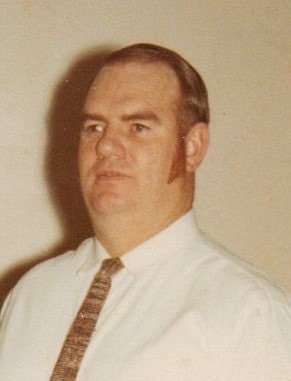
I was fortunate to have been accepted as a son-in-law by two men. Both attended the wedding ceremonies that conferred my legal status with their daughter. Both co-signed significant bank loans to support major investments that financial institutions would not approve without their signatures. Both were avid anglers who taught me how to fish in their favorite lakes. Both were golfers who smiled as I hacked my way on their favorite courses.
Both mean more to me than I can express today. I am grateful for their time in my life.
Today is the Islamic New Year. Happy New Year to the faithful!
History tells us that it was in the year 622 AD, the Prophet Muhammad chose to follow the lunar year calendar versus the solar year calendar. BTW: the lunar calendar is used across the world including theChinese calendar, Islamic Calendar, Native American, pre-historic English, Pagan, Celtic, and Indigenous Australians amongst many others. What varies is which lunar cycle is chosen to start the new year.
So, what’s the difference between the lunar year and solar year?
The lunar year follows twelve cycles of the Earth’s Moon orbit which collectively is 354 days total or eleven to twelve days shorter than the annual solar orbit of 365 days a year. Actually, the solar year is 365 days 5 hours 48 minutes 46 seconds which is why we have a leap day added every four years.
But wait a minute, doesn’t the Sun orbit the Milky Way galaxy? Yes, it does. The galactic year, also known as a cosmic year, is the duration of time required for the Sun to orbit once around the center of the Milky Way Galaxy. One galactic year is230 million Earth years.
Here is today’s haiku: What Year(s) Do You Follow?
Calendars focus
on the time most important
to you and your view
Note: some people follow all three calendars: lunar, solar and cosmic.
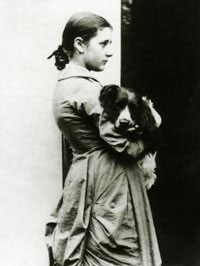
“Beatrix Potter, born on July 28, 1866, was an English children’s book writer who developed iconic animal characters such as Peter Rabbit, Jeremy Fisher, Jemima Puddle-Duck, Mrs. Tiggy-Winkle, and many more.” An accomplished artist, writer, landowner and sheep breeder. See: https://nationaltoday.com/birthday/beatrix-potter/
Preferring to be called Bernard Shaw, the celebrated and controversial Irish playwright, social activist and theatre critic lived for 94 years before dying in 1950. He won the Nobel Prize for Literature in 1925 and an Academy Award in 1938.
Loved and hated, Shaw has been considered second only to Shakespeare among British dramatists.
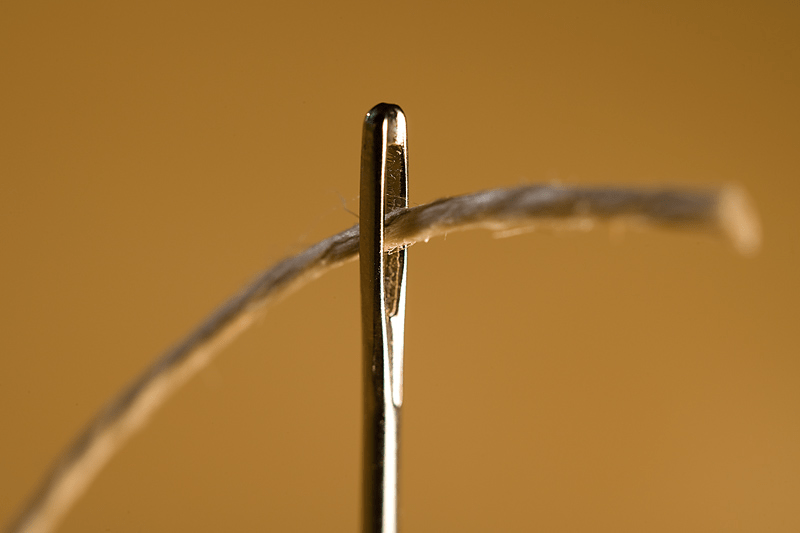
July 25 is National Thread the Needle Day. The saying “threading the needle” means different things in different contexts. Whether it’s billiards, football, golf, or politics, sewing or yoga; the general implication is the challenge required to navigating a narrow passageway.
Today is the 205th day of the year; 160 days remain until the end of the year. As the Navajo Saying above reminds us, may we walk in beauty today and in the days ahead.
A man and a woman sit near each other, and they do not long at this moment to be older, or younger, nor born in any other nation, or time, or place. They are content to be where they are, talking or not-talking. Their breaths together feed someone whom we do not know. The man sees the way his fingers move; he sees her hands close around a book she hands to him. They obey a third body that they share in common. They have made a promise to love that body. Age may come, parting may come, death will come. A man and a woman sit near each other; as they breathe they feed someone we do not know, someone we know of, whom we have never seen. –Robert Bly
Ernest Hemingway born July 21, 1899 and died July 2, 1961 – photo from The Toronto Star
Ranked among the top 5 authors of the 20th Century, Ernest Hemingway was known for his terse writing style which he called his iceberg theory. Best known works include A Farewell to Arms (1929), To Have and Have Not (1937), For Whom the Bell Tolls (1940) and The Old Man and the Sea (1952). He received the 1954 Nobel Prize in Literature.
Here is today’s haiku In Memory of Ernest Hemingway














 Life Matters