Tag Archives: Tricycle

Necessary Doubt

“An open mind is a strong mind … our doubting and questioning spur us on and keep us intellectually alert and can help us develop confidence in our innate qualities.”

Senior teacher, Jetsunma Tenzin Palmo encourages us to live our lives with a question mark and to not settle for blind faith. Instead, we can experience our faith firsthand and not be content with what other people think or describe.

I hope you enjoy excerpts from the provocative Tricycle article below,

Necessary Doubt

Ani Tenzin Palmo teaches that a questioning mind is essential to the Buddhist path.

By Jetsunma Tenzin Palmo SUMMER 2002

we have a tendency to regard doubt as something shameful, almost as an enemy. We feel that if we have doubts, it means that we are denying the teachings and that we should really have unquestioning faith.

Referring to the dharma, the Buddha said, “come and see,” or “come and investigate,” not “come and believe.”

A famous sutra tells of a group of villagers who came to visit the Buddha. They said to him, “Many teachers come through here. Each has his own doctrine. Each claims that his particular philosophy and practice is the truth, but they all contradict each other. Now we’re totally confused. What do we do?” Doesn’t this story sound modern? Yet this was twenty-five hundred years ago. Same problems.

The Buddha replied, “You have a right to be confused. This is a confusing situation. Do not take anything on trust merely because it has passed down through tradition, or because your teachers say it, or because your elders have taught you, or because it’s written in some famous scripture. When you have seen it and experienced it for yourself to be right and true, then you can accept it.”

We need to be patient. We should not expect to understand the profound expositions of an enlightened mind in our first encounter with them.

Our doubting and questioning spur us on and keep us intellectually alert.

instead of suppressing the questions, I brought up the things I questioned and examined them one by one. When I came out the other end, I realized that it simply didn’t matter. We can be quite happy with a question mark.

We need to know what great teachers in the past have said, because they have been there ahead of us and have laid down maps for us to follow.

Following the path is about experiencing it for ourselves. It’s not taking on what other people have described. It’s not based on blind faith.

Jetsunma Tenzin Palmo is the current president of the Sakyadhita International Association of Buddhist Women. She is one of the first Westerners to be ordained as a Buddhist nun and the founder of the Dongyu Gatsal Ling Nunnery in India.
Your Life Is a Mirror

What if every word you said, every gesture you made, revealed your true intentions? The Tricycle article reposted below says the answer to that question is an important step in our own personal development.

This somewhat lengthy article is well worth your time if you’re one of those people prone to self-deception. I know that’s something I need to work on. How about you?

————————————————–

Your Life Is a Mirror

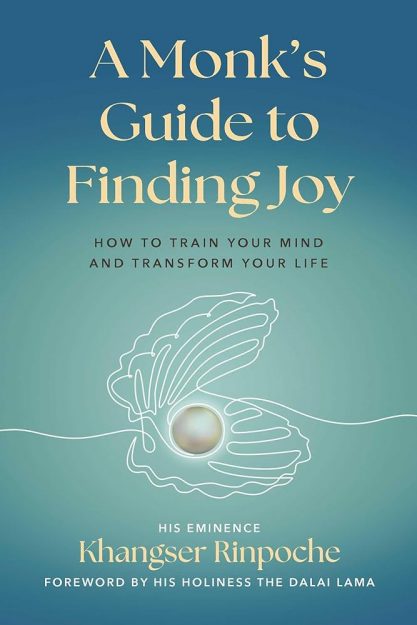
Venerated lama and spiritual teacher Khangser Rinpoche expounds on how to break free of the mind’s habitual tendency towards self-deception.

By Khangser Rinpoche  JUN 21, 2024

Your life is a mirror reflecting the state of your inner world.

To see clearly you must first polish your mirror to clear it of what distorts the truth: your obscuring self-deception.

no longer looking at the reflection in the bathroom mirror, he was looking at himself in a different way: inner reflection.

Self-improvement starts with breaking self-deception and learning to face the truth. You must honestly witness, then evaluate, how your mental, emotional, and behavioral actions obscure the truth.

It’s much easier for you to point out areas where other people can improve rather than seeing your own flaws. This is how it usually is. You have difficulty looking at your imperfections, so you tell yourself lies,

Start by Being Honest

When you encounter a situation where there is no way for you to tell the truth, it is better to just stay silent.

Even if you can’t eliminate lies completely, at least try to reduce their frequency.

Break Subconscious Habits

Your past shapes your perception of the present.

You are not who you think you are—you’ve formed a lot of subconscious habits over the years that are probably unknown to you. That’s why you need the input of those you trust, and you need to pay close attention to your thoughts, feelings, and behavior. If you can’t see your flaws, there is no self-improvement. 

Keep an Open Mind

Your ego has a way of obscuring areas you struggle with, so you must make certain to consider other people’s feedback about you. It’s not easy to see your own issues, you need a good, honest person to tell you about them.

You are not who you think you are

When you receive unpleasant feedback, try to resist the impulse to defend yourself with lies or get angry. Don’t dirty up your mirror with denial. Self-improvement is one of the most important aspects of your life, but to do it properly you need a clear mirror—you need honest feedback. 

Study Cause and Effect

We drum up supernatural ways of eliminating our issues instead of taking personal accountability for them.

Blame sullies your mirror of self-reflection. Instead, focus on accepting the reality of the problem and do what you can realistically do now.

Every kind of suffering can be remedied. To do that you must first clearly understand that there is no such thing as causeless suffering. When you know that wholesome activities have beneficial effects and unwholesome actions have unbeneficial results, you can then choose the best course of action for yourself. This means you have a measure of control over your destiny. 

Examine Your Motives

getting to the truth is tricky

Honesty is a matter of motive

Which is more honest: truth in words or truth in motive? When you want to give up self-deception in favor of self-knowledge, consider the reason why you’re doing what you’re doing.

Remember that life is like a mirror: everything you perceive reflects your inner world. Cleaning your dirty mirror of distorting smudges means clearing self-deception and coming closer to the truth.

This article was excerpted and adapted from A Monk’s Guide to Finding Joy: How to Train Your Mind and Transform Your Life by Khangser Rinpoche, © Wisdom Publications July 2, 2024. Reprinted in arrangement with Wisdom Publications.

Everyone Thinks They’re an Artist

Finding your True Self through ceramics, or any other art form, takes time and focus and diligence and acceptance.

Below are excerpts from another Tricycle article by Christina Moon. Here’s hoping you also are inspired by her words and example.

http://www.cristinamoon.com/about

“Everyone Thinks They’re an Artist”

Ceramics, Zen, and the true purpose of Zen in the arts (and the arts in Zen) By Reverend Cristina Moon APR 25, 2024

The thing about approaching the arts through Zen is that, by looking at any art as more than just an art but as a Way, you start to see how the state of your mind, body, and spirit is reflected in everything you do. The product of your art is a snapshot of the state of your mind in the moments of creation. 

All of the rich and varied feedback that’s a part of Zen training told me the same thing. Because of my habits and attachments, I was far from my True Self. I was already me, of course, and perfectly so, but also just a little off. 

Nakazato Sensei likes to chide other potters, saying, “Everyone thinks they’re an artist.” Instead of trying to make art, he says, we should just make things that are useful. And we should make lots of them.

I can see clearly that my sensitivity and strength in handling the clay has grown.

As time passes, I continue to see myself reflected back in these small plates, which is to say that they are more straight, upright, sturdy, and striking—but still have a lot of room for improvement.

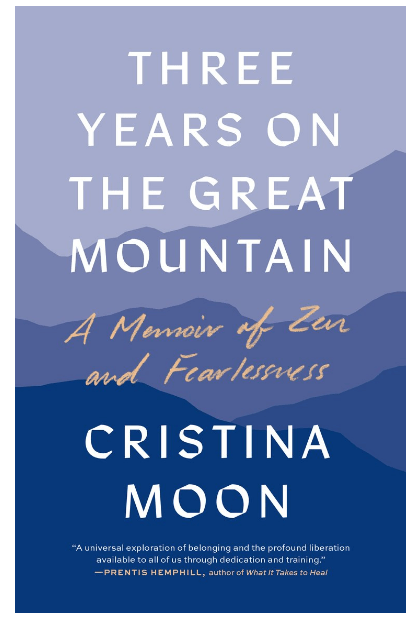
Reverend Cristina Moon lives and trains at Daihonzan Chozen-ji in Honolulu. Her first book, Three Years on the Great Mountain: A Memoir of Zen and Fearlessness, about her first three years living and training at Chozen-ji, is being published by Shambhala Publications on June 18, 2024. Available for pre-order now. Moon’s writings can be found at http://www.cristinamoon.com

http://www.cristinamoon.com/book-event

Stop Worring About Results

‘Let God Paint the Windows’

How meditation teacher Martin Aylward learned to stop worrying about the fruits of his actions and instead pay attention to the care with which he engaged in them. By Martin Aylward FEB 01, 2022

When I was 19 years old, I traveled to India with a one-way ticket and no luggage. At that point, I hadn’t learned how to be a human yet, let alone an adult human, and honestly, I didn’t really want to be a human—I wanted to be some kind of spiritual being. After completing my first ten-day meditation course in Dharamsala, I fell in love with meditation, and in a characteristically grandiose adolescent way, I decided to head off to the caves. After all, that was what yogis did (or so I believed). I walked out of Dharamsala straight up into the hills. I was terrified. I didn’t have any food or blankets, and I had no idea what I was doing, but I thought that was the whole point.

Luckily, I ran into an old sadhu, who asked me where I was going. I told him, “I’m off to the cave to meditate.” He rolled his eyes and said, “Why don’t you go across that valley and up that path? You’ll find this one Baba living there. He has a little place. Maybe you can stay with him.”

I went across the valley and up the path to ask the Baba if I could stay with him. He told me I could sleep there for three nights, and I ended up staying for most of the next three years. He never actually instructed me in meditation—he knew I had taken a meditation course, so he said I could keep practicing as I had been. In fact, he never tried to teach me anything at all, but I learned a lot just by being in his presence.

Mindfulness can sound like a technique, which is one reason I prefer to use the term “presence.” I learned about presence from Babaji by osmosis, simply witnessing the way he made tea, the way he moved a piece of firewood around, the way he undid the lid of a jar, or the way we washed pots together. It was like everything was worthy of attention. Everything was worthy of care. And in my scattered, adolescent mind full of overly complicated ideas about meditation, it was incredibly relieving and educational to be bringing my practice into the way I unscrewed the tea lid. On the one hand, I felt very clumsy and awkward next to Babaji, but on the other, I also felt like he was relentlessly kind and forgiving and generous-spirited to me, and that helped invite me to become attentive in a quiet way.

One day, when I was living with Babaji, I decided to repaint the ashram windows. I was very enthusiastic about it and worked eagerly. After the first day, Babaji said to me, “Your problem is you’re trying to paint the windows. Just stop. Just take care of the brushstrokes, and let God paint the windows. It’s not your responsibility. You just take care.” Then I started to notice the smell and the way the light caught the paint. I began to give myself to the process.

After four or five days of sanding and painting, as I stood back and saw the red shutters on the windows of the ashram, I was in awe. Sure enough, I had taken care of the brushstrokes, and God had painted the windows. Babaji taught me how to let go of worrying about the fruits of my actions and instead pay attention to the quality of care with which I engaged in them. This attention is just another word for love. You could say, “I’m giving attention to my breath,” or “I’m giving attention to painting the windows,” but it’s equally, “I’m learning how to love this in-breath, learning how to love this brushstroke.” The practice of attention is learning how to love.

Excerpted from “Coming Back to Embodiment,” an episode of Life As It Is, Tricycle’s podcast with James Shaheen and Sharon Salzberg.

Read an excerpt from Aylward’s recent bookAwake Where You Arehere.

Martin Aylward is a co-founding teacher of the Tapovan Dharma Community at Le Moulin de Chaves monastery in southwestern France.

Dec 12 – Learning to Love the Monstrous in Ourselves

tricycle.org/article/kai-cheng-thom-interview/

Tricycle magazine offers an insightful and provocative article on Kai Cheng Thom and her book Falling Back In Love With Being Human (c) 2023.

http://www.amazon.com/Falling-Back-Love-Being-Human

Highlights from the article/interview by Sarah Fleming include:

“I needed to know that I could love them,” she writes, “because that meant I could still love myself—as hopeless and lost as I had become.”

We’re less inclined to love one another because we’re so full of anger and hatred.

I don’t know if there is a God out there, but I think that human beings can offer one another divine love even in light of all that we’ve done wrong. I want to keep that idea around forever.

enlightenment is born—it’s not about resolving or conquering paradox by choosing one side; rather, it’s in the tension of more than one truth being true that a new wisdom arises. I think it’s so important to allow more than one thing to be true, especially when we’re talking about the nature of good and evil and people who may have harmed us

on the day-to-day level, choosing love is about resisting the spirit of panic and fear

Choosing love is about choosing courage: the courage to take a relational risk that is meaningful.

One important lesson from Buddhist practice is that falling back in love doesn’t really work if we are trying to fall back in love with other people first. Generally, it’s more sustainable if we start with ourselves. If we just try to love the oppressor without loving ourselves first, then we run the risk of internalizing our own oppression or gaslighting ourselves. It must begin with self-love, falling back in love with ourselves, and then we can fall back in love with others. Of course, it’s not linear—it’s a cycle we go through over and over again.”


Check out the full interview and the book at the links offered above.