Tag Archives: writing

Bearded Man On A Bus – New Book Recommendation

http://www.amazon.com/Bearded-Man-Bus-Immigrants-Privilege/

A friend and Buddhist mentor, Daniel L. Smith, has written a new book: Bearded Man On A Bus and it’s the perfect book for me right now as I live out my new life as a recovering romantic. His book is filled with wandering wisdom and gave me some fresh insights for my life journey. Specifically:

  • “Trailways red and white – and – lost all over” p.9
  • “Backwoods Alabama – born here, raised here, still feels she doesn’t belong.” p.31
  • “Wondering if enough is sufficient, if enough is in the right direction, if enough means loving just one person, enough? P.41
  • “Wrens migrating after the storm, down from Ontario for the summer; unaware of the tumult a world away.” p.75
  • “She sits in front of her all too honest mirror, as a thousand times before, one thought away from last week’s fantasy, another from this week’s fleeting memory, just one ahead of the nothingness, she fears.” p.82
  • “Tonight you end right quick, right here at table, Momma stirs her sauce with a long knife.” p.88
  • “Toils and tears of some creator we see as absent, but intuit in the present moment, moss underfoot or sandy shore, we find forgiveness in the sky. p.92
  • “Yet, it’s communion we’re really after, isn’t it? Not conversation, not community, but true communion at source – all light and insight.” p.99
  • “It is difficult, this staying in tenderness, this wanting to be” p.102
  • “What follows in the darkness, all a fantasy anyway, there’s not much real about any of it, but she, she goes on and on, almost as if there is no beginning and no end” p.107

My thanks to author Daniel L. Smith who approved the sharing of his words above. If you’d like to read more of his “wanderer’s spiritual journey … a collection (of) hopeful poems, possibly, because life continues, nothing is permanent, and breathing is such a fundamental right to exploring the conditions necessary for happiness in all humans, regardless of origin, journey, or destination.” check out his book available on Amazon.

Impermanent & Irreplaceable? New Tricycle Article Highlights

There’s a new Tricycle article titled Education and Work that call outs the false messages we receive from both educations systems and corporate bureaucracy. Here are a few of the very provocative points made:

  • Education turns human beings into commodities.
  • People should exist not as interchangeable parts of an economic machine
  • When people are alone, they’re not so bad. However, when a group forms, paralysis occurs; people become totally foolish and cannot distinguish good from bad. 
  • People live relying on groups and organizations, drifting along in them like floating weeds without roots.
  • “An organization man is an employee, especially of a large corporation, who has adapted so completely to what is expected in attitudes, ideas, behavior, etc., by the corporation as to have lost a sense of personal identity or independence.”
  • Suffering arises from our narrow concept of I, combined with our insatiable greed.

Check out the full article at the link provided below. I’d enjoy hearing your thoughts on this assessments of modern-day society.

Memoir Analysis #5: Harrison Scott Key

http://www.amazon.com/How-Stay-Married-Insane-Story/

Harrison Scott Key, winner of the Thurber Prize for American Humor, tells the shocking, “shot through with sharp humor” (The Washington Post), spiritually profound story of his journey through hell and back when infidelity threatens his marriage.Amazon.com summary.

Harrison Scott Key delivers another comic-tragedy and this is the most revealing of all. Another heart-wrenching memoir that addresses all the pain of betrayal and the struggle to survive.

Here are a few quick observations:

  • “Do I really care about three hundred pages on some stranger’s marriage? It turns out I did … There is an energy to HOW TO STAY MARRIED that I haven’t previously experienced in a memoir … Shot through with sharp humor” Jane Smiley, The Washington Post
  • Approximately 90k words spread over 38 chapters … just when you think it’s over, the pain and love and pain and forgiveness start all over again
  • “I read Harrison Scott Key’s hilarious, raw, bracing, profound memoir and have been recommending it to everyone I know. Read it! I’ve never read anything else quite like it.” Eleanor Barkhorn, The Atlantic

Key’s memoir of infidelity and forgiveness are presented in a realistic, painful yet hopeful way … and I speak with some experience on this topic. Yes, there’s some “god talk” included but not as much as you might think. Or, in other words, you’re likely to enjoy this book regardless of your faith or no faith perspective.

This book is definitely worth reading at least once. I’ve read it three times so far and find more humor and wisdom with each read.

One more memoir analysis to come within the next week. Please let me know if you have any questions on this or previous analyses offered.

To healing,

Patrick Cole

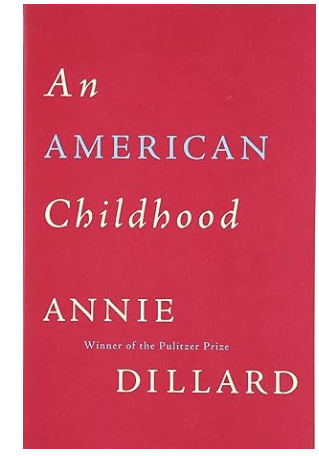
Memoir Analysis #3: An American Childhood by Annie Dillard

http://www.amazon.com/American-Childhood-Annie-Dillard

The third author and book selected for memoir analysis is the 1987 classic, An American Childhood by Annie Dillard. A literary gem, her memoir is very different from the first two I presented earlier this month. Here are a few quick observations:

  • A book that instantly captured the hearts of readers across the country, An American Childhood is Pulitzer Prize-winning author Annie Dillard’s poignant, vivid memoir of growing up in Pittsburgh in the 1950s and 60s.” Amazon summary,
  • It has approximately 70k words spread over 41 untitled chapters.
    • Note: at first, I was annoyed by the untitled chapters and then I realized that while each chapter was different, it also naturally flows from the previous one.
  •  And finally, “[An American Childhood] combines the child’s sense of wonder with the adult’s intelligence and is written in some of the finest prose that exists in contemporary America. It is a special sort of memoir that is entirely successful…This new book is [Annie Dillard’s] best, a joyous ode to her own happy childhood.” — Chicago Tribune

Unlike the first two books analyzed, Dillard’s book offers more nostalgia for bygone American culture and less humor than Bryson or Sedaris. That said, it is a wonderful read about a girl who loves to read and attempts to relive those written words in her own life.

Five more successful memoirs will be reviewed in the weeks to come. Please let me know what some of your favorite memoirs are.

Patrick Cole

Memoir Analysis #2: Bill Bryson

http://www.amazon.com/Life-Times-Thunderbolt-Kid-Memoir

One way to determine if a memoir is ready for publication is to compare it to others that have already been proven successful. Continuing to aim very high, the second author and book selected for analysis is the 2006 book The Life and Times of the Thunderbolt Kid by Bill Bryson. Here are a few quick observations:

  • this New York Times Bestseller is a “mix of exquisite detail and inspired exaggeration (which) all add up to the Truth with a capital T that rhymes with G that stands for out-loud guffaws” as reported by Scott Simon for NPR’s Weekend Edition Saturday,
  • it has approximately 81k words spread over 15 chapters, and
  • “The Life and Times of the Thunderbolt Kid is steeped in … the sweet, simple pleasures of an all-American boyhood. Even the world-weariest of souls will be charmed.” Parade

While Bryson and Sedaris may be contemporaries in time and country, their memoirs are worlds apart and inspired by worlds that no longer exist.

Six more successful memoirs will be reviewed in the weeks to come. Please let me know what your thoughts are on memoirs in general and what makes them worth reading for you.

Slow but sure, Patrick Cole

Memoir Analysis #1 – David Sedaris

http://www.amazon.com/David-Sedaris-Book-Set-Corduroy

My goal is to publish a memoir by this time next year: December 29, 2025. I wrote and edited a first draft this year so I’m publicly acknowledging that I need at least a year to complete this publishing goal. More drafts, more editing, more polishing are necessary before it will ever see a bookshelf.

One way to determine if my memoir is ready for publication is to compare it to others that have already been proven successful. Clearly, I’m aiming very high by selecting David Sedaris as one standard for comparison. Based on a recommendation, I chose his 2004 book Dress Your Family in Corduroy and Denim for review. Here are a few observations for starters:

  • this #1 National Bestseller is “hilarious, elegant and …. Sedaris is a complete master of the form” as Chris Lehmann reported for Washington Post Book World,
  • it has approximately 77k words spread over 22 chapters, and
  • “Sedaris’s perennial themes are not simply played for self-deprecating laughs in this volume, but are made to yield a more Chekhovian brand of comedy” as reported by Michiko Kakutani for the New York Times.

I know, it’s audacious of me to compare my memoir to one of Sedaris’s many successes. But why not aim high?

I will be reviewing seven other successful memoirs in the weeks to come. In the meantime, please let me know what recommendations you have for writing a successful memoir.

Slow but sure, Patrick Cole

Ugly Middles & Perseverance

Writing, like life, is not a cake walk and sometimes it’s just plain ugly.

I’m enjoying the 100 Day Book Writing Program offered by The Write Practice. Below is one of the helpful reminders from the program creator, Joe Bunting.

See thewritepractice.com for more information.


Middles are always the hardest. In A Million Miles in a Thousand Years, Donald Miller said every story is like paddling a rowboat to an island. When you first start, you feel like you’re making a lot of progress. The shore recedes quickly and the island feels so close you could touch it.

But once you get out into open water, it’s easy to think you’re not even moving. The shore you left seems far away and the island you’re going to isn’t getting closer. You’re not making any progress, and you wonder if you should just quit.

This is where most people, including myself, get stuck in their writing.

We have no problem starting stories. We don’t even have a hard time finishing them. But the middle is a story graveyard, littered with corpses of books, blog posts, and articles.

If you keep going though, almost miraculously, the opposite shore appears. You’re almost there. You can tell you’re just a few paddle strokes from land.

Don’t give up in the Ugly Middle. The breakthrough will always come just after the hardest part.

Even when it’s messy, keep writing. Even when you’re stuck, keep writing. Even when you feel like you’ve made no progress and the end is as far away as ever, keep writing.

And when you can see the shore, when you realize you finally, at last, know what your book is about, remember the feeling. You’ll need that memory for the next time you find yourself in the Ugly Middle.” Joe Bunting

Nouwen/Reeves Mash Up

We are a composite of all the influences we accept. Through nature and nurture, we look at life through the filters we’ve inherited and acquired.

The work of two artists converges into a message and an earworm guiding me this morning.

The first is today’s meditation from Henri Nouwen on seeing truth, love and beauty in our everyday lives. The second is a Del Reeves song reminding us to appreciate what we have because we will lose it if we don’t take care of it. Together they remind me how fortunate I am.

Here’s hoping one or both offer something to you.


henrinouwen.org/meditation/

What We’re Looking for is Already Here

We discover that cleaning and cooking, writing letters and doing professional work, visiting people and caring for others, are not a series of random events that prevent us from realizing our deepest self. It is the right time, the real moment, the chance of our lives.


genius.com/Del-reeves-be-glad-lyrics

Be glad you’ve got what you’ve got when you’ve got it
Or you’re gonna find out what you’ve got is gone

Take care what you do when you do if you do it
If you don’t you won’t have your baby long

Everybody envies you, you lucky so and so
You should thank your lucky stars above

You’d better treat her better you’d better start right now
She deserves the best that you can do
She does everything for you the best that she knows how
That’s the least she can expect from you

Finding Home in Ourselves

“Don’t forget … to call yourself Home.” Kaitlin Curtice

This is a beautiful excerpt from the Center for Action and Contemplation about Kaitlin Curtice’s writing on the sacred legacy of home.

Check out both links identified below. You will be comforted and edified.


http://www.kaitlincurtice.com

Finding Home in Ourselves
 
Author Kaitlin Curtice writes about the sacred legacy of home:  

May we always return to the places where the stories begin, to challenge them, to accept and honor them, and to whisper to ourselves and one another that we are always, always arriving. 

Don’t forget, 
my love, 
to live. 


Don’t forget 
to love yourself, 
all of you, 
from every season 
and every place, 
because you never know 
when they will 
come knocking for 
a cup of coffee 
and an overdue hug. 


call yourself Home

High Coo – Oct 20 – National Day On Writing

Vermont Public Radio

For eleven years now, the National Council of Teachers of English has celebrated a National Day On Writing. In a 2018 position paper, the group updated their definitions of writing, writers and the principles and purposes for writing. For example:

Principle 3.2: Writers grow when they broaden their repertoire, and when they refine their judgment in making choices with their repertoire.

Writers need models and strategies—to find topics, issues, and questions to write about, to revise, to contextualize and connect their piece with others, to give and receive feedback. However, collecting those strategies is not enough; writers need practice not only in choosing a strategy to fit a particular purpose and context, but they also need practice in explaining why they made the choices they did.

See https://ncte.org/statement/teachingcomposition/.

I enjoy the challenge of seventeen-syllable haiku because the structure requires brevity. Someday I will attempt the Six-Word Story format. 🙂

Today’s haiku: On Writing

words, words and more words

often dilute our message –

simply, less is more

Learn more about this holiday at https://nationaltoday.com/national-day-on-writing/

blackstone.edu