Zorro not feeling well (picture taken by me, also not feeling well)
Today, June 21, 2023, I will be asked to decide on end-of-life procedures for my beloved 12-year-old male Chihuahua. To say I am sad cannot express how low I feel.
As an animal chaplain, I have taken a vow to “honor animal lives and heal human hearts.” Today, I will honor Zorro and someday, maybe not today, I will heal my own heart. I know I will need help to do this and I’m uncomfortable asking for help. Giving help is easier for me than asking for it or even accepting it when it is offered.
Life is messy and Terry Hershey’s message below is especially meaningful for me today.
Messiness exposes vulnerability. I will admit, vulnerability is not my strong suit. I do prefer self-sufficiency. And rising above. And yet, self-reliance sounds laudable, but can be an obstacle, because it is difficult to say the words “help” or “thank you.” So, here’s the good news: There is power in embracing vulnerability. And vulnerability never exempts us from the sacrament of the present. Because vulnerability allows us to rest in that touch, that blessing.
Below is another wise reminder from Ryan Holiday who quotes Gandhi, Epictetus and Marcus Aurelius on how best to handle critiscim: own our imperfection.
No one likes to be found at fault. In fact, this is what many of us walk around fearing–that we’ll be exposed as imposters, we’ll be put on the spot in front of people, we’ll have to admit error. This makes us defensive, it makes us play it safe, and in some cases, it even makes us dishonest.
It’s a cure, you could say, that’s worse than the disease.
Gandhi, once being interviewed by a reporter, dispensed with all that. “I am very imperfect,” he said. “Before you are gone you will have discovered a hundred of my faults and if you don’t, I will help you to see them.” Why would he do such a thing? Perhaps it was because he knew that as a leader, egotism and an outsized sense of one’s abilities was dangerous and destructive. Perhaps he was inoculating himself against the fear in advance–taking away the power of the reporter to control Gandhi’s fate by disclosing up front what might otherwise be investigated (or even misconstrued).
There is a line from Epictetus who, after being criticized, joked “Yes, and he doesn’t know the half of it, because he could have said more.” It’s not that Epictetus had a bunch of bodies buried somewhere, it was that he had also inoculated himself against criticism by being more aware of his flaws–and more concerned about addressing them–than even his enemies.
Why should we be afraid of criticism? As Marcus Aureliuswrites, if that criticism is correct and we are in error thenthe person criticizing us has done us a favor by correcting it. If they are wrong, what do we care? More likely, if we are doing our job right, we should already be well aware of the issue that people are raising and already be fixing it. We should have no sense of ourselves as perfect or above critique. Nor should we be so fragile and vulnerable as to not be able to bear being disliked or disagreed with.
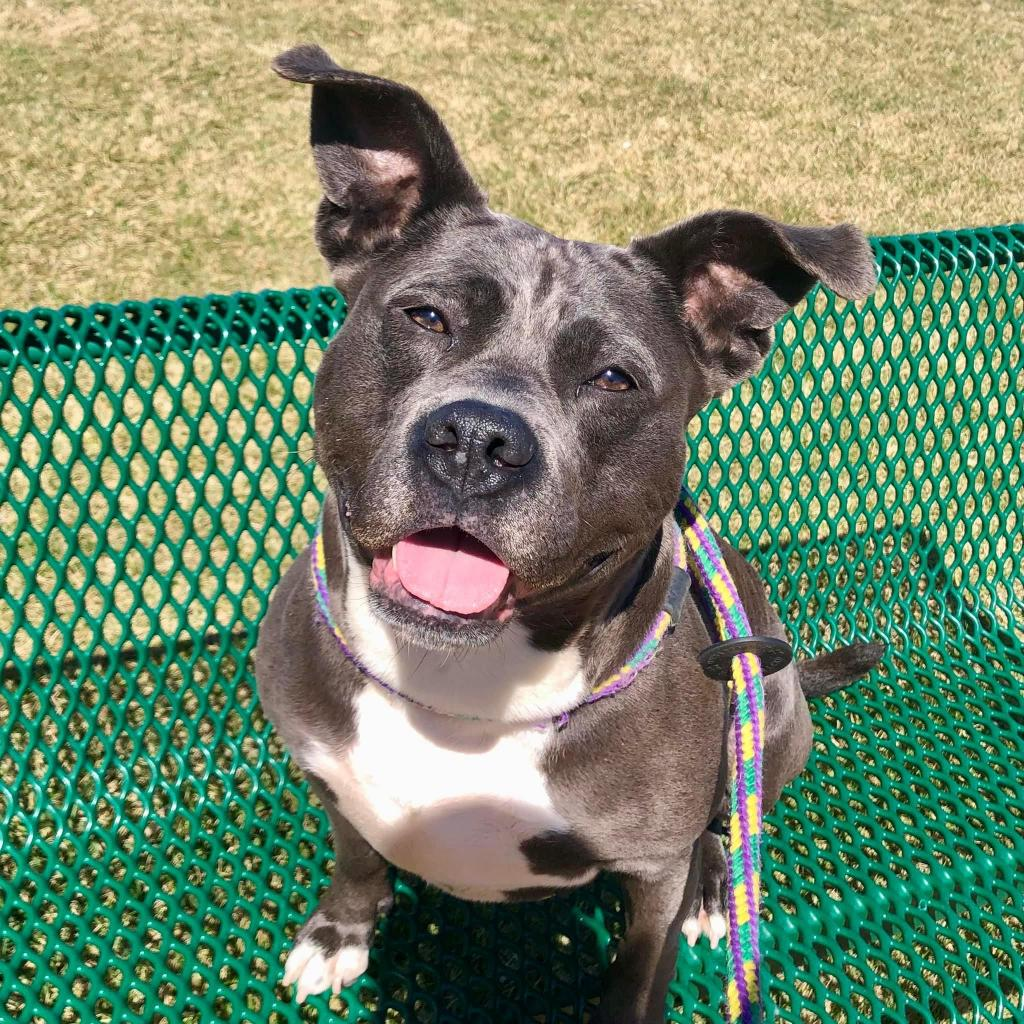
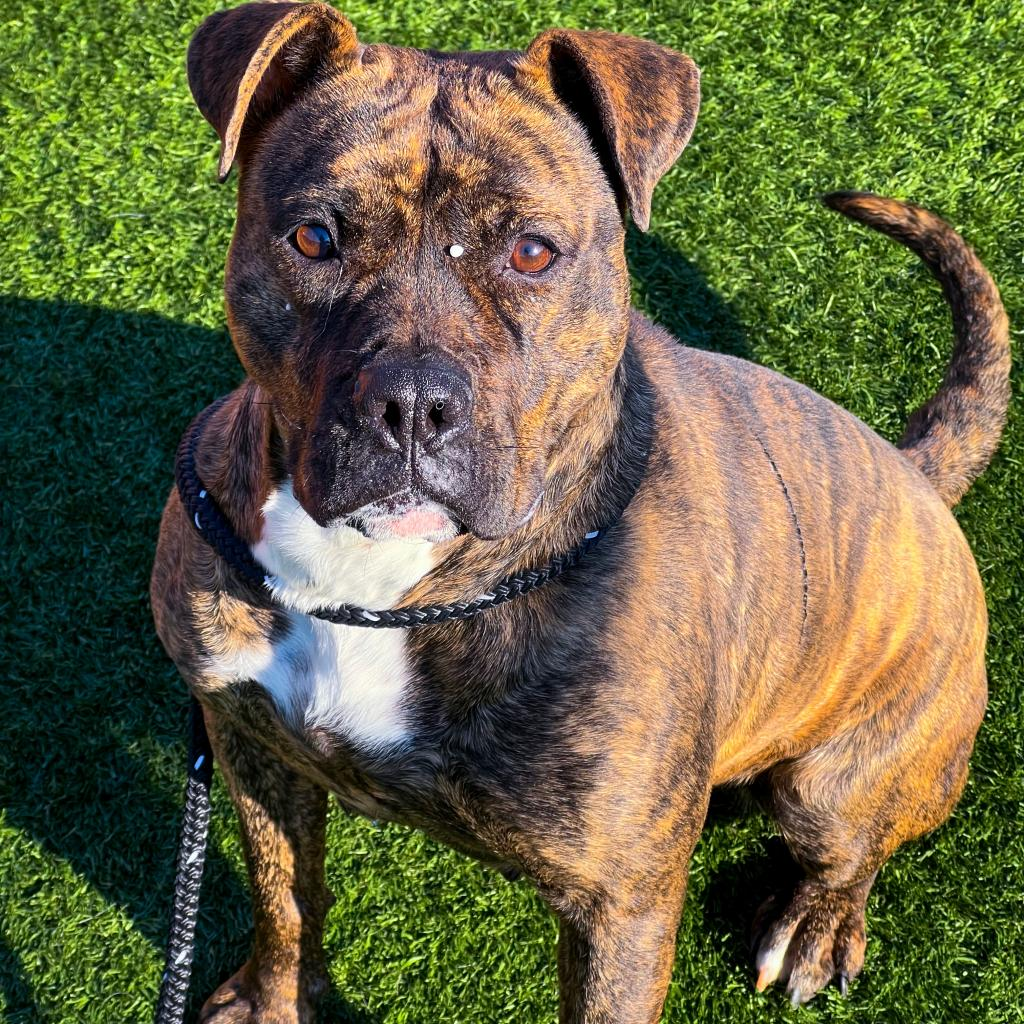
I am the luckiest man in the universe and this week I walked three new dogs and one lovable repeater. Pictured below are Elmers, Manifest, Fury (all new to me) and The Supreme (a personal BFFF).
Thich Nhat Hanh is a 93 year old Vietnamese Buddhist monk who has been one of the most influential spiritual leaders on earth for the past fifty years. Here’s how far back he goes: Martin Luther King nominated him for the 1967 Nobel Peace Prize for his efforts to end the Vietnam War.
He is best known for his beautiful, simple teachings about mindfulness. In that vein, here are four quotes of his that will help you become a better, happier human being.
1. “The most precious gift we can offer anyone is our attention. When mindfulness embraces those we love, they will bloom like flowers.”
That’s it. Just be there. All of you. Listening. With no agenda. Just 100% present. With your spouse. Your kids. Your coworkers. Your friends.
Thich Nhat Hanh is right on the money here. Being present is the deepest gift we can bestow on anybody.
Eckhart Tolle, another of my favorite spiritual teachers, states the very same thing.
2. “To be beautiful means to be yourself. You don’t need to be accepted by others. You need to accept yourself. When you are born a lotus flower, be a beautiful lotus flower, don’t try to be a magnolia flower. If you crave acceptance and recognition and try to change yourself to fit what other people want you to be, you will suffer all your life. True happiness and true power lie in understanding yourself, accepting yourself, having confidence in yourself.”
I am the father of 12, 10 and 4 year old kids and if I had to pick the number one thing I want to teach them it would be the sentiment behind this quote. Don’t fight yourself. Be yourself. Ralph Waldo Emerson expressed it in the most positive way: “Absolve you to yourself and you shall have the suffrage of the world.”
There is, however, one vital point on this subject of self-acceptance that I wish TNH, Emerson and others would emphasize, which is this: For most people, it takes courage.
Example: If your father is a macho ex-Marine, it takes courage to follow your inner compass that’s telling you to become a male ballet dancer.
Our families, our friends and society all pressure us to do what they think we should do. We have to summon the courage to say to all of them: “Sorry, but I’m the one living in here. I know what’s best for me and I need you to respect that.”
3. “The best way to take care of the future is to take care of the present moment.”
The first quote was about presence being the best thing we can do for others. This quote is about how presence is the best thing we can do for ourselves.
So much suffering in the world is caused by our worrying about the future. And what does worrying do? It takes us out of the present moment and makes us feel miserable.
We worry about the future and turn our backs on the present moment because we feel if we don’t, our future will be bleak. Well, how about this for an idea? If you’re worrying about having enough money to pay the rent, don’t spend your moments worrying about it. Place your moment to moment attention on making enough money to pay the rent.
But again, there is this insidious feeling in so many of us that worries that if we don’t worry things won’t work out. As if worrying will pay dividends for us. It’s crazy. And it’s not true.
What I’ve tried to do the past several years is live by the motto, “Be present and trust in life.” Because it does take a leap of faith to just say to yourself, “Screw it. I’m going to give everything I have to the present moments of my life and let the chips fall where they may.”
I can tell you that it’s definitely working for me and I know of nobody who truly lives life in the moment who has been ill-served by doing so. We just need the courage to toss the yoke of worrying by the wayside.
4. “Your breathing should flow gracefully, like a river, like a watersnake crossing the water, and not like a chain of rugged mountains or the gallop of a horse…Each time we find ourselves dispersed and find it difficult to gain control of ourselves by different means, the method of watching the breath should always be used.”
This one sums up the ultra-simple mindfulness technique for re-orienting ourselves after we’ve been knocked off track: We just come back to our breath.
I’m teaching a meditation and mindfulness course right now and my class is practicing this very technique this week. So simple, yet so powerful.
How do you do it? Example: You’re driving home after a tough day at work when the car behind you leans on the horn for five seconds because you didn’t signal when you changed into their lane; a minute later your teenage daughter calls and yells at you for not being home on time.
What do you do? At the next red light you stop. Close your eyes. Find your breath. Then start following it. Long, slow breaths. Just for a minute or so. When you open your eyes you’ll feel better and back on track.
If you don’t do this? There’s a good chance you’ll let these two irritating incidents affect your mood for the rest of the evening.
Finally, do yourself a favor and watch this interview with Oprah and Thich Nhat Hanh. The man just exudes goodness.
What keeps us from seeking our soul’s deepest desire? Most often it is the ego and its fear of annihilation.
Few of us have the courage to pray as St. Francis did — “Who are you, O God? And who am I?”—because we don’t really want to know the answer. While our souls long for intimate unions with God, unions in which we can no longer distinguish our deepest selves from the Divine, our ego selves understand the price of these unions: the loss of our hard-fought external identities.
We’ve spent our entire lives crafting an identity to present to the world, and our egos are terrified at the prospect of that identity being consumed in the flame of God’s great love. For if we follow our soul’s desire, we will be left standing defenseless and out of control, which is precisely where we need to be to experience the sheer delight and the richness of God’s consuming love for us.
The Good News for our souls is that the fire of God’s love is relentless and will eventually break through our well-formed heat shields. When that happens, we too will become a fire of consuming love that draws in everyone around us.
Loving and irresistible God, you draw me into your flame of love, and yet I resist. I pray for the courage to surrender my whole self to you, as St. Francis did, so that, like Francis, I might experience the joy of a life without control, a life that brings the unexpected delights of sweet surrender.
Loving God, help me to stop counting the costs and to overcome my fear of loss, so that through your consuming love I may find my true self, transformed by love, ready to share that experience of pure joy through loving service to the world around me.
I don’t read a lot of poetry, but I do have a favorite author and one who is deeply appreciated by many: Emily Dickinson. She lived in Amherst, Massachusetts, in the latter part of the 19th century. She was shy and lived a very reclusive life. During her 55 years, she wrote over 1,500 poems which were filled with simple wisdom. Two examples of such wisdom: “Old age comes on suddenly, not gradually as it thought” and “Saying nothing sometimes says the most.”
Only a few dozen of her poems were published in her lifetime. When she died, her family found hundreds more hidden all over her room and throughout the house. I have found two of her poems supremely thoughtful. In fact, I frequently quote them in my funeral homilies. The first one I use is “I Never Saw a Moor.”
“I never saw a moor; I never saw the sea; Yet know I how the heather looks and what a wave must be. I never spoke with God nor visited in heaven, Yet, certain am I of the spot, as if the chart were given.”
Deep Truths
I catch people smiling when they hear Dickinson’s words because they touch on a truth that is in every believer’s heart. Isn’t it true that we’ve never seen heaven or had an audible conversations with God? Yet, as a people of faith, are we not certain of that heavenly “spot” as if we had a very map in front of us?
If you argued with a nonbeliever who begged you to prove there was an eternal destiny, you might find yourself fumbling for Scripture passages to prove heaven to him. But I suspect after all the Scripture passages we might quote, what would likely make the nonbeliever think more deeply would be a line from one of Dickinson’s poems: “I’m certain of that spot; it’s like I have a map right in front of me.”
There is another poem she wrote that startles with its simple truth. “Because I could not stop for Death– He kindly stopped for me– The Carriage held but just Ourselves– And Immortality.”
While most of us secretly hope for a peaceful death with loved ones surrounding us, for the majority, it is not we who “stop to die,” but death which stops for us. And within that carriage, in the seat across from us, sits immortality, with a lovely smile.
What I see in this poem is really a basic truth of faith. Once God gives life, it never ends. It can’t end because our lives are a sharing in the eternal life of God. The moment of death is just the last piece of mosaic that completes the story of our life’s journey. And every moment of that journey has been accompanied by a loving and providential God.
Dickinson said that she never went to church. She said that the birds were her choir and the sky her cathedral vault. But one thing is quite certain: She was a woman of deep faith.
I love walking dogs; especially the beautiful animals at Stray Rescue of STL. Yet, I confess, there’s a sadness at times when you realize you’re walking some of the same animals, week after week, who would love to become someone’s best friend.
Sure, no dog is a perfect for everyone just like no human is a perfect fit for everyone. Maybe, just maybe, your perfect fit is at your local rescue shelter.
Here are three of the four dogs I walked yesterday.
The Supreme, nearly 5-yr-old 50lb+ female Terrier Mix who prefers to be an only dog.
Tic Tac, 7-yr-old, 50lb+ female Terrier – OK with kids and other mellow dogs; not cats.
L.O.T.I. (Luck of the Irish), 3-yr-old, 50lb+ female Terrier. Gorgeous dog with a pleasant personality.
A fourth dog, Skidmore, is a young Plott Hound/Shepherd mix. I will collect a picture next week if he’s still there. Fingers crossed he’s not because he’s been adopted.
“Silver-screen and singing legend Doris Day recorded more than 650 songs and starred in nearly 40 films, but PETA will always remember her for her most important role: animal champion. … Day personally rescued, fostered, and found loving homes for hundreds of animals, earning her the affectionate nickname “The Dog Catcher of Beverly Hills.”
Recognizing the need to stop animal homelessness at its source, she founded the Doris Day Pet Foundation in 1978, which later became the Doris Day Animal Foundation, a nonprofit organization that has saved countless animals’ lives by providing grants for spaying and neutering as well as funding humane education in schools and helping senior citizens pay for their animal companions’ food and veterinary care.
In 1987, she formed the Doris Day Animal League (DDAL) to lobby for humane legislation…. In recognition of her work for animals, former President George W. Bush honored Day with the Medal of Freedom, the highest civilian award in the United States.”
Mentioned earlier this week, I’m looking forward to my new helping professional role as an Animal Chaplain. Below is another article which explains how this role is serving people today. (See https://broadview.org/animal-chaplains/)
Animal chaplains like Rev. Sarah Bowen help clients prepare for and deal with the loss of their pets By Andrea Cooper, Religion Unplugged
| January 9, 2023
Karen Walsh Gillingham might have felt lonely when she moved to a new home in Mendham, New Jersey. She was single then, with one son soon headed for college and another already there.
But she also had Baxter, a mini golden doodle who loved feeling the breeze out the car window during their rides in the countryside. “It was me and Baxter,” she recalled.
Baxter was by her side for 12 years, through the joy of her remarriage, the births of grandchildren and the pandemic. She was shocked when he was diagnosed with terminal cancer and died in October 2022. A retired nurse, Gillingham had faced many other losses, including the deaths of her best friend and both parents. But losing Baxter still hit hard.
“It was so comforting to hear somebody who has experience say, ‘It’s OK; it’s normal, and all that grief is just love that has nowhere to go,’” Gillingham said.
Chaplains provide spiritual support in hospitals, hospices, universities, the military and other settings outside of congregations. Animal chaplains focus on relationships or concerns involving animals, from a family struggling with a pet’s illness to a veterinary tech overwhelmed with seeing animals die at work to an activist struggling over the loss of a species or habitat. “Animal chaplaincy for me means that I support all beings regardless of their belief system or species,” Bowen said.
Animal chaplains can help clients prepare for a pet’s passing and run animal loss support groups. They partner with clients to develop rituals, from memorial events to a welcome for a new animal companion. They may also lead “blessing of the animals” services at houses of worship, or comfort families who have lost an animal following a natural disaster.
Never heard of this emerging discipline? You’ve got company.
According to a recent Gallup survey commissioned by Chaplaincy Innovation Lab at Brandeis University, one in four Americans have received support from a chaplain. Yet few respondents mentioned animal chaplaincy. The field “is still in its very early days,” said Michael Skaggs, director of programs for the Chaplaincy Innovation Lab.
The specialty is not the same as therapy. Animal chaplains typically describe their work as “companioning” rather than “counselling.” They listen and help make meaning from a loss or challenging event. Their work addresses the human spirit instead of mental health.
You don’t have to be religious to seek out an animal chaplain. They serve people of any or no religious background, including atheist, agnostic, spiritual but not religious, and pluralistic. In general, “chaplains have to be deeply grounded in their own tradition, whatever it is. They have to know where they stand, who they are,” Skaggs said. “But then, when they come into the encounter with the person, that grounding has to be invisible.”
An animal ministry
Animal chaplaincy began about 30 years ago, coinciding with new research about the human-animal bond and animal cognition, Bowen said. “However, the connection and the questions about animals and humans, and what those relationships look like, go back in every religion and wisdom tradition to the beginning.”
Some denominations address animal concerns in a structured way today. The Episcopal Church in the U.S. has established prayers for animals who are adopted, missing, ill or dead. There is a specific prayer during euthanasia and even one for the suffering of animals during war.
Unitarian Universalism maintains an animal ministry designed to “empower individuals, chapters, and congregations to build justice and compassion for animals.”
It starts from the premise that “when we look into an animal’s eyes and really see that animal, there’s someone else on the other side who is looking back at us — that animals are our companions in creation,” said the Rev. John Gibb Millspaugh, the ministry’s executive director. UUAM encourages congregants “along their own path of compassion and respect for animals.”
Of the 30 UUAM chapters in the U.S., eight have animal chaplains to provide support. Chapters choose their activities based on local interest. Some lead book and film discussions to engage their congregations. They may focus on diet, educating about plant-based meals and encouraging a vegan option at events. Some collect blankets for animals in local shelters or build fences for dogs previously on chains. Others care for wildlife through river cleanups and planting butterfly gardens.
The denomination is currently updating its core documents, which don’t specifically include animals. The most recent draft identifies “all beings” as subjects for concern, care and respect. While not yet approved, the potential change is “a big damn deal,” the Rev. Russell Elleven, who serves as chaplain to UUAM, happily exclaimed.
Interfaith, interspecies
UUAM animal chaplains train with the Association for Veterinary Pastoral Education in Raleigh, North Carolina — one of a few organizations devoted to educating in this niche area. Robert Gierka founded the program after years as a chaplain, first for a hospital and later for North Carolina State University’s College of Veterinary Medicine. The virtual program has attracted students from a variety of religious and professional backgrounds in the U.S., the U.K., Australia and South Africa.
People bring different and sometimes contrasting perspectives to the training. One cohort included a large animal veterinarian whose priority was animal welfare to lessen the pain and fear of animals slaughtered for food. Another student was an animal rights rescue worker opposed to the killing of animals for any reason. In those sessions, Gierka “did some pastoral magic with someone who did get kind of offended,” said Karen Duke, the association’s vice president.
Compassion Consortium, an “interfaith, interspiritual, and interspecies” nonprofit based in New York, offers animal chaplaincy training programs from three to nine months. Bowen serves as program director. Learners are diverse, from current and retired pastors and Master of Divinity students to people who practice reiki or other healing arts and want to add to their skills.
Some develop their passion for animals later in life. Bowen, whose degrees include a master’s in religious studies from Chicago Theological Seminary, recognized her calling early. Her dad, a Presbyterian minister, often stopped by a local funeral home with her before taking her to swim lessons. At age six, she used her metal lunchbox to transport “little dead critters to bury them in our backyard and give them funerals.”
She continues that impulse with her “roadkill ministry,” removing dead animals from streets for a proper burial and taking injured ones to wildlife rehabilitation. Her eclectic services also include teaching clients how to meditate with their hyperactive puppies and how to help a grieving pet when another pet in the household has died.
Fees for animal chaplaincy services vary, in part based on the time required. It’s common for practitioners to offer reduced rates for clients of limited means. Some support groups are free or ask for small donations.
The field is poised for growth, advocates believe. While the profession is still novel, “we don’t have nearly as many people doing this work as we’re asked for,” Bowen said.
Skaggs from the Chaplaincy Innovation Lab agrees, given how many people bring their pets to veterinary clinics each day to say goodbye for the last time. Most veterinarians are very sympathetic but don’t have the training to comfort people through their loss, he said. “How wonderful would it be if you schedule an appointment and the vet clinic says, ‘Would you like this person to be present during this process or available to you after?’” Ideally, he said, every clinic would have a chaplain.
Karen Walsh Gillingham would vouch for the profession. Through her conversation with Bowen, she realized her dog Baxter’s death had brought up grief from her previous losses. While Gillingham will always miss Baxter, she has room in her life for more love. She’s planning for a new mini golden doodle to join her family.
***
Andrea Cooper has written for The New York Times, Jewish Telegraphic Agency, Tablet and other national publications. Her honours include the Simon Rockower Award from the American Jewish Press Association for coverage of North American Jewish history.












 Life Matters