Author Archives: Patrick Cole

Unknown's avatar

About Patrick Cole

Husband, parent and writer. Sharing stories with a little humor and wisdom along the way.

St. Patrick: A Sonnet

Today we recognize our patron saint. May we all enjoy a peaceful and joyful day. And cheers to Malcolm Guite for another beautiful sonnet. Thank you!

malcolmguite's avatarMalcolm Guite

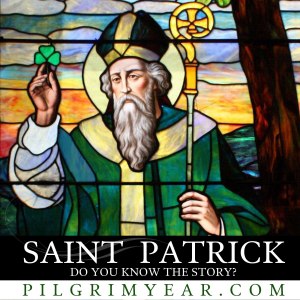
PilgrimYear_SaintPatrickMeme

Here is my sonnet for St. Patrick’s Day

While Patrick is of course primarily associated with Ireland where he flourished as a missionary in the second half of the fifth century, he was not Irish to begin with. He seems to have been a shepherd on the mainland of Great Britain and was in fact captured there, at the age of sixteen, by raiding pirates and taken across the sea to Ireland where he was sold as a slave. He was six years in captivity before he finally made his escape and returned to Britain. And this is where the story takes a truly extraordinary turn. While he was enslaved in Ireland, working as a shepherd for his masters, Patrick became a Christian and when, having made good his escape, he returned home he had a vision in which a man gave him a letter headed ‘The Voice of Ireland’…

View original post 295 more words

Mar 15 – Two Types of Ancestors

Sister Annabel Laity – author at the Plum Village Shop plumvillage.shop

In her book, Mindfulness – Walking with Jesus and Buddha (c) 2021, Sister Annabel Laity identifies the two types of ancestors:

“Our blood ancestors are not the only source of our lives. We also have spiritual ancestors who transmit to us the spiritual direction that our life takes … Our blood ancestors are one of our roots, and our spiritual ancestors are no less important a root … Mindful of our blood and our spiritual ancestors, we shall see their qualities that we want to continue, and we shall also see their shortcomings. We cannot reject our ancestors, because of their mistaken ways. Who are we, who are by no means perfect, to do that? … We accept all our ancestors as they are, and we feel well because, by accepting them, we are accepting ourselves.pp. 116-117

Today’s senryu: Two Types of Ancestors

Dearest sister and

crazy old uncle Friedrich,

did God really die?

https://en.wikipedia.org/wiki/Thus_Spoke_Zarathustra

Nietzsche dismissed Schopenhauer and Christianity and Buddhism as pessimistic and nihilistic, but, according to Benjamin A. Elman, “[w]hen understood on its own terms, Buddhism cannot be dismissed as pessimistic or nihilistic“. Moreover, answers which Nietzsche assembled to the questions he was asking, not only generally but also in Zarathustra, put him “very close to some basic doctrines found in Buddhism”. An example is when Zarathustra says that “the soul is only a word for something about the body“. https://en.wikipedia.org/wiki/Thus_Spoke_Zarathustra

Mar 14 – “What Betrayal of the Soul”

In his book Living Between Worlds, (c) 2020 Sounds True, Dr. James Hollis, asks:

“What betrayal of the soul transpires when we collude with our debilitating fears? And who, besides us, will pay those debts of unlived life – our children, our partners, our colleagues, our society? Do we not see the best thing we can do for others is really to bring our best, most nearly authentic selves to engage them?” (p. 42)

Today’s senryu: What Betrayal of the Soul

Hide it or use it,

share it or lose it – what calls

out to you today?

How the Divine Abodes Work

Love the final paragraph especially. We can’t free anyone else but we are responsible for liberating ourselves. May we be free.

lynnjkelly's avatarThe Buddha's Advice to Laypeople

Over the years, Thanissaro Bhikkhu has cleared up a lot of misunderstanding about what metta – and its companion mindstates – is and is not.

The brahmavihāras, or sublime attitudes, are attitudes of goodwill, compassion, empathetic joy, and equanimity that you spread to all beings, without limit: in other words, with no limit to the amount of goodwill, etc., that you spread, and no limit on the number of beings to whom you spread it. Each of these attitudes is an antidote for mental states that can get in the way of training the mind.

• Goodwill, a wish that beings will be happy, is an antidote for ill will, the desire to see beings suffer.

• Compassion, a wish that those who are suffering will be freed from their suffering, is an antidote to cruelty, the desire to actually harm others when they’re in a position to be harmed.

View original post 302 more words

Mar 13 – Could Dogs Survive Without Humans?

Reposting an article by Patrick Pester from Live Science below. I’m curious, what do you think about this topic?

https://www.livescience.com/could-dogs-survive-without-humans

Could dogs survive without humans?

By Patrick Pester

 published 16 days ago

In some ways, dogs would be better off without people.

It’s easy to look into the adoring eyes of our pampered pups and think they’d be totally helpless without us. Even the thought of a pet dog living out in the wild is enough to make some owners despair. But imagine if humans suddenly disappeared and dogs had to fend for themselves. In such an apocalyptic scenario, could dogs survive in a world without people?

“I have no doubt that dogs would survive without us,” Jessica Pierce, a faculty affiliate with the Center for Bioethics and Humanities at the University of Colorado Anschutz Medical Campus and author of “A Dog’s World: Imagining the Lives of Dogs in a World without Humans” (Princeton University Press, 2021), told Live Science. “Dogs are descended from wolves and they still have much of the behavioral repertoire of wolves and other wild canids, so they know how to hunt and scavenge.”

Without humans, our former pets would likely roll back the clock on their domestication and live as wild species do. Not all dogs would survive this transition, though. There’s a great variety of dog breeds today, and some are less equipped for the wild than others. For example, flat-faced dogs such as pugs and bulldogs are prone to various health problems, including those that restrict their breathing, which would hinder their ability to hunt. They are also bred with short tails, which would hurt them socially when they interacted with wild dogs. 

“Tails are an important part of the communicative toolbox,” Pierce said. “Even if you’re slightly less skillful at communicating something like an aggressive feeling or a submissive feeling, you’re more likely to wind up in a fight than if you’re able to send clear signals.”

Dogs that are likely to wind up in a fight are more likely to get injured and less likely to survive. Fortunately for our barking buddies, humans wouldn’t be around to dictate the canines’ reproductive habits any longer. As a result, different breeds would mix, allowing natural selection to forge the fittest mutts.

These doomsday dogs would also interbreed with wolves to create hybrids where their ranges overlapped. Stray dogs and wolves already mix in Europe in countries such as Italy, according to a 2017 study published in the journal Global Ecology and ConservationFriederike Range, an associate professor at the University of Veterinary Medicine Vienna who studies both dogs and wolves, told Live Science that the main thing that really separates the two is us. 

“While wolves are primarily hunters and dogs primarily scavengers, it’s a continuum,” Range said. “And wolves can also scavenge and dogs can go hunting.” For example, wolves can be found living in human garbage dumps just like stray dogs do, and stray dogs can be found hunting wild prey just like wolves do.

But even if dogs could get by in a humanless world, wouldn’t they be miserable without any morning fetch or evening fuss? Neither Pierce nor Range see the dogs suffering psychologically without owners. 

Pierce noted that, in a domestic setting, humans suppress a lot of dog behaviors — such as roaming, digging and peeing — because we find them annoying. Ownerless dogs don’t have such restrictions, and while they also don’t have the same home comforts as pet dogs do, they may be better off psychologically. “What they do have that pet dogs lack is freedom,” Pierce said. 

Having studied dogs living independently from humans, Range has seen dogs form their own social groups and believes that food is a more important consideration than human companionship in these canines’ well-being. 

“If we were to disappear, the food would be the main problem for the dogs, not losing the human as a social partner,” Range said. “As long as they could find food, they would be perfectly happy without us.”

Patrick Pester

Live Science Contributor

Patrick Pester is a freelance writer and previously a staff writer at Live Science. His background is in wildlife conservation and he has worked with endangered species around the world. Patrick holds a master’s degree in international journalism from Cardiff University in the U.K.

Repost of today’s Nouwen Meditation: Patience

Patience

March 11, 2023

The mother of expectation is patience. The French author Simone Weil writes in her notebooks: “Waiting patiently in expectation is the foundation of the spiritual life.” Without patience our expectation degenerates into wishful thinking. Patience comes from the word patior, which means “to suffer.” The first thing that Jesus promises is suffering: “I tell you . . . you will be weeping and wailing . . . and you will be sorrowful.” But he calls these birth pains. And so, what seems a hindrance becomes a way; what seems an obstacle becomes a door; what seems a misfit becomes a cornerstone. Jesus changes our history from a random series of sad incidents and accidents into a constant opportunity for a change of heart. To wait patiently, therefore, means to allow our weeping and wailing to become the purifying preparation by which we are made ready to receive the joy that is promised to us.

https://henrinouwen.org/meditation/

Mar 11 – Our True Self or 1+1+1

Ilia Delio, Chair in Theology at Villanova University, shares how Thomas Merton informed herstory in Discovering the true self in God with Merton’s guidance. (See https://www.ncronline.org/blogs/ncr-today/discovering-true-self-god-mertons-guidance). Delio begins by quoting Merton and then elaborates:

“‘Our vocation is not simply to be, but to work together with God in the creation of our own life, our own identity, our own destiny.

The search for true identity requires an honest self-love. Love of self is not selfishness but a humble recognition of our lives as true, good and beautiful. Without real love of self, all other loves are distorted. “

https://www.linkedin.com/in/marybeth-weiss/

Marybeth Weiss, VP for People & Culture, has a related message in her article, There Is No “I” in Team, but There Is a “Me”: Building a Better Team Starting with You. (See https://trainingindustry.com/articles/strategy-alignment-and-planning/there-is-no-i-in-team-but-there-is-a-me-building-a-better-team-starting-with-you/). Weiss offers:

“If we rely on stories to drive behavior, we can’t accomplish anything, and relationships deteriorate … Teams can only grow and flourish from the hunger and drive of each individualTeam success isn’t always about what the group does but how each member contributes.

Today’s senryu: our true self

one plus one plus one

equals infinity – yes,

we’re more, together

Feb 10 – Why Wait?

Are you ever impatient with impermanence? Does time marching on ever bring solace? Is life itself exasperating? Just three questions on a Friday morning resulting in three senryus linked below.

Today’s linked senryus: Why Wait?

At your service or

at your mercy – I’m tired;

tired of waiting …

Godot or Bardot

daydreams no longer work – I’m

tired of waiting …

Time is not my friend

I know I am breathing – so?

tired of waiting …

The Knowing – Doing Gap

Today’s senryu: The Knowing – Doing Gap

I know what to do

but have not done it just yet.

Do I really know?

I’m listening to Bhikkhu Bodhi‘s audio book The Noble Eightfold Path – The Way to the End of Suffering (c) 1984. Here are a couple of early passages:

“It would be pointless to pose the question which of the two aspects of the Dhamma has greater value, the doctrine or the path. But if we did risk the pointless by asking that question, the answer would have to be the path. The path claims primacy because it is precisely this that brings the teaching to life. The path translates the Dhamma from a collection of abstract formulas into a continually unfolding disclosure of truth. It gives an outlet from the problem of suffering with which the teaching starts. And it makes the teaching’s goal, liberation from suffering, accessible to us in our own experience, where alone it takes on authentic meaning.

To follow the Noble Eightfold Path is a matter of practice rather than intellectual knowledge, but to apply the path correctly it has to be properly understood. In fact, right understanding of the path is itself a part of the practice. It is a facet of right view, the first path factor, the forerunner and guide for the rest of the path. Thus, though initial enthusiasm might suggest that the task of intellectual comprehension may be shelved as a bothersome distraction, mature consideration reveals it to be quite essential to ultimate success in the practice.

The search for a spiritual path is born out of suffering. It does not start with lights and ecstasy, but with the hard tacks of pain, disappointment, and confusion. However, for
suffering to give birth to a genuine spiritual search, it must amount to more than something passively received.”

From another perspective, I’m fond of the book The Knowing-Doing Gap by Jeffrey Pfeffer and Robert I. Sutton (c) 2000 where the authors explain knowing comes from doing and teaching others how … in a world of conceptual frameworks, fancy graphics presentations, and, in general, lots of words, there is much too little appreciation for the power, and indeed the necessity, of not just talking and thinking but of doing – and this includes explaining and teaching – as a way of knowing.”

The book goes on to quote a senior executive who says, “Where we go from an awareness state to a real knowledge is where we have problems. We are aware of it but we don’t have the knowledge because we’ve never had to teach it or implement it. And I see that’s a huge gap.” p. 248-249

Can we ever truly know without actually doing something with that knowledge?