Author Archives: Patrick Cole

Unknown's avatar

About Patrick Cole

Husband, parent and writer. Sharing stories with a little humor and wisdom along the way.

The Four Pillars of Well-Being

Filmmaker Thomas Wade Jackson and Producer Victoria Moran have created a documentary well worth watching: A Prayer for Compassion. You can learn more about this at their respective websites: http://aprayerforcompassion.com/ and https://mainstreetvegan.com/a-prayer-for-compassion/

But today, I want to highlight Jackson’s Four Pillars of Well-Being. As he said:

At the midpoint of filming A Prayer For Compassion — an adventure composing some three-and-a-half years — I realized that if I was going to challenge people to have more self-compassion and take better care of themselves, I would need to start doing that myself. After some time trying to practice what I intended to preach, I discovered what I call my “Four Pillars of Well-Being.” I found that each day I practiced these, to the best of my ability, I felt great. My overall sense of ease seemed to grow. I was finding it hard to get anxious about things that used to worry me. Instead, I had the energy and clarity to discover solutions to the challenges that mattered and let go of those that didn’t.

THE FOUR PILLARS OF WELL-BEING 

  • Eating clean, healthful, vegan (nonviolent) food. I start my day by making a fruit-and-greens smoothie with ground flax and chia seeds to jumpstart my intake of micronutrients and ALA (an Omega-3 fatty acid). I sip on this smoothie throughout the day. This is just one example of caring for the body temple with food. A quick internet search can provide you with information on making the most health-promoting food choices.

  • Exercise and stretching. Movement is another way I increase my energy flow and perform much needed maintenance on the sacred temple that houses my spirit. My favorite kinds of year-round exercise are hiking in nature, riding my bike, working out at the gym, and yoga; I add on swimming and canoeing in the summer. There are so many ways to move our bodies.

  • Meditation and prayer. In these inner pursuits I find my deepest connection to love and peace. In fact, prayer and meditation are directly responsible for the making of A Prayer For Compassion. They sparked the idea and guided me on every aspect of the journey. Meditation has become a wonderful tool that I use throughout the day. I’ve learned not to put rules on meditation, nor judge the way it’s manifesting for me in the moment. Sometimes meditation is just going within for a few minutes  to shift gears and refocus between disparate tasks, or to quietly prepare for a meeting or conversation. Sometimes innovative thoughts come up, so I jot them down and go back within to find another thought waiting. I continue to write them until I either find the silence again or I run out of time. Sometimes I chant “Om,” the primordial sound in the Indian traditions, or hold a thought such as, “I am an instrument of peace.” And sometimes I just listen deeply within and feel my interconnectedness to all things. Meditation and prayer are personal, but there are techniques, resources and even apps to help you discover what works for you.

  • Sleep. This was the last pillar I added — probably because I truly love life and didn’t want to miss anything. I combined this discipline with the other three and found that together they create an overall feeling of well-being that continues to grow. There is a wealth of recent research around sleep which demonstrates the amazing benefits from getting the proper amount of it (seven to 8.5 hours is the range the researchers recommend). The right amount of quality sleep enhances mental clarity and sharpness, decreases inflammation in the body, offsets depression, and may even lead to a longer lifespan. Even so, many of us take sleep for granted and push ourselves to survive on the bare minimum. You deserve better.

I have to be honest that as a single dad and self-employed person, there are days where I leave out one or more of these pillars. Whether a rapidly approaching deadline or a dizzying travel schedule is to blame, I simply do the best I can in the moment, ever remembering to treat myself the way I would treat a dear friend, with kindness and compassion. I remind myself that it’s about progress, not perfection, and strive to trust the divine flow of things.

The Four Pillars are foundational in creating well-being, but they’re just the beginning. There are many other attitudes and practices that can add to our sense of peace, purpose, and connection. Loving relationships with those in our lives, giving back to the world around us, and indulging in activities that feed our soul are all on the list. For me, spending time in nature, having play dates with my daughter, and making music are favorites. For someone else it might be preparing and sharing healthy vegan food, reading a good book, or becoming engrossed in a play or a lecture. It’s simply a matter of making sure we give ample priority to what makes our heart sing. Whether it’s a once-a-month jam session with friends or making jam with a child, parent, or partner, I challenge you to take more time to nurture your soul.

Today, 2/23/23, is an easy date to remember. Why not consider one or more of these four pillars for your life? Why not check out the documentary?

As the cliche goes, today is the first day of the rest of your life. Let us make the most of it.

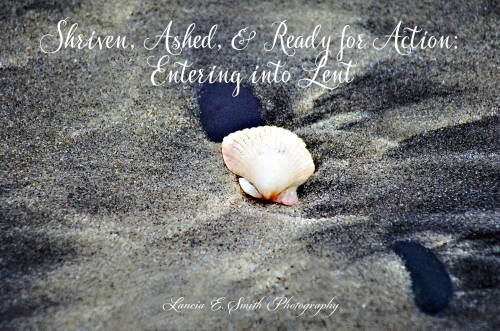
Shriven, Ashed, and ready for Action

Malcolm Guite reminds us of Seamus Heaney’s advice to “read poems as prayers.” Even better is to hear them read to us. I especially enjoy Malcolm’s reading of his poem below “All the Kingdoms of the World.”

malcolmguite's avatarMalcolm Guite

image courtesy of https://lanciaesmith.com image courtesy of https://lanciaesmith.com
image by https://lanciaesmith.com image by https://lanciaesmith.com

Today, on Shrove Tuesday, I am reposting the first of the weekly series in which you can hear me read aloud the poems I chose for my Lent Anthology The Word in the Wilderness. In the book itself you can read my commentary on each poem but I thought the recordings of my reading them might be useful, especially to groups who are using the book together.Where copyright allows I will also post the texts of the poems themselves here. Once more I am grateful to Lancia Smith who will be providing specially made images for these weekly posts. Lancia has told me that today’s image of the shell suggests a sense of our being ‘cleansed and emptied of what we once carried now waiting for a new day of our own’. But there is also of course the other sense in which…

View original post 704 more words

Generosity Makes Connections

Another beautiful and educational post from lynnjkelly. _/\_

lynnjkelly's avatarThe Buddha's Advice to Laypeople

From Gil Fronsdal:
Dana [pronounced dahnah] refers to the act of giving and to the donation itself. The Buddha used the word cage [pronounced chagah] to refer to the inner virtue of generosity…. This use of cage is particularly significant because it also means “relinquishment” or “renunciation.” An act of generosity entails giving more than is required, customary, or expected relative to one’s resources and circumstances. Certainly it involves relinquishment of stinginess, clinging and greed. In addition, generosity entails relinquishing some aspects of one’s self-interest, and thus is a giving of one’s self. The Buddha stressed that the spiritual efficacy of a gift is dependent not on the amount given but rather on the attitude with which it is given. A small donation that stretches a person of little means is considered of greater spiritual consequence than a large but personally insignificant donation from a wealthy…

View original post 336 more words

Feb 19 – Interspecies Companionship – Sarah Bowen

Rev. Sarah Bowen 12-minute video introducing Animal Chaplaincy

It’s a sunny winter day here in MId-America and I’m contemplating the questions Rev Sarah Bowen introduces in the video link above. Questions like:

  1. Do animals have spiritual lives?
  2. How can we survive the loss of a loved one?
  3. What self-care looks like for animal advocates and Earth Warriors?
  4. What are some of the ways we can honor animal lives and heal human hearts?

I was very fortunate to attend the original webinar offered last Spring, 2022, and join the Animal Chaplaincy Training Program, Rev Sarah began last Summer. Barring the Apocalypse occurring this coming week, I’m looking forward to certification next Sunday, Feb 26. After that I hope to continue on for another 3 – 4 months and be ordained as an Interspecies Interspiritual Chaplain (aka Spiritual Care provider).

If you’re a regular reader of this blog, you already know of my interest in Animals, Mindfulness and now Animal Chaplaincy. If you’re interested in learning more about these topics please subscribe to this blog AND check out Rev Sarah Bowen’s organization: Compassion Consortium. https://www.compassionconsortium.org/training

Today’s senryu: Interspecies Companionship

breathing in, I feel

life teeming all around me;

breathing out, I smile

Compassion Consortium’s Tenets of Agreement

https://www.compassionconsortium.org/our-founding-principles

Feb 18 – Thank You, Officer Boyd

“An Animal Control Officer provides humane control of stray animals within the city limits and assists owners in locating missing pets.

Please get your pets spayed or neutered! Every year thousands of unwanted kittens and puppies (are) euthanized!

Farmington’s animal control officer, Cheryla Boyd, takes in over 600 stray animals per year. Every attempt is made to either notify the owner or to adopt the animals.” https://www.farmington-mo.gov/farmington-police-animal-control

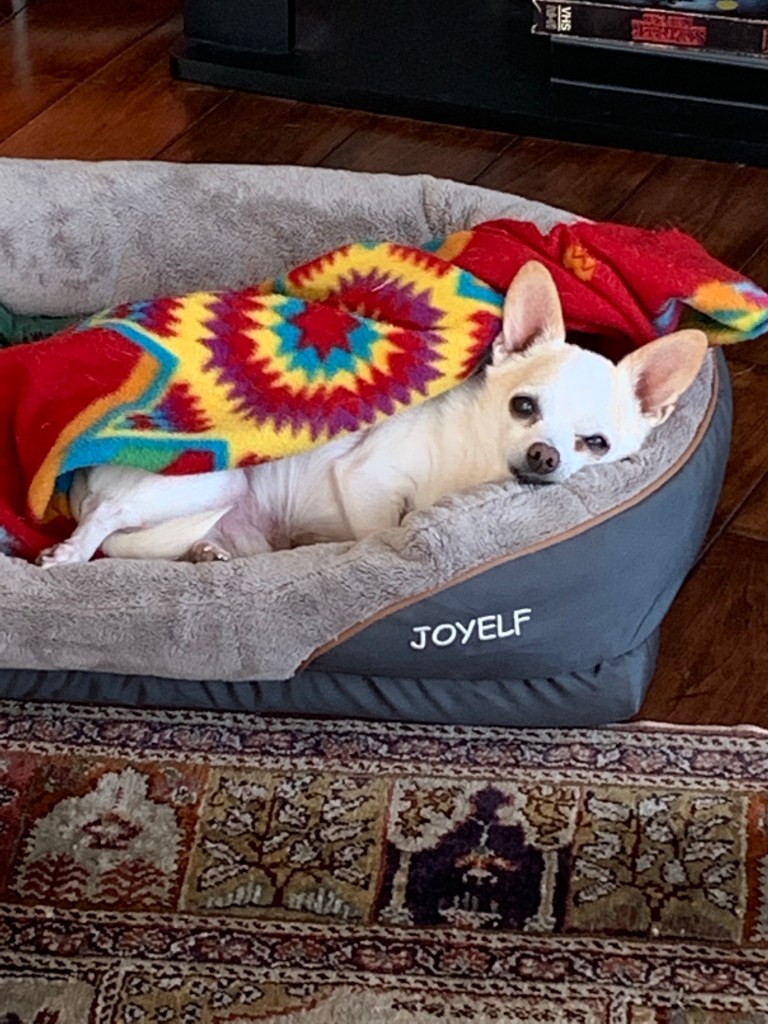
Zorro recovering from vaccinations

Eighteen months ago, Officer Boyd took custody of an abandoned elderly male Chihuahua and placed him in one of the compartments holding stray rescue dogs in the Animal Control Shelter. Officer Boyd then placed public announcements in various publications, including Facebook posts, attempting to notify a possible human guardian. No guardian was located so the dog was available for adoption. Thankfully, I was the lucky one to make his acquaintance. Below is a poem that describes this more:

Some Things We May Never Know

Little white Chihuahua, not so young;

            not looking your best, coat far from pure.

Animal Control said you were found

            living outside, skirting danger.

With matted hair and covered in fleas;

were you abandoned; owner succumbed?

Scrounging for food -and clearly quite lost –

I wonder, where did you come from?

Public announcements brought no results;

            two weeks later, “FREE for adoption.”

No resistance, we chose each other;

            optimistic reclamation.

Vet estimated you’re ten years old,

“a very good model”, she confirms.

Fleas now gone and shots have been given;

future routine: monthly heartworm.

Now we go forward,  the two of us;

            me asking questions, you staying mum.

Coming from a past of much unknown;

            no longer matters where you came from,

just one dog, one man walking in tandem.

Feb 17 – Happy Birthday Banjo Paterson

Andrew Barton Paterson (aka Banjo Paterson) b. 2.17.1864 – d. 2.5.1941

Andrew Paterson, was an Australian poet, or “bush balladeer” most known for “Waltzing Matilda“, “The Man from Snowy River” and “Clancy of the Overflow“.

“He topped the list of The Greatest of All – Our 50 Top Australians published in The Australian on 27 June 2013.” https://prabook.com/web/andrew.paterson/

https://en.wikipedia.org/wiki/Banjo_Paterson

Today’s senryu: Happy Birthday Banjo Paterson

you came a-waltzin

out of the bush with verses

everyone can sing

https://en.wikipedia.org/wiki/Waltzing_Matilda

Giving makes the mind beautiful

Always enjoy Lynn J Kelly’s blog posts. Today’s post reminds me: Giving can be a remedy for any bad feelings we might have about ourselves.” and our giving can be as simple as “to give time, a smile, a kind word, or something else of value.”

lynnjkelly's avatarThe Buddha's Advice to Laypeople

It’s worth thinking about the place that giving has in our lives. How important is it? How do we feel when we give something with no strings attached? How regularly do we practice generosity, and in what context? This is a central question if we are on a spiritual path.

Generosity is the first virtue that the Buddha taught to laypeople. It is the access point for all of the other trainings because it requires us to let go of whatever it is we’re clinging to or relying on. Real generosity is a kind of giving that can only be done with an open heart, and an open heart holds nothing back. It could be called lesson number one in surrendering to things as they are.

There’s a longish sutta in the Anguttara Nikaya, book of sevens, about giving; about all the different motivations that we might have when we…

View original post 325 more words

Feb 16 – Poets as Lovers of Truth

This image has an empty alt attribute; its file name is image-67.png

Lesley Day at Lesley Day Poetry on Facebook

A poet known for her raw emotion and passionate public readings; check out Lesley Day’s book, Authenticity on Amazon: https://www.amazon.com/Authenticity-Lesley-Day/dp/1958351008

This image has an empty alt attribute; its file name is image-68.png

Lesley will be hosting an Open Mic Poetry Night this coming Sunday at Spine Bookstore & Cafe. See https://www.stlmag.com/events/poetry-open-mic-hosted-lesley-day-featuring-patrick-cole/ I’m looking forward to meeting her in-person.

Based on social media and YouTube videos, I’m dedicating one of my past poems to her:

A Walking Billboard

An anchor was my first one, next came “I Love Mom,”

….. followed by a battleship, then a long-legged blonde

a little skin, a lot of ink, and some time to put it on.

….. my body is my billboard – you know where I’m coming from.

Some people have a flower on their ankles or their butt,

….. others a teddy bear or a dolphin jumping up

a pretty little heart, a family shield, a religious cup,

….. In other words, a confession they truly lack the guts

to tell the world, “Go to Hell” with a sneering devil’s grin

….. a fire-breathing dragon popping off their skin,

a green-fucking monster human-eating alien,

….. or something wickedly evil, truly hair-raisin.

No wimps need apply, a poet must have balls

….. to say what others won’t while their hiding behind walls

of secret little “come-ons” hidden under overalls

….. but a poet’s loud and proud to shout it from their falls.

Roaring thunder puts you under your bed sheets at night

….. but a poet tells the world of the dangers and who to fight

there are no winners, no deadly wrong, no sacred right,

….. just our scars and our tattoos of the war that’s skin tight!

from I Am Furious (Yellow), Patrick J. Cole, (c) 2009

This image has an empty alt attribute; its file name is image-70.png

Feb 15 – Three Dharma Poets: Bouse, Brehm and Metters

Today’s senryu: Now and Zen

Ev’ry now and zen

we take pleasure from life’s puns,

with or without wine

Below are pictures and links for three dharma poets, three wise men, that inspire my spiritual and poetic path. Perhaps they will inspire you as well.

Ari Bouse helps you breathe fresh air into your soul so you may then exhale the dead air of old ways that no longer serve you. … Something to Chew On serves as a walking meditation that will help you align with nature as it unfolds during the spirit of the season to enable you to rekindle a sense of magic, mystery, and adventure in your life.” https://www.goodreads.com/book/show/45290399-something-to-chew-on

Photo by Tracy Pitts https://www.poetryfoundation.org/poets/john-brehm

“The experience of reading a poem is a meditative experience in and of itself. As author John Brehm writes in The Dharma of Poetry, to enter a poem is to ‘shift out of everyday consciousness. . . to step out of the ongoing flow of experience and look at it.’ A poem inspires a moment of pause in which we can ‘engage in an imaginative activity that has no practical value.’” https://tricycle.org/article/meditative-poems/

Brehm adds “a poet may be defined as one who stops, one who is inclined by temperament and training to step out of the ongoing flow of experience and look at it, and to help us do the same.” https://tricycle.org/article/poetry-meditation/

Dr. Brian Metters http://www.amazon.com/Its-Not-About-Wine-philosophy and https://thetwodoctors.uk/

“Read this slowly, take your time, just think about it. … Now that you’ve read it what are you going to do about it?” https://thetwodoctors.uk/2022/12/08/be-mindful-today-21-gradual-awakening/

Feb 14 – Happy Birthday “Little Valentine”

Frederick Douglass was born in February 1818. Though the exact date of his birth is unknown, he chose to celebrate February 14 as his birthday, remembering that his mother called him her “Little Valentine.” Douglass, Frederick (1882). The Life and Times of Frederick Douglass: From 1817–1882. London: Christian Age Office. p. 2

Frederick Douglass was an American social reformer, abolitionist, social reformer, orator, writer, and statesman.

In 1848, Douglass was the only black person to attend the Seneca Falls Convention, the first women’s rights convention, in upstate New York. Elizabeth Cady Stanton asked the assembly to pass a resolution asking for women’s suffrage. Many of those present opposed the idea … Douglass stood and spoke eloquently in favor of women’s suffrage; he said that he could not accept the right to vote as a black man if women could also not claim that right. He suggested that the world would be a better place if women were involved in the political sphere.

In this denial of the right to participate in government, not merely the degradation of woman and the perpetuation of a great injustice happens, but the maiming and repudiation of one-half of the moral and intellectual power of the government of the world.

https://en.wikipedia.org/wiki/Frederick_Douglass

After Douglass’s powerful words, the attendees passed the resolution.

On February 20, 1895, Douglass attended a meeting of the National Council of Women in Washington, D.C. During that meeting, he was brought to the platform and received a standing ovation. Shortly after he returned home, Douglass died of a massive heart attack. He was 77.

Douglass’s coffin was transported to Rochester, NY, where he had lived for 25 years, longer than anywhere else in his life. His body was received in state at City Hall, flags were flown at half mast, and schools adjourned. He was buried next to Anna (his first wife) in the Douglass family plot of Mount Hope Cemetery, Rochester’s premier memorial park. Helen (his second wife) was also buried there, in 1903. His grave is, with that of Susan B. Anthony, the most visited in the cemetery. A marker, erected by the University of Rochester and other friends, describes him as “escaped slave, abolitionist, suffragist, journalist and statesman, founder of the Civil Rights Movement in America“. https://en.wikipedia.org/wiki/Frederick_Douglass

“America is false to the past, false to the present, and solemnly binds herself to be false to the future.” https://www.writerswrite.co.za/literary-birthday-14-february-frederick-douglass/