An Angry Person with a Zen Practice

The brief Lions Roar article below is much more than an American jazz singer, Bobby McFerrin lyric: Don’t Worry, Be Happy.

I highly recommend this piece written by Karen Maezen Miller. See excerpts below:

An Angry Person with a Zen Practice

by Karen Maezen Miller

I wasn’t an angry person until I became a Zen Buddhist. Sure, I yelled. I slammed things. I broke things. But I wouldn’t have called myself angry. It was always another person making me angry. How was that my fault?

But there was hope because I was an angry person with a Zen practice.

No one makes us feel, think, or do anything except as we allow.

Anger comes from our attachments.

We don’t get our way all the time, and besides, even when we do, it doesn’t last.

The wisdom of impermanence shows us the way to work with anger, that is, to not work with it at all.

Without my ruminations and reactions, anger does what all sensations do. It goes away by itself, providing I don’t chase after it.

One more thing has changed my relationship with anger: admitting it. When I feel myself getting angry around others, I try my best to say, “I’m angry right now.” Spoken, the words by themselves are safe. Unspoken, they smolder into fire and brimstone.

These days, though I still get angry, I’m no longer afraid of my anger. I don’t try to hide or avoid it. I remind myself not to rationalize it, justify it, or react in anger. I let it be, and then I let it be gone.

http://www.lionsroar.com/how-3-buddhist-teachers-work-with-difficult-emotions/

The Golden Rule?

Supposedly, the Golden Rule is something most faith traditions agree on. Supposedly, people without a faith tradition can agree on it as well. Does “the Golden Rule make a good one-sentence summary of what morality is about” for you?

The golden rule captures the spirit behind morality. It helps us to see the point behind moral rules. It engages our reasoning, instead of imposing an answer. It counteracts self-centeredness. And it concretely applies ideas like fairness and concern. So, the Golden Rule makes a good one-sentence summary of what morality is about.” Harry Gensler, philosopher. philosophynow.org/issues/125/The_Not_So_Golden_Rule

http://www.scarboromissions.ca/golden-rule

Job’s Emotional Courage

To truly know anything, we must first feel everything. It takes courage to feel.

I’ve tried my damnedest not to feel yet those feelings won’t pass until I let them.

Why should we acknowledge our feelings?

Because “emotions ought to be allowed to run their course. They are not right or wrong; they are merely indicators of what is happening.” 

Today’s excerpts come from Richard Rohr and the Center for Action and Contemplation.

Job’s Emotional Courage 

Monday, June 24, 2024

Richard Rohr notes the lessons on grief and lament we can learn from Job: 

why should I be happy about being born?”  

“May that day be darkness. May God on high have no thought for it, may no light shine on it. May murk and deep shadow claim it for their own” (Job 3:4–5). It’s beautiful, poetic imagery. He’s saying: “Uncreate that day. Make it not a day of light, but darkness. Let clouds hang over it, eclipse swoop down on it.” Where God in Genesis speaks “Let there be light,” Job insists “Let there be darkness.”

if we’re willing to feel and participate in the pain of the world, part of us will suffer that kind of despair.

Many people learn that the hard way—through depression, addictions, irritability, and misdirected anger—because they refuse to let their emotions run their course or to find some appropriate place to share them. Job is unafraid to feel his feelings. He acts and speaks them out. Emotions ought to be allowed to run their course. They are not right or wrong; they are merely indicators of what is happening. 

I am convinced that people who do not feel deeply finally do not know deeply either.

Reference:  
Adapted from Richard Rohr, Job and the Mystery of Suffering: Spiritual Reflections (New York: Crossroad Publishing, 1996), 53, 54–55.  

cac.org/daily-meditations/jobs-emotional-courage/

Ox-herding 3

I haven’t met Lynn J Kelly (yet) but do consider her a spiritual friend and teacher. I haven’t met Martine Batchelor (yet) but consider her, and her husband Stephen, spiritual mentors and teachers.

And so, I can highly recommend the blogpost below. May you be edified and encouraged by it as I have.

We Would Change

Oh, to spoon in June and point to the moon and read our future in a newly discovered rune. You know that tune, right?

Below is beautifully written reminder from Joan Chittister that everything changes in June.

We would change

Clearly, June is the time for being in the world in new ways, for throwing off the cold and dark spots of life.

flowers confront us with our responsibility for beauty.
 
June is the month that calls us out of our houses, out of ourselves,

Be a tribute to creation. Be a part of the chorus of life.
 
“I wish you happiness now and whatever will bring happiness to you in the future.”

Beauty and human warmth would take root in us like a clear, hot June day. We would change.

                   —selections from A Monastery Almanac by Joan Chittister

For more great writing check out this website: joanchittister.org/

Everyone Thinks They’re an Artist

Finding your True Self through ceramics, or any other art form, takes time and focus and diligence and acceptance.

Below are excerpts from another Tricycle article by Christina Moon. Here’s hoping you also are inspired by her words and example.

http://www.cristinamoon.com/about

“Everyone Thinks They’re an Artist”

Ceramics, Zen, and the true purpose of Zen in the arts (and the arts in Zen) By Reverend Cristina Moon APR 25, 2024

The thing about approaching the arts through Zen is that, by looking at any art as more than just an art but as a Way, you start to see how the state of your mind, body, and spirit is reflected in everything you do. The product of your art is a snapshot of the state of your mind in the moments of creation. 

All of the rich and varied feedback that’s a part of Zen training told me the same thing. Because of my habits and attachments, I was far from my True Self. I was already me, of course, and perfectly so, but also just a little off. 

Nakazato Sensei likes to chide other potters, saying, “Everyone thinks they’re an artist.” Instead of trying to make art, he says, we should just make things that are useful. And we should make lots of them.

I can see clearly that my sensitivity and strength in handling the clay has grown.

As time passes, I continue to see myself reflected back in these small plates, which is to say that they are more straight, upright, sturdy, and striking—but still have a lot of room for improvement.

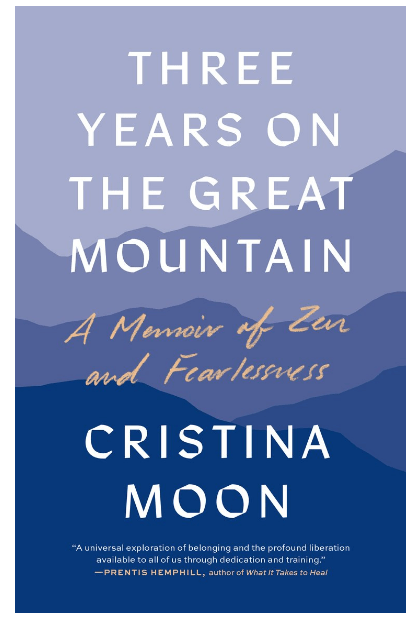
Reverend Cristina Moon lives and trains at Daihonzan Chozen-ji in Honolulu. Her first book, Three Years on the Great Mountain: A Memoir of Zen and Fearlessness, about her first three years living and training at Chozen-ji, is being published by Shambhala Publications on June 18, 2024. Available for pre-order now. Moon’s writings can be found at http://www.cristinamoon.com

http://www.cristinamoon.com/book-event

Agent of Change

WOW! Tricycle magazine offers us an archive article for this holiday weekend. It’s longer than normal but there’s so much here from Gloria Watkins aka bell hooks that the entire article is provided should you have the desire and time to read it.

If you’re just looking for highlights here are a few that jumped out at me:

  • Our true self transcends gender, race, religion and any other isms in our culture.
  • “If you’re attached to being a victim, there is no hope.”
  • “Things are always more complex than they seem. That’s more useful and more difficult than the idea that there is a right and wrong, or a good or bad, and you just decide what side you’re on.”
  • Every teacher is challenged by their culture and upbringing including Thich Nhat Hanh
  • Yes, I can use my rage, but only if there’s something else there with that rage.”

Agent of Change: An Interview with bell hooks

An interview with bell hooks by Helen Tworkov


.Helen Tworkov is Tricycle‘s founding editor and author of Zen in America: Profiles of Five Teachers (1989). She’s also the co-author of Turning Confusion Into Clarity: A Guide to the Foundation Practices of Tibetan Buddhism (2014) and In Love With the World: A Monk’s Journey Through the Bardos of Living and Dying (2019), which she wrote with Yongey Mingyur Rinpoche.


bell hooks (1952–2021) was an acclaimed intellectual, feminist theorist, cultural critic, writer, and Distinguished Professor-in-Residence at Berea College in her native Kentucky, where she also founded the bell hooks Institute.