Category Archives: nature

Feb 7 – Racoon Reckoning

Today’s senryu: Racoon Reckoning

Momma and three kits

live under our deck with

hideaways galore

These small but fearless omnivores have decided to share our residence. While cleanliness is next to godliness, (See Exodus 30:17-21), however, they have been known to pass on diseases to nearby humans. So, we are keeping our distance.

Our house is surrounded by beauty betty bushes, hickory and oak trees which provide much of their diet we’re told. We also feed wild birds and they apparently enjoy some of the sunflower seeds we distribute.

Hmmm, wonder how long they might be here? What have your racoon experiences been? Any advice for us?

Jan 29 – “Quiet Your Mind from Time to Time”

Meditation and poetry, meditators and poets, like two hands coming together in namaste.

One of the most famous poets of all time is Rumi (full name Jalāl al-Dīn Muḥammad Rūmī). He wrote poetry in the 13th century in Persian, Turkish, Arabic and Greek. His poetry was influenced by his Sufi meditation.

“Rumi was a scholar and poet that lived in 13th century Persia (now modern-day Iran.) Like all extraordinary gifted and profound teachers, Rumi’s words have transcended time and place.

An Islamic scholar and Sufi mystic, Rumi wrote much of his thoughts down in the form of poems … it’s well-known that Rumi was a mystic, devoted to contemplation and self-surrender … Rumi certainly practiced Mur?qabah, an Arabic word that translates to observation in English. Mur?qabah is a form of Sufi meditation where the goal is to “watch over” their spiritual heart and to gain insight into the Ultimate truth.

Nearly every form of meditation practiced, across religious and spiritual traditions, emphasizes quietude of mind. Individuals who are adept meditators are well-aware that mental silence can lead to profound insight, … Please quiet your mind from time to time!” https://www.powerofpositivity.com/rumi-quotes-transform-your-life/

Today’s senryu: Quiet Your Mind from Time to Time

The slower I go

the more I realize, life

is love in motion

Jan 28 – Animal Ministry – “Don’t Push the River”

Some people get it, some don’t. Some people need it, some don’t. Below are two more people who have dedicated their lives and their professions to animal ministry: Robert Gierka and Rebecca K. OConnor. See a brief introduction for each below and check out their websites for more information.

Robert Gierka, Ed.D., Founder and President of the Association for Veterinary Pastoral Education and Pet Chaplain®, Raleigh, NC, USA

Despite the ever growing popularity of pet keeping in America, there are still people who are indifferent to the agony of pet loss, who think a dog is just a dog, and if after two weeks you’re still upset about the dog dying you must be experiencing an irrational attachment. Typically, in an uninformed but well-meaning way, they may suggest, “You need to get another dog; that’ll make you feel better.” Culturally, this is still the norm in Western society, and in my lengthy interviews with pet lovers, there’s a tacit awareness that we have to be careful who we share our feelings with. The truth is that many people still misunderstand or deny the deep emotional and spiritual connections people enjoy with companion animals and the intense grief they can experience when those animals are lost.

My path with AVPE and Pet Chaplain® has been long and circuitous, and, though I strongly believe the mere existence of pet chaplaincy bodes well for the public good, especially for those who grieve for animals, I have run into skepticism about my work in some circles. A good friend of mine told me years ago that some people would “get it” and some would not. The also advised, “Don’t push the river, just go where it flows.” I have found this to be sage advice.” from the Robert Gierka bio at https://petchaplain.com/collaborators/

What is Animal Ministry and Why Does It Matter

Animal ministry is actually about people and how we interconnect with the animals around us. Most religions have traditions regarding the spirituality of animals and that intersects with human life in a positive way. Some would argue that in American culture, this reverence for feathered, furred and scaled creatures has disappeared. This is where animal ministries step in.

Jan 24 – Animal Chaplain Blessings

Blessing of the Animals Today

One spiritual care service of an animal chaplain is to bless or thank a higher power for the non-human companion(s) in our life.

For some great examples see this book edited by Lynn L. Caruso:

A couple of quotes from this beautiful book that caught my attention are:

“There are two means of refuge from the miseries of life: music and cats.” Albert Schweitzer, p.31

“Deep peace of the running wave to you. Deep peace of the flowing air to you. Deep peace of the quiet earth to you. Deep peace of the shining stars to you. Deep peace of the infinite peace to you.” Celtic blessing, attributed to Fiona McLeod, p.163

“May all sentient beings be happy, may all sentient beings be peaceful, may all sentient beings be free from suffering.” Buddhist prayer, p.184

In this spirit, I wish you and your companions, human and non-human, many moments of love and joy today:

Bless you and yours, here

and now, may your love expand

like the universe

Jan 23 – Four Roles of an Animal Chaplain

Donna Rae Yuritic’s Compassion for Creatures Animal Ministry https://tucson.com/lifestyles/faith-and-values/animal-chaplain-brings-peace-to-many/article_026dfee4-b9ca-50e5-a4f7-165c63ad5b06.html

Yuritic estimated, as of 2008, there were “50 animal chaplains in the U.S. and Canada.” That number has grown significantly since due to her work and that of Reverend Sarah Bowen.

Sarah Bowen’s roadkill ministry http://www.modernreverend.com/about-rev-sarah.html

What does an animal chaplain do? Sarah Bowen identifies at least four roles in a Tricycle magazine article. https://tricycle.org/article/animal-chaplain/

Those roles are: “animal chaplains primarily help people with

  1. end-of-life care and the grieving process for the animals who often become an integral part of our families but whose deaths we tend to not process as fully. The job can also entail
  2. working with animals in shelters,
  3. addressing behavioral problems through interspecies spiritual practices, and
  4. animal advocacy.https://tricycle.org/article/animal-chaplain/

Or, stated another way on Sarah Bowen’s website, ModernReverend.com:

  1. Supporting animals
  2. Promoting human/animal bonds
  3. Sacred Sendoffs
  4. Advocating for non-human animals

If you’re interested in “honoring animal lives and healing human hearts” check out Sarah Bowen’s companion website Compassion Consortium: https://www.compassionconsortium.org/training

How I Became an Animal Chaplain by Sarah Bowen

Below is an article from Spirituality + Health magazine highlighting Sarah Bowen, Director of the Animal Chaplaincy Training Program offered through Compassion Consortium. I am a current student in this program and look forward to becoming a certified and ordained animal chaplain later this year. Please let me know if you have any questions and I will be happy to respond to you directly or in future blog posts.

May you and all sentient beings be happy, healthy and safe.

How I Became an Animal Chaplain

(And Why It Matters)

by  Sarah Bowen

Sarah Bowen shares ways humans can rebalance their relationship with the rest of the animal kingdom.

“You were real to the boy,” the fairy said,
“because he loved you.
Now you shall be real to everyone.”
—FROM THE VELVETEEN RABBIT

It’s possible the seeds for my call to animal chaplaincy were sown the first time I was read Margery Williams’ The Velveteen Rabbit. In this classic children’s story, a stuffed rabbit struggles with some of the life lessons we humans do: What does it mean to be real? How powerful is unconditional love? Are some lives valued over others?

As a result of the story, I formed rich relationships with my stuffed animals, concerned about their welfare, loving them as the boy in the story loved his rabbit. William’s tale deeply informed my beliefs about what might have a soul or spirit, causing me to treat seemingly inanimate objects with great compassion. One day, I was in the toy store checkout line with my mother, preparing to hand over my allowance in exchange for a fuzzy brown bear. Taking a long look at the bear and then at 7-year-old me, the cashier noted, “Hold on a minute, sweetie, I’ll get you a different one. This bear is missing an eye.”

I boldly announced, “I know he is. That’s why I want him.” The cashier suggested, “Well then let me call a manager so you can get a discount since he’s damaged.” I emphatically countered, “That is just the way he is, and I will pay full price. He’s worth it.”

Much to my mother’s dismay, my growing love of animals also included bringing home dead chipmunks. Raised as a preacher’s kid, I often visited funeral homes with my father. I deduced that these animals needed burial in our bushes, accompanied by a small service ending with “May the Force be with you, chipmunk.”

Decades later, I found myself explaining to my new husband why we could not allow the cats to catch any mice in our house, teaching him how to capture the mouse in Tupperware and return it outside. In the event the cats won the scramble, a backyard burial would ensue, ending in the blessing, “May you have a most auspicious next lifetime, mouse.”

In my 40s, I enrolled in a seminary program to learn about the world’s spiritual traditions—but with no desire to be a pulpit preacher like my father. About a year in, students were asked to share about what each might do for their ministry. I blurted out, “I’m going to have a roadkill ministry.” Silence and wide-eyed stares followed. I continued (as if I was in a pulpit), “Each year, human motorists kill nearly 400 million animals, leaving them to die on the road. It’s just one of the ways we have become careless, callous, and cruel to the other beings we share the planet with.”

Perhaps impressed by my homiletics, my academic advisor suggested, “Have you ever thought about animal chaplaincy?” Now it was my turn for wide eyes, paired with a gaping jaw, as I queried incredulously, “Wait … that’s a real thing?”

A Day in the Life of an Animal Chaplain

No, I do not have a church that animals attend. However, you might be surprised how many people ask me if I do. Instead, my ministry takes place where animals are.

First, there are the needs of the cats we share our home with, and myriad critters who occupy the land on which our house sits. From our cleaning products to the type of ice melt we use on the driveway, each choice is informed by the needs of all the beings we live with, not just the two-legged ones paying the mortgage.

Next, there are the 8 million dogs and cats surrendered to animal shelters each year in the US—more than 913 each hour. Each week, I spend time sitting, playing, or talking with some of these animals. I’m especially drawn to those who are hardest to place in new homes, the so-called special needs animals. Many needs are simply symptoms of being scared, lonely, or confused as the result of being abandoned.

Humans can also be scared and downright perplexed when it comes to decisions around medical care and end-of-life decisions regarding their companion animals. As a chaplain, I help people deal with these issues and the grief and loss that often follow.

Finally, animal advocacy takes an increasing amount of my time, as I sign petitions and educate people on animal-welfare issues and rights. For example, as our society continues to expand into what was once wild, we traumatize and displace millions of other creatures. In the book Ethics on the Ark, William Conway notes, “It is a paradox that so many humans agonize over the well-being of an individual animal yet ignore the millions daily brutalized by the destruction of their environments. … We are touched with sadness at the plight of vanishing species but much more readily brought to tears by the difficulties of E.T., Dumbo, or Mickey Mouse. … Poorly equipped to discern data from deceit, we populate our concepts with caricatures.”

Further, we seem oblivious to what is happening in our food, entertainment, and consumer-goods systems, which are clearly out of alignment with what our spiritual and religious traditions espouse. Dr. Richard Schwartz, president Emeritus of Jewish Vegetarians of North America, outlines the horror we face today. “The insanity of current policies towards animals can be summarized as follows: Firstly, millions of animals are killed to protect our livestock. Then billions of animals are slaughtered for your food. As a result of our flesh-centered diets, millions of additional animals are tortured and killed seeking cures for … diseases, which people generally wouldn’t get in the first places if we had more sensible diets.”

I profess, working to decrease the atrocities of our systems is hard some days. Our society’s collective denial, endless excuses, and senseless rationalizations abound as people tell me, “Stop. I don’t want to know. Leave me be.”

Luckily, two rebellious black cats named Deacon and Buba-ji, Picasso the rescued goldfish, Max the squirrel, a backyard full of yet-to-be-named critters, and my incredibly supportive husband await me at home. All greet me with unconditional love, reminding me what is real and inspiring me to continue working towards a world in which all lives matter.

Why It Matters

It turns out that what many of us were told as children is no longer real. Scientists continue to uncover plentiful evidence that many animals can empathize, communicate over long distances, complete complex tasks, and do all sorts of amazing things for which we historically have not given them credit.

Our food does not come from idyllic farms where the Farmer and his Wife treat animals well in the Dell. It’s heartbreaking to realize our species, which once had a deep reverence for life and consisted on a diet primarily of grains, now supports a system that abuses and kills six million animals each hour for food alone. Even for people unconcerned with animal welfare, there is a case for alarm: Animal farming is a major contributor to global warming. In fact, it’s the No. 1 cause of climate change.

Contrary to what many of us learned in Sunday School, religion does not unequivocally state that we can use animals as we please. Today’s theologians, including Andrew Linzey, Ken Stone, and Sarah Withrow King, have dug deeply into Jewish and Christian texts to expose solid academic cases that dominion was not intended to mean taking anything (or anyone) from the earth to satisfy our out-of-control desires.

Finally, sociologists who have begun to study the effects of speciesism suggest that as we privilege some animals over others, and humans over all animals, there is a relation- ship to other types of prejudice. A 2018 study published in the American Psychological Association’s Journal of Personality and Social Psychology notes, “speciesism is psychologically related to human-human types of prejudice such as racism, sexism, and homophobia.” In addition, people with speciesist views tend towards lower levels of empathy and prosociality.

The foundation of our inherited values about other sentient beings is cracking. In field after field, people are redefining what we now know as true. And they need your help.

What You Can Do

• Reflect. Take a few minutes to consider your relationships with beings other than humans. What feels in balance? What doesn’t?

• Watch Speciesism: The Movie.

• Listen to the audiobook A Plea for the Animals: The Moral, Philosophical, and Evolutionary Imperative to Treat All Beings with Compassion by Matthieu Ricard.

• Grow. Cultivate a humane backyard using animal- friendly landscaping methods from Nancy Lawson (humanegardener.com).

• Reduce. Pledge to eat fewer animal products for 30 days at reducetarian.org.

• Download. Check out the Happy Cow app to find cruelty-free food worldwide and the Bunny Free app to find out if a company tests on animals.

• Volunteer. Visit your local animal shelter. Pet a cat. Play with a dog. Chill with a rabbit.

• Advocate. Get involved with an organization such as World Animal Protection, Animal Equality, or Mercy for Animals.

• Love. Save a mouse. Bury a chipmunk. Meditate with squirrels.

• Read. Dust off The Velveteen Rabbit.

• Become real.


About the Author

Sarah Bowen is an animal chaplain, multifaith spiritual educator, and award-winning author of Spiritual Rebel: A Positively Addictive Guide to Finding Deeper Perspective & Higher Purpose. Her latest book is Sacred Sendoffs: An

Click for more from this author.

https://www.spiritualityhealth.com/articles/2020/03/04/how-i-became-an-animal-chaplain-and-why-it-matters

Jan 21 – A Poet More People Should Know – Goethe

Johann Wolfgang von Goethe

“One of the preeminent figures in German literature, poet, playwright, and novelist Johann Wolfgang von Goethe was born in Frankfurt, Germany, in 1749. … Goethe is most well-known for his epic poem Faust (1808) … The poem depicts a young scholar who, frustrated by the limits to his education, power, and enjoyment of life, engages the assistance of the devil at the cost of his soul. … Goethe had a profound impact on later literary movements, including Romanticism and expressionism, and made important contributions to philosophical and naturalist schools of thought.” https://www.poetryfoundation.org/poets/johann-wolfgang-von-goethe

For more information see https://en.wikipedia.org/wiki/Johann_Wolfgang_von_Goethe

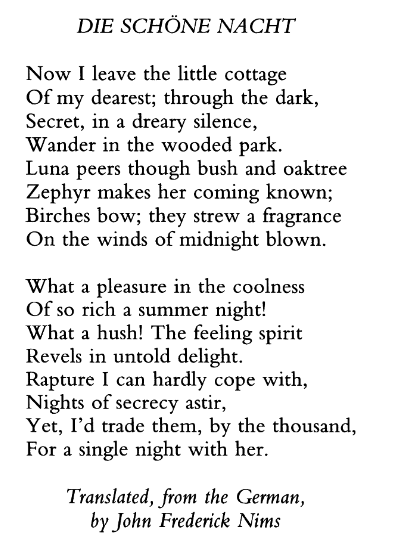
Two of his lesser-known poems speak to me:

https://www.poetryfoundation.org/poetrymagazine/browse?contentId=51848

https://allpoetry.com/The-Misanthrope

Here’s today’s homage senryu: Danke Goethe

Metta man – Goethe

confusing lust for love and

breath for life again

Jan 14 – What Is a Sentient Being?

Today’s senryu: What Is a Sentient Being?

Can we feel our pain?

Can we communicate care?

Are we sentient?

I sometimes wonder if all humans are sentient beings (i.e., able to care for self and others). Some human behavior can appear sociopathic (i.e., lacking empathy with little or no remorse).

I rarely wonder if other-than-human animals are sentient. Companion animals, especially, will often demonstrate a variety of feelings and they are able to communicate those feelings without words.

Below are five references I recommend for learning more about sentient beings and how we might be more sentient ourselves.

“A sentient being can feel, perceive and sense things. They have an awareness of surroundings, sensations, thoughts and an ability to show responsiveness. Having senses makes something sentient, or able to smell, communicate, touch, see, or hear. All sentient beings have an awareness of themselves they can feel happiness, sadness, pain and fear.” Jenni Madison, What Is a Sentient Being? @ naturesheart.org

“Humans have long insisted on believing that we are different from other animals, and somehow better. This idea, however, is slowly starting to change. Animals have moved into our homes as companions. We spend hours watching their antics on social media. We throw birthday parties on their behalf and spend millions every year on their care. And while our relationships with our pets are changing, research is also increasingly demonstrating sentience in nonhuman animals, challenging the idea that humans and animals are separated by an insurmountable gap.” Grace Hussain, https://sentientmedia.org/sentient-being/

Based on award-winning scientist Marc Bekoff’s years studying social communication in a wide range of species, this important book shows that animals have rich emotional lives. Bekoff skillfully blends extraordinary stories of animal joy, empathy, grief, embarrassment, anger, and love with the latest scientific research confirming the existence of emotions that common sense and experience have long implied. Filled with Bekoff’s light humor and touching stories, The Emotional Lives of Animals is a clarion call for reassessing both how we view animals and how we treat them. https://www.amazon.com/Emotional-Lives-Animals-Scientist-Explores/dp/1577316290

Jan 13 – RESPONDING TO THE CALL AND …

Animals, companion AND wild, teach us daily, if we take time to notice, to listen, to contemplate. In our interconnected world, we cannot survive without others; biologically or metaphysically.

This week, I reflected on our animal nature, mammal classification, omnivore eating habits, AND our ability to communicate AND be compassionate like fellow animals on this planet (see previous posts AND their references to birds, dogs AND a whale).

Individually, we are both special AND incapable of living without many other life forms in our biosphere. It “takes a village” to learn and grow … it takes an environment to be born AND live before we die.

One of our individual attributes is the talent or gift we uniquely possess to contribute to our environment AND our community. See today’s senryu AND daily meditation from Richard Rohr below.

Today’s senryu: RESPONDING TO THE CALL AND …

here I am, now what?

receiving AND giving back –

mammal relay race

Richard Rohr’s Daily Meditation

From the Center for Action AND Contemplation

Week Two: Responding to the Call

Surrendering to Our Soul Gift

For Father Richard, God shows us our soul’s calling through spiritual practice AND letting go of the ego’s drive:

Our age has come to expect satisfaction. We have grown up in an absolutely unique period when having AND possessing AND accomplishing have been real options. They have given us an illusion of fulfillment—AND fulfillment now—as long as we are clever enough, quick enough, AND pray or work hard enough for our goals or rewards. [1]

I am convinced that the Book of Jonah can best be read as God moving someone from a mere sense of a religious job or career to an actual sense of personal call, vocation, or destiny. It takes being “swallowed by a beast” AND taken into a dark place of nesting AND nourishing that allows us to move to a deeper place called personal vocation. It involves a movement from being ego-driven to being soul-drawn. The energy is very different. It comes quietly AND generously from within. Once we have accepted our call, we do not look for payment, reward, or advancement because we have found our soul gift.

I have met many people who have found their soul gift, AND they are always a joy to work with. It’s apparent they are not counting the cost, but just want to serve and help. Benedictines have a group they call oblates, which means “those who are offered.” To come with our lives as an offering is quite different from the seeking of a career, security, status, or title. Even the [retired head of the] Vatican’s office for bishops dared to admit publicly [his] worries about rampant careerism among bishops worldwide as they sought promotion to higher AND more prestigious dioceses. [2] It sounds like we still have James AND John wanting to sit at the right AND left sides of the throne of Jesus (Mark 10:37). Maybe young people need to start there, but we can see why Jonah has to be shoved out of the boat. Otherwise, he never would have gotten to the “right” Nineveh.

We must listen, wait, AND pray for our charism AND call. Most of us are really only good at one or two things. Meditation should lead to a clarity about who we are AND, maybe even more, who we are not. This second revelation is just as important as the first. I have found it difficult over the years to sit down AND tell people what is not their gift. It is usually very humiliating for individuals to face their own illusions AND inabilities. We are not usually a truth-speaking people. We don’t speak the truth to one another, nor does our culture encourage the journey toward the True Self. The false self often sets itself up for unnecessary failures and humiliations. [3]

[1] Adapted from Richard Rohr, Near Occasions of Grace (Maryknoll, NY: Orbis Books, 1993), 1. 

[2] See Michael J. Buckley, “Resources for Reform from the First Millennium,” in Common Calling: The Laity and Governance of the Catholic Church, ed. Stephen J. Pope (Washington, DC: Georgetown University Press, 2004), 77.

[3] Adapted from Richard Rohr, Dancing Standing Still: Healing the World from a Place of Prayer (New York: Paulist Press, 2014), 82–83.

Jan 10 – 3 Things to Know about Humans as Animals

Humans are competitive, omnivores and violent BUT do we have to be?

COMPETITION in the world is seen as a natural aspect of our “struggle for existence” and a basis for natural selection. See Population Biology: Ecological and Evolutionary Viewpoints https://link.springer.com/book/10.1007/978-3-642-74474-7

  • What is the competition between species? Food, shelter and water.
  • What is the competition within the same species? Food, shelter, water and mates.

And it was Sigmund Freud he reminded us of our sublimation: In psychology, sublimation is a mature type of defense mechanism, in which socially unacceptable impulses or idealizations are transformed into socially acceptable actions or behavior, possibly resulting in a long-term conversion of the initial impulse. Sigmund Freud 1926. Or in other words, we divert or modify our instinctual impulses into more socially acceptable activity. en.wikipedia.org/wiki/Sublimation_(psychology)

https://www.americanscientist.org/article/meat-eating-among-the-earliest-humans

OMNIVORES

Humans, as omnivores, (meaning they eat both plants and meat) may have developed larger brains as a result of meat-eating behavior. “Animals have been part of human diets for more than 3 million years” and “we do know that meat-eating was one of the most pivotal changes in our ancestors’ diets and that it led to many of the physical, behavioral, and ecological changes that make us uniquely human.” (See Briana Pobinar’s article https://www.americanscientist.org/article/meat-eating-among-the-earliest-humans)

VIOLENCE

“Some argue that humans are inherently aggressive, violent, and competitive, cooperating only for personal gain, while others believe that humans are inherently compassionate, peaceful, and loving, acting aggressively and violently only in unnatural circumstances or when they are afraid.

Isn’t it more reasonable to perceive humans as capable of horrific cruelty and violence as well as astonishing altruism and peaceful collaboration (and everything in between), and to notice that the great majority of the time? Humans can even be cooperative and competitive simultaneously. Think of team sports, in which we collaborate peacefully with our teammates to compete (sometimes violently) with another team.

But what remains true, no matter where one falls on the “What is humanity’s essential nature?” spectrum, is that we are capable of nurturing, reinforcing, and cultivating our more peaceful natures, and that we can also become violent based on the situations and systems in which we find ourselves.” Zoe Weil, co-founder and president of the Institute of Humane Education

(See https://www.psychologytoday.com/us/blog/becoming-solutionary/201910/are-humans-naturally-peaceful-or-violent)

Today’s senryu: 3 Things to Know about Humans as Animals

we compete, eat meat

and kill each other – and yet

we can learn and love