I’m a fan of both Lynn J Kelly and Martine Batchelor so reposting Ox-herding 1 is doubly satisfying for me. Hope you enjoy the link below as well.
Lynn and Martine Share the Ox-herding Story
Leave a reply

I’m a fan of both Lynn J Kelly and Martine Batchelor so reposting Ox-herding 1 is doubly satisfying for me. Hope you enjoy the link below as well.
Finding your True Self through ceramics, or any other art form, takes time and focus and diligence and acceptance.
Below are excerpts from another Tricycle article by Christina Moon. Here’s hoping you also are inspired by her words and example.
http://www.cristinamoon.com/about
Ceramics, Zen, and the true purpose of Zen in the arts (and the arts in Zen) By Reverend Cristina Moon APR 25, 2024
The thing about approaching the arts through Zen is that, by looking at any art as more than just an art but as a Way, you start to see how the state of your mind, body, and spirit is reflected in everything you do. The product of your art is a snapshot of the state of your mind in the moments of creation.
All of the rich and varied feedback that’s a part of Zen training told me the same thing. Because of my habits and attachments, I was far from my True Self. I was already me, of course, and perfectly so, but also just a little off.
Nakazato Sensei likes to chide other potters, saying, “Everyone thinks they’re an artist.” Instead of trying to make art, he says, we should just make things that are useful. And we should make lots of them.
I can see clearly that my sensitivity and strength in handling the clay has grown.
As time passes, I continue to see myself reflected back in these small plates, which is to say that they are more straight, upright, sturdy, and striking—but still have a lot of room for improvement.
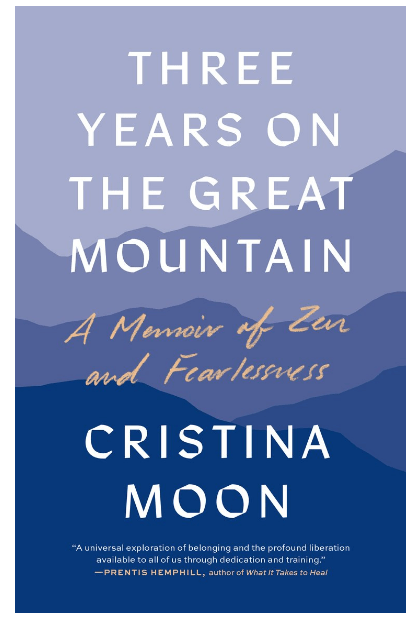
Reverend Cristina Moon lives and trains at Daihonzan Chozen-ji in Honolulu. Her first book, Three Years on the Great Mountain: A Memoir of Zen and Fearlessness, about her first three years living and training at Chozen-ji, is being published by Shambhala Publications on June 18, 2024. Available for pre-order now. Moon’s writings can be found at http://www.cristinamoon.com
WOW! Tricycle magazine offers us an archive article for this holiday weekend. It’s longer than normal but there’s so much here from Gloria Watkins aka bell hooks that the entire article is provided should you have the desire and time to read it.
If you’re just looking for highlights here are a few that jumped out at me:
An interview with bell hooks by Helen Tworkov
.Helen Tworkov is Tricycle‘s founding editor and author of Zen in America: Profiles of Five Teachers (1989). She’s also the co-author of Turning Confusion Into Clarity: A Guide to the Foundation Practices of Tibetan Buddhism (2014) and In Love With the World: A Monk’s Journey Through the Bardos of Living and Dying (2019), which she wrote with Yongey Mingyur Rinpoche.
bell hooks (1952–2021) was an acclaimed intellectual, feminist theorist, cultural critic, writer, and Distinguished Professor-in-Residence at Berea College in her native Kentucky, where she also founded the bell hooks Institute.
The Center for Action and Contemplation provides another message of diversity and inclusion. Check out the excerpts from their message below and the two contributing authors as well.
Thursday, May 23, 2024 at cac.org/daily-meditations/the-spirit-is-for-all/
Author Lisa Sharon Harper describes the diversity of the early church:
At Pentecost, the Holy Spirit rushed in and caused all those present to speak in languages that were not their own. Each person understood the others…. God established the confusion between languages at the Tower of Babel (see Genesis 11). At Pentecost, God brought the languages together, but not in the way we would imagine. God did not unite the world under one imperial language. Rather, the power of God made it possible to have unity in the midst of diversity. God made it possible for people to speak languages that were not their own and to understand one another.
In other words, all the cultural, economic, and gender barriers between them were broken down. [1]
Theologian Luke Powery names how the Holy Spirit’s presence is given for all, not just some:
No human voice or body is denied the presence and fire of God. Humans, regardless of ethnicity or race, speak a multiplicity of languages to reveal the diversity of God from the beginning, which is the vision of the end….
Pentecost… creates a new world. It is a new creation ignited by the Spirit. The Spirit may be “unsought” or “unwanted” but is “intent on making all things new.” [3] This includes new flesh, a new body for the people of God. [4]
References:
[1] Lisa Sharon Harper, The Very Good Gospel: How Everything Wrong Can Be Made Right (New York: Waterbrook, 2016), 183–184.
[2] Zora Neale Hurston, The Sanctified Church (Berkeley, CA: Turtle Island, 1981), 91.
[3] Stanley Hauerwas and William H. Willimon, The Holy Spirit (Nashville, TN: Abingdon Press, 2015), 35.
[4] Luke A. Powery, Becoming Human: The Holy Spirit and the Rhetoric of Race (Louisville, KY: Westminster John Knox Press, 2022), 70–71, 73, 75.
lisasharonharper.com/about-lisa/
chapel.duke.edu/staff/rev-dr-luke-powery
Below are excerpts from a delightful post by Myojin on the purpose of religion and why Zen is different.
Hope you enjoy this as much as I did.
For some it’s the belief in an all-powerful, all-knowing God, who cares about our lives.
For others it’s about a better way to live, through morality, devotions, spiritual practices; prayer, meditation. Be the aim union with divinity, greater connection to others, to live more fully in the moment
Any practice is based on the premise that there is a better way to live than the way we are living now.
If zen is a religion it’s the religion of getting up in the morning and brushing our teeth. It’s the religion of ordinary things, stripped of fantasy and exposed to stark truth.
Zen is making up our minds that since we are here anyway, living life, we may as well do it well.
Blind faith? Faith can move mountains? Faith of our fathers? Author Richard Fast offers a critique on faith worth reading, I think.
“I’m NOT trying to sell Atheism … “God” forbid. I’m selling the concept of searching and finding your faith.”
Check out an excerpt from Richard Fast’s provocative article recently published in Backyard Church
The more I searched for answers outside myself, the more frustration and anxiety I felt.
I didn’t require a God or a particular faith to settle my tormented soul. With total peace of mind, I could accept that there doesn’t have to be a God. The universe could just be a beautiful mystery.
I didn’t have to invent or conjure anything to calm my soul. I didn’t have to force myself into mental contortions to follow someone else’s belief; I could happily accept that there are many questions to which I will never know the answers, and I’m okay with that.
If history has taught us anything, there’s very little we can honestly know. Finding faith is a uniquely human experience that makes the challenging road of life a little easier to travel.
But many years of searching, thinking, deep introspection, and an acceptance of Atheism (the unknowable) have finally given me peace of mind.
I’m NOT trying to sell Atheism … “God” forbid. I’m selling the concept of searching and finding your faith.
Whatever that may be, I sincerely hope that you find your faith, as I’ve finally found mine.
I am the author of The Challenge of Choice … how to make a “good” decision when it REALLY matters!
Are you lovable? Do you have a perspective worth sharing? Is the world better off for you being here?
Today’s meditation from the Center for Action and Contemplation includes a challenge from Jacqui Lewis to “really see.” See an excerpt below and read the full meditation on cac.org.
jacquilewis.com
A Heart-Centered Revolution Excerpt
Rev. Dr. Jacqui Lewis writes of the solidarity necessary to transform our culture and our world:
In order to live a moral life, a good life, an ubuntu life, we must commit to a life of love that means seeing all the things ..…
Friend, you are the only one standing where you stand, seeing what you see, with your vantage point, your story. You are right there for a reason: to have, as my dear friend Ruby Sales says, “hindsight, insight, and foresight.” I want us to learn to see, with our eyes wide open, how best to be healers and transformers. I want us to really see, to fully awaken to the hot-mess times we are in and to the incredible power we have to love ourselves into wellness….
I want us open to revelation, not afraid of it, and open to the ways that it will provoke us to believe assiduously in how lovable we each are, and in the love between us and among us because, actually, believing is seeing. [2]
[2] Jacqui Lewis, “Apocalypse Now: Love, Believing, and Seeing,” Oneing 10, no. 1, Unveiled (Spring 2022): 44–45. Available in print and PDF download.
“Don’t forget … to call yourself Home.” Kaitlin Curtice
This is a beautiful excerpt from the Center for Action and Contemplation about Kaitlin Curtice’s writing on the sacred legacy of home.
Check out both links identified below. You will be comforted and edified.
Finding Home in Ourselves
Author Kaitlin Curtice writes about the sacred legacy of home:
May we always return to the places where the stories begin, to challenge them, to accept and honor them, and to whisper to ourselves and one another that we are always, always arriving.
Don’t forget,
my love,
to live.
Don’t forget
to love yourself,
all of you,
from every season
and every place,
because you never know
when they will
come knocking for
a cup of coffee
and an overdue hug.
call yourself Home.
Richard Rohr and the Center for Action and Contemplation offer another provocative post at their Daily Meditation site: cac.org/daily-meditations/the-departure-and-the-return/
Below are a few excerpts that especially interest me, and hopefully you as well.
“We are created with an inner drive and necessity that sends all of us looking for our True Self, our true home, whether we know it or not. This journey is a spiral and never a straight line. …
We dare not try to fill our souls and minds with numbing addictions, diversionary tactics, or mindless distractions. (We are) found, precisely in the depths of everything, even and maybe especially in the deep fathoming of our fallings and failures. …
If we go to the depths of anything, we’ll begin to knock upon something substantial, “real,” and with a timeless quality. We’ll move from the starter kit of “belief” to an actual inner knowing. This is most especially true if we have ever (1) loved deeply, (2) accompanied someone through the mystery of dying, or (3) stood in genuine life-changing awe before mystery, time, or beauty. …
Like Odysseus, we leave from Ithaca and we come back to Ithaca, but now it is fully home because all is included and nothing wasted or hated: even the dark parts are used in our favor. … What else could homecoming be?
Poet C. P. Cavafy (1863–1933) expressed this understanding most beautifully in his famous poem “Ithaca”:
Ithaca has now given you the beautiful voyage.
Without her, you would never have taken the road.
With the great wisdom you have gained on your voyage,
with so much of your own experience now,
you must finally know what Ithaca really means. [1] “
References:
[1] See C. P. Cavafy, “Ithaca,” in The Complete Poems of Cavafy, trans. Rae Dalven (New York: Harcourt, Brace and World, 1961), 36–37. Paraphrased by Richard Rohr.
NO BONNET SONNET
not ev’ry itch need be scratched,
not ev’ry egg need be hatched
not ev’ry thought need be spoke,
not ev’ry dream need be woke
colors seen on judgment day,
practice or pose your one way
no aura, no tonal vibe,
no ritual, ‘gyptian scribe
which of us doesn’t belong?
wrong question, don’t sing along
let go ego before burst,
don’t forget that she comes first
deep bow to Wilda Tanner
hat tip to Ian Kerner
 Life Matters