Category Archives: science

Feb 7 – A Heart of Flesh (1, 2, 3, Infinity)

Today’s senryu: Heart of Flesh

First heart of gold then

a greater truth – heart of flesh.

I and Thou are All

———————————————–

Neal Young sings of his search for a Heart of Gold while racing against the time of getting old. (See https://genius.com/Neil-young-heart-of-gold-lyrics)

Martin Buber‘s explains in, I and Thou, that “human life finds its meaningfulness in relationships.”(See https://en.wikipedia.org/wiki/I_and_Thou)

https://joanchittister.org/

Joan Chittister‘s book, Heart of Flesh, broadens these concepts to say that “the full humanity of women, leads all of us to new, better ways of being and relating.” (See https://joanchittister.org/books-page/heart-flesh-feminist-spirituality-women-and-men)

The feminist image of God is humble and feeling, nonviolent and empowering. Jesus, the feminist image of God, cures and loves, is vulnerable and receptive, laughs and dances at wedding feasts, cries tears and feels pain. This glimpse of God is the glimpse of otherness at its ultimate. It is in this model of otherness that the feminist puts hope for equality, for recognition, for respect, for the end of the sexism …

The world needs the voice of this otherness in order to hear the cries of the whole human race. The world needs the presence of otherness to redeem it from its headlong plunge for profit, power, comfort, control, individualism, and dominance. The world needs respect for this otherness, not simply patronizing approval.

 —from Heart of Flesh: A Feminist Spirituality for Women and Menby Joan Chittister (Eerdmans)

Yin, Yang, Qi, All

Perhaps another equation worth considering comes from the Tao Te Ching, verse 42:

Tao gives birth to One,
One gives birth to Two,
The Two gives birth to Three,
The Three gives birth to all universal things.
All universal things shoulder the Yin and embrace the Yang.
The Yin and Yang mingle and mix with each other to beget the harmony.

https://www.learnreligions.com/tao-te-ching-verse-42-3183165

March 1 – Why Mindfulness Is Key to Climate Action

Today’s senryu: Why Mindfulness is Key

touch a place of peace

deep listening/skillful speech

joy stronger than hate

https://tedxlondon.com/podcasts/climate-quickie-why-mindfulness-is-key-to-climate-action/

“Mindfulness, meditation and active listening can help us take more nourishing climate action, says Sister True Dedication, a Zen Buddhist Nun ordained by Thich Nhat Hanh on TEDxLondon’s Climate Curious.”

Check out this podcast which offers a 5-minute introduction to Thich Nhat Hanh’s book Zen and the Art of Saving the Planet and explains how Mindfulness can help us achieve change through compassion. As Sister True Dedications says:

  • Joy is more powerful than anger.
  • We can embody the change we seek.
  • We can have compassion for “climate criminals” for we are them also.”

Feb 24 – 10 Benefits of Having a Dog

Here’s a repost of an article from Parade magazine by Margie Zable Fisher 

Weighing up the pros of having a dog? Here’s 10 ways it could improve your life.

10 Benefits of Having a Dog© Provided by Parade

Most of us love dogs. In fact, 63% of households own a dog, according to the 2019-2020 National Pet Owners Survey conducted by the American Pet Products Association (APPA). This has steadily increased over the years and was helped by a 30% jump in pet adoptions during the COVID-19 pandemic, according to the Insurance Research Council’s October 2020 report.

There are so many benefits of having a dog. Dogs give us unconditional love and snuggles and they also help our health in a variety of ways, especially by motivating us to exercise, by walking them. But did you know that pets help improve not just your physical health, but your mental health, too?

You may have heard about emotional support animals, often seen providing comfort and emotional support to owners on airplanes and in other public places. Or even psychiatric service dogs, which are specially trained to help people with mental health issues.

The good news is that your family dog can also provide many mental health benefits.

Weighing up the pros of having a dog? Read on for science-backed ways that pooches help reduce anxiety, stress, loneliness and more.

Benefits of having a dog

1. Decreases anxiety

“Dogs provide unconditional love and are a safe harbor when people are in distress,” says Leslie Sinn, DVM, DACVB, of Behavior Solutions, which helps pet owners with animal behavior issues. A variety of research shows that dogs help people relax and become less anxious.

2. Benefits kids with ADHD

Dogs can have a calming influence. In a 2015 study, children who received cognitive-behavior therapy (CBT) with canine-assisted intervention experienced a larger decrease in the severity of ADHD symptoms. Social skills improved and difficult behavior was reduced.

3. Lowers stress for college students

Dorm life isn’t just one big party. College students have always experienced a high level of stress, due to the demands of studying, getting a job and even getting too little sleep. Inspired by “Pet the Stress Away” programs on college campuses, researchers at Washington State University studied 249 students, some of whom interacted with cats and dogs. The results were extremely paw-sitive. The group that interacted with the animals had a significant decrease in cortisol, a stress hormone. Even more interesting? Stress levels decreased after only 10 minutes.

4. Lowers stress for kids

Several studies show that dogs lower stress levels in children. One study showed that after being exposed to something stressful, brief, unstructured interactions with dogs decreased kids’ anxiety. Another study showed that when a dog was present during a physical examination, children had larger decreases in arterial pressure, heart rate and behavioral distress. In other words, they were less stressed.

5. Lowers stress for everyone

Having a pet allows us to fulfill one of our most basic needs—the human need for touch. But that’s just the beginning of the benefits of owning a dog. In addition to research showing that just petting a dog lowers stress, a study showed that cuddling, playing and petting Rover increases the level of the feel-good hormone oxytocin, which is the same hormone that helps bond moms to babies.

6. Decreases children’s anxiety

“Animals don’t judge. I think that’s one of the things they do best,” says Debra Horwitz, DVM, DACVB, of Veterinary Behavior Consultations. “For example, when a child is learning to read and reads to a dog or a cat, they might be more comfortable, because no one is correcting them on the pronunciation,” she says. One study measured the effect of children when reading to dogs. It found that anxiety levels of children were lower when reading to dogs than when they weren’t reading to dogs, as measured by a decrease in blood pressure. Dogs may also help lessen the anxiety of kids in other situations. In a study by the Centers for Disease Control and Prevention, the anxiety levels of 643 children at their annual pediatric doctor visit were analyzed. The results showed that the anxiety levels for kids with dogs in the home was 12%, vs. 21% for those without dogs.

7. Helps older folks feel better

As we get older, our friends and family might move away or even pass away, physical limitations may prevent activities and it may become harder to socialize. That’s why having a pet is so important to older adults. In fact, one study found a variety of benefits for community-dwelling older adults who owned pets: they provided companionship, gave a sense of purpose and meaning, reduced loneliness and increased socialization.

8. Reduces loneliness

In addition to being your buddy in the house and on the go, your dog can even help you make new friends. “Dogs are social magnets,” says Sinn. “They can help anyone meet people, but they are especially helpful with people who have problems engaging with others.” Case in point: One study showed that dogs help people with intellectual disabilities have social encounters, since more people talk to them when they have dogs.

9. Improves mood

It’s hard to be sad when you’re hanging out with Rover. Several studies confirm that we feel better when we’re with our dogs. One example, from the University of Missouri-Columbia, shows that participants who stroked their dogs for a few minutes experienced a release of mood-boosting hormones, including oxytocin, serotonin and prolactin.

10. Increases happiness

Doesn’t it feel great coming home to a wagging tale and a joyful pet? Science confirms that we feel a sense of wellbeing from having pets. In fact, one study found that pet owners were more satisfied with their lives than those who didn’t own pets.

The Four Pillars of Well-Being

Filmmaker Thomas Wade Jackson and Producer Victoria Moran have created a documentary well worth watching: A Prayer for Compassion. You can learn more about this at their respective websites: http://aprayerforcompassion.com/ and https://mainstreetvegan.com/a-prayer-for-compassion/

But today, I want to highlight Jackson’s Four Pillars of Well-Being. As he said:

At the midpoint of filming A Prayer For Compassion — an adventure composing some three-and-a-half years — I realized that if I was going to challenge people to have more self-compassion and take better care of themselves, I would need to start doing that myself. After some time trying to practice what I intended to preach, I discovered what I call my “Four Pillars of Well-Being.” I found that each day I practiced these, to the best of my ability, I felt great. My overall sense of ease seemed to grow. I was finding it hard to get anxious about things that used to worry me. Instead, I had the energy and clarity to discover solutions to the challenges that mattered and let go of those that didn’t.

THE FOUR PILLARS OF WELL-BEING 

  • Eating clean, healthful, vegan (nonviolent) food. I start my day by making a fruit-and-greens smoothie with ground flax and chia seeds to jumpstart my intake of micronutrients and ALA (an Omega-3 fatty acid). I sip on this smoothie throughout the day. This is just one example of caring for the body temple with food. A quick internet search can provide you with information on making the most health-promoting food choices.

  • Exercise and stretching. Movement is another way I increase my energy flow and perform much needed maintenance on the sacred temple that houses my spirit. My favorite kinds of year-round exercise are hiking in nature, riding my bike, working out at the gym, and yoga; I add on swimming and canoeing in the summer. There are so many ways to move our bodies.

  • Meditation and prayer. In these inner pursuits I find my deepest connection to love and peace. In fact, prayer and meditation are directly responsible for the making of A Prayer For Compassion. They sparked the idea and guided me on every aspect of the journey. Meditation has become a wonderful tool that I use throughout the day. I’ve learned not to put rules on meditation, nor judge the way it’s manifesting for me in the moment. Sometimes meditation is just going within for a few minutes  to shift gears and refocus between disparate tasks, or to quietly prepare for a meeting or conversation. Sometimes innovative thoughts come up, so I jot them down and go back within to find another thought waiting. I continue to write them until I either find the silence again or I run out of time. Sometimes I chant “Om,” the primordial sound in the Indian traditions, or hold a thought such as, “I am an instrument of peace.” And sometimes I just listen deeply within and feel my interconnectedness to all things. Meditation and prayer are personal, but there are techniques, resources and even apps to help you discover what works for you.

  • Sleep. This was the last pillar I added — probably because I truly love life and didn’t want to miss anything. I combined this discipline with the other three and found that together they create an overall feeling of well-being that continues to grow. There is a wealth of recent research around sleep which demonstrates the amazing benefits from getting the proper amount of it (seven to 8.5 hours is the range the researchers recommend). The right amount of quality sleep enhances mental clarity and sharpness, decreases inflammation in the body, offsets depression, and may even lead to a longer lifespan. Even so, many of us take sleep for granted and push ourselves to survive on the bare minimum. You deserve better.

I have to be honest that as a single dad and self-employed person, there are days where I leave out one or more of these pillars. Whether a rapidly approaching deadline or a dizzying travel schedule is to blame, I simply do the best I can in the moment, ever remembering to treat myself the way I would treat a dear friend, with kindness and compassion. I remind myself that it’s about progress, not perfection, and strive to trust the divine flow of things.

The Four Pillars are foundational in creating well-being, but they’re just the beginning. There are many other attitudes and practices that can add to our sense of peace, purpose, and connection. Loving relationships with those in our lives, giving back to the world around us, and indulging in activities that feed our soul are all on the list. For me, spending time in nature, having play dates with my daughter, and making music are favorites. For someone else it might be preparing and sharing healthy vegan food, reading a good book, or becoming engrossed in a play or a lecture. It’s simply a matter of making sure we give ample priority to what makes our heart sing. Whether it’s a once-a-month jam session with friends or making jam with a child, parent, or partner, I challenge you to take more time to nurture your soul.

Today, 2/23/23, is an easy date to remember. Why not consider one or more of these four pillars for your life? Why not check out the documentary?

As the cliche goes, today is the first day of the rest of your life. Let us make the most of it.

Feb 10 – Free Will Lemmings

Lemmings and humans share the same scientific classifications of animal and mammal. Free Will is a debatable concept with many schools of thought. So, I’ve been thinking lately…..

Today’s senryu: Free Will Lemmings

lemmings on parade

intelligent design, huh,

over the edge now

For additional information on the creative leap above, check out the Wikipedia excerpts below.

“In popular culture, a longstanding myth holds that they exhibit herd mentality and jump off cliffs, committing mass suicide….

Lemmings have become the subject of a widely popular misconception that they are driven to commit mass suicide when they migrate by jumping off cliffs. It is not a deliberate mass suicide, in which animals voluntarily choose to die, but rather a result of their migratory behavior.

Driven by strong biological urges, some species of lemmings may migrate in large groups when population density becomes too great. They can swim and may choose to cross a body of water in search of a new habitat. In such cases, many drown if the body of water is an ocean or is so wide as to exceed their physical capabilities. Thus, the unexplained fluctuations in the population of Norwegian lemmings, and perhaps a small amount of semantic confusion (suicide not being limited to voluntary deliberation, but also the result of foolishness), helped give rise to the popular stereotype of the suicidal lemmings.” https://en.wikipedia.org/wiki/Lemming

“Free will as an illusion

Spinoza thought that there is no free will. “Experience teaches us no less clearly than reason, that men believe themselves free, simply because they are conscious of their actions, and unconscious of the causes whereby those actions are determined.” Baruch SpinozaEthics

David Hume discussed the possibility that the entire debate about free will is nothing more than a merely “verbal” issue. He suggested that it might be accounted for by “a false sensation or seeming experience” (a velleity), which is associated with many of our actions when we perform them. On reflection, we realize that they were necessary and determined all along….

Buddhists believe in neither absolute free will, nor determinism. It preaches a middle doctrine, ‘dependent origination’, ‘dependent arising’ or ‘conditioned genesis’. It teaches that every volition is a conditioned action as a result of ignorance. In part, it states that free will is inherently conditioned and not “free” to begin with.” https://en.wikipedia.org/wiki/Free_will

Assuming you, the reader, are human, do you think you have free will?

Feb 7 – Racoon Reckoning

Today’s senryu: Racoon Reckoning

Momma and three kits

live under our deck with

hideaways galore

These small but fearless omnivores have decided to share our residence. While cleanliness is next to godliness, (See Exodus 30:17-21), however, they have been known to pass on diseases to nearby humans. So, we are keeping our distance.

Our house is surrounded by beauty betty bushes, hickory and oak trees which provide much of their diet we’re told. We also feed wild birds and they apparently enjoy some of the sunflower seeds we distribute.

Hmmm, wonder how long they might be here? What have your racoon experiences been? Any advice for us?

Jan 30 – Benefits of Mindfulness

There are many benefits to the practice of Mindfulness. The excerpts below come from a more comprehensive article, if you’re interested. Check it out here:(https://www.helpguide.org/harvard/benefits-of-mindfulness.htm). Hopefully this brief introduction will encourage you.

“Practices for Improving Emotional and Physical Well-Being

Mindfulness is the practice of purposely focusing your attention on the present moment—and accepting it without judgment. Mindfulness is now being examined scientifically and has been found to be a key element in stress reduction and overall happiness.

What are the benefits of mindfulness?

Professor emeritus Jon Kabat-Zinn helped to bring the practice of mindfulness meditation into mainstream medicine and demonstrated that practicing mindfulness can bring improvements in both physical and psychological symptoms as well as positive changes in health, attitudes, and behaviors.

Mindfulness improves well-being. 

Mindfulness improves physical health. 

Mindfulness improves mental health. In recent years, psychotherapists have turned to mindfulness meditation as an important element in the treatment of a number of problems, including depression, substance abuse, eating disorders, couples’ conflicts, anxiety disorders, and obsessive-compulsive disorder.

Mindfulness techniques

There is more than one way to practice mindfulness, but the goal of any mindfulness technique is to achieve a state of alert, focused relaxation by deliberately paying attention to thoughts and sensations without judgment. This allows the mind to refocus on the present moment. All mindfulness techniques are a form of meditation.

Basic mindfulness meditation – Sit quietly and focus on your natural breathing or on a word or “mantra” that you repeat silently. Allow thoughts to come and go without judgment and return to your focus on breath or mantra.

Body sensations – Notice subtle body sensations such as an itch or tingling without judgment and let them pass. Notice each part of your body in succession from head to toe.

Sensory – Notice sights, sounds, smells, tastes, and touches. Name them “sight,” “sound,” “smell,” “taste,” or “touch” without judgment and let them go.

Emotions – Allow emotions to be present without judgment. Practice a steady and relaxed naming of emotions: “joy,” “anger,” “frustration.” Accept the presence of the emotions without judgment and let them go.

Getting started

Mindfulness meditation builds upon concentration practices. Here’s how it works:

Go with the flow. In mindfulness meditation, once you establish concentration, you observe the flow of inner thoughts, emotions, and bodily sensations without judging them as good or bad.

Pay attention. You also notice external sensations such as sounds, sights, and touch that make up your moment-to-moment experience. The challenge is not to latch onto a particular idea, emotion, or sensation, or to get caught in thinking about the past or the future. Instead, you watch what comes and goes in your mind and discover which mental habits produce a feeling of well-being or suffering.

Stay with it. At times, this process may not seem relaxing at all, but over time it provides a key to greater happiness and self-awareness as you become comfortable with a wider and wider range of your experiences.

Practice acceptance

Above all, mindfulness practice involves accepting whatever arises in your awareness at each moment. It involves being kind and forgiving toward yourself.

Some tips to keep in mind:

Gently redirect. If your mind wanders into planning, daydreaming, or criticism, notice where it has gone and gently redirect it to sensations in the present.

Try and try again. If you miss your intended meditation session, simply start again.

By practicing accepting your experience during meditation, it becomes easier to accept whatever comes your way during the rest of your day.

Cultivate mindfulness informally

In addition to formal meditation, you can also cultivate mindfulness informally by focusing your attention on your moment-to-moment sensations during everyday activities. This is done by single-tasking—doing one thing at a time and giving it your full attention. As you floss your teeth, pet the dog, or eat an apple, slow down the process and be fully present as it unfolds and involves all of your senses.

Invest in yourself

The effects of mindfulness meditation tend to be dose-related — the more you do, the more effect it usually has. Most people find that it takes at least 20 minutes for the mind to begin to settle, so this is a reasonable way to start. If you’re ready for a more serious commitment, Jon Kabat-Zinn recommends 45 minutes of meditation at least six days a week. But you can get started by practicing the techniques described here for shorter periods.

Adapted with permission from Positive Psychology: Harnessing the Power of Happiness, Personal Strength, and Mindfulnessa special health report published by Harvard Health Publishing.

Last updated: December 5, 2022

Jan 29 – “Quiet Your Mind from Time to Time”

Meditation and poetry, meditators and poets, like two hands coming together in namaste.

One of the most famous poets of all time is Rumi (full name Jalāl al-Dīn Muḥammad Rūmī). He wrote poetry in the 13th century in Persian, Turkish, Arabic and Greek. His poetry was influenced by his Sufi meditation.

“Rumi was a scholar and poet that lived in 13th century Persia (now modern-day Iran.) Like all extraordinary gifted and profound teachers, Rumi’s words have transcended time and place.

An Islamic scholar and Sufi mystic, Rumi wrote much of his thoughts down in the form of poems … it’s well-known that Rumi was a mystic, devoted to contemplation and self-surrender … Rumi certainly practiced Mur?qabah, an Arabic word that translates to observation in English. Mur?qabah is a form of Sufi meditation where the goal is to “watch over” their spiritual heart and to gain insight into the Ultimate truth.

Nearly every form of meditation practiced, across religious and spiritual traditions, emphasizes quietude of mind. Individuals who are adept meditators are well-aware that mental silence can lead to profound insight, … Please quiet your mind from time to time!” https://www.powerofpositivity.com/rumi-quotes-transform-your-life/

Today’s senryu: Quiet Your Mind from Time to Time

The slower I go

the more I realize, life

is love in motion

How I Became an Animal Chaplain by Sarah Bowen

Below is an article from Spirituality + Health magazine highlighting Sarah Bowen, Director of the Animal Chaplaincy Training Program offered through Compassion Consortium. I am a current student in this program and look forward to becoming a certified and ordained animal chaplain later this year. Please let me know if you have any questions and I will be happy to respond to you directly or in future blog posts.

May you and all sentient beings be happy, healthy and safe.

How I Became an Animal Chaplain

(And Why It Matters)

by  Sarah Bowen

Sarah Bowen shares ways humans can rebalance their relationship with the rest of the animal kingdom.

“You were real to the boy,” the fairy said,
“because he loved you.
Now you shall be real to everyone.”
—FROM THE VELVETEEN RABBIT

It’s possible the seeds for my call to animal chaplaincy were sown the first time I was read Margery Williams’ The Velveteen Rabbit. In this classic children’s story, a stuffed rabbit struggles with some of the life lessons we humans do: What does it mean to be real? How powerful is unconditional love? Are some lives valued over others?

As a result of the story, I formed rich relationships with my stuffed animals, concerned about their welfare, loving them as the boy in the story loved his rabbit. William’s tale deeply informed my beliefs about what might have a soul or spirit, causing me to treat seemingly inanimate objects with great compassion. One day, I was in the toy store checkout line with my mother, preparing to hand over my allowance in exchange for a fuzzy brown bear. Taking a long look at the bear and then at 7-year-old me, the cashier noted, “Hold on a minute, sweetie, I’ll get you a different one. This bear is missing an eye.”

I boldly announced, “I know he is. That’s why I want him.” The cashier suggested, “Well then let me call a manager so you can get a discount since he’s damaged.” I emphatically countered, “That is just the way he is, and I will pay full price. He’s worth it.”

Much to my mother’s dismay, my growing love of animals also included bringing home dead chipmunks. Raised as a preacher’s kid, I often visited funeral homes with my father. I deduced that these animals needed burial in our bushes, accompanied by a small service ending with “May the Force be with you, chipmunk.”

Decades later, I found myself explaining to my new husband why we could not allow the cats to catch any mice in our house, teaching him how to capture the mouse in Tupperware and return it outside. In the event the cats won the scramble, a backyard burial would ensue, ending in the blessing, “May you have a most auspicious next lifetime, mouse.”

In my 40s, I enrolled in a seminary program to learn about the world’s spiritual traditions—but with no desire to be a pulpit preacher like my father. About a year in, students were asked to share about what each might do for their ministry. I blurted out, “I’m going to have a roadkill ministry.” Silence and wide-eyed stares followed. I continued (as if I was in a pulpit), “Each year, human motorists kill nearly 400 million animals, leaving them to die on the road. It’s just one of the ways we have become careless, callous, and cruel to the other beings we share the planet with.”

Perhaps impressed by my homiletics, my academic advisor suggested, “Have you ever thought about animal chaplaincy?” Now it was my turn for wide eyes, paired with a gaping jaw, as I queried incredulously, “Wait … that’s a real thing?”

A Day in the Life of an Animal Chaplain

No, I do not have a church that animals attend. However, you might be surprised how many people ask me if I do. Instead, my ministry takes place where animals are.

First, there are the needs of the cats we share our home with, and myriad critters who occupy the land on which our house sits. From our cleaning products to the type of ice melt we use on the driveway, each choice is informed by the needs of all the beings we live with, not just the two-legged ones paying the mortgage.

Next, there are the 8 million dogs and cats surrendered to animal shelters each year in the US—more than 913 each hour. Each week, I spend time sitting, playing, or talking with some of these animals. I’m especially drawn to those who are hardest to place in new homes, the so-called special needs animals. Many needs are simply symptoms of being scared, lonely, or confused as the result of being abandoned.

Humans can also be scared and downright perplexed when it comes to decisions around medical care and end-of-life decisions regarding their companion animals. As a chaplain, I help people deal with these issues and the grief and loss that often follow.

Finally, animal advocacy takes an increasing amount of my time, as I sign petitions and educate people on animal-welfare issues and rights. For example, as our society continues to expand into what was once wild, we traumatize and displace millions of other creatures. In the book Ethics on the Ark, William Conway notes, “It is a paradox that so many humans agonize over the well-being of an individual animal yet ignore the millions daily brutalized by the destruction of their environments. … We are touched with sadness at the plight of vanishing species but much more readily brought to tears by the difficulties of E.T., Dumbo, or Mickey Mouse. … Poorly equipped to discern data from deceit, we populate our concepts with caricatures.”

Further, we seem oblivious to what is happening in our food, entertainment, and consumer-goods systems, which are clearly out of alignment with what our spiritual and religious traditions espouse. Dr. Richard Schwartz, president Emeritus of Jewish Vegetarians of North America, outlines the horror we face today. “The insanity of current policies towards animals can be summarized as follows: Firstly, millions of animals are killed to protect our livestock. Then billions of animals are slaughtered for your food. As a result of our flesh-centered diets, millions of additional animals are tortured and killed seeking cures for … diseases, which people generally wouldn’t get in the first places if we had more sensible diets.”

I profess, working to decrease the atrocities of our systems is hard some days. Our society’s collective denial, endless excuses, and senseless rationalizations abound as people tell me, “Stop. I don’t want to know. Leave me be.”

Luckily, two rebellious black cats named Deacon and Buba-ji, Picasso the rescued goldfish, Max the squirrel, a backyard full of yet-to-be-named critters, and my incredibly supportive husband await me at home. All greet me with unconditional love, reminding me what is real and inspiring me to continue working towards a world in which all lives matter.

Why It Matters

It turns out that what many of us were told as children is no longer real. Scientists continue to uncover plentiful evidence that many animals can empathize, communicate over long distances, complete complex tasks, and do all sorts of amazing things for which we historically have not given them credit.

Our food does not come from idyllic farms where the Farmer and his Wife treat animals well in the Dell. It’s heartbreaking to realize our species, which once had a deep reverence for life and consisted on a diet primarily of grains, now supports a system that abuses and kills six million animals each hour for food alone. Even for people unconcerned with animal welfare, there is a case for alarm: Animal farming is a major contributor to global warming. In fact, it’s the No. 1 cause of climate change.

Contrary to what many of us learned in Sunday School, religion does not unequivocally state that we can use animals as we please. Today’s theologians, including Andrew Linzey, Ken Stone, and Sarah Withrow King, have dug deeply into Jewish and Christian texts to expose solid academic cases that dominion was not intended to mean taking anything (or anyone) from the earth to satisfy our out-of-control desires.

Finally, sociologists who have begun to study the effects of speciesism suggest that as we privilege some animals over others, and humans over all animals, there is a relation- ship to other types of prejudice. A 2018 study published in the American Psychological Association’s Journal of Personality and Social Psychology notes, “speciesism is psychologically related to human-human types of prejudice such as racism, sexism, and homophobia.” In addition, people with speciesist views tend towards lower levels of empathy and prosociality.

The foundation of our inherited values about other sentient beings is cracking. In field after field, people are redefining what we now know as true. And they need your help.

What You Can Do

• Reflect. Take a few minutes to consider your relationships with beings other than humans. What feels in balance? What doesn’t?

• Watch Speciesism: The Movie.

• Listen to the audiobook A Plea for the Animals: The Moral, Philosophical, and Evolutionary Imperative to Treat All Beings with Compassion by Matthieu Ricard.

• Grow. Cultivate a humane backyard using animal- friendly landscaping methods from Nancy Lawson (humanegardener.com).

• Reduce. Pledge to eat fewer animal products for 30 days at reducetarian.org.

• Download. Check out the Happy Cow app to find cruelty-free food worldwide and the Bunny Free app to find out if a company tests on animals.

• Volunteer. Visit your local animal shelter. Pet a cat. Play with a dog. Chill with a rabbit.

• Advocate. Get involved with an organization such as World Animal Protection, Animal Equality, or Mercy for Animals.

• Love. Save a mouse. Bury a chipmunk. Meditate with squirrels.

• Read. Dust off The Velveteen Rabbit.

• Become real.


About the Author

Sarah Bowen is an animal chaplain, multifaith spiritual educator, and award-winning author of Spiritual Rebel: A Positively Addictive Guide to Finding Deeper Perspective & Higher Purpose. Her latest book is Sacred Sendoffs: An

Click for more from this author.

https://www.spiritualityhealth.com/articles/2020/03/04/how-i-became-an-animal-chaplain-and-why-it-matters

Jan 21 – A Poet More People Should Know – Goethe

Johann Wolfgang von Goethe

“One of the preeminent figures in German literature, poet, playwright, and novelist Johann Wolfgang von Goethe was born in Frankfurt, Germany, in 1749. … Goethe is most well-known for his epic poem Faust (1808) … The poem depicts a young scholar who, frustrated by the limits to his education, power, and enjoyment of life, engages the assistance of the devil at the cost of his soul. … Goethe had a profound impact on later literary movements, including Romanticism and expressionism, and made important contributions to philosophical and naturalist schools of thought.” https://www.poetryfoundation.org/poets/johann-wolfgang-von-goethe

For more information see https://en.wikipedia.org/wiki/Johann_Wolfgang_von_Goethe

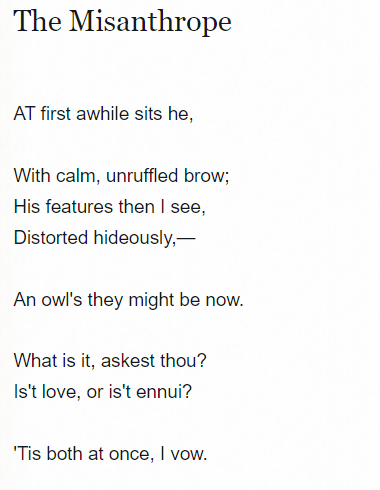
Two of his lesser-known poems speak to me:

https://www.poetryfoundation.org/poetrymagazine/browse?contentId=51848

https://allpoetry.com/The-Misanthrope

Here’s today’s homage senryu: Danke Goethe

Metta man – Goethe

confusing lust for love and

breath for life again