I return to Stray Rescue today to walk some big dogs. Plenty of dogs looking for love and attention. The feelings are mutual.
In his book HOW TO LIVE WHEN A LOVED ONE DIES, Thich Nhat Hanh explains:
“Letting Emotions Flow Through You
Do not be afraid of your painful feelings and difficult emotions. If we try to repress our painful feelings, we create a lack of circulation in our psyche which can lead to depression or other psychological problems. Just as the body needs good circulation of the blood to remain healthy, we also need good psychological circulation. …
Mindfulness is the blood of our psyche. Like the blood in the body, it has the power to eliminate toxins and heal our pain. Every time our pain is embraced by mindfulness, it loses some of its strength; it becomes weaker each time. …
When mindfulness circulates in our consciousness, we begin to experience well-being. We needn’t be afraid of our pain when we know that our mindfulness is also there, ready to embrace and transform it.” p.56
After 8 days of not eating and 5 days of medical tests and treatment, I made the decision not to continue medical intervention, based on consultation with multiple medical advisors.
Zorro, a 12-year-old male Chihuahua, had an enlarged kidney, gallbladder, liver and pancreas with multiple cysts attached. The doctors said the combination of his age, size and multiple organs involved indicated that further treatment would be too intrusive and not likely to make a difference anyway.
Zorro not feeling well (picture taken by me, also not feeling well)
Today, June 21, 2023, I will be asked to decide on end-of-life procedures for my beloved 12-year-old male Chihuahua. To say I am sad cannot express how low I feel.
As an animal chaplain, I have taken a vow to “honor animal lives and heal human hearts.” Today, I will honor Zorro and someday, maybe not today, I will heal my own heart. I know I will need help to do this and I’m uncomfortable asking for help. Giving help is easier for me than asking for it or even accepting it when it is offered.
Life is messy and Terry Hershey’s message below is especially meaningful for me today.
Messiness exposes vulnerability. I will admit, vulnerability is not my strong suit. I do prefer self-sufficiency. And rising above. And yet, self-reliance sounds laudable, but can be an obstacle, because it is difficult to say the words “help” or “thank you.” So, here’s the good news: There is power in embracing vulnerability. And vulnerability never exempts us from the sacrament of the present. Because vulnerability allows us to rest in that touch, that blessing.
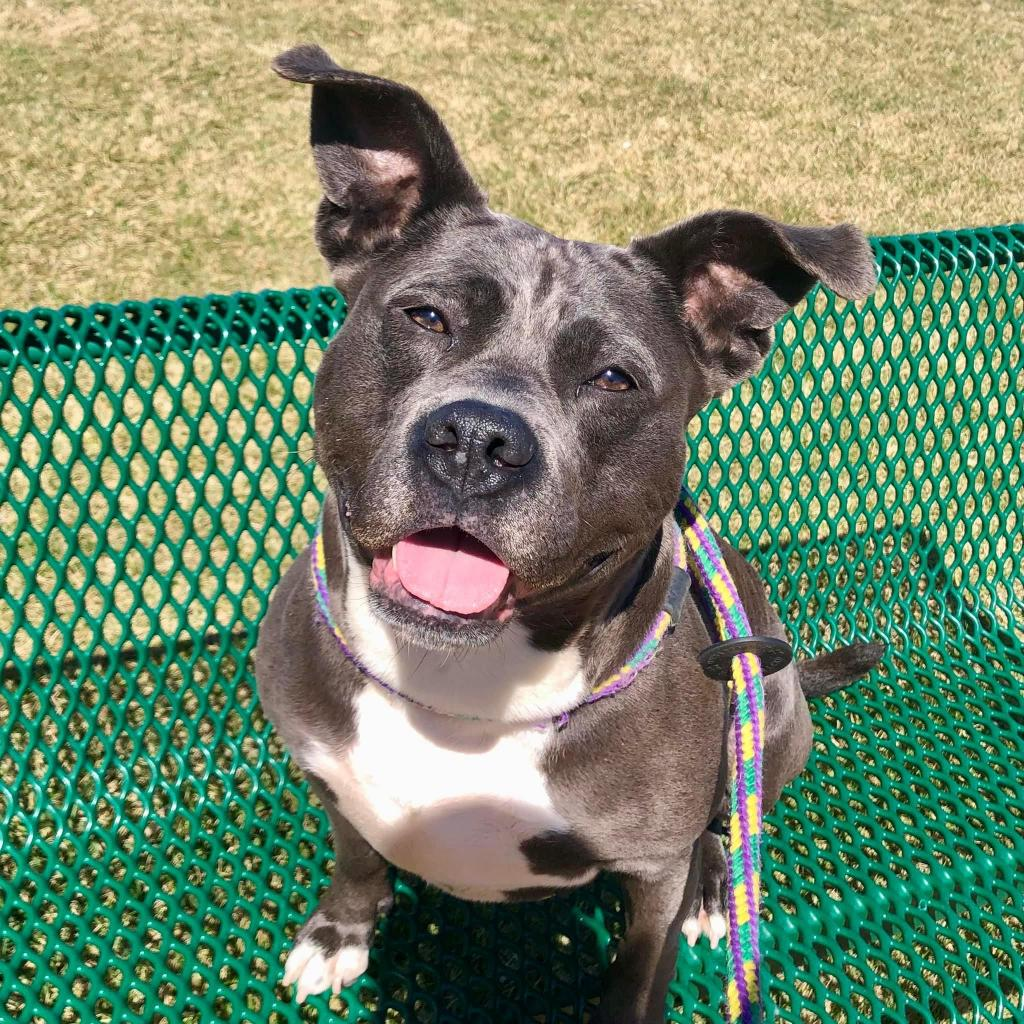
I am the luckiest man in the universe and this week I walked three new dogs and one lovable repeater. Pictured below are Elmers, Manifest, Fury (all new to me) and The Supreme (a personal BFFF).
What keeps us from seeking our soul’s deepest desire? Most often it is the ego and its fear of annihilation.
Few of us have the courage to pray as St. Francis did — “Who are you, O God? And who am I?”—because we don’t really want to know the answer. While our souls long for intimate unions with God, unions in which we can no longer distinguish our deepest selves from the Divine, our ego selves understand the price of these unions: the loss of our hard-fought external identities.
We’ve spent our entire lives crafting an identity to present to the world, and our egos are terrified at the prospect of that identity being consumed in the flame of God’s great love. For if we follow our soul’s desire, we will be left standing defenseless and out of control, which is precisely where we need to be to experience the sheer delight and the richness of God’s consuming love for us.
The Good News for our souls is that the fire of God’s love is relentless and will eventually break through our well-formed heat shields. When that happens, we too will become a fire of consuming love that draws in everyone around us.
Loving and irresistible God, you draw me into your flame of love, and yet I resist. I pray for the courage to surrender my whole self to you, as St. Francis did, so that, like Francis, I might experience the joy of a life without control, a life that brings the unexpected delights of sweet surrender.
Loving God, help me to stop counting the costs and to overcome my fear of loss, so that through your consuming love I may find my true self, transformed by love, ready to share that experience of pure joy through loving service to the world around me.
I love walking dogs; especially the beautiful animals at Stray Rescue of STL. Yet, I confess, there’s a sadness at times when you realize you’re walking some of the same animals, week after week, who would love to become someone’s best friend.
Sure, no dog is a perfect for everyone just like no human is a perfect fit for everyone. Maybe, just maybe, your perfect fit is at your local rescue shelter.
Here are three of the four dogs I walked yesterday.
The Supreme, nearly 5-yr-old 50lb+ female Terrier Mix who prefers to be an only dog.
Tic Tac, 7-yr-old, 50lb+ female Terrier – OK with kids and other mellow dogs; not cats.
L.O.T.I. (Luck of the Irish), 3-yr-old, 50lb+ female Terrier. Gorgeous dog with a pleasant personality.
A fourth dog, Skidmore, is a young Plott Hound/Shepherd mix. I will collect a picture next week if he’s still there. Fingers crossed he’s not because he’s been adopted.
“Silver-screen and singing legend Doris Day recorded more than 650 songs and starred in nearly 40 films, but PETA will always remember her for her most important role: animal champion. … Day personally rescued, fostered, and found loving homes for hundreds of animals, earning her the affectionate nickname “The Dog Catcher of Beverly Hills.”
Recognizing the need to stop animal homelessness at its source, she founded the Doris Day Pet Foundation in 1978, which later became the Doris Day Animal Foundation, a nonprofit organization that has saved countless animals’ lives by providing grants for spaying and neutering as well as funding humane education in schools and helping senior citizens pay for their animal companions’ food and veterinary care.
In 1987, she formed the Doris Day Animal League (DDAL) to lobby for humane legislation…. In recognition of her work for animals, former President George W. Bush honored Day with the Medal of Freedom, the highest civilian award in the United States.”
Mentioned earlier this week, I’m looking forward to my new helping professional role as an Animal Chaplain. Below is another article which explains how this role is serving people today. (See https://broadview.org/animal-chaplains/)
Animal chaplains like Rev. Sarah Bowen help clients prepare for and deal with the loss of their pets By Andrea Cooper, Religion Unplugged
| January 9, 2023
Karen Walsh Gillingham might have felt lonely when she moved to a new home in Mendham, New Jersey. She was single then, with one son soon headed for college and another already there.
But she also had Baxter, a mini golden doodle who loved feeling the breeze out the car window during their rides in the countryside. “It was me and Baxter,” she recalled.
Baxter was by her side for 12 years, through the joy of her remarriage, the births of grandchildren and the pandemic. She was shocked when he was diagnosed with terminal cancer and died in October 2022. A retired nurse, Gillingham had faced many other losses, including the deaths of her best friend and both parents. But losing Baxter still hit hard.
“It was so comforting to hear somebody who has experience say, ‘It’s OK; it’s normal, and all that grief is just love that has nowhere to go,’” Gillingham said.
Chaplains provide spiritual support in hospitals, hospices, universities, the military and other settings outside of congregations. Animal chaplains focus on relationships or concerns involving animals, from a family struggling with a pet’s illness to a veterinary tech overwhelmed with seeing animals die at work to an activist struggling over the loss of a species or habitat. “Animal chaplaincy for me means that I support all beings regardless of their belief system or species,” Bowen said.
Animal chaplains can help clients prepare for a pet’s passing and run animal loss support groups. They partner with clients to develop rituals, from memorial events to a welcome for a new animal companion. They may also lead “blessing of the animals” services at houses of worship, or comfort families who have lost an animal following a natural disaster.
Never heard of this emerging discipline? You’ve got company.
According to a recent Gallup survey commissioned by Chaplaincy Innovation Lab at Brandeis University, one in four Americans have received support from a chaplain. Yet few respondents mentioned animal chaplaincy. The field “is still in its very early days,” said Michael Skaggs, director of programs for the Chaplaincy Innovation Lab.
The specialty is not the same as therapy. Animal chaplains typically describe their work as “companioning” rather than “counselling.” They listen and help make meaning from a loss or challenging event. Their work addresses the human spirit instead of mental health.
You don’t have to be religious to seek out an animal chaplain. They serve people of any or no religious background, including atheist, agnostic, spiritual but not religious, and pluralistic. In general, “chaplains have to be deeply grounded in their own tradition, whatever it is. They have to know where they stand, who they are,” Skaggs said. “But then, when they come into the encounter with the person, that grounding has to be invisible.”
An animal ministry
Animal chaplaincy began about 30 years ago, coinciding with new research about the human-animal bond and animal cognition, Bowen said. “However, the connection and the questions about animals and humans, and what those relationships look like, go back in every religion and wisdom tradition to the beginning.”
Some denominations address animal concerns in a structured way today. The Episcopal Church in the U.S. has established prayers for animals who are adopted, missing, ill or dead. There is a specific prayer during euthanasia and even one for the suffering of animals during war.
Unitarian Universalism maintains an animal ministry designed to “empower individuals, chapters, and congregations to build justice and compassion for animals.”
It starts from the premise that “when we look into an animal’s eyes and really see that animal, there’s someone else on the other side who is looking back at us — that animals are our companions in creation,” said the Rev. John Gibb Millspaugh, the ministry’s executive director. UUAM encourages congregants “along their own path of compassion and respect for animals.”
Of the 30 UUAM chapters in the U.S., eight have animal chaplains to provide support. Chapters choose their activities based on local interest. Some lead book and film discussions to engage their congregations. They may focus on diet, educating about plant-based meals and encouraging a vegan option at events. Some collect blankets for animals in local shelters or build fences for dogs previously on chains. Others care for wildlife through river cleanups and planting butterfly gardens.
The denomination is currently updating its core documents, which don’t specifically include animals. The most recent draft identifies “all beings” as subjects for concern, care and respect. While not yet approved, the potential change is “a big damn deal,” the Rev. Russell Elleven, who serves as chaplain to UUAM, happily exclaimed.
Interfaith, interspecies
UUAM animal chaplains train with the Association for Veterinary Pastoral Education in Raleigh, North Carolina — one of a few organizations devoted to educating in this niche area. Robert Gierka founded the program after years as a chaplain, first for a hospital and later for North Carolina State University’s College of Veterinary Medicine. The virtual program has attracted students from a variety of religious and professional backgrounds in the U.S., the U.K., Australia and South Africa.
People bring different and sometimes contrasting perspectives to the training. One cohort included a large animal veterinarian whose priority was animal welfare to lessen the pain and fear of animals slaughtered for food. Another student was an animal rights rescue worker opposed to the killing of animals for any reason. In those sessions, Gierka “did some pastoral magic with someone who did get kind of offended,” said Karen Duke, the association’s vice president.
Compassion Consortium, an “interfaith, interspiritual, and interspecies” nonprofit based in New York, offers animal chaplaincy training programs from three to nine months. Bowen serves as program director. Learners are diverse, from current and retired pastors and Master of Divinity students to people who practice reiki or other healing arts and want to add to their skills.
Some develop their passion for animals later in life. Bowen, whose degrees include a master’s in religious studies from Chicago Theological Seminary, recognized her calling early. Her dad, a Presbyterian minister, often stopped by a local funeral home with her before taking her to swim lessons. At age six, she used her metal lunchbox to transport “little dead critters to bury them in our backyard and give them funerals.”
She continues that impulse with her “roadkill ministry,” removing dead animals from streets for a proper burial and taking injured ones to wildlife rehabilitation. Her eclectic services also include teaching clients how to meditate with their hyperactive puppies and how to help a grieving pet when another pet in the household has died.
Fees for animal chaplaincy services vary, in part based on the time required. It’s common for practitioners to offer reduced rates for clients of limited means. Some support groups are free or ask for small donations.
The field is poised for growth, advocates believe. While the profession is still novel, “we don’t have nearly as many people doing this work as we’re asked for,” Bowen said.
Skaggs from the Chaplaincy Innovation Lab agrees, given how many people bring their pets to veterinary clinics each day to say goodbye for the last time. Most veterinarians are very sympathetic but don’t have the training to comfort people through their loss, he said. “How wonderful would it be if you schedule an appointment and the vet clinic says, ‘Would you like this person to be present during this process or available to you after?’” Ideally, he said, every clinic would have a chaplain.
Karen Walsh Gillingham would vouch for the profession. Through her conversation with Bowen, she realized her dog Baxter’s death had brought up grief from her previous losses. While Gillingham will always miss Baxter, she has room in her life for more love. She’s planning for a new mini golden doodle to join her family.
***
Andrea Cooper has written for The New York Times, Jewish Telegraphic Agency, Tablet and other national publications. Her honours include the Simon Rockower Award from the American Jewish Press Association for coverage of North American Jewish history.
Definition of contemplative – a person who seeks to remove distractions to focus on essentials, fond of silence and solitude, thoughtful and prudent, suspicious of ego, and full of praise for the feeling of divine presence (https://catholicstand.com/five-traits-for-a-contemplative-life/)
Definition of time– the continued sequence of existence and events that occurs in an apparently irreversible succession from the past, through the present, into the future (https://en.wikipedia.org/wiki/Time)
Thich Nhat Hanhspeaks of relative and ultimate truth which elaborates on a moment of time and eternity:
“When we look at the ocean, we see that each wave has a beginning and an end. A wave can be compared with other waves, and we can call it more or less beautiful, higher or lower, longer lasting or less long lasting. But if we look more deeply, we see that a wave is made of water. While living the life of a wave, it also lives the life of water. It would be sad if the wave did not know that it is water. It would think, “Someday, I will have to die. This period of time is my life span, and when I arrive at the shore, I will return to nonbeing.” These notions will cause the wave fear and anguish. We have to help it remove the notions of self, person, living being, and life span if we want the wave to be free and happy.
A wave can be recognized by signs—high or low, beginning or ending, beautiful or ugly. But in the world of the water, there are no signs. In the world of relative truth, the wave feels happy as she swells, and she feels sad when she falls. She may think, “I am high,” or “I am low,” and develop a superiority or inferiority complex. But when the wave touches her true nature—which is water—all her complexes will cease, and she will transcend birth and death.
We become arrogant when things go well, and we are afraid of falling, or being low or inadequate. But these are relative ideas, and when they end, a feeling of completeness and satisfaction arises. Liberation is the ability to go from the world of signs to the world of true nature. We need the relative world of the wave [emphasis mine], but we also need to touch the water, the ground of our being, to have real peace and joy [and this is what so many contemporary people lack]. We shouldn’t allow relative truth to imprison us and keep us from touching absolute truth. Looking deeply into relative truth, we penetrate the absolute. Relative and absolute truths inter-embrace. Both truths, relative and absolute, have a value.” from Thich Nhat Hanh, The Heart of the Buddha’s Teaching (Broadway Books: 1998), 124-125.
If I had to label my spiritual path, Zen Christian comes close to describing it. This Summer I’m scheduled to be “ordained,” first as an Interspecies, Interspiritual Animal Chaplain through Compassion Consortium and later as a lay brother in the Order of Interbeing, Thich Nhat Hanh’s Plum Village Tradition.
Below are two quotes which explain how I see my Zen Christian practice today.
First, “to be a human being is to be a knower and a lover of nature and spirit, because to be human is to be both.” Dr. Christopher Baglow (https://strangenotions.com/two-paths/)
“We enter the path of practice through the door of knowledge, perhaps from a Dharma talk or a book. We continue along the path, and our suffering lessens, little by little. But at some point, all of our concepts and ideas must yield to our actual experience. Words and ideas are only useful if they are put into practice. When we stop discussing things and begin to realize the teachings in our own life, a moment comes when we realize that our life is the path, and we no longer rely merely on the forms of practice. Our action becomes ‘non-action,’ and our practice becomes ‘non-practice.‘” from The Heart of the Buddha’s Teaching by Thich Nhat Hanh (c) Broadway Books, p.122
“Thích Nhất Hạnh was a Vietnamese Buddhist monk, teacher, author, poet and peace activist who lived in southwest France where he was in exile for many years. Born Nguyễn Xuân Bảo, Thích Nhất Hạnh joined a Zen monastery at the age of 16 and studied Buddhism as a novitiate. Upon his ordination as a monk in 1949, he assumed the Dharma name Thích Nhất Hạnh. Thích is an honorary family name used by all Vietnamese monks and nuns, meaning that they are part of the Shakya (Shakyamuni Buddha) clan. He was often considered the most influential living figure in the lineage of Lâm Tế (Vietnamese Rinzai) Thiền, and perhaps also in Zen Buddhism as a whole.” https://www.goodreads.com/book/show/209574.The_Heart_of_the_Buddha_s_Teaching











 Life Matters