Tag Archives: mindfulness

Essential Gratitude Repost

Below are highlights from another beautiful reminder from Lynn J Kelly:

Essential Gratitude

Posted on August 10, 2025 by lynnjkelly

Because of our emphasis on individualism rather than community, gratitude is easily overlooked as an important element of a satisfying life.

A life without gratitude is a joyless life. If we don’t have anything to be grateful about, our life is a dreary plane. …

Many of us have had fortunate lives, but although we have been born in fortunate places we can tend to take a lot for granted. We have privileges and benefits, and a much better life than a good portion of people in the world can ever hope to expect. There’s a lot to be grateful for … (from https://dhammatalks.net/Books3/Ajahn_Sumedho_Gratitude_to_Parents.htm)

In addition, practicing gratitude is a direct cure for self-obsession. Are we ready to give up the idea that we are the most important person in the world? If we spend some time every day appreciating others in our lives, it loosens the chains of self-importance.

Within Buddhist thinking on virtue, there are things we ought to refrain from doing, and things we ought to deliberately do. We refrain from harming other sentient beings; we support the safety and growth of other lives. This training is the basis for Buddhist ethics and cannot be skipped over. As with generosity and gratitude, understanding them is insufficient as a foundation for practice. To grow in the Dhamma, we need to continuously nourish and strengthen these skillful qualities in ourselves.

Why Be Generous?

Lynn J Kelly’s blogpost today provides more helpful wisdom for our consideration.

May we all be more generous with ourselves and others.

Why Be Generous?

Posted on July 21, 2025 by lynnjkelly

One of the senior monks in the Ajahn Chah lineage said that Buddha talked about dāna [giving] first because if someone didn’t understand the value of basic generosity, they weren’t even teachable. If we don’t have a sense of its significance, and don’t have some degree of maturity in our experience of it, then other forms of practice—sīlabhāvanamettā—won’t even get off the ground. There has to be a malleability of heart, a softness, a diminished self-absorption, before the engines can even get started! And this softness is developed largely through our increasingly mature direct experience of dāna.

Giving as a ritual is not the same as giving as practice. There can be various motives for giving, and many of them have to do with varieties of clinging. We cling to the idea of what is expected of us, or what would “look good”, or we give to relieve a feeling of guilt, or even because we think it will produce a better afterlife. But there is a higher motivation that we can tap into, one that moves us away from any form of clinging.

(from Gloria Taraniya Ambrosia) There’s a wonderful story in the Vināya (Mahāvagga 8:15) about a very generous laywoman who lived at the time of the Buddha. As the story goes, she wanted to give a large gift to the community—lifetime gifts of food, clothing and medicinal requisites. Before agreeing to receive this offering, the Buddha asked Visakha why she wanted to make such a generous offering.

Her reply may surprise you. She said that when she sees the monks and nuns she will know that they are wearing robes made out of the cloth that she offered, etc., and it will make her very happy. Thus, her mind will be calm and her meditation will go well. As if to say, “Yes, that’s the right answer,” the Buddha accepted her gift.

So we can give to make our minds peaceful and happy. This may sound like a selfish motive – we want to be happy – but this sort of happiness comes from profound unselfishness, which feels entirely different from building up our self-image. Is this happening without our noticing it? Do we overlook this subtle and beautiful feeling?

Only we know what is in our minds and hearts, and we can track whether we are producing the kind of mental peace that is the foundation for wisdom or the product of a satisfied ego. Mindfulness is essential to discern this difference, but once we see it, we are naturally inclined to pursue a wholesome path.

World Repair – Lynn J. Kelly

I am amazed at how much pain is being inflicted by the new U.S. president and his administration team. I am astounded that so many Americans want this pain to occur. Fortunately, there are others who are looking for ways to counteract this pain and stop the cruelty we see.

Lynn J. Kelly, offers some gentle advice on how to we might respond to these trying times. Below is a quote, and a link, to her full message. I think you will find this very helpful today and, in the days, to come.

“Once we have accepted the overwhelming dukkha that is the news of our world, what can we do? We can acknowledge that we are close to powerless to alleviate all the suffering that we see around us. However, we can each find a way to dedicate some of our energy to a healing activity.

Whatever we care about most will use our energy to best effect. We don’t have to feel helpless if we understand what we are doing and why. It is important to support both our mindfulness (internal) and something outside of ourselves that we care about (external).”

How to Find Inner Peace – the Buddhist Way Excerpts

Statue of Buddha at Magnolia Grove Monastery – picture taken by Patrick Cole

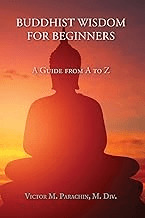
Spirituality + Health online magazine has shared another helpful article written by Victor M. Parachin. Highlights can be found below. For the full article see: https://www.spiritualityhealth.com/authors/victor-m-parachin-m-div-c-y-t

How to Find Inner Peace—the Buddhist Way

Buddhism identifies inner peace as a sense of emotional, mental, and spiritual harmony, even as life’s challenges arise. When inner peace is present, there are strong feelings of serenity, balance, tranquility, and calmness. Here are some Buddhist methods of attaining inner peace:

  • Limit Desires
  • Practice CPR Meditation – calm, peaceful and relaxed
  • Don’t Gossip
  • Accept Help
  • Lighten Your Life, and
  • Cultivate Countermeasures

The Dalai Lama notes that whenever negative emotions such as anxiety, anger, worry, or fear emerge, “We need some countermeasures to oppose them. For example, if we are too hot, we reduce the temperature, or if we want to remove darkness, there’s no other way than bringing light.”

When you’re feeling impoverished, practice gratitude; when you’re feeling sad, smile at every person you encounter; when you’re experiencing guilt, be extra kind to others; when you’re feeling discouraged, recall and savor what is good and right in your life.”


Prodigal Son – A Henri Nouwen Meditation

Thich Nhat Hanh, the Vietnamese Zen Master, would introduce his meditations with simple phrases or Gathas to set the tone for what could follow. One such gatha goes like this:

“I have arrived, I am home in the here, in the now. I am solid. I am free. In the ultimate, I dwell.”

Below is a meditation verse from Henri Nouwen, a Dutch-born Catholic priest and American psychology professor. He uses the returning home reference from The Prodigal Son parable.

May we “return home” many times each day.

You Are Home

September 14, 2024

I have been meditating on the story of the prodigal son. It is a story about returning. I realize the importance of returning over and over again. My life drifts away from God. I have to return. My heart moves away from my first love. I have to return. My mind wanders to strange images. I have to return.

Returning is a lifelong struggle. . . . I am moved by the fact that the father didn’t require any higher motivation. His love was so total and unconditional that he simply welcomed his son home.


For more information about Henri Nouwen see:

henrinouwen.org/about

Excerpts from How to Break the Chains of Thought

Like dominoes falling, it’s interesting to see how one thought leads to another … or not.

Lion’s Roar online magazine shares a full article on How to Break the Chains of Thought. Below are a few excerpts for your consideration. For the full article, go to http://www.lionsroar.com/break-the-chains-of-thought

How to Break the Chains of Thought

When you study your thought process, … you see how it rules your life. In the breaks and gaps between thoughts, you can experience awakened mind on the spot.

Dzogchen Ponlop Rinpoche 8 September 2024

We are all citizens of the Information Age, when attention-consuming data is abundant and human attention itself is regarded as a scarce commodity. In the noise and chaos of this flood of information, how often do you notice where your mind is and what it’s doing? …

The starting point for discovering the true nature or reality of your mind is just this awareness of thoughts. When you can see these patterns clearly, that’s the beginning of discovering the sanity and wakefulness within your own mind. …

Chaos and sanity coexist—they depend on each other. Without insanity, there is no sanity. So please don’t worry about your thoughts and the chaos of your mind. They can serve as the basis of your transformation.

When you look at your thoughts and emotions, the starting point is very important. It’s like chaos theory, which looks at the dynamics of highly sensitive systems. A very small change at the outset or starting point of a motion makes the system behave completely differently, and that very small change can make a big difference after a while. An often quoted example in popular culture is the “butterfly effect,” in which a butterfly flapping its wings in the forests of Brazil could cause a hurricane in the East China Sea.

It’s the same with thoughts. You may have just a glimmer of a judgmental thought about someone. It seems so small and harmless. But that tiny thought has the potential to intensify and color your next thought, and the next, in the end triggering deep-rooted habitual patterns that have a big effect. …

The interesting thing here is that within the seeming chaos or randomness of our thoughts, there are patterns, including how our thoughts and emotions interact. … thoughts are viewed as always at play with our emotional energies, driving them one way or the other.

We have so many thoughts—positive thoughts, negative thoughts, coarse thoughts, subtle thoughts—but when you look directly and closely at any thought, or any emotion, perception, or appearance of mind at all, what do you see?

The first thing you see is that the thought you’re looking at disappears. As soon as you think, “Oh, there is a thought, I am going to look at it,” it is gone. And after the thought is gone, then what do you see?

Between the dissolving of one thought and the arising of the next, there is a gap, an open space. When a thought arises, it’s there for just a moment, then starts to dissolve. When it dissolves, there is a clear, open space where there’s nothing happening until the next thought. If we can totally let go, rest, and relax, then that point where thoughts vanish is where we will find our natural liberation, our genuinely awakened heart.

With these momentary gaps, our chaotic thoughts are being quite kind, offering to give us a break and a chance for awakening. But usually we don’t take that opportunity. We run right over it. We are attached to our busy, workaholic pattern that keeps us moving on to the next thought, the next moment, the next experience. That’s one of the main patterns of our mind—to always be moving, instead of pausing and resting where we are, even for a moment.

Although thoughts are momentary, it feels like our mind is always thinking. That’s because we don’t notice the gaps. We create the illusion of continuity by linking thoughts together seamlessly, so they have a feeling of permanence and oneness.

... each momentary thought is like a link in a chain that connects to another link in the chain, and so on. Who knows where the chain began or where it will end? At some point, without even knowing it, we’ve created a chain that effectively binds us. We are a captive of our own thoughts. Positive thoughts we attach to may create a pretty golden chain, but we are still bound.

To accomplish our aims, it’s important for us to have a good understanding of our thoughts and how the patterns they form blind and control us. …

When you can see the full display and just let it go, there is liberation right there. Not liberation in a religious sense, but simple freedom from being controlled by your thoughts. You don’t have to take this on faith. You can discover it yourself. As you get closer to it, you can feel it, and then finally you can see it.

Most of all in this process, we need to have a genuine measure of compassion for ourselves and others. Even if it’s just a little, it can still have a profound and far-reaching effect, like the flapping of the wings of our butterfly. …

Seeing these patterns, we get to know our mind so that it works better for us and helps us to achieve our goals in this life. …

We see that thoughts are momentary, arising and then dissolving, and in the open space between them we can discover awakened mind on the spot.

Dzogchen Ponlop Rinpoche

Dzogchen Ponlop Rinpoche is the author of several books including, most recently, Emotional Rescue: How to Work with Your Emotions to Transform Hurt and Confusion into Energy That Empowers You.

Never Enough? Abandon Craving One Day at a Time

mindfulness is a means for overcoming craving.

Below are highlights of a recent Tricycle article on Cutting the Roots of Craving. I have three of Gunaratana’s books now and the provocative excerpt below comes from his latest book co-written by Veronique Ziegler.

May the words below offer some helpful advice to overcome our addiction for “more.”


Cutting the Roots of Craving

Desire is beginningless. Yet through right mindfulness we can learn to abandon it. By Bhante Henepola Gunaratana and Veronique Ziegler Jul 18, 2024

Everything we do pivots around craving and Its insatiability is such that it yields more craving

whenever we ask ourselves the question “Am I satisfied?” we always get the same answer: “Not yet.”

There is no point in time before which a state of desirelessness can be found.

in dependence upon feeling, there is craving.

Everything happens in your mind. When you talk, write, perform any deed whatsoever, watch your mind at all times in order to guard it against defilements and prevent craving from invading it.

Look at your own mind to see the invisible greed, anger, jealousy, and all the other defilements that are the real cause of your suffering.

If you end greed now, you attain liberation now. If you end greed one minute later, you attain liberation one minute later. If you end greed tomorrow, you attain liberation tomorrow.

Craving can be found in our very own mind. Understanding it is a personal exploration that must be undertaken individually, for the solution to abandon it is also in our own minds.

How to Abandon Craving

there is a great danger in sensual pleasures—not that they cause immediate harm or risk to one’s life (although some sensory pleasures can definitely be lethal) but that sense enjoyments are impermanent. And because they are impermanent they can never be satisfactory.

to live a happy and healthy life. We must use our senses, but we must do so with wisdom,

Mindfulness is a means for overcoming craving.

© 2024 by Bhante Gunaratana and Veronique Ziegler, Dependent Origination in Plain English. Reprinted by arrangement with Wisdom Publications.

Bhante Henepola Gunaratana is a Buddhist monk from Sri Lanka and the author of Mindfulness in Plain English. He is president of the Bhavana Society in High View, West Virginia, an organization that promotes meditation and monastic life.
Veronique Ziegler earned her doctorate degree in experimental high-energy physics from the University of Iowa working on the BaBar experiment at SLAC National Laboratory in Menlo Park, California. She then took a research assistant position at the same lab and later a staff scientist position at Jefferson National Laboratory in Newport News, Virginia, where she currently works full time and is involved in the lab particle spectroscopy experimental program. In 2018, she started attending Bhante Gunaratana’s dhamma classes. She has been an avid dhamma student ever since.

The Value of Simplicity – KISSS

A fresh cup of coffee to start the day, re-reading a familiar passage from a favorite book, letting go of unnecessary complexity in our lives, oh what joy can be received from a simple life!

Keeping it short, sweet and simple (KISSS) is a mantra worth remembering.

Below is an excerpt from a Tricycle article on Full Simplicity written by Kim Allen for a Buddhist take on the art of living more simply and skillfully.

http://www.uncontrived.org/books.html

The Value of Simplicity

Doing more with less: A teaching from the Metta Sutta By Kim Allen

“(The) idea of valuing simplicity is a notion that is consonant with the early (Buddhist) teachings. Choosing just one of many examples, we can find the value of simplicity expressed in the opening lines of the Metta Sutta (Sn 1.8).

This is what should be done
By one who is skilled in goodness
And who knows the path of peace:

Let them be able and upright,
Straightforward and gentle in speech.
Humble and not conceited,

Contented and easily satisfied.
Unburdened with duties and frugal in their ways.
Peaceful and calm, and wise and skillful,
Not proud and demanding in nature.

These verses suggest a link between goodwill (metta), ethical behavior, and simplicity.

Once we turn our mind toward the value of simplicity, we will notice ways in which complication has burdened or tangled our relationship with life. Here are a few possibilities for practice that can be extracted from these lines:

  • Simplicity of body: Moving more slowly (peaceful and calm); maintaining a balanced posture (upright); using fewer material resources (frugal in their ways),
  • Simplicity of speech: Speaking straightforwardly with just as many words as needed (straightforward in speech); refraining from complaining or demanding (not proud and demanding); speaking words of harmony (gentle in speech; skillful), and
  • Simplicity of mind: Being satisfied with little (contentment; humility); honesty (upright); seeing in wise ways (wise and skillful); choosing non-busyness (unburdened with duties).

Centering (your) simplicity practice on these few lines from the Metta Sutta could go very far … Pragmatic wisdom also guides how we view and think about life activities:

  • possessions must be managed, such as maintaining our car, computer, and phone;
  • cleaning our clothes and living space;
  • handling the purchase, preparation, and clean-up of food for meals;
  • caring for our body and health in many ways, and
  • the necessary task of acquiring money also takes significant energy, and even if we have enough money, it takes time and attention to manage financial resources.”

Excerpted with permission of the author from Full Simplicity: The Art of Renunciation and Letting Go, by Kim Allen, an exploration of how to fully embrace the dharma life as a layperson.

Kim Allen is an Insight teacher who draws from a background in long retreat practice, sutta study, and contemplative living to bring classical dharma to modern life. Her website is http://www.uncontrived.org.

See tricycle.org/article/value-of-simplicity/ for the full article.

http://www.uncontrived.org/about-kim-allen.html