This is Wayne. Standing up and looking out his apartment door window. He is VERY eager to come out! He desperately wants some fresh air, a chance to defecate outdoors and receive whatever reward treats you might want to give him for good behavior. He will also appreciate his apartment being cleaned, fresh water provided, and a welcome home treat on his pillow when he returns. Would you like to give him, and his apartment cleaner, 30 minutes of “free time”?
Wayne is a nearly 5-yr old, 48-pound Terrier Mix, who can jump at least another 18 inches higher than this picture shows when he thinks you will open the door for him to leave. He’s a sweetheart who shows his appreciation vigorously when you accept his invitation for love.
Fortunately, he’s big enough that you cannot see the fecal matter and urine behind him that needs cleaning up. But don’t worry, there’s more of that he would love to leave outside on his walk around the city neighborhood that surrounds this stray rescue kennel.
When I entered his apartment this morning, like I have the three previous Wednesday mornings before this, he delightfully jumps and circles and tries his darnedest to stay still for a second so I can put on the two leads needed to walk him. One lead around his neck and chest as a harness to hold and guide him safely and another longer lead loosely around his neck as a back-up security leash if needed.
Once he is “secured” he quickly confirms that I have treats in my pocket and lets me know he’s ready when I am to taste-test them for me. He doesn’t get a treat now; that will come later when he pees or poops outside. He knows that too. We both know the routine or basis of our relationship and yet he just loves to nuzzle me and I love to scratch his ears and pet him vigorously before we leave his apartment.
Thirty minutes of walking joy ahead of us and today is especially nice because the sky is blue, the morning temps are in the 40s and climbing and there’s plenty of sunshine ahead. Look out world, or at least downtown St. Louis, Wayne and his walker are coming out!
The Supreme, a three-year old, 51-pound, female Terrier/Pitbull Mix, currently lives in a six by five foot “apartment” at the Pine Street Shelter, Marquis Suite section of the 100-apartment dog rescue and medical facility. Her short bio recommends that her “fur-ever” adopting parent be someone who does not have cats, nor any other pets, so that they can provide full attention to her. I know from first-hand experience that she does require and demand full-time attention – and you cannot help loving this dog for it!
First, just a little background information:
Every Wednesday morning since last August I have been volunteering at Stray Rescue STL as a dogwalker. This means I arrive early morning to walk usually four different dogs for approximately 30 minutes each while their apartments are being cleaned by staff. Since this rescue kennel is located in downtown St. Louis, a walker needs to be attentive to traffic and prepared to bag poop whenever and wherever it is produced. The “mechanics” of being a dogwalker are important but are unlikely to ever overshadow the joy of spending time with a dog that appreciates any attention they can get during their morning walk of freedom from their apartment.
Before I could become a volunteer dogwalker I had to attend an orientation session to learn the “mechanics”. I was one of eight people under consideration, as our Orienteer, explained how to properly harness a dog, the importance of never letting go of the two leads, and the need for gentle but firm attention to safely walk the city streets before returning the dog to the kennel door where they were initially released to you. The orientation session took approximately 90 minutes to receive the instruction that including taking turns walking a beautiful and friendly German Shepherd who seemed to be the most gentle animal possible.
BTW: this dog had been abused by its former owner and left behind in an dilapidated parking lot. Attached to a short chain that was attached to some chain-link fencing, the dog had been forced to sit on the hot Summer tarmac its own urine and feces for days without food or water. He suffered urine burns to his back legs that left painful scarring that marred both his appearance and his walking gait. Despite this human mis-treatment, he loved spending time with humans and appreciated every gentle touch and dog treat provided. It took approximately six months before someone adopted him.
At the end of the orientation session, our Orienteer responded to any and all questions. For example:
Q: Are all dogs as gentle as this German Shepherd?
A: No, dogs are rated by behavior and volunteers only work with the gentlest dogs available among the 100+ housed in the kennel.
Q: What are some of the challenges to be prepared for as a dogwalker?
A: Some dogs are “dog reactive” meaning they behave fine as long as they are kept at least 30 feet away from other dogs. Some dogs are “people reactive” meaning once they accept the person holding their lead they are not interested in being close to any other human. Reactive behavior is barking, lunging and at worst attacking the “threat” they perceive from the other animal or human. Note: some strangers are enthralled when they see a dog and just want to pet them but that “good intention” cannot be satisfied because the dog can easily feel overwhelmed and threatened by too many people getting close to them at one time. So, when walking a dog, you need to change direction if you see another dog or person getting too close. It’s best to avoid a possible confrontation and retrace your steps or take another route.
Q: Has a walker ever lost hold of the leads allowing the dog to run away?
A: Yes. If this happens the walker should notify staff immediately so they can begin the search to re-rescue the dog before any harm to the dog or others occurs. Escaped dogs will often run to construction areas or seek places to hide to avoid harm.
Q: Has a dog ever attacked a dogwalker?
A: Not exactly….
Sometimes a dog is so powerful it tries to lunge forward (after a car, squirrel, bird, whatever) and can pull the dogwalker off their feet. If a dogwalker falls down it’s important to hang on the lead so the dog doesn’t get away. This can be challenging with some of the larger dogs; especially those with pit bull or boxer DNA.
Sometimes a dog can be stubborn and refuse to move forward and/or follow your lead at some point during the walk. They may need a break or want to sniff a particular area a little longer before moving on.
If a dogwalker is too forceful in moving the dog before it wants to be moved a dog might snap or even bite the dogwalker. Gentle but firm guidance is needed to restart the walk and maintain control.
Note: at the end of every walk it’s important that the dogwalker report to staff how the dog did on the walk. For example, how many pees and/or poops occurred or whether there were any challenges encountered. This information is helpful for recording behavior and informing other walkers what to expect or avoid in the future.
Getting back to The Supreme. Most dogs are rescued without identification so Staff name them. Names often recognize the dog’s demeanor or the location they were found. The Supreme is a dog named after her demeanor. She considers herself the Alpha Female and will take the lead if you don’t clearly establish yourself as her leader. She can quickly get into a crouch and plow forward like a miniature tank attempting to force her will on where she wants to go. She is on the lookout for food or a favorite walking route that may have been rewarding on previous walks.
The Supreme can be very challenging so it did not surprise me that I had not been introduced to her in my first five months as a dogwalker. It was a compliment to my past experience that the Staff felt I was now ready to walk her. Little did I know that this would not be like my first three Pitbulls of the day. This was going to be a test.
To start, I harnessed her in her apartment, or should I say, just outside her apartment, as she charged through the open door I was attempting to enter. She wanted out NOW and wasn’t keen on wasting any time. Once I had the two leads around her neck and chest, I took her out of the building and turned eastward to walk down the back alley towards the first street we would encounter. She immediately began to plow and wanted to walk faster. Had we been on my own property, out in the country, I would have enjoyed running with her but this was downtown St. Louis and far too busy and dangerous for that entertainment. So, I held firmly and we approached the sidewalk where I would determine our next turn.
Looking both ways for any oncoming traffic wasn’t a simple matter. This first street had many parked cars on both sides of the road and I knew from past experience that a smaller vehicle could easily surprise us if we weren’t careful stepping into the street. In the meantime, The Supreme pulled on the leads impatiently. She wanted to cross the street NOW but I wasn’t ready yet. BTW: this whole interaction took only seconds but in her world she needed to cross this street quicker than I was prepared to do.
I looked to the left, then to the right, and before I could take my next breath she circled me tightly, lunged forward and launched me into the air and then plunging to the asphalt street below me. Time slowed down as I reached out with my left hand to soften my landing but this was a big mistake. My butt landed on my left hand, crushing my left thumb into the pavement. I wondered if I had broken the thumb because it really hurt but I didn’t have time to think about that right now. My right hand held the two leads that had roped my legs together and I was determined to not let The Supreme out of my grasp. I must have looked like a calf roped and tied by a rodeo rider but my job was to protect the dog. Where was she?
Before I could think twice, The Supreme was licking my face. It was if she was almost apologizing or concerned about my welfare or whatever other anthropomorphizing I might imagine. Yet clearly she was very attentive to me and in no way trying to get away from me.
Comforted by her attention, I looked around sheepishly to see who might have seen my come-uppance but there wasn’t anyone in sight. Slowly I untied my legs and arose to a relieved dog eager to be petted and continue our walk. Delighted that we were okay, The Supreme looked to the street again and tugged, somewhat less vigorously, to indicate she was ready to cross if I was. Together we continued for another 25 minutes or so and enjoyed our time together on this crispy cold winter’s morning.
So what did I learn from The Supreme? What wisdom did she impart to me? A couple of things come to mind:
While we may tussle with others on occasion, in an emergency we tend to look out for one another. Our first instinct is to help rather than flee.
Suffering unites us if we let it. There was no need to scold or punish another when calamity ensues. If fact, I ended up laughing at the two of us and how we adapted to each other in this first time encounter.
Love does conquer all. The Supreme can be intimidating if you let her; however, if you hang on, even for dear life, the inner beauty becomes apparent and the affectionate licking (kissing?) can mend a broken thumb (or heart?) pretty quickly.
My thanks to Stray Rescue STL for dogwalking training and rescuing animals abandoned and/or abused by humans in the past so that I might enjoy the opportunity to meet and walk The Supreme.
This is a wall at Stray Rescue where prospective foster or adoption parents first meet a dog they are interested in possibly taking home. An application is required prior to visiting this room which allows the agency to give a quick review of your situation (residence, reason for wanting a pet, stated level of commitment to pet care, past experience with pets, etc.).
This wall is also a place where prior “fur parents” can acknowledge a pet they obtained through Stray Rescue who is no longer living. Each gold leaf on this “Tree of Life” has a pet’s name to honor their memory for both the “fur parents” and for the staff of the agency who was involved in the placement of the pet with the parent.
On this wall there is a leaf with the name Etta Pearl.
She was a blind, deaf MinPin-Doxie we adopted nearly 14 months ago. See picture below. We were challenged to care for this needy dog but found ourselves “out of our league” when she was diagnosed with “doggie dementia” and/or “sundowner’s syndrome” indicating her final days of life. She walked in small circles and attempted to bite us whenever we tried to direct her to her food or to the outdoors for elimination. She was unhappy and disoriented. She was approaching death and not enjoying the final stage.
We regretfully returned her to Stray Rescue and they regretfully euthanized her which is something they only do in a “last option” situation.
I learned a lot from Etta Pearl and ordered the engraved leaf above in her honor. I now volunteer weekly to walk rescued dogs at Stray Rescue and see this wall each week I am there.
Even in her final weeks with us, Etta Pearl was able to teach me a valuable life lesson. I am grateful for our time together. Thank you Etta Pearl.
Trust me dear reader, my point is not to offend but to point out the obvious. Whenever we espouse one thing but do another, we are a hypocrite. Whenever we hold someone else accountable for their behavior but justify our own, we are a hypocrite. Whenever we pretend to be someone or capable of something when we are not, we are a hypocrite. Please allow me to explain:
Living in a duplicitous world creates the expectation that we be duplicitous ourselves. Expected to wear many hats and play many roles calls for the ability to flex as necessary from child to adult to parent to grandparent, from learner to teacher, from amateur to professional, from paid provider to unpaid volunteer, from gender to agender, from racial to nonracial, etc.
Here are a few concepts worth considering (see sources for each below):
1.The original definition of the word hypocrite is one who considers many possible responses and selects the “right words to use” to fit the situation; or, in other words, an actor, especially one that wears a mask, or debater who considers multiple viewpoints and then selects one to project. Over time, the word took on more negative meanings especially when it was considered in a political context (i.e., politicians lie, are two-faced, and pretend to be or do something they aren’t or won’t).
2.The Greek word hypokrisis means to act or pretend; typically someone pretending to have virtues or morals they don’t possess or hides their genuine beliefs and displays publicly approved attitudes in hopes of convincing others that they are righteous or equally deceptive, sits on a fence to neither accept the reality of not being righteous nor put in efforts to become righteous.
Note: hypocrisy in the above definition is a moral choice and/or a dilemma because individuals aren’t sure what they believe or want to defend. While this might be an honest attempt to be open and flexible, it can also be the result of insecurity. Thus, as we move through our lives and encounter unfamiliar situations we will naturally devolve to hypocrisy for a while.
3.Referencing The Happiness Hypothesis, it is easier to see hypocrisy in others since we delude ourselves into thinking we contribute more and understand more about reality than others. Our “conscious, rational mind” sees what it wants to see and thus justifies what we say and do much easier than justifying what others say and do. Our self-delusion can be helpful for us at times when encountering difficult challenges; however, it is very unhelpful when we see ourselves as having more knowledge and wisdom than others which can easily harm our relationships and decrease our overall happiness. Yet, even when the obvious negative aspects are pointed out to us, we “somehow, each of us clings to the belief that we are the sole exception.”
4.Hypocrisy is cited as the lack of conformity between stated beliefs and one’s own behavior; especially in a hypocritical culture. While hypocrisy is a natural outcome of a bad situation (i.e., a bad system with overpower a good performer every time), “hypocrisy is bad” because it degrades social trust, reduces our ability to work together, communicate and enjoy each other’s company. Hypocrisy hurts all of us even though you don’t always see the consequences of your duplicitous behavior (e.g., talk behind your back or actions sabotaged in business, romance and communal life in general). Some classic examples provided are: Christians who support the War on Terror, parents who support the “white lie”, people giving themselves the right to grow and change but not extending that same right to others, and our naturally poor memories which fail to remember details and thus too casually lump behaviors and people types into one.
And so, ultimately we are all hypocrites at some times. A positive goal is to seek the reduction in our hypocritical behavior. Five recommended actions to accomplish this goal are:
Write down your beliefs and values and read and recite them regularly;
Examine your life for inconsistent behavior and start anew with more congruent behavior;
Recognize the difference between important and urgent and focus on the important;
Anticipate challenges and identify scenarios for dealing with them; and
Prepare your responses to potential questions or incidents so that you are better prepared to act consistently with your beliefs.
Once again, we will fail, we will be hypocritical; however, by pausing, reflecting and then taking action we can reduce the number of our failures especially on the most important situations in our lives.
5.Most of us are plenty smart to know the right thing to say and do at the right time and yet we tend to be much better at saying than doing. The “smart talk trap” is a very common trait in modern business and modern technology. Not following through on our smart talk is also very common. Using the excuses of urgency, unfair competition, “need to survive” versus thrive, are all lame and lead to major gaps in integrity. The “knowing-doing gap” can be lessened by improving our memory through careful codification, reducing fear through emphasis on quality, using metrics to reward good judgment, and reducing unhealthy competition to improve collaboration and cooperation. A lot of “motherhood and apple pie” here but real enough if taken seriously.
In summary, we will be hypocritical at times in our life but we can avoid becoming full-time hypocrites by understanding where and when we fail and how best to minimize those failures. I do believe this is worth doing and intend to act on this belief; which is another reason for going public with this post so that I may be held more accountable.
Carry on dear friends.
Here are the four articles and one book that are the sources for this opinion. They are:
It doesn’t take that much thought to realize we have been preceded by our ancestors and will be succeeded by our descendants. We are part of at least ten thousand in our species and lineage alone. Add on to this all the species we eat, drink and breathe in order to continue living and we are quickly surrounded by billions and even trillions (i.e., when you include the bacteria in our own digestive systems). Wow! We are a miniscule part of a gigantic living system on this planet alone.
Recognizing our very tiny part in the “great chain of being” it can quickly become apparent of how unimportant we are, or are we? Does not every link in a chain serve a purpose? If one link is broken does it not affect the immediate links around it, and so forth?
Returning to the Tao Te Ching quote above, one might suppose the “one, two, three” that begin the process might be the Trinity of Christian thinking or some other spiritual triad that precedes Christianity. The rush to religion appears to be natural for our species, in that we are continuously attempting to understand the “world” of which we are a member. What does the Tao Te Ching say about this? How about the very first line: “The Tao that can be told is not the eternal Tao.” Okay, so maybe we cannot adequately describe or even verbalize the whole truth, “so help us God.” So what then can we do?
Some other quotes from the same book come to mind:
“The wise, therefore rule by emptying hearts and stuffing bellies, by weakening ambitions and strengthening bones.” Chapter 3. Does this mean “shut up and eat” and “don’t strive for position just keep doing the work immediately set before you?” Serve wherever you are?
“In dwelling, be close to the land. In meditation, go deep in the heart. In dealing with others, be gentle and kind. In speech, be true. In ruling, be just. In daily life, be competent. In action, be aware of the time and the season. No fight: No blame.” Chapter 8. This reminds me of the great movie Bull Durham when Crash Davis (Kevin Costner’s role) says to the pitcher, Nuke LaLoosh (Tim Robbins role), “Don’t think meat. It’ll only hurt the ballclub.” More doing and less talking?
“Accept disgrace willingly. Accept misfortune as the human condition….Accept being unimportant. Do not be concerned with loss or gain….Misfortune comes from having a body….Surrender yourself humbly; then you can be trusted to care for all things. Love the world as your own self; then you can truly care for all things.” Chapter 13. Why does this remind me of the t-shirt “Life sucks and then you die”?
“Give up sainthood, renounce wisdom, and it will be a hundred times better for everyone. Give up kindness, renounce morality, and men will discover filial piety and love. Give up ingenuity, renounce profit, and bandits and thieves will disappear. These three are outward forms alone; they are not sufficient in themselves. It is more important to see the simplicity, to realize one’s true nature, to cast off selfishness and temper desire.” Chapter 19. A lot of giving up and surrendering. I know, it doesn’t sound very American which maybe means it’s a whole lot more true than this American Dream myth unraveling before our eyes.
Hmmm. To the victors go the spoils so then the victors become spoiled? Or were the Beatles right when they sang “Let it be?”
First comes May Day, the first of the month, observed in many countries to celebrate the arrival of the season of Spring but also the Russian revolution of 1917 or a day honoring labor and the shorter workday and work week fought four in the late 1800s. Whether celebrated by pagans, communists or union members it is generally a day of celebration and can sometimes involve dancing, drinking, fire-setting and other general mayhem. Speaking of mayhem which starts with the word “may”, there are a couple of “may” words worth noting this month:
Mayday, the international general distress call used for water and air transportation; derived from the French phrase “venez m’aider” meaning “come help me”. It’s intention is to signal for assistance in life threatening situations.
Mayhem, means violent or damaging disorder as well as the crime of maliciously injuring or maiming someone. Not a pleasant word for most to hear or experience.
Maybe, a word often used by parents or other authorities to suggest that perhaps, there’s a possibility or a mere probability that what is sought might actually be found, that what is desired might actually come about, that what is needed might actually be delivered.
Then comes Cinco de Mayo, the fifth of May, that celebrates the Mexican army’s victory over the French forces in 1862. Considered a minor holiday in Mexico, it has become a celebration of Mexican culture and heritage in the United States primarily for Mexican-American people. This day is often filled listening to Latin music, visiting Mexican food booths and learning more about Mexican history.
Finally, there is Memorial Day, celebrated on May 31 this year, that often involves flag raising in honor of family members who have died while serving in the military and visiting cemeteries to honor family ancestors who have transitioned beyond this life in general.
Between the celebrations and remembrances, this is a month that covers the full spectrum of emotions and the hope of better things to come like Summer and the transition to whatever the next month or next life might bring.
But let’s not skip to the end of this month or overlook other valuable things worth remembering this time of year. Many of us have important people in our lives celebrating birthdays, anniversaries, and other days worth commemorating.
Sincerely, may we all be peaceful, joyful and grateful each and every day of May 2021.
The Milky Way Galaxy is a collection of 400 billion stars of which one is the fireball we call our Sun. Earth is the third planet from the Sun which is “our” home; our species, homo sapiens, is but one of 8.7 million species on this planet at this time; 6.5 million species on land and 2.2 million living in the ocean. Our conscious awareness of this living organism called the Milky Way is one of the many gifts we have received as miniscule parts of this vast and yet not unique galaxy within the universe of multiple galaxies that we believe exist.
We are not exactly sure of the total number of galaxies in the universe but it is estimated there are at least 200 billion and possibly as many as 2 trillion. The Milky Way galaxy is only an arm of the Laniakea supercluster, one of the largest objects in the known universe stretching 520 million light-years across. Our specific solar system is located about 27,000 light-years from the Galactic Center on the inner edge of the Orion Arm within the Milky Way. Where does our solar system exist inside the Milky Way? Is it at the edge of the Milky Way galaxy? – Quora
The physical body I call “me” is composed of water, earth, fire and air all provided by the physical elements in which I have been “born.” Water represents approximately 60% of my body weight and over one hundred trillion forms of bacteria live on our skin, in our gut and up our nostrils, and so forth. You could say I am composed of more non-human elements than “human.”
I am a product of my biological parents who were products of theirs, and so on. My body is but one of the many bodies existing at this time on this planet. How unique can I be as one of 7.9 billion humans currently residing at this time on this planet in this galaxy.
A macrocosm is the whole of a complex structure, especially the world or universe, contrasted with a small or representative part of it. A microcosm is a miniature with characteristics that exemplify something much larger (e.g., humankind regarded as the epitome of the universe). Narcissism is excessive interest in oneself with a grandiose view of one’s importance in its environment. Hmmm, from the sublime to the ordinary; what an amazing universe we live in.
As I sip my coffee in the early morning hours of this side of the planet on this late-April day listening to my dog snore at my feet as I type these words on my laptop recalling the question I received less than 24 hours ago which was “why do I write”. I recall my two answers. First, because I have to. Second, because I enjoy it.
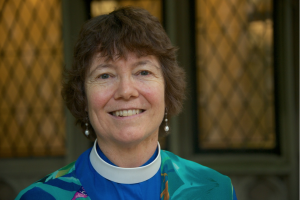
Author, retreat leader, and Episcopal priest: Dr. Bullitt-Jones serves the Episcopal Diocese of Western Massachusetts & Southern New England Conference, United Church of Christ, and the Episcopal Diocese of Massachusetts. A long-time climate activist, she believes that the ecological crisis – from climate change to the extinction of species – calls us to claim our kinship with all creation, to look deeply into our sources of hope, and to work together to build a just and sustainable future. Reviving Creation
The term “deep ecology” comes to mind when introduced to Dr. Margaret Bullitt-Jonas. The core principle of the term “is the belief that the living environment as a whole should be respected and regarded as having certain basic moral and legal rights to live and flourish, independent of its instrumental benefits for human use.” (Deep ecology – Wikipedia). Dr. Bullitt-Jonas has combined her life experiences and faith tradition to be a strong supporter of protecting all life on the planet.
Photo (c) Robert A. Jonas
Dr. Bullitt-Jonas’ latest book is a collection of 21 essays by scientists, scholars, faith leaders, and activists who write about their sources of strength, wisdom, and hope as they grapple with climate crisis. Below is a brief excerpt below from the book called “Love Every Leaf” written by Dr. Bullitt-Jonas:
In times like these, our prayer may need to be expressive and embodied, visceral and vocal. How else can we pray with our immense anger and grief? How else can we pray about ecocide, about the death that humanity is unleashing upon Mother Earth and upon ourselves? How else can we break through our inertia and despair, so that we don’t shut down and go numb? . . . .
I’ve taken to praying outdoors. I go outside, feel the good earth beneath my feet and the wind on my face, and I sing to the trees—to oak and beech, hemlock and pines. Making up the words and music as I go along, I sing my grief to the trees that are going down, and my grief for so much more—for what we have lost and are losing, and for what we are likely to lose. I sing my outrage about these beautiful old trees being cut to the roots, their bodies chipped to bits and hauled away to sell. I sing my fury about the predicament we’re in as a species. I sing my protest of the political and corporate powers-that-be that drive forward relentlessly with business as usual, razing forests, drilling for more oil and fracked gas, digging for more coal, expanding pipeline construction, and opening up public lands and waters to endless exploitation, as if Earth were their private business and they were conducting a liquidation sale. I sing out my shame to the trees, my repentance and apology for the part I have played in Earth’s destruction and for the part my ancestors played when they stole land and chopped down the original forests of the Native peoples who lived here. I sing my praise for the beauty of trees and my resolve not to let a day go by that I don’t celebrate the precious living world of which we are so blessedly a part. I’m not finished until I sing my determination to renew action for trees and for all of God’s Creation. . . .
So our prayer may be noisy and expressive, or it may be very quiet. It may be the kind of prayer that depends on listening in stillness and silence with complete attention: listening to the crickets as they pulse at night, listening to the rain as it falls, listening to our breath as we breathe God in and breathe God out, listening to the inner voice of love that is always sounding in our heart. A discipline of contemplative prayer or meditation can set us free from the frantic churn of thoughts and feelings and enable our spirit to rest and roam in a vaster, wilder space.
Margaret Bullitt-Jonas, “Love Every Leaf,” in Rooted & Rising: Voices of Courage in a Time of Climate Crisis, eds. Leah D. Schade and Margaret Bullitt-Jonas, (Rowman & Littlefield: 2019), 175, 176–177.
In short, Margaret believes that the root of the struggle with Climate Change is spiritual and her focus on environmental ministry is her way of helping others understand and respond to the challenges.
Margaret lives with her husband Robert A. Jonas (see www.emptybell.org for his Christian-Buddhist dialogue website) in Northampton, MA, and works with him to help preserve farmlands, fields, and woodlands in the Pioneer Valley.
As we celebrate Earth Day this year let us consider the declaration of climate emergency, with suggested resources and actions, that was prepared and distributed by the Massachusetts Episcopal dioceses. As the declaration suggests, we can be more effective in our concern when we “pray, learn, act, and advocate.” See this link for the available pdf for download. e277ab1c-b900-49b4-9cee-02e9543522e2.pdf (constantcontact.com)
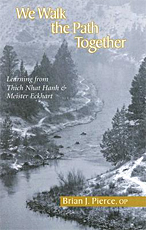
Chapter 1 Magnanimity (Learning the Art of Dialogue) “Pope John Paul II wrote the following words, stressing that dialogue is another word for love: ‘We are all brothers and sisters and, as pilgrims on this earth, although on different paths, we are all on our way to the common Homeland which God, through ways known only to him, does not cease to indicate to us. The main road of mission is sincere dialogue’ p.13
Chapter 2 Mindfulness and the Eternal Now (Present Moment, Moment of Peace) “From the point of view of the Christian mystical tradition, eternity is not a future time out there in heaven….’What is today? Asks Eckhart, a question to which he gives his own answer, ‘Eternity’” p.21
Chapter 3 The Breath of the Holy Spirit (Learning to Breathe Again) “There is no doubt that the East is helping the West recover the simple art of breathing – that most basic of human actions, the one that will not let us escape from the present moment. We cannot breathe yesterday or tomorrow. We can only breathe in the here and now.” p.35 “The breath symbolizes the living, divine Reality present in each of us and in all creation.” p.37 “We breathe in the gift, and we breathe it out again, through loving-kindness and service.” p39
Chapter 4 The Water and the Waves (Water-soaked Ground) “if what Eckhart and (Nhat Hanh) say is true – namely, that the drop of water or the wave ‘become the ocean’ – then what happens next? Do we just disappear? What happens when we merge into God? Eckhart smiles at the earnestness with which we ask the question, and then with the wit of a true master of wisdom, he replies: So, you want to know what happens with the drop of water? ‘It finds God; and the finding of herself and the finding of God is one and the same act.’” p.57 “The author of the Chinese Tao Te Ching has a similar insight:
There was something formless and perfect before the universe was born. It is serene. Empty. Solitary. Unchanging. Infinite. Eternally present. It is the mother of the universe. For lack of a better name, I call it Tao. It flows through all things, inside and out, and returns to the origin of all things.” p.58
Chapter 5 Jesus and God (“Coming Home”) “For Christians, the question inevitably arises: Then how do we get back home to God? For (Nhat Hanh) the answer is quite simple: through the practice of mindfulness. We Christians can find much to imitate in this teaching, for only through mindful spiritual practice does the Trinity move from the theology books to becoming a reality in our lives. p.84 “from T.S. Eliot’s The Four Quartets: ‘What we call the beginning is often the end, and to make an end is to make a beginning. The end is where we start from….we shall not cease from exploration, and the end of all our exploring will be to arrive where we started, and know the place for the first time.’” p.85
Chapter 6 Christ (The Amazing Grace of God) “the reality of our true nature is that we are historical and eternal beings, human and divine, wave and water, heaven and earth. Or, in the image that St. Paul uses: ‘We hold the treasure of divine life within the earthen vessel of our humanity’ (Cor.4:7)…Says Eckhart, ‘The soul is created as if at the junction of time and eternity” p. 97 “from the well-known song ‘Morning Has Broken’: Mine is the sunlight! Mine is the morning. Born of the one light Eden saw play! Praise with elation, praise every morning, God’s re-creation of the new day.’” p.102 “It is heartening for both Buddhists and Christians to know that, in the absence of our respective teachers, the body of their teachings lives on, guiding us toward truth and life.” p.109
Chapter 7 Suffering “The Buddhist journey out of suffering and into freedom is a the heart of the Christian Gospels as well….The Book of Deuteronomy records this admonition from God: ‘I have set before you life and death, blessings and curses. Choose life that you and your descendants my live. (Deut. 30:19)” p.114 “Spirituality is not primarily about following rules, but about living a life that generates happiness and well-being for oneself and for others.” p.116 “No one possesses the truth. On the contrary, we are possessed by the truth. Truth is the Ground upon which every this and that stands.” p. 120 “A person must be willing to stop trying to solve life’s aches and pains by placing one’s trust in the gods of money, power, prestige, relationships, spiritual pleasure, and the like and plunge into the naked, silent Ground of God within.” p. 125
Chapter 8 Compassion Born from Suffering (Looking Deeply)“The discipline of meditation slows us down and trains us to look at the world with understanding and compassion. The result? We begin to see the world around us as it truly is. p.129 “Compassion is love that is willing to run the risk of suffering with and for the beloved….the risky business of loving, of course, requires great patience The two words, compassion and patience both come from the Latin root patior, meaning “to suffer.” p.132 Love is not generic; we do not love in general. Love is always concrete. It always involves real people….the only way we have to love God is by loving this person right here and right now….The ‘perfect’ relationship is not one that is free from suffering, but one that is full of compassion.” p.134 “Suffering is part of loving; it just is. There is nothing romantic or heroic about it.” p.135
Chapter 9 The Tree of the Cross (The Cross: Path to Freedom) “The cross…is more of a path to follow that something we are encouraged to imitate” p.144 “a lived response to the great question of life and death and inner freedom. Do we answer the question and speak the truth – ready to pay the consequences – or do we remain silent and immobile, paralyzed and enslaved by fear?” p.147 Jesus, like the Zen masters, leads his disciples along the path of dying to the self-sufficient ego….He calls us to die to the illusion that we are separate from God, that death has any ultimate power over us.” p.149 “The cross is the Christian version of the Buddha’s Four Noble Truths.” p.159 “All of us who have chosen a spiritual path have, at one time or another, fallen short of the goal. We are all human beings in process, learning day by day to be more human….We learn from the mistakes of the past, so that today we can say yes once again to the journey.” p. 161
Chapter 10 Love in Full Bloom (Equanimity: What Is, Is) “Equanimity is …the calm, peaceful acceptance of the way things are in the present moment…..’if life hands you lemons, then make lemonade’….equanimity teaches us to smile and to laugh at life. We learn to accept each other and every situation just as it is and, to the best of our ability to do so with a sense of humor.” p.168 “Through the practice of equanimity, we lose nothing. What we gain, though, in inner peace and tranquility, is immeasurable.” p.171 “To grow in love, says (Nhat Hanh), requires that we develop the spiritual capacity to rise above the fray of life, to be able to observe any given situation without being attached to either this side or that side.” p.175
CONCLUSION A Journey and a Begging Bowl “Thomas Merton wrote a prayer ‘My Lord God, I have no idea where I am going. I do not see the road ahead of me. I cannot know for certain where it will end…I know that …you will lead me by the right road.” p. 179 “As spiritual practitioners of the twenty-first century, we, like our ancestors, are on a journey, walking a path that unfolds in each and every step. The practice of mindfulness teaches us to savor each step, to live the present moment in all its fullness, aware that the kingdom is either now or never. p.181 “Master Eckhart once said that if he had to summarize the entire spiritual life into a single word or phrase, it would be ‘Thank you.’….The journey, though different and unique for each practitioner and each tradition, is one, and the great joy is the discovery that we walk the path together.” p. 183
This 202 page book includes a lengthy final Notes section that provides detailed references for all the sources cited throughout. Surely, my brief recap does not do justice to this excellent comparison of the Christian and Zen Buddhist traditions. Clearly your key passages would be different than mine.
I welcome your thoughts on the book, and more importantly, on your spiritual path. Have you found inspiration from multiple traditions?



 Life Matters