“As Catherine of Siena said, ‘It’s heaven all the way to heaven, and it’s hell all the way to hell!’” Richard-Rohr-s-Meditation–Heaven-Is-Both-Now-and-Later.html
Today’s senryu: All the Way to Heaven
anticipation
eager to visit loved ones
hearts all a flutter
Nervous excitement can be exhilarating. Our positive energy can enlighten those we meet; showing how much they mean to us. I’m thinking positively today.
Re-reading Power vs. Force by David R. Hawkins, M.D., Ph.D., (c) 2012 Author’s Official Authoritative Edition, I was reminded that it was time to “raise my sights” from choosing joy to choosing enlightenment.
While both joy and enlightenment are in the “extraordinary outcomes” pinnacle, why stop at joy when there are still two higher vibrations levels available?
Today’s senryu: Levels of Consciousness
getting past my self
we perceive a greater truth:
interbeing Self
May we all be happy, productive, without stress and synchronistically extraordinary.
Sometimes people find compassion practice the easiest entry to practicing mettā more generally. As Thanissaro Bhikkhu said, compassion is an extension of mettā that we feel when we encounter suffering. When we are confronted with suffering, especially in person, compassion (karunā) is a natural response, and if we give it space, it will grow. This can be experienced in every day life, but also if we seek out situations to support those in need: incarcerated people, support groups for people with mental challenges, people in aged care or hospice, even animal rescue and rehabilitation. All of these can inspire us to set aside our own petty concerns and listen patiently to others, with an open heart, whether they are talking or not.
The sense of presence that we can develop with mettā or karunā comes from devoting ourselves to observing and listening to others in a complete way…
“What’s in a name? That which we call a rose By any other name would smell as sweet.” Spoken by Juliet, Act 2 Scene 2 of Shakespeare’s Romeo and Juliet
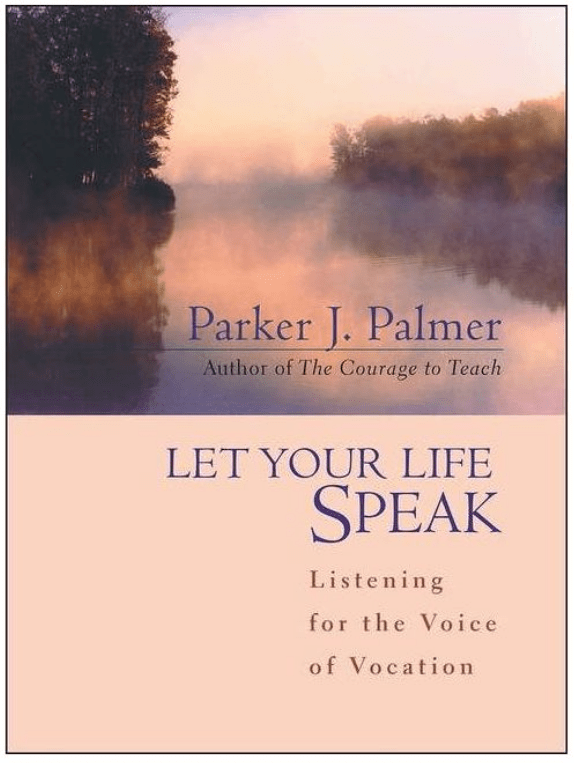
“Parker J. Palmer is an American author, educator, and activist who focuses on issues in education, community, leadership, spirituality and social change. He has published ten books and numerous essays and poems and is founder and Senior Partner Emeritus of the Center for Courage and Renewal.”https://en.wikipedia.org/wiki/Parker_Palmer
Only 117 pages, Palmer’s small book, Let Your Life Speak, (c) 2000 by Jossey-Bass, is filled with candor and wisdom about his (and our) search for right livelihood, for a meaningful vocation.
A couple of quotes from this book inspired by his Quaker practice are:
“there is much guidance in what does not and cannot happen in my life as there is in what can and does – maybe more.” p.39
“If I try to be or do something noble that has nothing to do with who I am, I may look good to others and to myself for a while. But the fact that I am exceeding my limits will eventually have consequences. I will distort myself, the other, and our relationship – and may end up doing more damage than if I had never set out to do this particular ‘good’. … It took me a long time to understand that although everyone needs to be loved, I cannot be the source of that gift to everyone who asks me for it. There are some relations in which I am capable of love and others in which I am not. To pretend otherwise, to put out promissory notes I am unable to honor, is to damage my own integrity and that of the person in need.” pp.47-48
“We can make choices about what we are going to project, and with those choices we help grow the world … Our complicity in world making is a source of awesome and sometimes painful responsibility – and a source of profound hope for change.” p.78
“Spring teaches me to look more carefully for the green stems of possibility, for the intuitive hunch that may turn into a larger insight, for the glance or touch that may thaw a frozen relationship, for the stranger’s act of kindness that make the world seem hospitable again. … if you receive a gift, you keep it alive not by clinging to it but by passing it along.” pp.104-105
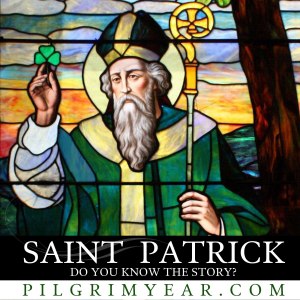
While Patrick is of course primarily associated with Ireland where he flourished as a missionary in the second half of the fifth century, he was not Irish to begin with. He seems to have been a shepherd on the mainland of Great Britain and was in fact captured there, at the age of sixteen, by raiding pirates and taken across the sea to Ireland where he was sold as a slave. He was six years in captivity before he finally made his escape and returned to Britain. And this is where the story takes a truly extraordinary turn. While he was enslaved in Ireland, working as a shepherd for his masters, Patrick became a Christian and when, having made good his escape, he returned home he had a vision in which a man gave him a letter headed ‘The Voice of Ireland’…
Sister Annabel Laity – author at the Plum Village Shop plumvillage.shop
In her book, Mindfulness – Walking with Jesus and Buddha (c) 2021, Sister Annabel Laity identifies the two types of ancestors:
“Our blood ancestors are not the only source of our lives. We also have spiritual ancestors who transmit to us the spiritual direction that our life takes … Our blood ancestors are one of our roots, and our spiritual ancestors are no less important a root … Mindful of our blood and our spiritual ancestors, we shall see their qualities that we want to continue, and we shall also see their shortcomings. We cannot reject our ancestors, because of their mistaken ways. Who are we, who are by no means perfect, to do that? … We accept all our ancestors as they are, and we feel well because, by accepting them, we are accepting ourselves.” pp. 116-117
“Nietzsche dismissed Schopenhauer and Christianity and Buddhism as pessimistic and nihilistic, but, according to Benjamin A. Elman, “[w]hen understood on its own terms, Buddhism cannot be dismissed as pessimistic or nihilistic“. Moreover, answers which Nietzsche assembled to the questions he was asking, not only generally but also in Zarathustra, put him “very close to some basic doctrines found in Buddhism”. An example is when Zarathustra says that “the soul is only a word for something about the body“. https://en.wikipedia.org/wiki/Thus_Spoke_Zarathustra




 Life Matters