Animals are God’s creatures, not human property, nor utilities, nor resources, nor commodities, but precious beings in God’s sight. … Christians whose eyes are fixed on the awfulness of crucifixion are in a special position to understand the awfulness of innocent suffering. The Cross of Christ is God’s absolute identification with the weak, the powerless, and the vulnerable, but most of all with unprotected, undefended, innocent suffering.
Met a wonderful therapist at the Humane Society US Animal Care Expo last week, Jen Blough; a sister Michigander and animal lover. Her website is https://www.animalwelfarewellness.com/ and her clinic is called Deepwater Consulting.
Below is one of her blogposts and I highly recommend learning more about Jen, her books and her services.
Man’s Best…Therapist? Exploring the Health Benefits of Animals
When we live with, care for, work with, and protect animals, we often find ourselves forming deep attachments to them. This special connection, known as the human-animal bond, is described by the American Veterinary Medical Association as a “mutual beneficial and dynamic relationship between people and other animals that is influenced by behaviors that are essential to the health and well-being of both.”
Benefits of the Human-Animal Bond
People are forming friendships with all creatures great and small in some rather unlikely places – zoos, hospitals, and even prisons. More than 90 percent of zookeepers, for example, report having a bond with one or more animals in their care. Sharing the company of birds helps older patients in skilled rehab facilities battle loneliness and depression while boosting morale. Providing aquariums full of fish for dementia patients promotes healthy eating habits, sociability, and relaxation. Prison programs are becoming increasingly popular, offering second chances to inmates and animals alike. From dogs and horses that need socialization to injured, sick, or orphaned wildlife, animals all of kinds are receiving comfort and care in the confinements of prison walls, and returning the favor by providing inmates with a purpose.
Research has only begun to uncover the myriad of psychological, physiological, and social benefits from human-animal interactions. Did you know that petting a dog, for instance, has been shown to reduce blood pressure in people – as well as in the pooches? In addition to helping us calm down, our critters can decrease our heart rate and cholesterol levels and boost our immune system. And forget fad diets and magic weight loss pills. When it comes to the battle of the bulge, nothing beats man’s best friend. A study by the National Institutes of Health revealed that those who walked their dogs on a regular basis were more active, less obese, and even more social. Animals promote healing in hospitalized children, aid adults coping with chronic health conditions such as cancer, and bring peace to those near the end of life in hospice care by alleviating anxiety and decreasing discomfort. As you can see, animals have an amazing ability to heal us throughout our lifespans:
Pets can help children develop motor skills, self-confidence, and empathy.
Children often see their pets as companions, even siblings. In withdrawn or shy children, sometimes a pet is the only companion.
Companion animals provide affection.
They promote opportunities to exercise, play, and socialize.
Pets allow us to love and nurture something – leading to enhanced self-esteem.
Companion animals are dependent on us, creating caregiving opportunities.
Pets can offer stability and support in difficult situations such as a divorce or move.
They can serve as an extension (eyes, ears, or legs) for those with physical impairments.
Pets can be a lifeline for people with terminal illnesses.
For the elderly especially, pets can provide a sense of purpose.
Companion animals provide something humans cannot — unconditional love.
I am very fortunate to be investing much of this week at the Animal Care Expo in New Orleans, LA, USA. This 4-day event is an annual opportunity for educators and exhibitors to meet with over 2500 attendees to discuss what is happening to improve animal care, animal rescue and animal re-homing across the globe. Here’s what I did on Day 1:
Introduced to the Canine Assessment for Risk of Shelters (CARS) framework to assess a dog’s behavioral response to humans, other dogs, or other domesticated animals. This Learning Lab also included a Bite Assessment. This nearly 5-hour interactive session was excellently presented by Dorothy Baisly, Fernando Dias, Amanda Kowalski and Mara Velez.
The Welcome Keynote included the recognition of the 4,000 Beagles rescue program completed last year and the aspiration to do even more this year and years to come. This was followed by an inspirational presentation by Dr. Jyothi Robertson on how her interspecies family members (i.e. cats, dogs and a tortoise) help her (and can help us) look at life and our animal care challenges more courageously and lovingly.
Last, but not least, I was one of three animal chaplains staffing an exhibition booth for Compassion Consortium.
More good news to come!
Jill Angelo, Patrick Cole and (Rev) Sarah Bowen (award-winning author for Sacred Sendoffs and a founding director for Compassion Consortium)!
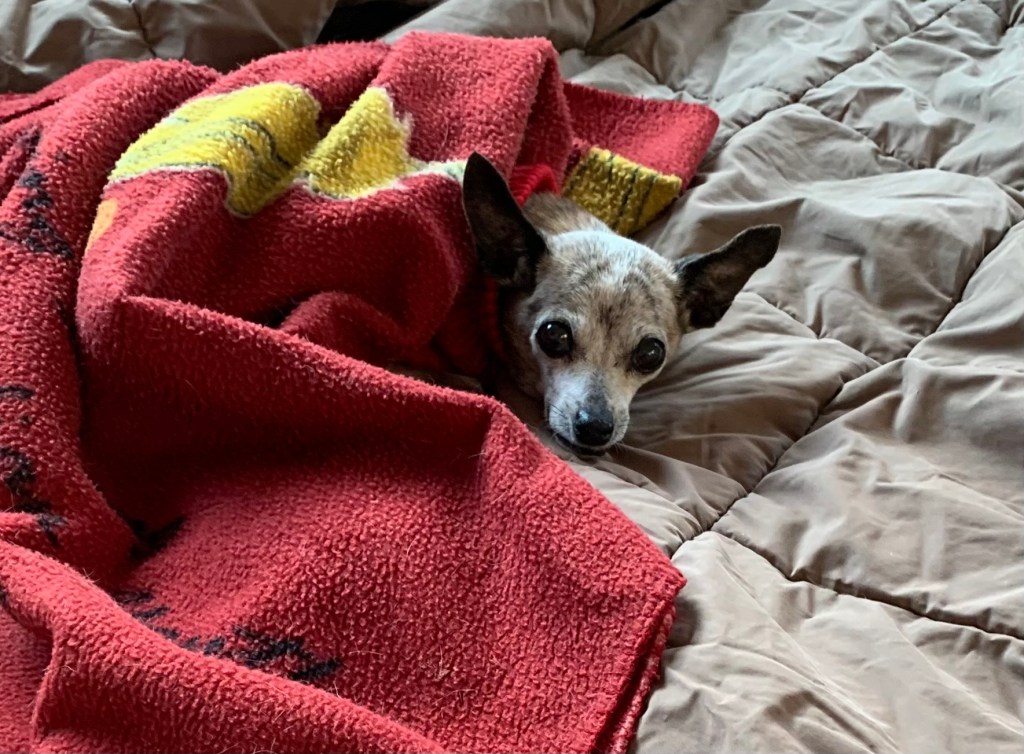
Rescued from a puppy mill, we were blessed with nearly 8 years of life with Tilly. RIPsweet girl. We look forward to meeting up with you again someday.
“Pet shelters are packed while pet owners grapple with high costs. By Axel Turcios, AP, March 21, 2023
Shelters are filling for a multitude of reasons, including a lack of vets and as pet owners’ home and financial situations change.
Rising economic costs have made it difficult for pet owners to keep animals they adopted during the pandemic, and for rescues to pay for their care.
While the national animal shelter intake numbers are still below pre-pandemic levels, many animal welfare organizations, like the Animal Care Centers of New York City, are struggling with capacity challenges, with more animals coming into the shelters than leaving. They say one of the causes of the rising numbers in shelters is that they are staying longer at the sites.
“As they stay inside the shelter longer, it’s not great for them mentally or physically, and many of them will break down,” said Katy Hansen, director of marketing and communications at Animal Care Centers of NYC. “They’re stressed, so they’re not showing well to potential adopters that come in. We went from an average length of stay of eight days pre-pandemic to now we’re at 13 days.”
The Shelter Animals Count database released a report in January 2023 that shows nationwide shelter animal intake was 4% higher in 2022 than in 2021, though still lower than it was in 2019. This report also revealed that the number of animals leaving shelters remained flat in 2022 versus 2021, meaning space for animals in shelters is shrinking.
“I think this is a great time to reach out to your local shelter and see how you can help,” Caceres-Gil said. “Even if you cannot adopt an animal right now, there are many resources, there are many other ways that you can help, volunteering in becoming a foster parent.”
According to the February Consumer Price Index, year-over-year pet food is up 15%, and pets and pet products are up 12%. The ASPCA estimates that the average annual cost of a dog is $1,391, while the average annual cost of a cat is $1,149.”
In some ways, dogs would be better off without people.
It’s easy to look into the adoring eyes of our pampered pups and think they’d be totally helpless without us. Even the thought of a pet dog living out in the wild is enough to make some owners despair. But imagine if humans suddenly disappeared and dogs had to fend for themselves. In such an apocalyptic scenario, could dogs survive in a world without people?
“I have no doubt that dogs would survive without us,” Jessica Pierce, a faculty affiliate with the Center for Bioethics and Humanities at the University of Colorado Anschutz Medical Campus and author of “A Dog’s World: Imagining the Lives of Dogs in a World without Humans” (Princeton University Press, 2021), told Live Science. “Dogs are descended from wolves and they still have much of the behavioral repertoire of wolves and other wild canids, so they know how to hunt and scavenge.”
Without humans, our former pets would likely roll back the clock on their domestication and live as wild species do. Not all dogs would survive this transition, though. There’s a great variety of dog breeds today, and some are less equipped for the wild than others. For example, flat-faced dogs such as pugs and bulldogs are prone to various health problems, including those that restrict their breathing, which would hinder their ability to hunt. They are also bred with short tails, which would hurt them socially when they interacted with wild dogs.
“Tails are an important part of the communicative toolbox,” Pierce said. “Even if you’re slightly less skillful at communicating something like an aggressive feeling or a submissive feeling, you’re more likely to wind up in a fight than if you’re able to send clear signals.”
Dogs that are likely to wind up in a fight are more likely to get injured and less likely to survive. Fortunately for our barking buddies, humans wouldn’t be around to dictate the canines’ reproductive habits any longer. As a result, different breeds would mix, allowing natural selection to forge the fittest mutts.
These doomsday dogs would also interbreed with wolves to create hybrids where their ranges overlapped. Stray dogs and wolves already mix in Europe in countries such as Italy, according to a 2017 study published in the journal Global Ecology and Conservation. Friederike Range, an associate professor at the University of Veterinary Medicine Vienna who studies both dogs and wolves, told Live Science that the main thing that really separates the two is us.
“While wolves are primarily hunters and dogs primarily scavengers, it’s a continuum,” Range said. “And wolves can also scavenge and dogs can go hunting.” For example, wolves can be found living in human garbage dumps just like stray dogs do, and stray dogs can be found hunting wild prey just like wolves do.
But even if dogs could get by in a humanless world, wouldn’t they be miserable without any morning fetch or evening fuss? Neither Pierce nor Range see the dogs suffering psychologically without owners.
Pierce noted that, in a domestic setting, humans suppress a lot of dog behaviors — such as roaming, digging and peeing — because we find them annoying. Ownerless dogs don’t have such restrictions, and while they also don’t have the same home comforts as pet dogs do, they may be better off psychologically. “What they do have that pet dogs lack is freedom,” Pierce said.
Having studied dogs living independently from humans, Range has seen dogs form their own social groups and believes that food is a more important consideration than human companionship in these canines’ well-being.
“If we were to disappear, the food would be the main problem for the dogs, not losing the human as a social partner,” Range said. “As long as they could find food, they would be perfectly happy without us.”
Patrick Pester is a freelance writer and previously a staff writer at Live Science. His background is in wildlife conservation and he has worked with endangered species around the world. Patrick holds a master’s degree in international journalism from Cardiff University in the U.K.
“Just like with humans, sundowning in dogs is believed to be caused by age-related issues such as the breakdown of the central nervous system, oxidative stress and brain cell death,” explains Dr. Stephen Katz, a veterinarian practicing more than 30 years and founder of the Bronx Veterinary Center in New York. “Unfortunately, it’s often all just a part of the aging process for both dogs and people.” https://www.dogster.com/dog-health-care/sundowning-in-dogs
Around the US and UK, dozens of animal hospitals have a catch-all when it comes to grieving pet parents who have lost a furry friend: they give them the poem Rainbow Bridge.
Yet this poem that has touched millions of peoples’ hearts has remained largely authorless for years until the sleuth work of an art historian and cat owner Paul Koudounaris, who managed to turn up the original poet decades after Rainbow Bridge became famous.
Her name is Edna Clyne-Rekhy, an 82-year-old Scottish artist and animal lover who traveled the world, and failed to notice her poem’s popularity.
The story begins with Koudounaris’ work researching pet cemeteries, and the constant references he found to Rainbow Bridge. Looking back over the use cases of what he determined to be the single most important text in animal mourning, Koudounaris pinned it to a 1994 appearance on the advice column Dear Abby, the most syndicated column in American history.
A reader told Abby Van Buren that she had received a copy of Rainbow Bridge from her local Humane Society chapter in Grand Rapids Michigan. From that debut to her 100 million readers, Rainbow Bridge began appearing on everything to do with the loss of a pet—Hallmark cards, veterinary clinics, etc.
Koudounaris worked out that of the 15 separate authorship filings at the United States Copyright Office, none of them was the legitimate poet. Eventually expanding the list to 25 names in connection to the poem, he determined one, Edna Clyne-Rekny, was the most promising.
This January, Clyne-Rekhy received a strange phone call asking if she were the author of Rainbow Bridge, to which she answered “How on Earth did you find me?”
In 1957, when she was 19 years old, Clyne-Rekhy was grieving the loss of Major, her Labrador retriever, who “died in my arms,” she told Nat Geo. Her mother told her to write down how she was feeling.
“It just came through my head, it was like I was talking to my dog—I was talking to Major,” she says. “I just felt all of this and I had to write it.”
When Koudounaris met her, he found she still had the original handwritten text of the poem. She explained that she had given out handmade copies without her name on them to several of her friends over the years who had lost pets, before moving to live in India, and Spain, all the while the poem’s popularity blossomed across the US and UK.
“Can you imagine?” she says. “Every vet in Britain has it!”
The original text goes like this:
Just this side of heaven is a place called Rainbow Bridge. When an animal dies that has been especially close to someone here, your pet goes to Rainbow Bridge. There are meadows and hills for all of our special friends so they can run and play together. There is plenty of food, water, and sunshine, and friends are warm and comfortable. All the animals who have been ill and old are restored to health and strength, those who were hurt are made better and strong again, like we remember them before they go to heaven. They are happy and content except for one small thing—they each miss someone very special to them who had to be left behind. They all run and play together, but the day comes when one suddenly stops and looks into the distance. His bright eyes are shining, his body shakes. Suddenly he begins to run from the herd, rushing over the grass, his legs carrying him faster and faster, and when you and your special friend finally meet, you cuddle in a happy hug never to be apart again. You and your pet are in tears. Your hands again cuddle his head and you look again into his trusting eyes, so long gone from life, but never absent from your heart, and then you cross the Rainbow Bridge together.
The last stanza of one of Robert Frost’s most famous poems is both support and challenge to my new vocation as an animal chaplain. The stanza goes like this:
“But yield who will to their separation,
my object in living is to unite
my avocation and my vocation
as my two eyes make one in sight.
Only where love and need are one,
and the work is play for mortal stakes,
is the deed ever really done
for Heaven and the future’s sakes.”
Tomorrow, I will receive a certificate of completion for animal chaplain training through Compassion Consortium (https://www.compassionconsortium.org/training). As the program describes:
Animal chaplains provide support for both animals and humans by using ritual, ceremony, and the tools of spiritual companionship. Compassion Consortium’s Animal Chaplaincy Training helps you fulfill your heart’s call to honor and celebrate the lives of all species, including how to companion them through joys and challenges.
This six-month program was offered to:
Healers and spiritual directors/mentors who’d like to expand their yoga, coaching, massage, therapy, reiki, veterinary, or spiritual counseling, or wellness practice to support animals and their humans through spiritual practices, rituals, and sacred listening
People interested in diving deeper into the intersection of spirituality and science, such as the empirical evidence for improved health and wellness benefits of human-animal bonds
Staff and volunteers working in animal shelters/sanctuaries, veterinary practices, humane education, or vegan advocacy who are interested in integrating spirituality and wellness into their organization
I’d like to think that I fit in all three categories above. Now that I’ve completed this part of the program, I will continue on for another 3+ months toward ordination in late June.
As Robert Frost referred to his role above, I hope to combine my author and animal shelter roles into one so that I may serve both animal and humans more effectively. Ultimately, my goal is to live up to the Compassion Consortium objective to “honor animal lives and heal human hearts.”
With the support of family & friends, not to mention Heaven and Mother Earth, may it be so.



 Life Matters