Category Archives: nature

Apr 2 – Plants Really Do Scream

Plants Really Do Scream

all life suffers – yes

even plants feel the pain of

their violation

Inspired by the reposted article below

Plants Really Do ‘Scream’ Out Loud. We Just Never Heard It Until Now.

NATURE 31 March 2023
By MICHELLE STARR

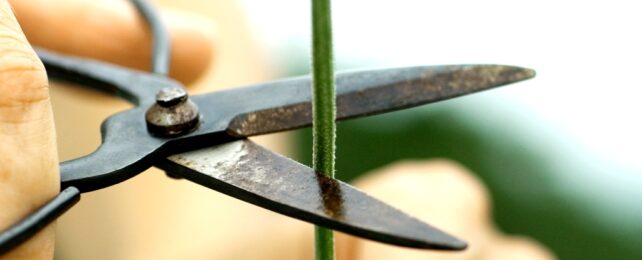
Shears Cut Plant Stem(Michele Constantini/Getty Images)

It seems like Roald Dahl may have been onto something after all: if you hurt a plant, it screams.

Well, sort of. Not in the same way you or I might scream. Rather, they emit popping or clicking noises in ultrasonic frequencies outside the range of human hearing that increase when the plant becomes stressed. This, according to scientists, could be one of the ways in which plants communicate their distress to the world around them.

“Even in a quiet field, there are actually sounds that we don’t hear, and those sounds carry information. There are animals that can hear these sounds, so there is the possibility that a lot of acoustic interaction is occurring,” explains evolutionary biologist Lilach Hadany of Tel Aviv University in Israel.

“Plants interact with insects and other animals all the time, and many of these organisms use sound for communication, so it would be very suboptimal for plants to not use sound at all.”

Plants under stress aren’t as passive as you might think. They undergo some pretty dramatic changes, one of the most detectable of which (to us humans, at least) is the release of some pretty powerful aromas. They can also alter their color and shape.

These changes can signal danger to other plants nearby, which in response boost their own defenses; or attract animals to deal with the pests that may be harming the plant.

However, whether plants emit other kinds of signals – such as sounds – has not been fully explored. A few years ago, Hadany and her colleagues found that plants can detect sound. The logical next question to ask was whether they can produce it, too.

To find out, they recorded tomato and tobacco plants in a number of conditions. First, they recorded unstressed plants, to get a baseline. Then they recorded plants that were dehydrated, and plants that had had their stems cut. These recordings took place first in a soundproofed acoustic chamber, then in a normal greenhouse environment.

Then, they trained a machine learning algorithm to differentiate between the sound produced by unstressed plants, cut plants, and dehydrated plants.

The sounds plants emit are like popping or clicking noises in a frequency far too high-pitched for humans to make out, detectable within a radius of over a meter (3.3 feet). Unstressed plants don’t make much noise at all; they just hang out, quietly doing their plant thing.

By contrast, stressed plants are much noisier, emitting an average up to around 40 clicks per hour depending on the species. And plants deprived of water have a noticeable sound profile. They start clicking more before they show visible signs of dehydrating, escalating as the plant grows more parched, before subsiding as the plant withers away.

The algorithm was able to distinguish between these sounds, as well as the species of plant that emitted them. And it’s not just tomato and tobacco plants. The team tested a variety of plants, and found that sound production appears to be a pretty common plant activity. Wheat, corn, grape, cactus, and henbit were all recorded making noise.

But there are still a few unknowns. For example, it’s not clear how the sounds are being produced. In previous research, dehydrated plants have been found to experience cavitation, a process whereby air bubbles in the stem form, expand and collapse. This, in human knuckle-cracking, produces an audible pop; something similar could be going on with plants.

We don’t know yet if other distress conditions can induce sound, either. Pathogens, attack, UV exposure, temperature extremes, and other adverse conditions could also induce the plants to start popping away like bubble wrap.

It’s also not clear whether sound production is an adaptive development in plants, or if it is just something that happens. The team showed, however, that an algorithm can learn to identify and distinguish between plant sounds. It’s certainly possible that other organisms could have done the same.

In addition, these organisms could have learned to respond to the noise of distressed plants in various ways. “For example, a moth that intends to lay eggs on a plant or an animal that intends to eat a plant could use the sounds to help guide their decision,” Hadany says. For us humans, the implications are pretty clear; we could tune into the distress calls of thirsty plants and water them before it becomes an issue.

But whether or not other plants are sensing and responding is unknown. Previous research works have shown that plants can increase their drought tolerance in response to sound, so it’s certainly plausible. And this is where the team is pointing the next stage of their research.

“Now that we know that plants do emit sounds, the next question is – ‘who might be listening?'” Hadany says. “We are currently investigating the responses of other organisms, both animals and plants, to these sounds, and we’re also exploring our ability to identify and interpret the sounds in completely natural environments.”

The research has been published in Cell.
Mar 13 – Could Dogs Survive Without Humans?

Reposting an article by Patrick Pester from Live Science below. I’m curious, what do you think about this topic?

https://www.livescience.com/could-dogs-survive-without-humans

Could dogs survive without humans?

By Patrick Pester

 published 16 days ago

In some ways, dogs would be better off without people.

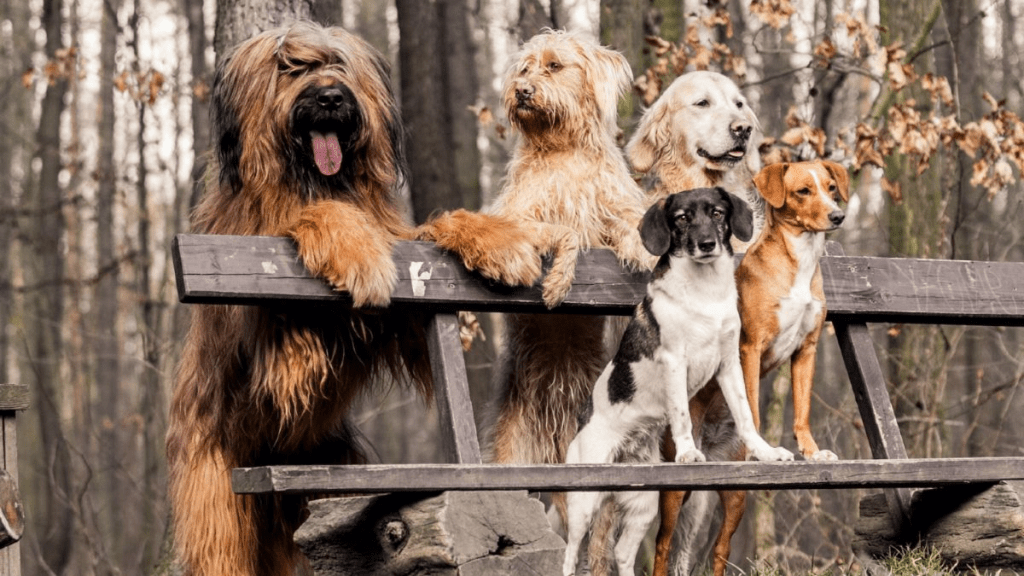
It’s easy to look into the adoring eyes of our pampered pups and think they’d be totally helpless without us. Even the thought of a pet dog living out in the wild is enough to make some owners despair. But imagine if humans suddenly disappeared and dogs had to fend for themselves. In such an apocalyptic scenario, could dogs survive in a world without people?

“I have no doubt that dogs would survive without us,” Jessica Pierce, a faculty affiliate with the Center for Bioethics and Humanities at the University of Colorado Anschutz Medical Campus and author of “A Dog’s World: Imagining the Lives of Dogs in a World without Humans” (Princeton University Press, 2021), told Live Science. “Dogs are descended from wolves and they still have much of the behavioral repertoire of wolves and other wild canids, so they know how to hunt and scavenge.”

Without humans, our former pets would likely roll back the clock on their domestication and live as wild species do. Not all dogs would survive this transition, though. There’s a great variety of dog breeds today, and some are less equipped for the wild than others. For example, flat-faced dogs such as pugs and bulldogs are prone to various health problems, including those that restrict their breathing, which would hinder their ability to hunt. They are also bred with short tails, which would hurt them socially when they interacted with wild dogs. 

“Tails are an important part of the communicative toolbox,” Pierce said. “Even if you’re slightly less skillful at communicating something like an aggressive feeling or a submissive feeling, you’re more likely to wind up in a fight than if you’re able to send clear signals.”

Dogs that are likely to wind up in a fight are more likely to get injured and less likely to survive. Fortunately for our barking buddies, humans wouldn’t be around to dictate the canines’ reproductive habits any longer. As a result, different breeds would mix, allowing natural selection to forge the fittest mutts.

These doomsday dogs would also interbreed with wolves to create hybrids where their ranges overlapped. Stray dogs and wolves already mix in Europe in countries such as Italy, according to a 2017 study published in the journal Global Ecology and ConservationFriederike Range, an associate professor at the University of Veterinary Medicine Vienna who studies both dogs and wolves, told Live Science that the main thing that really separates the two is us. 

“While wolves are primarily hunters and dogs primarily scavengers, it’s a continuum,” Range said. “And wolves can also scavenge and dogs can go hunting.” For example, wolves can be found living in human garbage dumps just like stray dogs do, and stray dogs can be found hunting wild prey just like wolves do.

But even if dogs could get by in a humanless world, wouldn’t they be miserable without any morning fetch or evening fuss? Neither Pierce nor Range see the dogs suffering psychologically without owners. 

Pierce noted that, in a domestic setting, humans suppress a lot of dog behaviors — such as roaming, digging and peeing — because we find them annoying. Ownerless dogs don’t have such restrictions, and while they also don’t have the same home comforts as pet dogs do, they may be better off psychologically. “What they do have that pet dogs lack is freedom,” Pierce said. 

Having studied dogs living independently from humans, Range has seen dogs form their own social groups and believes that food is a more important consideration than human companionship in these canines’ well-being. 

“If we were to disappear, the food would be the main problem for the dogs, not losing the human as a social partner,” Range said. “As long as they could find food, they would be perfectly happy without us.”

Patrick Pester

Live Science Contributor

Patrick Pester is a freelance writer and previously a staff writer at Live Science. His background is in wildlife conservation and he has worked with endangered species around the world. Patrick holds a master’s degree in international journalism from Cardiff University in the U.K.

Mar 3 – Sundowning

Today’s senryu: Sundowning

when verbs become nouns

when memories fade away

when darkness descends

Just like with humans, sundowning in dogs is believed to be caused by age-related issues such as the breakdown of the central nervous system, oxidative stress and brain cell death,” explains Dr. Stephen Katz, a veterinarian practicing more than 30 years and founder of the Bronx Veterinary Center in New York. “Unfortunately, it’s often all just a part of the aging process for both dogs and people.” https://www.dogster.com/dog-health-care/sundowning-in-dogs

March 2 – Animals and World Religions

“We need a conception of ourselves in the universe not as the master species but as the servant species … We must move from the idea that the animals were given to us and made for us, to the idea that we were made for creation, to serve it and ensure its continuance. This actually is little more than the theology of Genesis chapter two. The garden is made beautiful and abounds with life; humans are created specifically to “take care of it” (Gen. 2:15) (Linzey, “Arrogance,” 69) Animals and World Religions, Lisa Kemmerer, (c) 2012, p.217

Today’s senryu: Animals and World Religions

compassion for all

love unrestricted includes!

all earth animals

Feb 25 – Two Tramps in Mud Time by Robert Frost

The last stanza of one of Robert Frost’s most famous poems is both support and challenge to my new vocation as an animal chaplain. The stanza goes like this:

“But yield who will to their separation,

my object in living is to unite

my avocation and my vocation

as my two eyes make one in sight.

Only where love and need are one,

and the work is play for mortal stakes,

is the deed ever really done

for Heaven and the future’s sakes.”

Tomorrow, I will receive a certificate of completion for animal chaplain training through Compassion Consortium (https://www.compassionconsortium.org/training). As the program describes:

Animal chaplains provide support for both animals and humans by using ritual, ceremony, and the tools of spiritual companionship. Compassion Consortium’s Animal Chaplaincy Training helps you fulfill your heart’s call to honor and celebrate the lives of all species, including how to companion them through joys and challenges.

This six-month program was offered to:

  • Healers and spiritual directors/mentors who’d like to expand their yoga, coaching, massage, therapy, reiki, veterinary, or spiritual counseling, or wellness practice to support animals and their humans through spiritual practices, rituals, and sacred listening 
  • People interested in diving deeper into the intersection of spirituality and science, such as the empirical evidence for improved health and wellness benefits of human-animal bonds 
  • Staff and volunteers working in animal shelters/sanctuaries, veterinary practices, humane education, or vegan advocacy who are interested in integrating spirituality and wellness into their organization

I’d like to think that I fit in all three categories above. Now that I’ve completed this part of the program, I will continue on for another 3+ months toward ordination in late June.

As Robert Frost referred to his role above, I hope to combine my author and animal shelter roles into one so that I may serve both animal and humans more effectively. Ultimately, my goal is to live up to the Compassion Consortium objective to “honor animal lives and heal human hearts.”

With the support of family & friends, not to mention Heaven and Mother Earth, may it be so.

_/\_

The Four Pillars of Well-Being

Filmmaker Thomas Wade Jackson and Producer Victoria Moran have created a documentary well worth watching: A Prayer for Compassion. You can learn more about this at their respective websites: http://aprayerforcompassion.com/ and https://mainstreetvegan.com/a-prayer-for-compassion/

But today, I want to highlight Jackson’s Four Pillars of Well-Being. As he said:

At the midpoint of filming A Prayer For Compassion — an adventure composing some three-and-a-half years — I realized that if I was going to challenge people to have more self-compassion and take better care of themselves, I would need to start doing that myself. After some time trying to practice what I intended to preach, I discovered what I call my “Four Pillars of Well-Being.” I found that each day I practiced these, to the best of my ability, I felt great. My overall sense of ease seemed to grow. I was finding it hard to get anxious about things that used to worry me. Instead, I had the energy and clarity to discover solutions to the challenges that mattered and let go of those that didn’t.

THE FOUR PILLARS OF WELL-BEING 

  • Eating clean, healthful, vegan (nonviolent) food. I start my day by making a fruit-and-greens smoothie with ground flax and chia seeds to jumpstart my intake of micronutrients and ALA (an Omega-3 fatty acid). I sip on this smoothie throughout the day. This is just one example of caring for the body temple with food. A quick internet search can provide you with information on making the most health-promoting food choices.

  • Exercise and stretching. Movement is another way I increase my energy flow and perform much needed maintenance on the sacred temple that houses my spirit. My favorite kinds of year-round exercise are hiking in nature, riding my bike, working out at the gym, and yoga; I add on swimming and canoeing in the summer. There are so many ways to move our bodies.

  • Meditation and prayer. In these inner pursuits I find my deepest connection to love and peace. In fact, prayer and meditation are directly responsible for the making of A Prayer For Compassion. They sparked the idea and guided me on every aspect of the journey. Meditation has become a wonderful tool that I use throughout the day. I’ve learned not to put rules on meditation, nor judge the way it’s manifesting for me in the moment. Sometimes meditation is just going within for a few minutes  to shift gears and refocus between disparate tasks, or to quietly prepare for a meeting or conversation. Sometimes innovative thoughts come up, so I jot them down and go back within to find another thought waiting. I continue to write them until I either find the silence again or I run out of time. Sometimes I chant “Om,” the primordial sound in the Indian traditions, or hold a thought such as, “I am an instrument of peace.” And sometimes I just listen deeply within and feel my interconnectedness to all things. Meditation and prayer are personal, but there are techniques, resources and even apps to help you discover what works for you.

  • Sleep. This was the last pillar I added — probably because I truly love life and didn’t want to miss anything. I combined this discipline with the other three and found that together they create an overall feeling of well-being that continues to grow. There is a wealth of recent research around sleep which demonstrates the amazing benefits from getting the proper amount of it (seven to 8.5 hours is the range the researchers recommend). The right amount of quality sleep enhances mental clarity and sharpness, decreases inflammation in the body, offsets depression, and may even lead to a longer lifespan. Even so, many of us take sleep for granted and push ourselves to survive on the bare minimum. You deserve better.

I have to be honest that as a single dad and self-employed person, there are days where I leave out one or more of these pillars. Whether a rapidly approaching deadline or a dizzying travel schedule is to blame, I simply do the best I can in the moment, ever remembering to treat myself the way I would treat a dear friend, with kindness and compassion. I remind myself that it’s about progress, not perfection, and strive to trust the divine flow of things.

The Four Pillars are foundational in creating well-being, but they’re just the beginning. There are many other attitudes and practices that can add to our sense of peace, purpose, and connection. Loving relationships with those in our lives, giving back to the world around us, and indulging in activities that feed our soul are all on the list. For me, spending time in nature, having play dates with my daughter, and making music are favorites. For someone else it might be preparing and sharing healthy vegan food, reading a good book, or becoming engrossed in a play or a lecture. It’s simply a matter of making sure we give ample priority to what makes our heart sing. Whether it’s a once-a-month jam session with friends or making jam with a child, parent, or partner, I challenge you to take more time to nurture your soul.

Today, 2/23/23, is an easy date to remember. Why not consider one or more of these four pillars for your life? Why not check out the documentary?

As the cliche goes, today is the first day of the rest of your life. Let us make the most of it.

Feb 19 – Interspecies Companionship – Sarah Bowen

Rev. Sarah Bowen 12-minute video introducing Animal Chaplaincy

It’s a sunny winter day here in MId-America and I’m contemplating the questions Rev Sarah Bowen introduces in the video link above. Questions like:

  1. Do animals have spiritual lives?
  2. How can we survive the loss of a loved one?
  3. What self-care looks like for animal advocates and Earth Warriors?
  4. What are some of the ways we can honor animal lives and heal human hearts?

I was very fortunate to attend the original webinar offered last Spring, 2022, and join the Animal Chaplaincy Training Program, Rev Sarah began last Summer. Barring the Apocalypse occurring this coming week, I’m looking forward to certification next Sunday, Feb 26. After that I hope to continue on for another 3 – 4 months and be ordained as an Interspecies Interspiritual Chaplain (aka Spiritual Care provider).

If you’re a regular reader of this blog, you already know of my interest in Animals, Mindfulness and now Animal Chaplaincy. If you’re interested in learning more about these topics please subscribe to this blog AND check out Rev Sarah Bowen’s organization: Compassion Consortium. https://www.compassionconsortium.org/training

Today’s senryu: Interspecies Companionship

breathing in, I feel

life teeming all around me;

breathing out, I smile

Compassion Consortium’s Tenets of Agreement

https://www.compassionconsortium.org/our-founding-principles

Feb 11 – My Chihuahua Rescue

I was a lucky man to be offered the chance to adopt a Chihuahua stray rescue. Here’s a brief poem that explains how it all began:

Some Things We May Never Know

Little white Chihuahua, not so young;

not looking your best, coat far from pure.

Animal Control said you were found

living outside, skirting danger.

With matted hair and covered in fleas;

were you abandoned; owner succumbed?

Scrounging for food -and clearly quite lost –

I wonder, where did you come from?

Public announcements brought no results;

two weeks later, “FREE for adoption.”

No resistance, we chose each other;

  optimistic reclamation.

Vet estimated you’re ten years old,

“a very good model”, she confirms.

Fleas now gone and shots have been given;

future routine: monthly heartworm.

Now we go forward,  the two of us;

me asking questions, you staying mum.

Coming from a past only half known;

no longer matters where you came from,

Just one man, one dog walking in tandem.

Feb 10 – Free Will Lemmings

Lemmings and humans share the same scientific classifications of animal and mammal. Free Will is a debatable concept with many schools of thought. So, I’ve been thinking lately…..

Today’s senryu: Free Will Lemmings

lemmings on parade

intelligent design, huh,

over the edge now

For additional information on the creative leap above, check out the Wikipedia excerpts below.

“In popular culture, a longstanding myth holds that they exhibit herd mentality and jump off cliffs, committing mass suicide….

Lemmings have become the subject of a widely popular misconception that they are driven to commit mass suicide when they migrate by jumping off cliffs. It is not a deliberate mass suicide, in which animals voluntarily choose to die, but rather a result of their migratory behavior.

Driven by strong biological urges, some species of lemmings may migrate in large groups when population density becomes too great. They can swim and may choose to cross a body of water in search of a new habitat. In such cases, many drown if the body of water is an ocean or is so wide as to exceed their physical capabilities. Thus, the unexplained fluctuations in the population of Norwegian lemmings, and perhaps a small amount of semantic confusion (suicide not being limited to voluntary deliberation, but also the result of foolishness), helped give rise to the popular stereotype of the suicidal lemmings.” https://en.wikipedia.org/wiki/Lemming

“Free will as an illusion

Spinoza thought that there is no free will. “Experience teaches us no less clearly than reason, that men believe themselves free, simply because they are conscious of their actions, and unconscious of the causes whereby those actions are determined.” Baruch SpinozaEthics

David Hume discussed the possibility that the entire debate about free will is nothing more than a merely “verbal” issue. He suggested that it might be accounted for by “a false sensation or seeming experience” (a velleity), which is associated with many of our actions when we perform them. On reflection, we realize that they were necessary and determined all along….

Buddhists believe in neither absolute free will, nor determinism. It preaches a middle doctrine, ‘dependent origination’, ‘dependent arising’ or ‘conditioned genesis’. It teaches that every volition is a conditioned action as a result of ignorance. In part, it states that free will is inherently conditioned and not “free” to begin with.” https://en.wikipedia.org/wiki/Free_will

Assuming you, the reader, are human, do you think you have free will?