“I hate a song that makes you think you are not any good.”
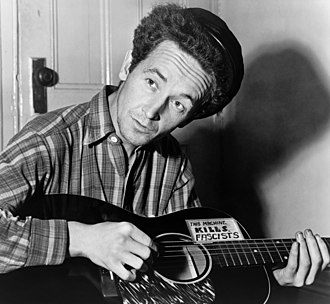
Born on July 14th, Woody Guthrie was an American Folk Music singer-songwriter and social activist. He inspired many musicians, most notably Bob Dylan and Bruce Springsteen.
Woody wrote hundreds of songs and regrettably died far too young at the age of 55 in 1967. Here is today’s haiku:
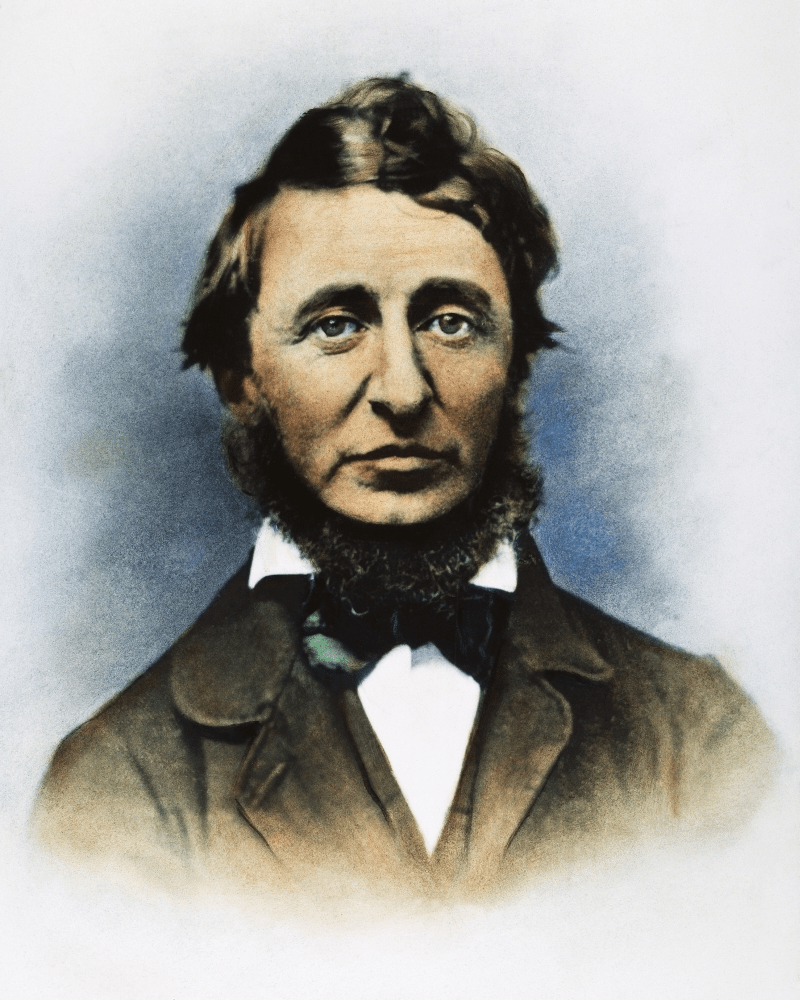
Today is National Simplicity Day which celebrates the life and philosophy of American author and philosopher Henry David Thoreau. One of his oft-repeated quotes is “Our life is frittered away by detail. Simplify, simplify.”
Whether your interest is Minimalism, Nature or Transcendentalism, Thoreau is worth reading (again). Here is today’s haiku:
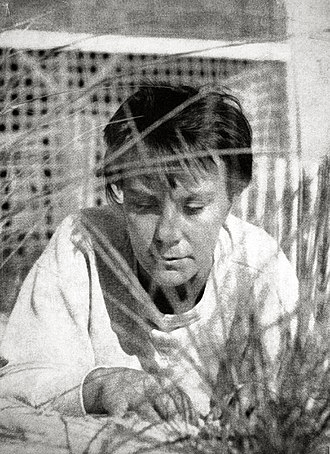
American author, Harper Lee, published her first book based loosely on her own family’s experience in Monroeville, Alabama in 1936. Addressing rape and racial injustice, the book was an instant success and received the Pulitzer Prize 1961.
The book was made into a movie in 1962 starring Gregory Peck. The movie was a hit and won three Oscars including Best Actor for its star.
(Nelle) Harper Lee did not publish another book until 2015. She died in 2016. Here is today’s haiku:
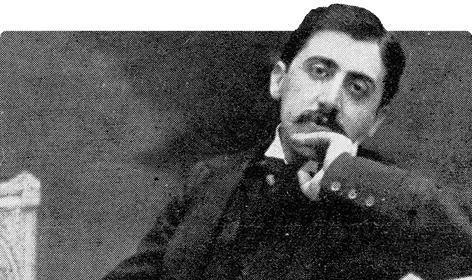
Born on this day in history in 1871, Marcel Proust produced the longest novel ever published: In Search of Lost Time which was some 3200 pages in original French and about 4300 pages when translated into English. It has over 2000 characters and was rejected by at least two publishers before Proust self-published.
In Search of Lost Time, aka Remembrance of Things Past, is the narrator’s recollection of childhood and adulthood in high society France. The reported themes are the loss of time and lack of meaning in the world. I’m sure it’s a fine read but …
Who would you say is the greatest novelist of the 20th Century? Here is today’s haiku:
Donated by Kokichi Takahashi, courtesy of Hiroshima Peace Memorial museum
One day after a Saturday lecture, my Buddhist teacher Shunryu Suzuki opened the floor to questions. This was in 1968, at the height of the Vietnam War. I was in my early twenties at the time, working as an antiwar activist by day and learning about Buddhist meditation at Suzuki’s temple on weekends. I raised my hand and asked the question that was troubling me and so many of us in the room. “Suzuki Roshi,” I said, “What is war?”
He pointed to the goza mat in front of him, a six-by-three-foot thin rush mat on which two people were seated, and said, “When two people sit down on one mat, each person smooths the wrinkles on his side of the mat. When the wrinkles meet in the middle, that’s war.”
What a strange response, was my first thought. Then I remembered that Suzuki had lived through World War II as a temple priest in Japan. It was never clear why he wasn’t drafted into the Japanese army. Some people said it was because he was too short. Others said it was because temple priests were needed at home. Though he never talked about what he had experienced during the war, we all knew that it had been a traumatic and searing time for him. He once told us, “You Americans have seen the worst of my country. I came here to show you the best.” By that he meant Buddhism and Zen meditation. In any case, Suzuki’s answer to my question had to be taken seriously. He knew far more about war than any of us young Americans did.
At the time, his answer triggered a vigorous discussion in the whole group about the war in Vietnam and the fact that on this same day there was a big antiwar demonstration in the park—many of us had been conflicted about whether to go to the demonstration or come to Suzuki’s temple. Suzuki listened patiently to the back-and-forth of our discussion without saying anything. I’m sure that he appreciated our sincerity, but at the same time, given his own war experience, we probably struck him as young and naive.
His answer taught us that war was not just some vast, abstract governmental action happening out there in the world, against which we had to demonstrate and protest.
I’ve had decades since then to ponder his answer, and on deeper reflection I have realized that the story has many nuances and implications. Clearly the notion that each person wants their side of the mat to be smooth is an observation about a certain aspect of human nature. We tend to take care of our own needs first, or the needs of our family, community, or tribe, before we include the needs of anyone outside those circles. Only an unusually perceptive and aware person would take into account the needs of others when it causes inconvenience or suffering to themselves or their own group. There is a theory of moral stages created by the American psychologist Lawrence Kohlberg that maps a person’s ethical development from infancy through childhood and adulthood. According to this representation, to act from an awareness of “the greatest good for the greatest number,” to quote the famous dictum of philosopher John Locke, demonstrates a high level of moral development. Such principles form the basis of modern liberal democracies, including our own.
The highest moral stage, according to Kohlberg, is “transcendent morality,” in which a person’s awareness of the common good is so broad and evolved that it includes sacrificing one’s own well-being, or even one’s life, in the service of the universal welfare of all beings. This is the moral stance of such heroes as Mahatma Gandhi and Martin Luther King Jr., as well as of Buddhism itself. Suzuki Roshi’s comment about the wrinkles in the mat, I believe, emanated from that kind of Buddhist understanding. Given that understanding, it must have been horrific for Suzuki to watch helplessly as his entire country was swept up in a terrible war which it lost at the cost of more than two million young men. I once saw a photograph of the young Suzuki presiding over a ceremony at his temple to send the temple bell off to a factory to be melted down into bullets. He looked so sad in the photograph. I have often wondered how many funerals of young men Suzuki presided over during those war years. Assuredly, there were many.
In today’s world, one war that we are all facing is an internal war—some say a “cold civil war”—between political factions, red and blue, right and left. His answer might apply to that war too. There are so many ways in which Suzuki Roshi could have responded to my question, so many philosophical or religious doctrines that might have framed and explained the subject of war. But he did not do that. Instead, he just pointed to what was right in front of him: two people sitting on a straw mat. His answer taught us that war was not just some vast, abstract governmental action happening out there in the world, against which we had to demonstrate and protest. The real war starts right here, within each of us, and the first challenge is to face the conflict that lives within our own hearts. He didn’t directly say whether we should have gone to the antiwar demonstration or come to his temple for meditation, but his response to that was implicit in the answer he did give. If you want to truly know what war is, he was saying, sit down on a straw mat with one other person and don’t try to smooth out just your side. Be willing to accept the wrinkles that are always there, for everyone.
Thank you to Tricycle! As a nonprofit, they depend on readers like you to keep Buddhist teachings and practices widely available. Lewis Richmond is a Buddhist priest, meditation teacher, and a transmitted disciple of Shunryu Suzuki Roshi. He is the author of five books, including the award-winning Aging as a Spiritual Practice: A Contemplative Guide to Growing Older and Wiser, and his essays have appeared in Tricycle, Buddhadharma, Turning Wheel, and Lion’s Roar. He currently writes a weekly column for The Good Men Project.
Jean Moulin – President of the French Resistance for 2 months before he died on July 8, 1943
Lawyer, political cartoonist, French civil servant, resistance hero. Born in 1899, Jean Moulin died at the age of 44 after being tortured by a German Gestapo officer. His picture above shows a scarf around his neck to hide a scar from a failed suicide attempt.
Jean Moulin is considered a French national hero and there are many theories regarding who the betrayer was that led to his final arrest and early death.
Truly, war is hell, and we should do whatever we can to avoid it. However, if it comes our way, may we be heroic enough to face it with compassion, wisdom and integrity.
I’m feeling discombobulated today and don’t know why. I have always loved numbers. I don’t know numerology but would be interested in hearing from anyone who does.
Today’s poem is an excerpt from my poem Seven Figures published in I Am Furious (Yellow) (c) 2009
One, two, three: numbers comfort me
I watch them parade with perfect symmetry
I love how they add, subtract and multiply
consistently predictable, enough to make me cry
with tears of joy and calm security
numbers so reliable; perfect harmony.
Does anyone know what the numerological significance would be for today’s date?











 Life Matters