Category Archives: psychology

We Will Not Cancel Us

Today’s post from the Center for Action and Contemplation includes an excerpt from adrienne maree brown’s book We Will Not Cancel Us: And Other Dreams of Transformative Justice (Chico, CA: AK Press, 2020), 76–77.

There’s great compassion and wisdom in her words below. May we not cancel ourselves and one another. …

Writer and activist adrienne maree brown normalizes making mistakes and working towards accountability instead of “canceling” others:  

“We will tell each other we hurt people, and who. We will tell each other why, and who hurt us and how. We will tell each other what we will do to heal ourselves and heal the wounds in our wake. We will be accountable, rigorous in our accountability, all of us unlearning, all of us crawling towards dignity. We will learn to set and hold boundaries, communicate without manipulation, give and receive consent, ask for help, love our shadows without letting them rule our relationships, and remember we are of earth, of miracle, of a whole, of a massive river—love, life, life, love.  

We all have work to do. Our work is in the light. We have no perfect moral ground to stand on, shaped as we are by this toxic complex time. We may not have time, or emotional capacity, to walk each path together. We are all flailing in the unknown at the moment, terrified, stretched beyond ourselves, ashamed, realizing the future is in our hands. We must all do our work. Be accountable and go heal, simultaneously, continuously. It’s never too late. 

We will not cancel us. If we give up this strategy [of canceling], we will learn together the other strategies that will ultimately help us break these cycles, liberate future generations from the burden of our shared and private pain, leaving nothing unspeakable in our bones, no shame in our dirt.  

Each of us is precious. We, together, must break every cycle that makes us forget this.”

For the full post see: cac.org/daily-meditations/confession-not-cancellation/

Light by Which We See

Here’s a message that’s very important to me and hopefully helpful to you or someone you know:

  • “Begin honest shadowboxing” even if it initially “make us miserable.”
  • Step 4 of the Twelve Steps can lead to “awareness and compassion” for self and others, and
  • Avoid “vengeance on the self.”

Below is today’s meditation from Richard Rohr and the Center for Action and Contemplation from Richard’s book Breathing Under Water: Spirituality and the Twelve Steps


store.cac.org/products/breathing-under-water-tenth-anniversary-edition

Light by Which We See 

Thursday, July 18, 2024

Made a searching and fearless moral inventory of ourselves.
Step 4 of the Twelve Steps  

Father Richard helps us understand that a moral inventory or “shadow work” is a necessary part of the spiritual life: 

I am convinced that some people are driven to addictions to quiet their constant inner critic, but it only gives them another thing to hate about themselves. What a vicious cycle! Moral scrutiny is not to discover how good or bad we are and regain some moral high ground, but to begin some honest “shadowboxing” which is at the heart of all spiritual awakening. Yes, “the truth will set you free” as Jesus says (John 8:32), but first it tends to make us miserable.  

People only come to deeper consciousness by intentional struggles with contradictions, conflicts, inconsistencies, inner confusions, and what the biblical tradition calls “sin” or moral failure. The goal is actually not the perfect avoidance of all sin, which isn’t possible anyway (see 1 John 1:8–9; Romans 5:12), but the struggle itself, and the encounter and wisdom that come from it. Law and failure create the foil, which creates the conflict, which leads to a very different kind of victory than any of us expected. Not perfect moral victory, not moral superiority, but luminosity of awareness and compassion for the world. After thirty years in “perfect” recovery, alcoholics are still imperfect and still alcoholic, and they know it, which makes all the difference. 

So shadowboxing, a “searching and fearless moral inventory,” is for the sake of truth, humility, and generosity of spirit, not vengeance on the self or some kind of complete victory. And while seeing and naming our actual faults allows us to grow and change, it may be experienced as an even greater gift by those around us.  

Our shadow self is not our evil self. It is just that part of us that we do not want to see, our unacceptable self by reason of nature, nurture, and choice. That bit of denial is what allows us to do evil and cruel things—without recognizing them as evil or cruel. Ongoing shadowboxing is absolutely necessary because we all have a well-denied shadow self. We all have that which we cannot see, will not see, dare not see. It would destroy our public and personal self-image.  

Jesus says, “Take the log out of your own eye first, and then you will see clearly enough to take the splinter out of your brother’s or sister’s eye” (Matthew 7:5). Step 4 is about dealing with our own log first, so we can stop blaming, accusing, and denying, and thus displacing the problem. It’s about seeing truthfully and fully. Note that Jesus does not just praise good moral behavior or criticize immoral behavior, as we might expect. Instead, he talks about something caught in the eye. He knows that if we see rightly, the actions and behavior will eventually take care of themselves. 

Reference:  
Selected from Richard Rohr, Breathing under Water: Spirituality and the Twelve Steps, 10th anniv. ed.(Cincinnati, OH: Franciscan Media, 2011,2021), 29, 30–31, 31–32. 

The Grace of Powerlessness

Richard Rohr and Rami Shapiro offer more inverted wisdom about radical freedom and addiction recovery below.

The Grace of Powerlessness

cac.org/daily-meditations/the-grace-of-powerlessness/

Monday, July 15, 2024

I cannot understand my own behavior. I fail to carry out the very things I want to do and find myself doing the very things I hate … for although the will to do what is good is in me, the power to do it is not. —Romans 7:15, 18 

Admitted we were powerless over alcohol—that our lives had become unmanageable.
—Step 1 of the Twelve Steps 

Father Richard affirms the essential and difficult task of admitting our own powerlessness: 

As many teachers of the Twelve Steps have said, the first Step is probably the hardest, most denied, and most avoided. Letting go isn’t in anybody’s program for happiness, and yet all mature spirituality is about letting go and unlearning.  

Jesus used the metaphors of a “grain of wheat” (John 12:24) or a “branch cut off from the vine” (John 15:2) to describe the arrogant ego. Paul used the unfortunate word “flesh,” which made most people think he was talking about the body. Yet both Jesus and Paul were pointing to the isolated and protected small self, and both said it has to go. Its concerns are too small and too selfish. An ego response is always an inadequate or even wrong response to the moment. It will not deepen or broaden life, love, or inner peace. Since it has no inner substance, our ego self is always attached to mere externals. The ego defines itself by its attachments and revulsions. The soul does not attach, nor does it hate; it desires and loves and lets go.  

What the ego hates more than anything else is to change—even when the present situation isn’t working or is horrible. Instead, we do more and more of what does not work. The reason we do anything one more time is because the last time did not really satisfy us deeply. As English poet W. H. Auden wrote, “We would rather be ruined than changed, / We would rather die in our dread / Than climb the cross of the moment / And let our illusions die.” [1]  

Rabbi Rami Shapiro names the paradox of powerlessness and surrender to God: 

The fundamental and paradoxical premise of Twelve Step recovery as I experience it is this: The more clearly you realize your lack of control, the more powerless you discover yourself to be… [and] the more natural it is for you to be surrendered to God. The more surrendered to God you become, the less you struggle against the natural flow of life. The less you struggle against the flow of life, the freer you become. Radical powerlessness is radical freedom, liberating you from the need to control the ocean of life and freeing you to learn how best to navigate it.…  

We are all addicted to control, and it is to this greater addiction that I wish to speak. The deepest truth of Step 1 requires us to admit that we are powerless over our lives, and that life itself is unmanageable. [2] 

References:  
[1] Selected from Richard Rohr, Breathing under Water: Spirituality and the Twelve Steps, 10th anniv. ed.(Cincinnati, OH: Franciscan Media, 2011,2021), 5–6; W. H. Auden, The Age of Anxiety: A Baroque Eclogue (Princeton, NJ: Princeton University Press, 2011), 105. 

[2] Rami Shapiro, Recovery, the Sacred Art: The Twelve Steps as Spiritual Practice (Woodstock, VT: Skylight Paths, 2009), 3, 6. 

A Counterintuitive Wisdom

What’s your addiction?

Anne Wilson Schaef introduced the concept of societal addiction in her book When Society Becomes an Addict first published in 1987. Then came Richard Rohr in his book Breathing under Water: Spirituality and the Twelve Steps first published in 2011. Together they help us understand how we can all benefit from identifying and addressing our addictions.

Check out their book covers and excerpts from today’s daily meditation from the Center for Action and Contemplation below.

http://www.goodreads.com/book/show/1431703.When_Society_Becomes_an_Addict

http://www.amazon.com/Breathing-Under-Water-Spirituality-Twelve/dp/1616361573

Richard Rohr’s Daily Meditations from the Center for Action and Contemplation

 
A Counterintuitive Wisdom 

I am convinced that, on a practical level, the gospel message of Jesus and the Twelve Step message of Bill Wilson are largely the same message.

Here are four assumptions that I am making about addiction: 

We are all addicts.

“Stinking thinking” is the universal addiction.

All societies are addicted to themselves and create deep codependency. 

Some form of alternative consciousness is the only freedom from the addicted self and from cultural lies.

Let me sum up, then. These are the foundational ways that I believe Jesus and the Twelve Steps of AA are saying the same thing but with different vocabulary:  

We suffer to get well.  
We surrender to win.  
We die to live.  
We give it away to keep it.  

We are all spiritually powerless, not just those who are physically addicted to a substance. Alcoholics simply have their powerlessness visible for all to see. The rest of us disguise it in different ways and overcompensate for our more hidden and subtle addictions and attachments. 


Read this meditation in full at cac.org/daily-meditations/a-counterintuitive-wisdom/  
 
Selected from Richard Rohr, introduction to Breathing under Water: Spirituality and the Twelve Steps, 10th anniv. ed. (Cincinnati, OH: Franciscan Media, 2011, 2021), xix, xxii–xxiii, xxviii, xxix–xxx, xxv.  

Ox-herding 7

“In the long run, both a peaceful mind and harmonious behavior are essential. Cultivating the mind will eventually lead to cultivating ethical behavior, and cultivating ethical behavior will support cultivating the mind. This is likely to be an iterative process rather than first one thing then the other.”

Lynn J Kelly does it again!

Check out the link below for another informative and provocative post.

Necessary Doubt

“An open mind is a strong mind … our doubting and questioning spur us on and keep us intellectually alert and can help us develop confidence in our innate qualities.”

Senior teacher, Jetsunma Tenzin Palmo encourages us to live our lives with a question mark and to not settle for blind faith. Instead, we can experience our faith firsthand and not be content with what other people think or describe.

I hope you enjoy excerpts from the provocative Tricycle article below,

Necessary Doubt

Ani Tenzin Palmo teaches that a questioning mind is essential to the Buddhist path.

By Jetsunma Tenzin Palmo SUMMER 2002

we have a tendency to regard doubt as something shameful, almost as an enemy. We feel that if we have doubts, it means that we are denying the teachings and that we should really have unquestioning faith.

Referring to the dharma, the Buddha said, “come and see,” or “come and investigate,” not “come and believe.”

A famous sutra tells of a group of villagers who came to visit the Buddha. They said to him, “Many teachers come through here. Each has his own doctrine. Each claims that his particular philosophy and practice is the truth, but they all contradict each other. Now we’re totally confused. What do we do?” Doesn’t this story sound modern? Yet this was twenty-five hundred years ago. Same problems.

The Buddha replied, “You have a right to be confused. This is a confusing situation. Do not take anything on trust merely because it has passed down through tradition, or because your teachers say it, or because your elders have taught you, or because it’s written in some famous scripture. When you have seen it and experienced it for yourself to be right and true, then you can accept it.”

We need to be patient. We should not expect to understand the profound expositions of an enlightened mind in our first encounter with them.

Our doubting and questioning spur us on and keep us intellectually alert.

instead of suppressing the questions, I brought up the things I questioned and examined them one by one. When I came out the other end, I realized that it simply didn’t matter. We can be quite happy with a question mark.

We need to know what great teachers in the past have said, because they have been there ahead of us and have laid down maps for us to follow.

Following the path is about experiencing it for ourselves. It’s not taking on what other people have described. It’s not based on blind faith.

Jetsunma Tenzin Palmo is the current president of the Sakyadhita International Association of Buddhist Women. She is one of the first Westerners to be ordained as a Buddhist nun and the founder of the Dongyu Gatsal Ling Nunnery in India.

Your Life Is a Mirror

What if every word you said, every gesture you made, revealed your true intentions? The Tricycle article reposted below says the answer to that question is an important step in our own personal development.

This somewhat lengthy article is well worth your time if you’re one of those people prone to self-deception. I know that’s something I need to work on. How about you?

————————————————–

Your Life Is a Mirror

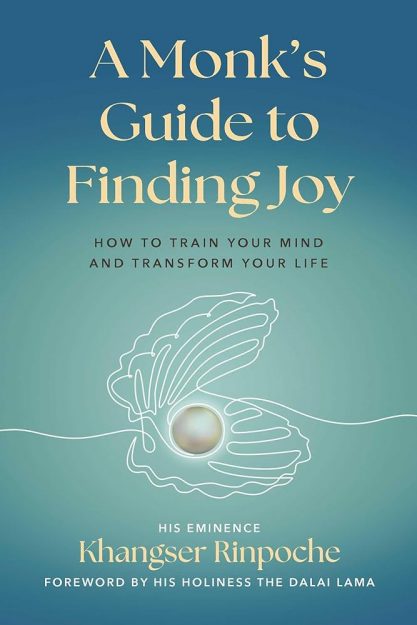
Venerated lama and spiritual teacher Khangser Rinpoche expounds on how to break free of the mind’s habitual tendency towards self-deception.

By Khangser Rinpoche  JUN 21, 2024

Your life is a mirror reflecting the state of your inner world.

To see clearly you must first polish your mirror to clear it of what distorts the truth: your obscuring self-deception.

no longer looking at the reflection in the bathroom mirror, he was looking at himself in a different way: inner reflection.

Self-improvement starts with breaking self-deception and learning to face the truth. You must honestly witness, then evaluate, how your mental, emotional, and behavioral actions obscure the truth.

It’s much easier for you to point out areas where other people can improve rather than seeing your own flaws. This is how it usually is. You have difficulty looking at your imperfections, so you tell yourself lies,

Start by Being Honest

When you encounter a situation where there is no way for you to tell the truth, it is better to just stay silent.

Even if you can’t eliminate lies completely, at least try to reduce their frequency.

Break Subconscious Habits

Your past shapes your perception of the present.

You are not who you think you are—you’ve formed a lot of subconscious habits over the years that are probably unknown to you. That’s why you need the input of those you trust, and you need to pay close attention to your thoughts, feelings, and behavior. If you can’t see your flaws, there is no self-improvement. 

Keep an Open Mind

Your ego has a way of obscuring areas you struggle with, so you must make certain to consider other people’s feedback about you. It’s not easy to see your own issues, you need a good, honest person to tell you about them.

You are not who you think you are

When you receive unpleasant feedback, try to resist the impulse to defend yourself with lies or get angry. Don’t dirty up your mirror with denial. Self-improvement is one of the most important aspects of your life, but to do it properly you need a clear mirror—you need honest feedback. 

Study Cause and Effect

We drum up supernatural ways of eliminating our issues instead of taking personal accountability for them.

Blame sullies your mirror of self-reflection. Instead, focus on accepting the reality of the problem and do what you can realistically do now.

Every kind of suffering can be remedied. To do that you must first clearly understand that there is no such thing as causeless suffering. When you know that wholesome activities have beneficial effects and unwholesome actions have unbeneficial results, you can then choose the best course of action for yourself. This means you have a measure of control over your destiny. 

Examine Your Motives

getting to the truth is tricky

Honesty is a matter of motive

Which is more honest: truth in words or truth in motive? When you want to give up self-deception in favor of self-knowledge, consider the reason why you’re doing what you’re doing.

Remember that life is like a mirror: everything you perceive reflects your inner world. Cleaning your dirty mirror of distorting smudges means clearing self-deception and coming closer to the truth.

This article was excerpted and adapted from A Monk’s Guide to Finding Joy: How to Train Your Mind and Transform Your Life by Khangser Rinpoche, © Wisdom Publications July 2, 2024. Reprinted in arrangement with Wisdom Publications.

The Healing of Tears

Washing out the toxins. Shedding the pains of our life and our world.

I’m not a crier by nature (or is it nurture?) so tears are not something I enjoy or receive comfort from. Yet, tears can be healing.

Below are excerpts from today’s meditation from the Center for Action and Contemplation. Perhaps it will bring a welcome tear to your eyes. cac.org/daily-meditations/the-healing-of-tears/

The Healing of Tears 

Friday, June 28, 2024

Blessed are those who mourn, for they shall be comforted. —Matthew 5:4 

There’s a therapeutic, healing meaning to tears.

those who can grieve, those who can cry, are those who will understand.  

Weeping over our sin and the sin of the world is an entirely different mode than self-hatred or hatred of others.

recognize the sad reality

That might seem ridiculous, and it is especially a stumbling block for many men in our culture. Young men have often been told not to cry because it will make us look vulnerable. So, we men—and many women too—stuff our tears.

He was falling apart, becoming his most radiant, his most needful. And little did I know, he was showing me how to do the same. [2]  

References: 
[1] Adapted from Richard Rohr, Jesus’ Alternative Plan: The Sermon on the Mount (Cincinnati, OH: Franciscan Media, 1996, 2022), 139–140.  

[2] Ross Gay, Inciting Joy: Essays (Chapel Hill, NC: Algonquin Books, 2022), 228–229. 

An Angry Person with a Zen Practice

The brief Lions Roar article below is much more than an American jazz singer, Bobby McFerrin lyric: Don’t Worry, Be Happy.

I highly recommend this piece written by Karen Maezen Miller. See excerpts below:

An Angry Person with a Zen Practice

by Karen Maezen Miller

I wasn’t an angry person until I became a Zen Buddhist. Sure, I yelled. I slammed things. I broke things. But I wouldn’t have called myself angry. It was always another person making me angry. How was that my fault?

But there was hope because I was an angry person with a Zen practice.

No one makes us feel, think, or do anything except as we allow.

Anger comes from our attachments.

We don’t get our way all the time, and besides, even when we do, it doesn’t last.

The wisdom of impermanence shows us the way to work with anger, that is, to not work with it at all.

Without my ruminations and reactions, anger does what all sensations do. It goes away by itself, providing I don’t chase after it.

One more thing has changed my relationship with anger: admitting it. When I feel myself getting angry around others, I try my best to say, “I’m angry right now.” Spoken, the words by themselves are safe. Unspoken, they smolder into fire and brimstone.

These days, though I still get angry, I’m no longer afraid of my anger. I don’t try to hide or avoid it. I remind myself not to rationalize it, justify it, or react in anger. I let it be, and then I let it be gone.

http://www.lionsroar.com/how-3-buddhist-teachers-work-with-difficult-emotions/