Since 1985, October 17 has been celebrated as Black Poetry Day “to honor all the talented African American poets, both past and present. If you’re a literature enthusiast, poet, or writer — no matter your race — you’ll absolutely love Black Poetry Day where you can celebrate black heritage and history. Black Poetry Day is celebrated in commemoration of the birth of the man popularly referred to as the father of African American literature, Jupiter Hammon, the first published black poet in the United States of America.” See https://nationaltoday.com/black-poetry-day/
“Bridge Day isn’t a day to celebrate the architectural beauty of bridges all around the world. Bridge Day is a festival held in Fayetteville, West Virginia in the United States where thousands of adventure lovers either watch or take part in various extreme sports that largely involve jumping off the New River Gorge Bridge….
The bridge was the world’s longest single-span arch bridge for 26 years and is now the fifth-longest. Because of the bridge’s whopping 876 feet height, it was a natural attraction for daredevils around the world. The initial person to jump off the bridge was Cowen’s Burton Ervin, a coal-mine foreman who jumped off the bridge on August 1, 1979, using a conventional parachute….
Why we love Bridge Day – it breaks the monotony of life. Let’s face it — life can get boring. Bridge Day reminds us to get out of the monotony of our regular lives at least once a year and reminds us that life can be exciting.” See https://nationaltoday.com/bridge-day/
When I think of a bridge, three pictures come to mind:
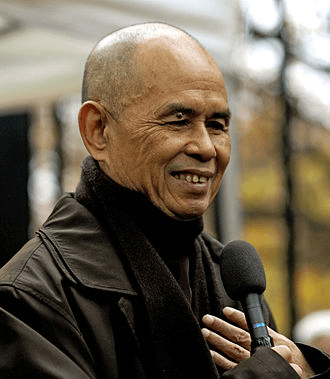
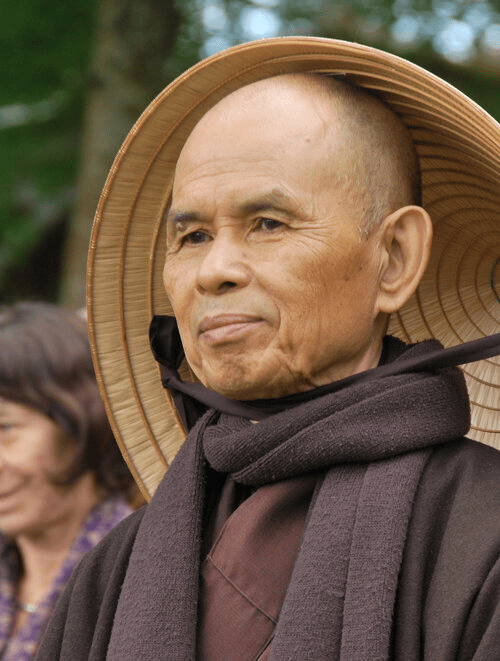
Zen Master and peace activist, Thich Nhat Hanh, was born on this day in 1926. He died earlier this year, at the age of 95, January 22, 2022. Known mostly for his non-violent peace activism during the American/Vietnam War in the 1960s, he was lauded by such notables as Martin Luther King, Jr. and Father Thomas Merton.
Thich Nhất Hạnh, or Thay’ (which means “teacher” in Vietnamese), “published over 130 books, including more than 100 in English, which as of January 2019 had sold over five million copies worldwide. His books, which cover topics including spiritual guides and Buddhist texts, teachings on mindfulness, poetry, story collections, and scholarly essays on Zen practice, have been translated into more than 40 languages as of January 2022. In 1986 Nhất Hạnh founded Parallax Press, a nonprofitbook publisher and part of the Plum Village Community of Engaged Buddhism.” See https://en.wikipedia.org/wiki/Thich_Nhat_Hanh
As one of his thousands of students, I have taken comfort especially in his books: Living Buddha, Living Christ, No Death, No Fearand No Mud, No Lotus published in 1995, 2002 and 2014 respectively. See https://www.parallax.org/authors/thich-nhat-hanh/ An inspiring quote from the first book mentioned is “Because you are alive, everything is possible.”
“In 1992, Columbus Day became Indigenous Peoples’ Day as a sign of protest against the massacres that the Native Americans suffered at the hands of the Europeans. …Celebrating Columbus Day and Columbus himself goes against the very essence of indigenous nations as he was the man who began the genocide of the Native Americans.
For the Native Americans, Columbus Day was always hurtful as it glorified the violent past constituting 500 years of colonial torture and oppression by European explorers like Columbus and those who settled in America. Indigenous Peoples’ Day draws attention to the pain, trauma, and broken promises that were erased by the celebration of Columbus Day. Before his arrival, the indigenous folk were successful self-sufficient communities that sustained life for thousands of years.”
Since 1994, October 5 has been a day for commemorating teachers. Today we focus on “appreciating, assessing and improving the educators of the world.” https://en.wikipedia.org/wiki/World_Teachers’_Day
As the 27th verse of the Tao Te Ching reminds us:
“These are the paths to enlightenment. Those who arrive at their destination teach those who are still on the path, while those still on the path are sources of wisdom for their teachers.” See Tao Te Ching – A New Translation & Commentary by Ralph Alan Dale (c) 2002, p.55
A humble haiku response: World Teachers’ Day
We learn then we teach
consciously or not – our life
is our lesson plan
What My Teachers Taught Me About Teaching – Edutopia
And here’s a provocative poem from “the Bard of the Yukon“:
My Guardian Angel by Robert William Service
When looking back I dimly see The trails my feet have trod, Some hand divine, it seems to me, Has pulled the strings with God; Some angel form has lifeward leaned When hope for me was past; Some love sublime has intervened To save me at the last.
For look you! I was born a fool, Damnation was my fate; My lot to drivel and to drool, Egregious and frutrate. But in the deep of my despair, When dark my doom was writ, Some saving hand was always there to pull me from the Pit.
A Guardian Angel – how absurd! I scoff at Power Divine. And yet . . . a someone spoke the word That willed me from the swine. And yet, despite my scorn of prayer, My lack of love or friend, I know a Presence will be there, To save me at the end.
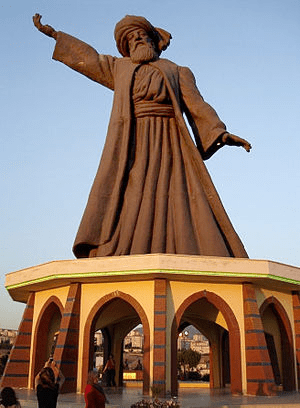
Jalāl al-Dīn Muḥammad Rūmī, more popularly known simply as Rumi, was born on this day in 1207 in present-day Afghanistan. He later died on December 17, 1273 in present-day Turkey. He was a 13th-century Persian poet and Sufi Mystic. Rumi’s influence transcends national borders and ethnic divisions. His poems have been widely translated into many of the world’s languages and he has been described as the “most popular poet” and the “best selling poet” in the United States. (See https://en.wikipedia.org/wiki/Rumi)
Rumi was a firm believer in the use of music, poetry, and dance as a means of approaching God. His poetry is divided into common themes: mystical, passion, and life and death. Madonna and Philip Glass are among his many admirers: Madonna recorded readings of Rumi’s poetry, and Glass’s “Monsters of Grace” is based on Rumi’s art. (See https://nationaltoday.com/rumi-day/)
Rumi’s poetry speaks of love which infuses the world. Rumi’s longing and desire to attain the ideal of Love is evident in this excerpt from his book the Masnavi:
“I died to the mineral state and became a plant.
I died to the vegetal state and reached animality.
I died to the animal state and became a man,
Then what should I fear? I have never become less from dying.”
There is an annual Japanese holiday which remembers deceased ancestors. The actual date varies by region but usually falls between mid-July to mid-August. It is not an official holiday, rather a religious and traditional holiday which includes using lanterns to guide the dead, making food offerings to temples and celebrating with dancing. See https://www.jrailpass.com/blog/obon-festival-in-japan
Here is today’s humble haiku which recognizes this holiday, past and future, yet also celebrates the life still happening on this side of existence.
Our First O-bon
our day of the dead
has not yet arrived – still time
to explore this shore
Obon – Japan’s Day of the Dead @ asiahighlights.com
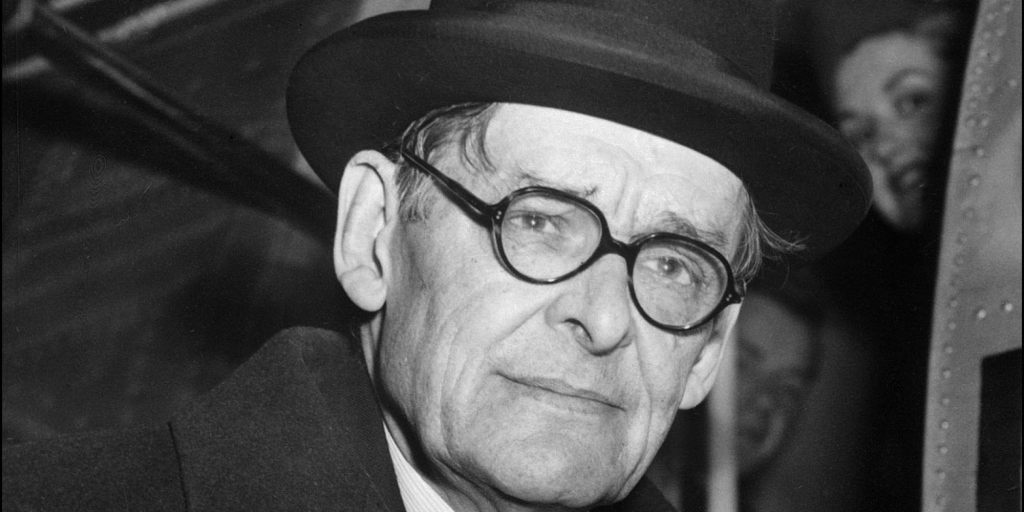
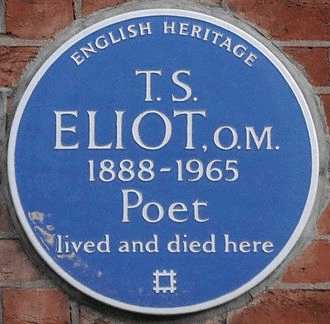
T. S. Eliot (b. 9/26/1888 d. 1/4/1965) photo from HuffPost
Born in St. Louis, Missouri, Thomas Stearns (T. S.) Eliot moved to England at the age of 25 and became an English citizen at 39 thus renouncing his American citizenship.
“During an interview in 1959, Eliot said of his nationality and its role in his work: ‘I’d say that my poetry has obviously more in common with my distinguished contemporaries in America than with anything written in my generation in England. That I’m sure of. … It wouldn’t be what it is, and I imagine it wouldn’t be so good; putting it as modestly as I can, it wouldn’t be what it is if I’d been born in England, and it wouldn’t be what it is if I’d stayed in America. It’s a combination of things. But in its sources, in its emotional springs, it comes from America.'” (See Hall, Donald (Spring–Summer 1959). “The Art of Poetry No. 1” (PDF). The Paris Review. Archived from the original (PDF) on 3 October 2009. Retrieved 7 November 2009.)
Awarded the Nobel Prize for Literature in 1948, (see https://en.wikipedia.org/wiki/1948_Nobel_Prize_in_Literature), Eliot was known as one of the most famous and influential poets of the last century. Among many others, he is credited for his influence on Virginia Woolf, Ezra Pound, F. Scott Fitzgerald, James Joyce, Bob Dylan and Andrew Lloyd Webber. Note the musical Cats is based on Eliot’s book of poetry Old Possum’s Book of Practical Cats (1939) and the movie Tom and Viv recounts his life with his first wife. (See https://en.wikipedia.org/wiki/T._S._Eliot)
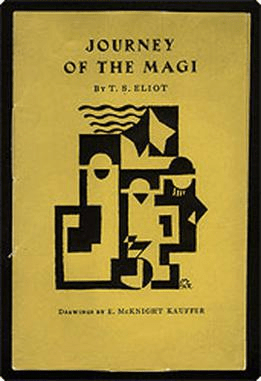
His most famous poems include The Waste Land, Hollow Men, Ash Wednesday and Four Quartets. However, my current favorite of his is Journey of the Magi which is a short 43-line poem. This poem recounts the original trip to the Bethlehem manger and it’s last 8 lines are:
Birth or Death? There was a Birth, certainly We had evidence and no doubt. I had seen birth and death, But had thought they were different; this Birth was Hard and bitter agony for us, like Death, our death. We returned to our places, these Kingdoms, But no longer at ease here, in the old dispensation, With an alien people clutching their gods. I should be glad of another death.









 Life Matters