Lynn J. Kelly offers us some alternative New Year’s goals for consideration.
May We Be Kind in Our Endings & Beginnings
Leave a reply

Lynn J. Kelly offers us some alternative New Year’s goals for consideration.
Am I separate from the gloating MAGA hat wearer?
Check out today’s post from the Center for Action and Contemplation: The Pain of Separateness (cac.org/daily-meditations/the-pain-of-separateness/)
Highlights include:
“the great thawing of all logic, reason, and worthiness”
Below is today’s reminder of the power of forgiveness from Richard Rohr and the Center for Action and Contemplation.
Three Goodnesses
Among the most powerful of human experiences is to give or to receive forgiveness. When we forgive, we choose the goodness of others over their faults, we experience God’s goodness flowing through ourselves, and we also experience our own goodness in a way that surprises us.
We are still living in a world of meritocracy, of quid-pro-quo thinking, of performance and behavior that earns an award. Forgiveness is the great thawing of all logic, reason, and worthiness. It is a melting into the mystery of God as unearned love, unmerited grace, the humility and powerlessness of a Divine Lover.
Without forgiveness, there will be no future.
People formed by such love are indestructible. Forgiveness might just be the very best description of what God’s goodness engenders in humanity. [2]
Read this meditation on cac.org.
[1] Adapted from Richard Rohr, The Wisdom Pattern: Order, Disorder, Reorder (Cincinnati, OH: Franciscan Media, 2001, 2020), 155, 158–159, 162.
[2] Adapted from Richard Rohr, The Universal Christ: How a Forgotten Reality Can Change Everything We See, Hope for, and Believe (New York: Convergent, 2019, 2021), 72.
I’m approaching a milestone birthday, and my thoughts today are about aging. Synchronistical, there’s an archived Tricycle article that offers much reassurance on this very topic.
See excerpts below from Douglas Penick’s article. For the full article see: tricycle.org/magazine/buddhism-aging/
Old age as preparation for perfect awakening
There are many discussions of how the young should manage the old, but there is not much discussion of how it feels for the old to find the same mind continuing, its clarity and curiosity.
Buddhaghosa, the great 5th-century Theravada Buddhist investigator of mind, wrote:
Aging has the characteristic of maturing (ripening) material instances. Its function is to lead on to death.
Aging is the basis for the bodily and mental suffering that arises owing to many conditions such as leadenness in all the limbs, decline and warping of the faculties, vanishing of youth, undermining of strength, loss of memory and intelligence, contempt on the part of others, and so on.
Hence it is said:
With leadenness in every limb,
With every faculty declining,
With vanishing of youthfulness,
With memory and wit grown dim,
With strength now drained by undermining,
With growing unattractiveness to spouse and kin,
To [spouse] and family and then
With dotage coming on, what pain
Alike of body and of mind
A mortal must expect to find!
Since aging all of this will bring,
Aging is well named suffering.—The Path of Purification, trans. Bikkhu Nanamoli
If you are reading this, your chances of ending up in a nursing home are just short of 50/50. That is to say, 4 out of 10 of Tricycle’s readers are likely to end their lives in institutional care. But as Meg Federico wrote, people have to make the most difficult decisions, plans concerning the last years of their lives, at a time they are least capable of doing so. Nonetheless, we will age, and something will happen to us. Atul Gawande, a distinguished surgeon and commentator on the care of the aged, describes the likely situation in which we who live in the Western post-industrial world will find ourselves:
The waning days of our lives are given over to treatments that addle our brains and sap our bodies of a sliver’s chance of benefit. They are spent in institutions—nursing homes and intensive care units—where regimens, anonymous routines cut us off from all the things that matter to us in life. Our reluctance to honestly examine the experience of aging and dying has increased the harm we inflict on people and denied them the comforts they most need. Lacking a coherent view of how people might live successfully all the way to their very end, we have allowed our fates to be controlled by the imperatives of medicine, technology, and strangers.
—Being Mortal
“Old age. It’s a secret, a kind of hidden magic. It’s right there, this practice, and no one sees it. We’re being shown, given. It is how our lives actually work. What we are told we should not cling to is actually naturally being stripped away. . . . Resistance is not possible or only creates more confusion, pain.”
We see our body as a noun, an entity with fixed properties and functions. And because we tend to look at ourselves this way, when various qualities of our body change during the aging process, this is unpleasant; when our body cannot function as it used to, we are distraught, lost. If, however, we see our body as a verb, a combination of properties and functions constantly in motion, then it’s very different.
Dogen Zenji said: “When the world ends, and the fires blaze unobstructedly through everything, and all falls to ruin, we just follow circumstance.” (Trans. Kidder Smith)
Like light in air, we cannot stop,
Every instant dissolves.
Awakening is not something we make happen
Awakening happens without reference point
Without boundary.
Like light in air
Moments do not stop in one self or an other.
Dissolving
Reforming
Awakening breaks open in the experience of whatever and all.
Here’s Dogen again:
Greatly awakening has no beginning or end, returning to confusion had no beginning or end. Why? It just goes off everywhere, while the worlds are being destroyed.” (Trans. Kidder Smith)
Douglas Penick is a longtime Buddhist practitioner and has published three Gesar of Ling episodes. His books include the recent essay collection T The Age of Waiting, adapted from Tricycle articles, and the upcoming The Oceans of Cruelty.
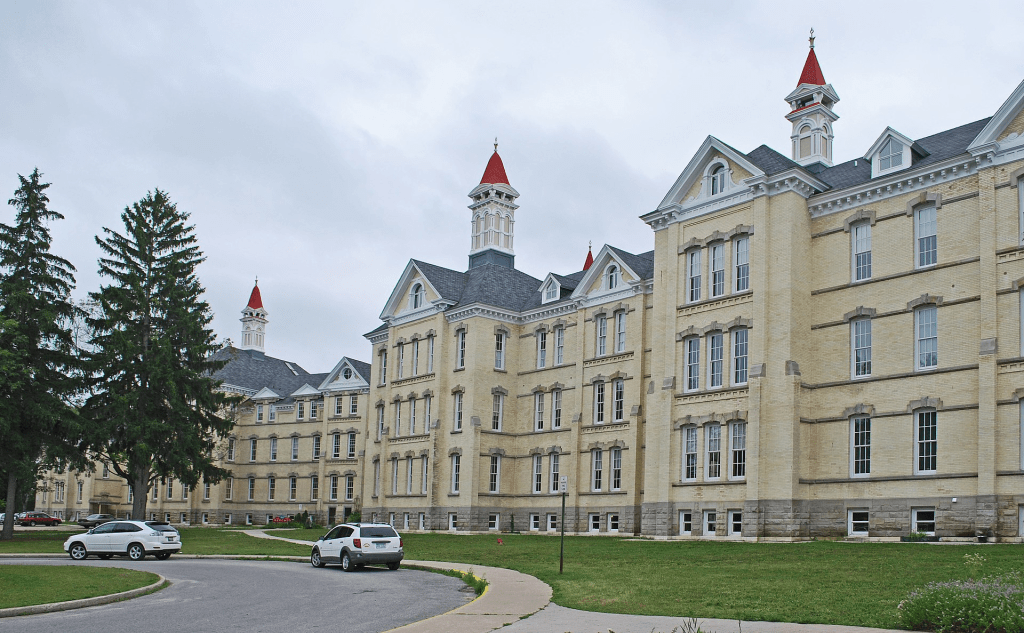

A nurse working in the state psychiatric hospital system, our grandma explained that she was drawn into this work by watching her father, and later her older brother, suffer from Alzheimer’s Disease. Was it her observations or her personal light-hearted and reassuring demeanor, which led to her informing us of the “two types of Alzheimer’s: the funny kind and the scary.”
Grandma said that some of her patients would laugh at their forgetfulness and find it such a tickle to discover that they had forgotten their name, their location and what they were doing just a second ago. “Ha, ha, ha.” What a delight, every day, every hour, sometimes every minute, was a whole new adventure and “Oh, who are you again?” Grandma enjoyed working with these happy folks.
Sadly, there were other patients who would be frightened to discover that they didn’t know where they were, who you were, who they were, and become so disoriented that they would huddle or cry and be so fearful of what might happen to them. No matter how much grandma might say or do to console them, these patients would be distraught and distrustful of anyone’s attempts to assist them.
Grandma ensured me that our family was fortunate to have the “funny kind of Alzheimer’s.” “Nothing to worry about should you ever experience Alzheimer’s.”
Below are excerpts of the touching, Douglas Penick, article in the latest Tricycle magazine called “The Wall – What Remains When the Mind Goes?“
“Month by month, I forget more
and more,
Betray the kindness of those
who taught me.
I drift in seductions of fatigue and
winter mist.
I forget liturgies, poems, practices,
Drifting on the errant life force of a vacant mind.
Layer after layer falls away.
There is
This wall
Before me
Here and now. …
But I know that if I were diagnosed with a profoundly mind-altering disease, I would find cultivating a different and broader kind of mental engagement more encouraging than struggling against encroaching deficits by playing Sudoku and doing crossword puzzles. …
The sudden disappearance of a routine memory: I cannot remember the name and even the atmosphere of a nearby street I walk on regularly. I can see it as I look down through leafless trees from the window in my high-rise apartment, but I no longer know what I’m looking at. It is a blank, a gap. …
For the full article see: tricycle.org/magazine/douglas-penick-memory/ and the companion article link displayed below.
The Third Zen Patriarch, Seng-Ts’an said,
“Word! Words! The Way is beyond language, for in it there is no yesterday, no tomorrow, no today.” from the Hsin-Hsin Ming translated by Richard B. Clarke (c) 1973.
Malcolm Guite, in the link provided below, gives us a beautiful poem on what can happen, what might happen if we use our words recklessly.
May our words be truthful and kind.
I feel like a dead tree
No branches, no bark
Missing my top half
Still standing but could probably be easily pushed over
Fortunately
Those who would be happy to topple me
Pull me up by my roots
Are no longer alive or
No longer capable
I’m not the last man standing
Nor the last tree standing
But I’m still standing
If only for today

A final goodbye in the consolation room
After 8 days of not eating and 5 days of medical tests and treatment, I made the decision not to continue medical intervention, based on consultation with multiple medical advisors.
Zorro, a 12-year-old male Chihuahua, had an enlarged kidney, gallbladder, liver and pancreas with multiple cysts attached. The doctors said the combination of his age, size and multiple organs involved indicated that further treatment would be too intrusive and not likely to make a difference anyway.
Goodbye dear fur friend.
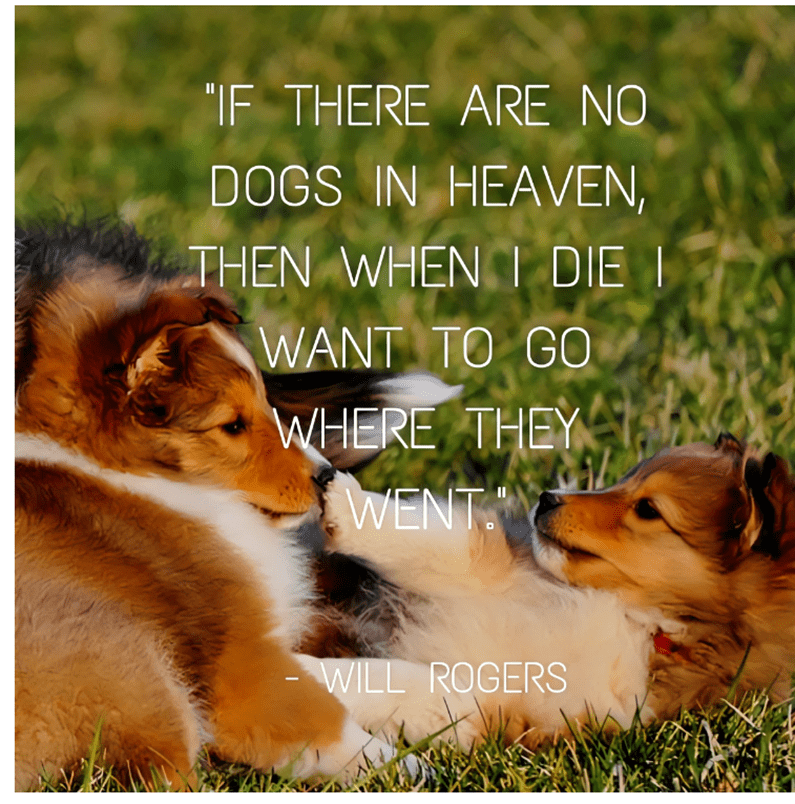
As Will Rogers reportedly said:
Mentioned earlier this week, I’m looking forward to my new helping professional role as an Animal Chaplain. Below is another article which explains how this role is serving people today. (See https://broadview.org/animal-chaplains/)

TOPICS: ETHICAL LIVING | SOCIETY
Animal chaplains like Rev. Sarah Bowen help clients prepare for and deal with the loss of their pets By Andrea Cooper, Religion Unplugged
Karen Walsh Gillingham might have felt lonely when she moved to a new home in Mendham, New Jersey. She was single then, with one son soon headed for college and another already there.
But she also had Baxter, a mini golden doodle who loved feeling the breeze out the car window during their rides in the countryside. “It was me and Baxter,” she recalled.
Baxter was by her side for 12 years, through the joy of her remarriage, the births of grandchildren and the pandemic. She was shocked when he was diagnosed with terminal cancer and died in October 2022. A retired nurse, Gillingham had faced many other losses, including the deaths of her best friend and both parents. But losing Baxter still hit hard.
After she wrote about her pain on Instagram, a friend suggested Gillingham talk with an animal chaplain. Gillingham scheduled a virtual conversation with the Rev. Sarah Bowen, an animal chaplain and ordained minister in New York through One Spirit Interfaith Seminary. Bowen is the author of “Sacred Sendoff: An Animal Chaplain’s Advice For Surviving Animal Loss, Making Life Meaningful, & Healing The Planet.”
“It was so comforting to hear somebody who has experience say, ‘It’s OK; it’s normal, and all that grief is just love that has nowhere to go,’” Gillingham said.
Chaplains provide spiritual support in hospitals, hospices, universities, the military and other settings outside of congregations. Animal chaplains focus on relationships or concerns involving animals, from a family struggling with a pet’s illness to a veterinary tech overwhelmed with seeing animals die at work to an activist struggling over the loss of a species or habitat. “Animal chaplaincy for me means that I support all beings regardless of their belief system or species,” Bowen said.
Animal chaplains can help clients prepare for a pet’s passing and run animal loss support groups. They partner with clients to develop rituals, from memorial events to a welcome for a new animal companion. They may also lead “blessing of the animals” services at houses of worship, or comfort families who have lost an animal following a natural disaster.
Never heard of this emerging discipline? You’ve got company.
According to a recent Gallup survey commissioned by Chaplaincy Innovation Lab at Brandeis University, one in four Americans have received support from a chaplain. Yet few respondents mentioned animal chaplaincy. The field “is still in its very early days,” said Michael Skaggs, director of programs for the Chaplaincy Innovation Lab.
The specialty is not the same as therapy. Animal chaplains typically describe their work as “companioning” rather than “counselling.” They listen and help make meaning from a loss or challenging event. Their work addresses the human spirit instead of mental health.
You don’t have to be religious to seek out an animal chaplain. They serve people of any or no religious background, including atheist, agnostic, spiritual but not religious, and pluralistic. In general, “chaplains have to be deeply grounded in their own tradition, whatever it is. They have to know where they stand, who they are,” Skaggs said. “But then, when they come into the encounter with the person, that grounding has to be invisible.”
Animal chaplaincy began about 30 years ago, coinciding with new research about the human-animal bond and animal cognition, Bowen said. “However, the connection and the questions about animals and humans, and what those relationships look like, go back in every religion and wisdom tradition to the beginning.”
Some denominations address animal concerns in a structured way today. The Episcopal Church in the U.S. has established prayers for animals who are adopted, missing, ill or dead. There is a specific prayer during euthanasia and even one for the suffering of animals during war.
Unitarian Universalism maintains an animal ministry designed to “empower individuals, chapters, and congregations to build justice and compassion for animals.”
It starts from the premise that “when we look into an animal’s eyes and really see that animal, there’s someone else on the other side who is looking back at us — that animals are our companions in creation,” said the Rev. John Gibb Millspaugh, the ministry’s executive director. UUAM encourages congregants “along their own path of compassion and respect for animals.”
Of the 30 UUAM chapters in the U.S., eight have animal chaplains to provide support. Chapters choose their activities based on local interest. Some lead book and film discussions to engage their congregations. They may focus on diet, educating about plant-based meals and encouraging a vegan option at events. Some collect blankets for animals in local shelters or build fences for dogs previously on chains. Others care for wildlife through river cleanups and planting butterfly gardens.
The denomination is currently updating its core documents, which don’t specifically include animals. The most recent draft identifies “all beings” as subjects for concern, care and respect. While not yet approved, the potential change is “a big damn deal,” the Rev. Russell Elleven, who serves as chaplain to UUAM, happily exclaimed.
UUAM animal chaplains train with the Association for Veterinary Pastoral Education in Raleigh, North Carolina — one of a few organizations devoted to educating in this niche area. Robert Gierka founded the program after years as a chaplain, first for a hospital and later for North Carolina State University’s College of Veterinary Medicine. The virtual program has attracted students from a variety of religious and professional backgrounds in the U.S., the U.K., Australia and South Africa.
People bring different and sometimes contrasting perspectives to the training. One cohort included a large animal veterinarian whose priority was animal welfare to lessen the pain and fear of animals slaughtered for food. Another student was an animal rights rescue worker opposed to the killing of animals for any reason. In those sessions, Gierka “did some pastoral magic with someone who did get kind of offended,” said Karen Duke, the association’s vice president.
Compassion Consortium, an “interfaith, interspiritual, and interspecies” nonprofit based in New York, offers animal chaplaincy training programs from three to nine months. Bowen serves as program director. Learners are diverse, from current and retired pastors and Master of Divinity students to people who practice reiki or other healing arts and want to add to their skills.
Some develop their passion for animals later in life. Bowen, whose degrees include a master’s in religious studies from Chicago Theological Seminary, recognized her calling early. Her dad, a Presbyterian minister, often stopped by a local funeral home with her before taking her to swim lessons. At age six, she used her metal lunchbox to transport “little dead critters to bury them in our backyard and give them funerals.”
She continues that impulse with her “roadkill ministry,” removing dead animals from streets for a proper burial and taking injured ones to wildlife rehabilitation. Her eclectic services also include teaching clients how to meditate with their hyperactive puppies and how to help a grieving pet when another pet in the household has died.
Fees for animal chaplaincy services vary, in part based on the time required. It’s common for practitioners to offer reduced rates for clients of limited means. Some support groups are free or ask for small donations.
The field is poised for growth, advocates believe. While the profession is still novel, “we don’t have nearly as many people doing this work as we’re asked for,” Bowen said.
Skaggs from the Chaplaincy Innovation Lab agrees, given how many people bring their pets to veterinary clinics each day to say goodbye for the last time. Most veterinarians are very sympathetic but don’t have the training to comfort people through their loss, he said. “How wonderful would it be if you schedule an appointment and the vet clinic says, ‘Would you like this person to be present during this process or available to you after?’” Ideally, he said, every clinic would have a chaplain.
Karen Walsh Gillingham would vouch for the profession. Through her conversation with Bowen, she realized her dog Baxter’s death had brought up grief from her previous losses. While Gillingham will always miss Baxter, she has room in her life for more love. She’s planning for a new mini golden doodle to join her family.
***
Andrea Cooper has written for The New York Times, Jewish Telegraphic Agency, Tablet and other national publications. Her honours include the Simon Rockower Award from the American Jewish Press Association for coverage of North American Jewish history.
magnoliagrovemonastery.org/photo-gallery
Sunday morning coming down … the last day of retreat is for final talks and final goodbyes. Some people linger as long as possible while others pack up early and are eager to return to home, family, work, and/or civilization.
The vast majority of retreatants are making promises to themselves and/or others to return again. There are many goodbye hugs and well wishes shared.
Today’s senryu: Last Day of Retreat
renewed spirits and
relief to move forward – yes
impermanence is
The six-hour drive home includes a lot of debriefing with car mates that had similar yet different experiences than you. Since retreatants are assigned living quarters by gender and meditation groups by chance, it’s very likely that each traveler has a different perspective on what was their favorite part of the retreat.
So long, Magnolia Grove.
magnoliagrovemonastery.org/photo-gallery
 Life Matters