It’s been many years since I attended parochial school or celebrated Lent for that matter. However, this year I have a poem to share that uses the word lent in perhaps a different way. May this Lent be a time of good reflection for all of us regardless of our faith tradition.
What We Are Lent
sometimes we think too much
sometimes not enough
sometimes it’s time to pause and breathe
I think that’s the “right stuff”
or is it right view, right action
or right effort
whatever it is
let’s recognize the common hurt
then embrace and smile
and enjoy this moment
it’s a short ride after all
and life is what we are lent
From my latest book of poetry, Natural Beauty and Other Poems, (c) 2021
Malcolm Guite reminds us of Seamus Heaney’s advice to “read poems as prayers.” Even better is to hear them read to us. I especially enjoy Malcolm’s reading of his poem below “All the Kingdoms of the World.”
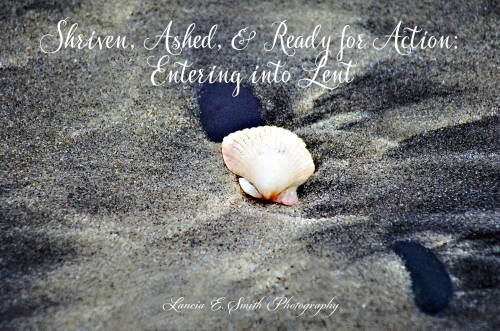
Today, on Shrove Tuesday, I am reposting the first of the weekly series in which you can hear me read aloud the poems I chose for my Lent Anthology The Word in the Wilderness. In the book itself you can read my commentary on each poem but I thought the recordings of my reading them might be useful, especially to groups who are using the book together.Where copyright allows I will also post the texts of the poems themselves here. Once more I am grateful to Lancia Smith who will be providing specially made images for these weekly posts. Lancia has told me that today’s image of the shell suggests a sense of our being ‘cleansed and emptied of what we once carried now waiting for a new day of our own’. But there is also of course the other sense in which…
From Gil Fronsdal:
Dana [pronounced dahnah] refers to the act of giving and to the donation itself. The Buddha used the word cage [pronounced chagah] to refer to the inner virtue of generosity…. This use of cage is particularly significant because it also means “relinquishment” or “renunciation.” An act of generosity entails giving more than is required, customary, or expected relative to one’s resources and circumstances. Certainly it involves relinquishment of stinginess, clinging and greed. In addition, generosity entails relinquishing some aspects of one’s self-interest, and thus is a giving of one’s self. The Buddha stressed that the spiritual efficacy of a gift is dependent not on the amount given but rather on the attitude with which it is given. A small donation that stretches a person of little means is considered of greater spiritual consequence than a large but personally insignificant donation from a wealthy…
Always enjoy Lynn J Kelly’s blog posts. Today’s post reminds me: Giving can be a remedy for any bad feelings we might have about ourselves.” and our giving can be as simple as “to give time, a smile, a kind word, or something else of value.”
It’s worth thinking about the place that giving has in our lives. How important is it? How do we feel when we give something with no strings attached? How regularly do we practice generosity, and in what context? This is a central question if we are on a spiritual path.
Generosity is the first virtue that the Buddha taught to laypeople. It is the access point for all of the other trainings because it requires us to let go of whatever it is we’re clinging to or relying on. Real generosity is a kind of giving that can only be done with an open heart, and an open heart holds nothing back. It could be called lesson number one in surrendering to things as they are.
There’s a longish sutta in the Anguttara Nikaya, book of sevens, about giving; about all the different motivations that we might have when we…
Poet/lyricist Thomas Campion was born February 12, 1567, and lived until March 1, 1620, dying at the age of 52, most likely of the plague. His poems/songs were known for their “brevity and simple, straightforward delivery.” Considered a “keen observer of human frailty, particularly that brought on by the conflicts of love and sexuality. He is also a moralist.” Campion never married and left a paltry legacy to “his longtime friend and collaborator, Philip Rosseter.”
Campion was also known as a metric poet more interested in syllable count than rhyme. He wrote that rhyme should be “sparingly used, lest it should offend the ear with tedious affectation.” He added that rhyming was a “childish titillation.” These comments did not endear him to his contemporaries, and he was “neglected for almost two hundred years, but in the late 1800s he was rediscovered by A.H. Bullen and was later admired by T.S. Eliot and Ezra Pound. In The Use of Poetry and the Use of Criticism (1933) Eliot calls Campion, “except for Shakespeare … the most accomplished master of rhymed lyric of his time.” His lyrics and the songs in which he presented them strongly reflect his period’s style, and Davis finds Campion’s influence in the works of such poets as Pound, W.H. Auden, and Robert Creeley. Campion has been called a poet of the ear, and his careful respect for the nature of the language and its capacities for pleasing intonation was a significant development.” https://www.poetryfoundation.org/poets/thomas-campion
Lemmings and humans share the same scientific classifications of animal and mammal. Free Will is a debatable concept with many schools of thought. So, I’ve been thinking lately…..
Today’s senryu: Free Will Lemmings
lemmings on parade
intelligent design, huh,
over the edge now
For additional information on the creative leap above, check out the Wikipedia excerpts below.
“In popular culture, a longstanding myth holds that they exhibit herd mentality and jump off cliffs, committing mass suicide….
Lemmings have become the subject of a widely popular misconception that they are driven to commit mass suicide when they migrate by jumping off cliffs. It is not a deliberate mass suicide, in which animals voluntarily choose to die, but rather a result of their migratory behavior.
Driven by strong biological urges, some species of lemmings may migrate in large groups when population density becomes too great. They can swim and may choose to cross a body of water in search of a new habitat. In such cases, many drown if the body of water is an ocean or is so wide as to exceed their physical capabilities. Thus, the unexplained fluctuations in the population of Norwegian lemmings, and perhaps a small amount of semantic confusion (suicide not being limited to voluntary deliberation, but also the result of foolishness), helped give rise to the popular stereotype of the suicidal lemmings.” https://en.wikipedia.org/wiki/Lemming
“Free will as an illusion
Spinoza thought that there is no free will. “Experience teaches us no less clearly than reason, that men believe themselves free, simply because they are conscious of their actions, and unconscious of the causes whereby those actions are determined.” Baruch Spinoza, Ethics
David Hume discussed the possibility that the entire debate about free will is nothing more than a merely “verbal” issue. He suggested that it might be accounted for by “a false sensation or seeming experience” (a velleity), which is associated with many of our actions when we perform them. On reflection, we realize that they were necessary and determined all along….
Buddhists believe in neither absolute free will, nor determinism. It preaches a middle doctrine, ‘dependent origination’, ‘dependent arising’ or ‘conditioned genesis’. It teaches that every volition is a conditioned action as a result of ignorance. In part, it states that free will is inherently conditioned and not “free” to begin with.” https://en.wikipedia.org/wiki/Free_will
Assuming you, the reader, are human, do you think you have free will?
Yesterday, in addition to walking The Supreme, I walked four new dogs downtown St. Louis, Missouri. Here’s how it went:
Firstly, Stray Rescue STL is 2 miles directly west of The Gateway Arch which is what I see every Wednesday morning when walking dogs. It’s a beautiful view although the road traffic can be quite busy and sometimes distracting for the dogs.
I met four new dogs this week and walked each a little over a mile for their morning exercise. I have an eight-to-12-mile block route that I vary based on the eagerness and pace of the dog. This distance takes 20 – 30 minutes and provides the staff time to refresh their apartments before we return.
The first dog was Rose Apothecary, a 3-year-old, Pit Bull Terrier. She weighs in at 60 pounds and could afford to lose a couple of pounds with someone eager to take her for multiple walks a day. Rose has a very sweet nature, yet can be a little skittish, perhaps due to her limited vision.
Next comes Tyre (pronounced tie-ree). He’s a large mixed breed 1-year old also weighing in at 60 pounds. He too is a little nervous on the busy downtown streets and hugs my side as we walk. Fortunately, he moves at a comfortable pace due to his size even if he’s a little hesitant at times.
Third comes Tic Tac. She’s a 7-year-old Terrier weighing in at 55 pounds. She’s loves going for walks and snuggling with her human companions. She likes kids and some other dogs but is not keen on cats; strong prey drive, you know.
Last, but not least, is Manifest. She’s a 7-month-old, medium-sized, mixed breed female full of energy and a real sweetheart eager to play and be by your side. She’s relatively new to the facility so there’s not a lot to share except she would be a wonderful companion for someone able to give and receive her love.
I love The Supreme and look forward to walking her every Wednesday morning. My goal is to help every rescue achieve and stay in prime condition for “furever home” adoption and The Supreme (aka “Soup”) is in prime condition…
with a few caveats… she’s dog reactive and door reactive which means she doesn’t like to share you with any other dog and she’s a touch nervous around doors. Oh, and she’s also very, verypowerful.
The ideal human guardian companion would be someone with no other non-human companions in the homestead, no small humans who could be easily knocked over, and a guardian human able to hold on to her leash should she suddenly be eager to lunge forward to track down whatever catches her senses. Otherwise, she is a delight.
Here’s a poem shared on the Stray Rescue website from another admirer.
A note from her enrichment friend, Kathleen B.:
“S-trong: This can not be emphasized enough. She is one of the strongest dogs in terms of strength, willpower and heart.
U-niversally adored: Once you meet her, you have to love her, not because she’s super cuddly, but because she is uniquely Supreme and you can’t help but fall in love.
P-assionate: She goes for what she wants, be that a Jolly Ball, treat or trash on the street. She needs someone to continue working with her to know she will always have food and fun.
R-eady to go: You like adventure? This is your girl! You won’t wonder if she’s up for it, because she will be right by the door!
E-xercise: She is not a lazy couch kind of dog. She loves to take hikes and be on the go! If you lead an active lifestyle, Supreme is your gal!
M-emorable: Whether it’s her strength, love of toys or stunning looks you don’t forget your time with her.
E-nergetic: She can go for days, whether that’s a walk or playing with toys. She gives it her all and then some.
Other things to note: -Prefers to be an only dog -She doesn’t know her own strength so kids are probably not the best fit. -If you are patient, willing to work with her and commit to her forever, she will be your best friend.”
Maybe, there’s a supreme dog in your nearby rescue shelter. If you’re a good personality match, you might find a BFF (best friend forever) for your life.
These small but fearless omnivores have decided to share our residence. While cleanliness is next to godliness, (See Exodus 30:17-21), however, they have been known to pass on diseases to nearby humans. So, we are keeping our distance.
Our house is surrounded by beauty betty bushes, hickory and oak trees which provide much of their diet we’re told. We also feed wild birds and they apparently enjoy some of the sunflower seeds we distribute.
Hmmm, wonder how long they might be here? What have your racoon experiences been? Any advice for us?
“We are living in a time of unprecedented danger, and the Doomsday clock time reflects that reality. 90 seconds to midnight is the closest the clock has ever been set to midnight, and it’s a decision our experts do not take lightly,” Rachel Bronson, the president and CEO of BAS, said at a news conference on Tuesday (Jan. 24).”






 Life Matters