Category Archives: peace

Feb 27 – Nhat Hanh, Rohr and Rumi

In the book, Interbeing – The 14 Mindfulness Trainings of Engaged Buddhism (Fourth Edition) by Thich Nhat Hanh (c) 2020 by Parallax Press, Thay’ says:

“The Fourteen Mindfulness Trainings were born in a sea of fire in 1966 in Vietnam. The situation of the war was extremely hot. And we know how hot the fire of fanaticism can be. That is why the very first precept is about nonattachment to views, openness, and tolerance, because we see that attachment to views, narrowness, and fanaticism is the ground of a lot of suffering.” p.30

The First Mindfulness Training – Openness

Aware of the suffering created by fanaticism and intolerance, we are determined to not be idolatrous about or bound to any doctrine, theory, or ideology, even Buddhist ones. We are committed to seeing the Buddhist teachings as a guiding means that help us learn to look deeply and develop our understanding and compassion. They are not doctrines to fight, kill, or die for. We understand that fanaticism in its many forms is the result of perceiving things in a dualistic or discriminative manner. We will train ourselves to look at everything with openness and the insight of interbeing in order to transform dogmatism and violence in ourselves and the world.” p.29

Similarly, Richard Rohr speaks of “solidarity instead of judgment.”

Richard Rohr from http://www.sightmagazine.com.au

In the book, The Universal Christ – How a Forgotten Reality Can Change Everything We See, Hope For, and Believe by Richard Rohr (c) 2019 by Center for Action and Contemplation, Inc., Richard says:

“A mature Christian sees Christ in everything and everyone else. That is a definition that will never fail you, always demand more of you, and give you no reasons to fight, exclude, or reject anyone.

Isn’t that ironic? The point of the Christian life is not to distinguish oneself from the ungodly, but to stand in radical solidarity with everyone and everything else. … Humans were fashioned to love people more than principles.” p.33

In the book, The Essential Rumi – Translations by Coleman Barks, New Expanded Edition (c) 2004 HarperOne, Rumi, 13th-Century Persian poet, Islamic scholar and Sufi mystic from Iran, says:

“Out beyond ideas of wrongdoing and rightdoing, there is a field. I’ll meet you there.

When the soul lies down in that grass, the world is too full to talk about. Ideas, language, even the phrase ‘each other’ doesn’t make any sense.” p.36

Here is my humble senryu to these great teachers: Nhat Hanh, Rohr and Rumi

Looking for the truth

I found love, then hope, then faith.

Thank you, dear loved ones.
The Four Pillars of Well-Being

Filmmaker Thomas Wade Jackson and Producer Victoria Moran have created a documentary well worth watching: A Prayer for Compassion. You can learn more about this at their respective websites: http://aprayerforcompassion.com/ and https://mainstreetvegan.com/a-prayer-for-compassion/

But today, I want to highlight Jackson’s Four Pillars of Well-Being. As he said:

At the midpoint of filming A Prayer For Compassion — an adventure composing some three-and-a-half years — I realized that if I was going to challenge people to have more self-compassion and take better care of themselves, I would need to start doing that myself. After some time trying to practice what I intended to preach, I discovered what I call my “Four Pillars of Well-Being.” I found that each day I practiced these, to the best of my ability, I felt great. My overall sense of ease seemed to grow. I was finding it hard to get anxious about things that used to worry me. Instead, I had the energy and clarity to discover solutions to the challenges that mattered and let go of those that didn’t.

THE FOUR PILLARS OF WELL-BEING 

  • Eating clean, healthful, vegan (nonviolent) food. I start my day by making a fruit-and-greens smoothie with ground flax and chia seeds to jumpstart my intake of micronutrients and ALA (an Omega-3 fatty acid). I sip on this smoothie throughout the day. This is just one example of caring for the body temple with food. A quick internet search can provide you with information on making the most health-promoting food choices.

  • Exercise and stretching. Movement is another way I increase my energy flow and perform much needed maintenance on the sacred temple that houses my spirit. My favorite kinds of year-round exercise are hiking in nature, riding my bike, working out at the gym, and yoga; I add on swimming and canoeing in the summer. There are so many ways to move our bodies.

  • Meditation and prayer. In these inner pursuits I find my deepest connection to love and peace. In fact, prayer and meditation are directly responsible for the making of A Prayer For Compassion. They sparked the idea and guided me on every aspect of the journey. Meditation has become a wonderful tool that I use throughout the day. I’ve learned not to put rules on meditation, nor judge the way it’s manifesting for me in the moment. Sometimes meditation is just going within for a few minutes  to shift gears and refocus between disparate tasks, or to quietly prepare for a meeting or conversation. Sometimes innovative thoughts come up, so I jot them down and go back within to find another thought waiting. I continue to write them until I either find the silence again or I run out of time. Sometimes I chant “Om,” the primordial sound in the Indian traditions, or hold a thought such as, “I am an instrument of peace.” And sometimes I just listen deeply within and feel my interconnectedness to all things. Meditation and prayer are personal, but there are techniques, resources and even apps to help you discover what works for you.

  • Sleep. This was the last pillar I added — probably because I truly love life and didn’t want to miss anything. I combined this discipline with the other three and found that together they create an overall feeling of well-being that continues to grow. There is a wealth of recent research around sleep which demonstrates the amazing benefits from getting the proper amount of it (seven to 8.5 hours is the range the researchers recommend). The right amount of quality sleep enhances mental clarity and sharpness, decreases inflammation in the body, offsets depression, and may even lead to a longer lifespan. Even so, many of us take sleep for granted and push ourselves to survive on the bare minimum. You deserve better.

I have to be honest that as a single dad and self-employed person, there are days where I leave out one or more of these pillars. Whether a rapidly approaching deadline or a dizzying travel schedule is to blame, I simply do the best I can in the moment, ever remembering to treat myself the way I would treat a dear friend, with kindness and compassion. I remind myself that it’s about progress, not perfection, and strive to trust the divine flow of things.

The Four Pillars are foundational in creating well-being, but they’re just the beginning. There are many other attitudes and practices that can add to our sense of peace, purpose, and connection. Loving relationships with those in our lives, giving back to the world around us, and indulging in activities that feed our soul are all on the list. For me, spending time in nature, having play dates with my daughter, and making music are favorites. For someone else it might be preparing and sharing healthy vegan food, reading a good book, or becoming engrossed in a play or a lecture. It’s simply a matter of making sure we give ample priority to what makes our heart sing. Whether it’s a once-a-month jam session with friends or making jam with a child, parent, or partner, I challenge you to take more time to nurture your soul.

Today, 2/23/23, is an easy date to remember. Why not consider one or more of these four pillars for your life? Why not check out the documentary?

As the cliche goes, today is the first day of the rest of your life. Let us make the most of it.

Feb 14 – Happy Birthday “Little Valentine”

Frederick Douglass was born in February 1818. Though the exact date of his birth is unknown, he chose to celebrate February 14 as his birthday, remembering that his mother called him her “Little Valentine.” Douglass, Frederick (1882). The Life and Times of Frederick Douglass: From 1817–1882. London: Christian Age Office. p. 2

Frederick Douglass was an American social reformer, abolitionist, social reformer, orator, writer, and statesman.

In 1848, Douglass was the only black person to attend the Seneca Falls Convention, the first women’s rights convention, in upstate New York. Elizabeth Cady Stanton asked the assembly to pass a resolution asking for women’s suffrage. Many of those present opposed the idea … Douglass stood and spoke eloquently in favor of women’s suffrage; he said that he could not accept the right to vote as a black man if women could also not claim that right. He suggested that the world would be a better place if women were involved in the political sphere.

In this denial of the right to participate in government, not merely the degradation of woman and the perpetuation of a great injustice happens, but the maiming and repudiation of one-half of the moral and intellectual power of the government of the world.

https://en.wikipedia.org/wiki/Frederick_Douglass

After Douglass’s powerful words, the attendees passed the resolution.

On February 20, 1895, Douglass attended a meeting of the National Council of Women in Washington, D.C. During that meeting, he was brought to the platform and received a standing ovation. Shortly after he returned home, Douglass died of a massive heart attack. He was 77.

Douglass’s coffin was transported to Rochester, NY, where he had lived for 25 years, longer than anywhere else in his life. His body was received in state at City Hall, flags were flown at half mast, and schools adjourned. He was buried next to Anna (his first wife) in the Douglass family plot of Mount Hope Cemetery, Rochester’s premier memorial park. Helen (his second wife) was also buried there, in 1903. His grave is, with that of Susan B. Anthony, the most visited in the cemetery. A marker, erected by the University of Rochester and other friends, describes him as “escaped slave, abolitionist, suffragist, journalist and statesman, founder of the Civil Rights Movement in America“. https://en.wikipedia.org/wiki/Frederick_Douglass

“America is false to the past, false to the present, and solemnly binds herself to be false to the future.” https://www.writerswrite.co.za/literary-birthday-14-february-frederick-douglass/

Jan 30 – Remembering Mahatma Gandhi

With thanks to Sister Joan Chittister, I am reminded of the life and legacy of Mohandas Karamchand Gandhi (2 October 1869 – 30 January 1948).

January 30: Mahatma Gandhi, the great Indian teacher of nonviolence, died on this day in 1948. One of the greatest pacifists of all time, in 1948 Gandhi was himself assassinated by religious conservatives who promoted the political division he sought to overcome. It would seem that Gandhi failed. Yet, multitudes around the world, including Martin Luther King, Jr., have followed his tenets. To allow your own life to seed another’s, is fruit enough to last a lifetime.
         —from A Monastery Almanac by Joan Chittister

Today’s senryu: Remembering Mahatma Gandhi

A man of extremes

you would not be ignored when

life’s demands beckoned

For more information on this great soul, see https://en.wikipedia.org/wiki/Mahatma_Gandhi

Jan 30 – Benefits of Mindfulness

There are many benefits to the practice of Mindfulness. The excerpts below come from a more comprehensive article, if you’re interested. Check it out here:(https://www.helpguide.org/harvard/benefits-of-mindfulness.htm). Hopefully this brief introduction will encourage you.

“Practices for Improving Emotional and Physical Well-Being

Mindfulness is the practice of purposely focusing your attention on the present moment—and accepting it without judgment. Mindfulness is now being examined scientifically and has been found to be a key element in stress reduction and overall happiness.

What are the benefits of mindfulness?

Professor emeritus Jon Kabat-Zinn helped to bring the practice of mindfulness meditation into mainstream medicine and demonstrated that practicing mindfulness can bring improvements in both physical and psychological symptoms as well as positive changes in health, attitudes, and behaviors.

Mindfulness improves well-being. 

Mindfulness improves physical health. 

Mindfulness improves mental health. In recent years, psychotherapists have turned to mindfulness meditation as an important element in the treatment of a number of problems, including depression, substance abuse, eating disorders, couples’ conflicts, anxiety disorders, and obsessive-compulsive disorder.

Mindfulness techniques

There is more than one way to practice mindfulness, but the goal of any mindfulness technique is to achieve a state of alert, focused relaxation by deliberately paying attention to thoughts and sensations without judgment. This allows the mind to refocus on the present moment. All mindfulness techniques are a form of meditation.

Basic mindfulness meditation – Sit quietly and focus on your natural breathing or on a word or “mantra” that you repeat silently. Allow thoughts to come and go without judgment and return to your focus on breath or mantra.

Body sensations – Notice subtle body sensations such as an itch or tingling without judgment and let them pass. Notice each part of your body in succession from head to toe.

Sensory – Notice sights, sounds, smells, tastes, and touches. Name them “sight,” “sound,” “smell,” “taste,” or “touch” without judgment and let them go.

Emotions – Allow emotions to be present without judgment. Practice a steady and relaxed naming of emotions: “joy,” “anger,” “frustration.” Accept the presence of the emotions without judgment and let them go.

Getting started

Mindfulness meditation builds upon concentration practices. Here’s how it works:

Go with the flow. In mindfulness meditation, once you establish concentration, you observe the flow of inner thoughts, emotions, and bodily sensations without judging them as good or bad.

Pay attention. You also notice external sensations such as sounds, sights, and touch that make up your moment-to-moment experience. The challenge is not to latch onto a particular idea, emotion, or sensation, or to get caught in thinking about the past or the future. Instead, you watch what comes and goes in your mind and discover which mental habits produce a feeling of well-being or suffering.

Stay with it. At times, this process may not seem relaxing at all, but over time it provides a key to greater happiness and self-awareness as you become comfortable with a wider and wider range of your experiences.

Practice acceptance

Above all, mindfulness practice involves accepting whatever arises in your awareness at each moment. It involves being kind and forgiving toward yourself.

Some tips to keep in mind:

Gently redirect. If your mind wanders into planning, daydreaming, or criticism, notice where it has gone and gently redirect it to sensations in the present.

Try and try again. If you miss your intended meditation session, simply start again.

By practicing accepting your experience during meditation, it becomes easier to accept whatever comes your way during the rest of your day.

Cultivate mindfulness informally

In addition to formal meditation, you can also cultivate mindfulness informally by focusing your attention on your moment-to-moment sensations during everyday activities. This is done by single-tasking—doing one thing at a time and giving it your full attention. As you floss your teeth, pet the dog, or eat an apple, slow down the process and be fully present as it unfolds and involves all of your senses.

Invest in yourself

The effects of mindfulness meditation tend to be dose-related — the more you do, the more effect it usually has. Most people find that it takes at least 20 minutes for the mind to begin to settle, so this is a reasonable way to start. If you’re ready for a more serious commitment, Jon Kabat-Zinn recommends 45 minutes of meditation at least six days a week. But you can get started by practicing the techniques described here for shorter periods.

Adapted with permission from Positive Psychology: Harnessing the Power of Happiness, Personal Strength, and Mindfulnessa special health report published by Harvard Health Publishing.

Last updated: December 5, 2022

Jan 29 – “Quiet Your Mind from Time to Time”

Meditation and poetry, meditators and poets, like two hands coming together in namaste.

One of the most famous poets of all time is Rumi (full name Jalāl al-Dīn Muḥammad Rūmī). He wrote poetry in the 13th century in Persian, Turkish, Arabic and Greek. His poetry was influenced by his Sufi meditation.

“Rumi was a scholar and poet that lived in 13th century Persia (now modern-day Iran.) Like all extraordinary gifted and profound teachers, Rumi’s words have transcended time and place.

An Islamic scholar and Sufi mystic, Rumi wrote much of his thoughts down in the form of poems … it’s well-known that Rumi was a mystic, devoted to contemplation and self-surrender … Rumi certainly practiced Mur?qabah, an Arabic word that translates to observation in English. Mur?qabah is a form of Sufi meditation where the goal is to “watch over” their spiritual heart and to gain insight into the Ultimate truth.

Nearly every form of meditation practiced, across religious and spiritual traditions, emphasizes quietude of mind. Individuals who are adept meditators are well-aware that mental silence can lead to profound insight, … Please quiet your mind from time to time!” https://www.powerofpositivity.com/rumi-quotes-transform-your-life/

Today’s senryu: Quiet Your Mind from Time to Time

The slower I go

the more I realize, life

is love in motion

Jan 22 – In Remembrance of Thich Nhat Hanh

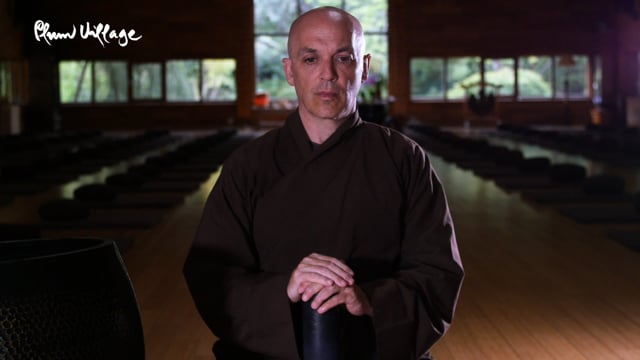
Our teacher, Thay’, Thich Nhat Hanh, died one year ago. Below are two links for more information on this fierce and gentle Zen Master.

I especially appreciate his poem displayed below which includes the phrase: “birth and death are a game of hide-and-seek”

May you experience his continued presence of peace and joy.

Contemplation on No-Coming and No-Going

by Thich Nhat Hanh

Read by Brother Phap Lai
This body is not me.
I am not limited by this body.
I am life without boundaries.
I have never been born,
and I have never died.

Look at the ocean and the sky filled with stars,
manifestations from my wondrous true mind.
Since before time, I have been free.

Birth and death are only doors through which we pass,
sacred thresholds on our journey.
Birth and death are a game of hide-and-seek.

So laugh with me,
hold my hand,
let us say good-bye,
say good-bye, to meet again soon.

We meet today.
We will meet again tomorrow.
We will meet at the source every moment.
We meet each other in all forms of life.
https://plumvillage.org/contemplation-on-no-coming-and-no-going/

Jan 24 – Animal Chaplain Blessings

Blessing of the Animals Today

One spiritual care service of an animal chaplain is to bless or thank a higher power for the non-human companion(s) in our life.

For some great examples see this book edited by Lynn L. Caruso:

A couple of quotes from this beautiful book that caught my attention are:

“There are two means of refuge from the miseries of life: music and cats.” Albert Schweitzer, p.31

“Deep peace of the running wave to you. Deep peace of the flowing air to you. Deep peace of the quiet earth to you. Deep peace of the shining stars to you. Deep peace of the infinite peace to you.” Celtic blessing, attributed to Fiona McLeod, p.163

“May all sentient beings be happy, may all sentient beings be peaceful, may all sentient beings be free from suffering.” Buddhist prayer, p.184

In this spirit, I wish you and your companions, human and non-human, many moments of love and joy today:

Bless you and yours, here

and now, may your love expand

like the universe

Jan 23 – Four Roles of an Animal Chaplain

Donna Rae Yuritic’s Compassion for Creatures Animal Ministry https://tucson.com/lifestyles/faith-and-values/animal-chaplain-brings-peace-to-many/article_026dfee4-b9ca-50e5-a4f7-165c63ad5b06.html

Yuritic estimated, as of 2008, there were “50 animal chaplains in the U.S. and Canada.” That number has grown significantly since due to her work and that of Reverend Sarah Bowen.

Sarah Bowen’s roadkill ministry http://www.modernreverend.com/about-rev-sarah.html

What does an animal chaplain do? Sarah Bowen identifies at least four roles in a Tricycle magazine article. https://tricycle.org/article/animal-chaplain/

Those roles are: “animal chaplains primarily help people with

  1. end-of-life care and the grieving process for the animals who often become an integral part of our families but whose deaths we tend to not process as fully. The job can also entail
  2. working with animals in shelters,
  3. addressing behavioral problems through interspecies spiritual practices, and
  4. animal advocacy.https://tricycle.org/article/animal-chaplain/

Or, stated another way on Sarah Bowen’s website, ModernReverend.com:

  1. Supporting animals
  2. Promoting human/animal bonds
  3. Sacred Sendoffs
  4. Advocating for non-human animals

If you’re interested in “honoring animal lives and healing human hearts” check out Sarah Bowen’s companion website Compassion Consortium: https://www.compassionconsortium.org/training

Jan 20 – A Truth-Teller More People Should Know – Jacqui Lewis

Repost from the Center for Action and Contemplation Daily Meditations https://cac.org/daily-meditations/

Love Speaks the Truth

Truth-telling can be a very difficult journey on the way to freedom.
—Jacqui Lewis, Fierce Love

CAC friend Rev. Dr. Jacqui Lewis writes about the ways both prophetic and personal truth-telling challenge us and the systems to which we belong:

In my faith tradition we call that speaking the truth—in love. As a clergyperson, I have many truth-telling strategies. Sometimes I’m gentle, needing to take good care of the one who is listening. Sometimes I’ve got my fists in the air while marching for the truth, for justice and liberation. Always my intention is to free up the energy that’s caught in the story, to liberate myself and the other with whom I’m in relationship to find a way forward. Can we win this action? Will the politician change policy or give in to demands? Will the congregant or colleague hear my point of view, and can I hear theirs? Can I change the story in the public square in a compelling way and open eyes, hearts, and minds to new worldviews? Will [my husband] John and I become stronger because of this difficult talk? Telling the truth is an act of love, an act of resistance, an act of courage. Its end is liberation, freedom, and, if possible, reconciliation. But there can be no reconciliation without truth.…

The historian Howard Zinn wrote, “The most revolutionary act one can engage in is […] to tell the truth.” [1] Indeed! I think the revolutionary part of truth is that it can free us and those around us to live with greater certainty about what is real, even when it hurts, because we are no longer shackled to the energy lying requires of us. Lying demands the continuation of the lie and the amplification of the lie to keep the truth hidden.… Telling the truth creates ripples of authenticity that change the world.…

I believe truth is revolutionary; it’s part of the work of fierce love. Truth makes a personal, spiritual, ethical, and moral demand upon us. It wants to be said, known, told. It hurts and it’s inconvenient, but it’s essential to our well-being. It cleanses our spiritual palate and restores our souls. Truth is a drink of water to a parched traveler. It lubricates relationships. It liberates us from bondage. It builds trust and connections. It’s the beginning of authentic living and joy. Truth eludes us at times, and we have to pursue it. Truth invites us to be honest about who we are, about our flawed-but-beautiful, broken-but-healing selves. Truth leads to reconciliation and peace; without truth, there is no peace. In the light of truth, we are able to honor our journey and love ourselves. Truth-telling is a spiritual discipline that requires practice. We must not lie to others and, as Fyodor Dostoevsky suggested, we mustn’t lie to ourselves. Being honest with ourselves about ourselves is to love ourselves unconditionally, to love ourselves fiercely.

[1] Howard Zinn, “Marx in Soho: A Play on History,” in Three Plays: The Political Theater of Howard Zinn (Boston: Beacon Press, 2010), 115.

Jacqui Lewis, Fierce Love: A Bold Path to Ferocious Courage and Rule-Breaking Kindness That Can Heal the World (New York: Harmony Books, 2021), 58, 64, 65.

https://www.goodreads.com/book/show/56293867-fierce-love