Category Archives: poetry

Apr 2 – Plants Really Do Scream

Plants Really Do Scream

all life suffers – yes

even plants feel the pain of

their violation

Inspired by the reposted article below

Plants Really Do ‘Scream’ Out Loud. We Just Never Heard It Until Now.

NATURE 31 March 2023
By MICHELLE STARR

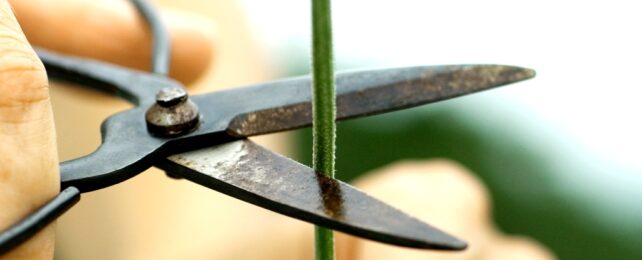
Shears Cut Plant Stem(Michele Constantini/Getty Images)

It seems like Roald Dahl may have been onto something after all: if you hurt a plant, it screams.

Well, sort of. Not in the same way you or I might scream. Rather, they emit popping or clicking noises in ultrasonic frequencies outside the range of human hearing that increase when the plant becomes stressed. This, according to scientists, could be one of the ways in which plants communicate their distress to the world around them.

“Even in a quiet field, there are actually sounds that we don’t hear, and those sounds carry information. There are animals that can hear these sounds, so there is the possibility that a lot of acoustic interaction is occurring,” explains evolutionary biologist Lilach Hadany of Tel Aviv University in Israel.

“Plants interact with insects and other animals all the time, and many of these organisms use sound for communication, so it would be very suboptimal for plants to not use sound at all.”

Plants under stress aren’t as passive as you might think. They undergo some pretty dramatic changes, one of the most detectable of which (to us humans, at least) is the release of some pretty powerful aromas. They can also alter their color and shape.

These changes can signal danger to other plants nearby, which in response boost their own defenses; or attract animals to deal with the pests that may be harming the plant.

However, whether plants emit other kinds of signals – such as sounds – has not been fully explored. A few years ago, Hadany and her colleagues found that plants can detect sound. The logical next question to ask was whether they can produce it, too.

To find out, they recorded tomato and tobacco plants in a number of conditions. First, they recorded unstressed plants, to get a baseline. Then they recorded plants that were dehydrated, and plants that had had their stems cut. These recordings took place first in a soundproofed acoustic chamber, then in a normal greenhouse environment.

Then, they trained a machine learning algorithm to differentiate between the sound produced by unstressed plants, cut plants, and dehydrated plants.

The sounds plants emit are like popping or clicking noises in a frequency far too high-pitched for humans to make out, detectable within a radius of over a meter (3.3 feet). Unstressed plants don’t make much noise at all; they just hang out, quietly doing their plant thing.

By contrast, stressed plants are much noisier, emitting an average up to around 40 clicks per hour depending on the species. And plants deprived of water have a noticeable sound profile. They start clicking more before they show visible signs of dehydrating, escalating as the plant grows more parched, before subsiding as the plant withers away.

The algorithm was able to distinguish between these sounds, as well as the species of plant that emitted them. And it’s not just tomato and tobacco plants. The team tested a variety of plants, and found that sound production appears to be a pretty common plant activity. Wheat, corn, grape, cactus, and henbit were all recorded making noise.

But there are still a few unknowns. For example, it’s not clear how the sounds are being produced. In previous research, dehydrated plants have been found to experience cavitation, a process whereby air bubbles in the stem form, expand and collapse. This, in human knuckle-cracking, produces an audible pop; something similar could be going on with plants.

We don’t know yet if other distress conditions can induce sound, either. Pathogens, attack, UV exposure, temperature extremes, and other adverse conditions could also induce the plants to start popping away like bubble wrap.

It’s also not clear whether sound production is an adaptive development in plants, or if it is just something that happens. The team showed, however, that an algorithm can learn to identify and distinguish between plant sounds. It’s certainly possible that other organisms could have done the same.

In addition, these organisms could have learned to respond to the noise of distressed plants in various ways. “For example, a moth that intends to lay eggs on a plant or an animal that intends to eat a plant could use the sounds to help guide their decision,” Hadany says. For us humans, the implications are pretty clear; we could tune into the distress calls of thirsty plants and water them before it becomes an issue.

But whether or not other plants are sensing and responding is unknown. Previous research works have shown that plants can increase their drought tolerance in response to sound, so it’s certainly plausible. And this is where the team is pointing the next stage of their research.

“Now that we know that plants do emit sounds, the next question is – ‘who might be listening?'” Hadany says. “We are currently investigating the responses of other organisms, both animals and plants, to these sounds, and we’re also exploring our ability to identify and interpret the sounds in completely natural environments.”

The research has been published in Cell.
Mar 28 – Those vs. These Terrible Times

Virginia Woolf @ Pinterest

On this day in 1941, Virginia Woolf committed suicide by drowning in the river behind her house. She was feeling the return of massive depression. She wrote a love letter/suicide note to her husband. Her writing was often controversial and, so it might be expected, that even her suicide note would be misquoted, misinterpreted and misjudged.

Today’s senryu: Those vs. These Terrible Times

life can be cruel

inside and outside our mind

stop judging – be kind

There’s an excellent piece by Maria Popova on The Marginalian website that provides an explanation of how “self-righteousness is the enemy of compassion.” And, as might be expected, the “self-righteous” ones include so called “Christians” and “journalists.” This piece also recommends the book, Afterwords – Letters on the Death of Virginia Woolf, edited by Sybil Oldfield, (c) 2005, Rutgers University Press

See https://www.themarginalian.org/2014/03/28/virginia-woolf-suicide-letter/ and http://www.amazon.com/exec/obidos/ASIN/0813535603/

https://allthatsinteresting.com/virginia-woolf-suicide-note-death

Mar 27 – All the Way to Heaven

http://www.dictionary.com/e/emoji/red-heart-emoji

“As Catherine of Siena said, ‘It’s heaven all the way to heaven, and it’s hell all the way to hell!’” Richard-Rohr-s-Meditation–Heaven-Is-Both-Now-and-Later.html

Today’s senryu: All the Way to Heaven

anticipation

eager to visit loved ones

hearts all a flutter

Nervous excitement can be exhilarating. Our positive energy can enlighten those we meet; showing how much they mean to us. I’m thinking positively today.

Mar 23 – What’s in a Name?

Some days my mind jumps from one thought to another so quickly it’s hard to connect the dots. Today is like that for me.

nosweatshakespeare.com/quotes/soliloquies/whats-in-a-name/

“What’s in a name? That which we call a rose
By any other name would smell as sweet.” Spoken by Juliet, Act 2 Scene 2 of Shakespeare’s Romeo and Juliet

Today’s senryu: What’s in a Name?

a whore’s spaghetti

so tainted by love apples

childhood favorite

(See https://recipes.howstuffworks.com/tomato-called-a-love-apple.htm)

3.21.23 – Numbers Comfort Me

Today’s poem: Numbers Comfort Me

one, two, three: numbers comfort me

I watch them parade with perfect symmetry

I love how they add, subtract and multiply

consistently predictable, enough to make me cry

with tears of joy and calm security

numbers so reliable; perfect harmony …

(From my poem Seven Figures in I Am Furious (c) 2009)

http://www.amazon.com/Am-Furious-Yellow-Patrick-Cole

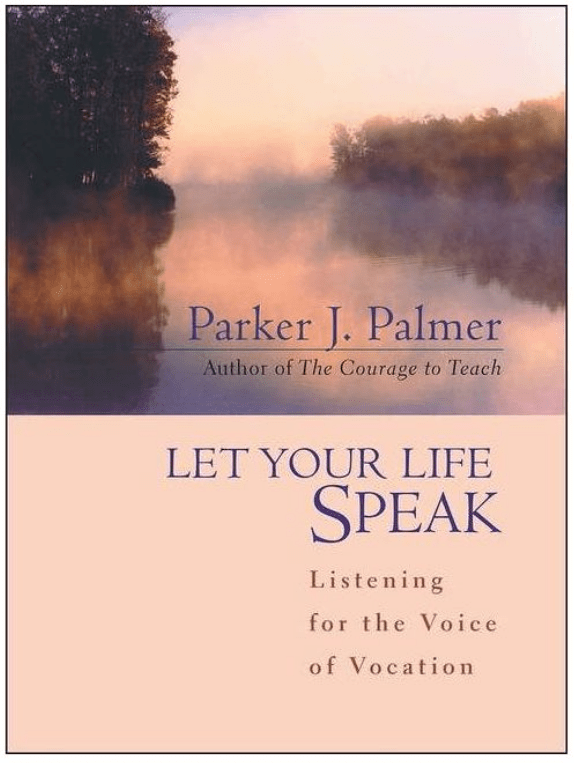
Mar 18 – Let Your Life Speak by Parker Palmer

Parker J. Palmer is an American author, educator, and activist who focuses on issues in education, community, leadership, spirituality and social change. He has published ten books and numerous essays and poems and is founder and Senior Partner Emeritus of the Center for Courage and Renewal.” https://en.wikipedia.org/wiki/Parker_Palmer

Only 117 pages, Palmer’s small book, Let Your Life Speak, (c) 2000 by Jossey-Bass, is filled with candor and wisdom about his (and our) search for right livelihood, for a meaningful vocation.

A couple of quotes from this book inspired by his Quaker practice are:

“there is much guidance in what does not and cannot happen in my life as there is in what can and does – maybe more.” p.39

“If I try to be or do something noble that has nothing to do with who I am, I may look good to others and to myself for a while. But the fact that I am exceeding my limits will eventually have consequences. I will distort myself, the other, and our relationship – and may end up doing more damage than if I had never set out to do this particular ‘good’. … It took me a long time to understand that although everyone needs to be loved, I cannot be the source of that gift to everyone who asks me for it. There are some relations in which I am capable of love and others in which I am not. To pretend otherwise, to put out promissory notes I am unable to honor, is to damage my own integrity and that of the person in need.” pp.47-48

“We can make choices about what we are going to project, and with those choices we help grow the world … Our complicity in world making is a source of awesome and sometimes painful responsibility – and a source of profound hope for change.” p.78

“Spring teaches me to look more carefully for the green stems of possibility, for the intuitive hunch that may turn into a larger insight, for the glance or touch that may thaw a frozen relationship, for the stranger’s act of kindness that make the world seem hospitable again. … if you receive a gift, you keep it alive not by clinging to it but by passing it along.” pp.104-105

Today’s senryu: Let Your Life Speak

I can do myself,

I cannot do you – that is

yours to make happen.

http://www.target.com/p/let-your-life-speak-by-parker-j-palmer-hardcover

Mar 15 – Two Types of Ancestors

Sister Annabel Laity – author at the Plum Village Shop plumvillage.shop

In her book, Mindfulness – Walking with Jesus and Buddha (c) 2021, Sister Annabel Laity identifies the two types of ancestors:

“Our blood ancestors are not the only source of our lives. We also have spiritual ancestors who transmit to us the spiritual direction that our life takes … Our blood ancestors are one of our roots, and our spiritual ancestors are no less important a root … Mindful of our blood and our spiritual ancestors, we shall see their qualities that we want to continue, and we shall also see their shortcomings. We cannot reject our ancestors, because of their mistaken ways. Who are we, who are by no means perfect, to do that? … We accept all our ancestors as they are, and we feel well because, by accepting them, we are accepting ourselves.pp. 116-117

Today’s senryu: Two Types of Ancestors

Dearest sister and

crazy old uncle Friedrich,

did God really die?

https://en.wikipedia.org/wiki/Thus_Spoke_Zarathustra

Nietzsche dismissed Schopenhauer and Christianity and Buddhism as pessimistic and nihilistic, but, according to Benjamin A. Elman, “[w]hen understood on its own terms, Buddhism cannot be dismissed as pessimistic or nihilistic“. Moreover, answers which Nietzsche assembled to the questions he was asking, not only generally but also in Zarathustra, put him “very close to some basic doctrines found in Buddhism”. An example is when Zarathustra says that “the soul is only a word for something about the body“. https://en.wikipedia.org/wiki/Thus_Spoke_Zarathustra

Mar 14 – “What Betrayal of the Soul”

In his book Living Between Worlds, (c) 2020 Sounds True, Dr. James Hollis, asks:

“What betrayal of the soul transpires when we collude with our debilitating fears? And who, besides us, will pay those debts of unlived life – our children, our partners, our colleagues, our society? Do we not see the best thing we can do for others is really to bring our best, most nearly authentic selves to engage them?” (p. 42)

Today’s senryu: What Betrayal of the Soul

Hide it or use it,

share it or lose it – what calls

out to you today?

Mar 11 – Our True Self or 1+1+1

Ilia Delio, Chair in Theology at Villanova University, shares how Thomas Merton informed herstory in Discovering the true self in God with Merton’s guidance. (See https://www.ncronline.org/blogs/ncr-today/discovering-true-self-god-mertons-guidance). Delio begins by quoting Merton and then elaborates:

“‘Our vocation is not simply to be, but to work together with God in the creation of our own life, our own identity, our own destiny.

The search for true identity requires an honest self-love. Love of self is not selfishness but a humble recognition of our lives as true, good and beautiful. Without real love of self, all other loves are distorted. “

https://www.linkedin.com/in/marybeth-weiss/

Marybeth Weiss, VP for People & Culture, has a related message in her article, There Is No “I” in Team, but There Is a “Me”: Building a Better Team Starting with You. (See https://trainingindustry.com/articles/strategy-alignment-and-planning/there-is-no-i-in-team-but-there-is-a-me-building-a-better-team-starting-with-you/). Weiss offers:

“If we rely on stories to drive behavior, we can’t accomplish anything, and relationships deteriorate … Teams can only grow and flourish from the hunger and drive of each individualTeam success isn’t always about what the group does but how each member contributes.

Today’s senryu: our true self

one plus one plus one

equals infinity – yes,

we’re more, together