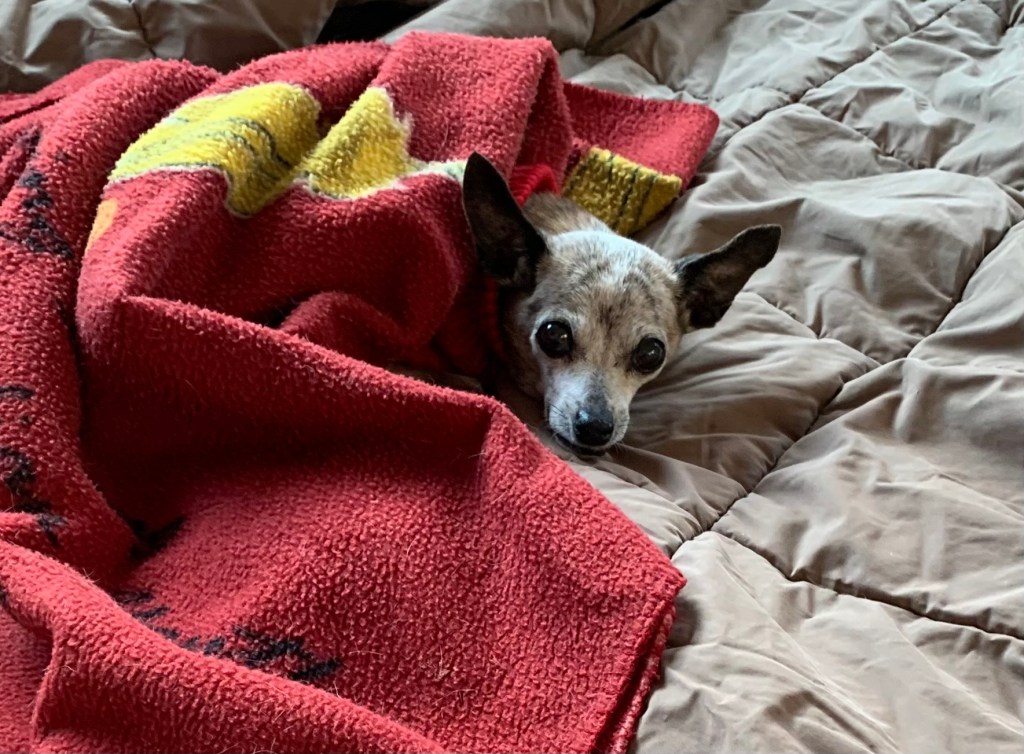
Walked four beautiful girls, one at a time, downtown St. Louis yesterday. All available for adoption through Stray Rescue of St. Louis. Hard to imagine that they haven’t been adopted already. I can certainly vouch for each one as prime candidates for best fur friends forever: BFFF!
Animals are God’s creatures, not human property, nor utilities, nor resources, nor commodities, but precious beings in God’s sight. … Christians whose eyes are fixed on the awfulness of crucifixion are in a special position to understand the awfulness of innocent suffering. The Cross of Christ is God’s absolute identification with the weak, the powerless, and the vulnerable, but most of all with unprotected, undefended, innocent suffering.
Met a wonderful therapist at the Humane Society US Animal Care Expo last week, Jen Blough; a sister Michigander and animal lover. Her website is https://www.animalwelfarewellness.com/ and her clinic is called Deepwater Consulting.
Below is one of her blogposts and I highly recommend learning more about Jen, her books and her services.
Man’s Best…Therapist? Exploring the Health Benefits of Animals
When we live with, care for, work with, and protect animals, we often find ourselves forming deep attachments to them. This special connection, known as the human-animal bond, is described by the American Veterinary Medical Association as a “mutual beneficial and dynamic relationship between people and other animals that is influenced by behaviors that are essential to the health and well-being of both.”
Benefits of the Human-Animal Bond
People are forming friendships with all creatures great and small in some rather unlikely places – zoos, hospitals, and even prisons. More than 90 percent of zookeepers, for example, report having a bond with one or more animals in their care. Sharing the company of birds helps older patients in skilled rehab facilities battle loneliness and depression while boosting morale. Providing aquariums full of fish for dementia patients promotes healthy eating habits, sociability, and relaxation. Prison programs are becoming increasingly popular, offering second chances to inmates and animals alike. From dogs and horses that need socialization to injured, sick, or orphaned wildlife, animals all of kinds are receiving comfort and care in the confinements of prison walls, and returning the favor by providing inmates with a purpose.
Research has only begun to uncover the myriad of psychological, physiological, and social benefits from human-animal interactions. Did you know that petting a dog, for instance, has been shown to reduce blood pressure in people – as well as in the pooches? In addition to helping us calm down, our critters can decrease our heart rate and cholesterol levels and boost our immune system. And forget fad diets and magic weight loss pills. When it comes to the battle of the bulge, nothing beats man’s best friend. A study by the National Institutes of Health revealed that those who walked their dogs on a regular basis were more active, less obese, and even more social. Animals promote healing in hospitalized children, aid adults coping with chronic health conditions such as cancer, and bring peace to those near the end of life in hospice care by alleviating anxiety and decreasing discomfort. As you can see, animals have an amazing ability to heal us throughout our lifespans:
Pets can help children develop motor skills, self-confidence, and empathy.
Children often see their pets as companions, even siblings. In withdrawn or shy children, sometimes a pet is the only companion.
Companion animals provide affection.
They promote opportunities to exercise, play, and socialize.
Pets allow us to love and nurture something – leading to enhanced self-esteem.
Companion animals are dependent on us, creating caregiving opportunities.
Pets can offer stability and support in difficult situations such as a divorce or move.
They can serve as an extension (eyes, ears, or legs) for those with physical impairments.
Pets can be a lifeline for people with terminal illnesses.
For the elderly especially, pets can provide a sense of purpose.
Companion animals provide something humans cannot — unconditional love.
I attended a powerful session yesterday on the importance of remembering all the change that’s been accomplished to-date and moving forward more skillfully when discerning how these changes were made. Bernard Unti, PhD of Philosophy from the American University provided a rich history of animal protection progress starting in Europe and then through the U.S. Here’s a few highlights of what he said:
“Organized animal protection is now 200 years old … skillful use of our history can help us engage more supporters in the future.” Dr. Bernard Unti, presented on the four key themes from a historical and contemporary perspective and showed how these themes have led to real (but not-yet-complete) improvement in our human-animal relations.
The four themes are:
relationship between cruelty to animals and interpersonal violence (e.g., how we treat non-human animals leads to how we treat fellow humans – beat your animals = beat your spouse, kids, elders, …)
connection between animal causes and other social justice causes (e.g., temperance, feminism, work safety …)
social values and communicating change (e.g., Black Beauty, Be Kind to Animals Week, Scouting …)
Bottom line: change comes from communicatingwhat we are for versus what we are against and wear our values gracefully (i.e., recognize incremental improvement and patiently win one person at a time).”
Rescued from a puppy mill, we were blessed with nearly 8 years of life with Tilly. RIPsweet girl. We look forward to meeting up with you again someday.
“Pet shelters are packed while pet owners grapple with high costs. By Axel Turcios, AP, March 21, 2023
Shelters are filling for a multitude of reasons, including a lack of vets and as pet owners’ home and financial situations change.
Rising economic costs have made it difficult for pet owners to keep animals they adopted during the pandemic, and for rescues to pay for their care.
While the national animal shelter intake numbers are still below pre-pandemic levels, many animal welfare organizations, like the Animal Care Centers of New York City, are struggling with capacity challenges, with more animals coming into the shelters than leaving. They say one of the causes of the rising numbers in shelters is that they are staying longer at the sites.
“As they stay inside the shelter longer, it’s not great for them mentally or physically, and many of them will break down,” said Katy Hansen, director of marketing and communications at Animal Care Centers of NYC. “They’re stressed, so they’re not showing well to potential adopters that come in. We went from an average length of stay of eight days pre-pandemic to now we’re at 13 days.”
The Shelter Animals Count database released a report in January 2023 that shows nationwide shelter animal intake was 4% higher in 2022 than in 2021, though still lower than it was in 2019. This report also revealed that the number of animals leaving shelters remained flat in 2022 versus 2021, meaning space for animals in shelters is shrinking.
“I think this is a great time to reach out to your local shelter and see how you can help,” Caceres-Gil said. “Even if you cannot adopt an animal right now, there are many resources, there are many other ways that you can help, volunteering in becoming a foster parent.”
According to the February Consumer Price Index, year-over-year pet food is up 15%, and pets and pet products are up 12%. The ASPCA estimates that the average annual cost of a dog is $1,391, while the average annual cost of a cat is $1,149.”
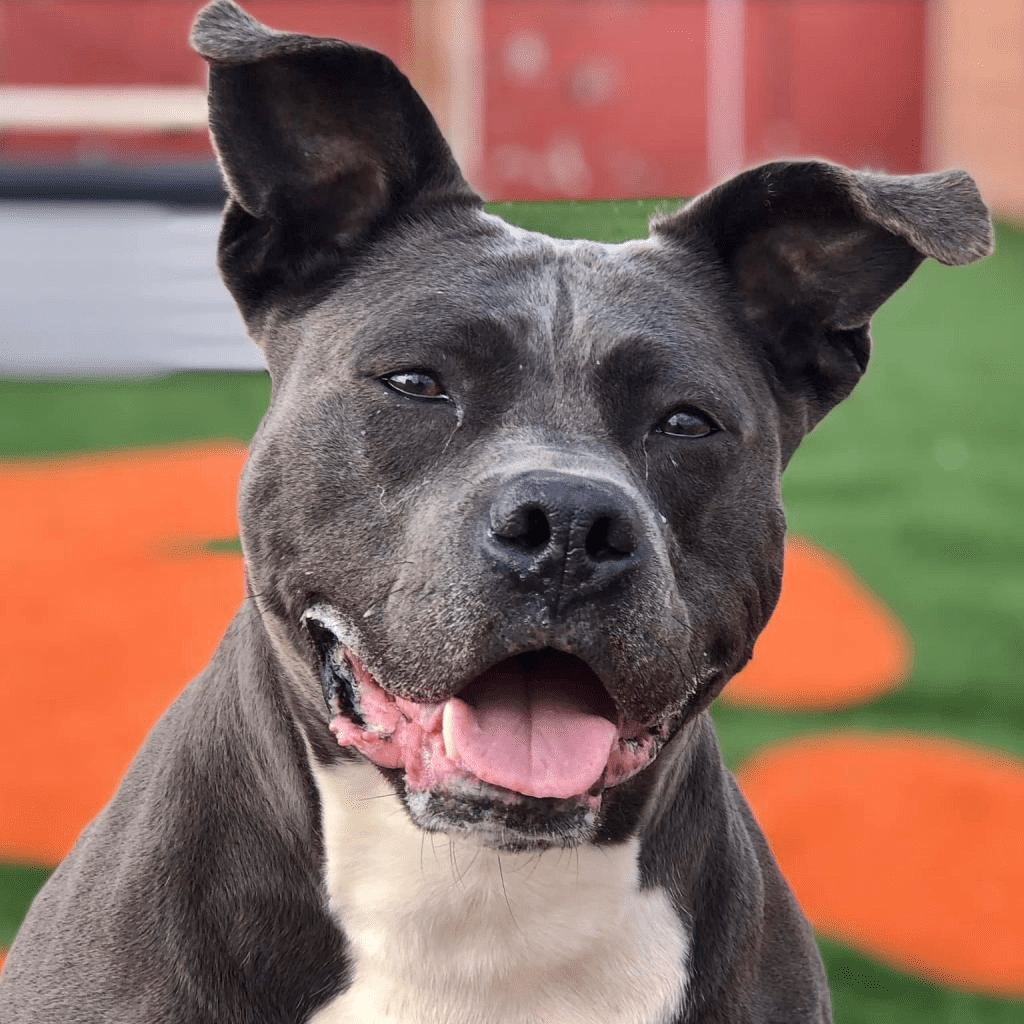
I love The Supreme and look forward to walking her every Wednesday morning. My goal is to help every rescue achieve and stay in prime condition for “furever home” adoption and The Supreme (aka “Soup”) is in prime condition…
with a few caveats… she’s dog reactive and door reactive which means she doesn’t like to share you with any other dog and she’s a touch nervous around doors. Oh, and she’s also very, verypowerful.
The ideal human guardian companion would be someone with no other non-human companions in the homestead, no small humans who could be easily knocked over, and a guardian human able to hold on to her leash should she suddenly be eager to lunge forward to track down whatever catches her senses. Otherwise, she is a delight.
Here’s a poem shared on the Stray Rescue website from another admirer.
A note from her enrichment friend, Kathleen B.:
“S-trong: This can not be emphasized enough. She is one of the strongest dogs in terms of strength, willpower and heart.
U-niversally adored: Once you meet her, you have to love her, not because she’s super cuddly, but because she is uniquely Supreme and you can’t help but fall in love.
P-assionate: She goes for what she wants, be that a Jolly Ball, treat or trash on the street. She needs someone to continue working with her to know she will always have food and fun.
R-eady to go: You like adventure? This is your girl! You won’t wonder if she’s up for it, because she will be right by the door!
E-xercise: She is not a lazy couch kind of dog. She loves to take hikes and be on the go! If you lead an active lifestyle, Supreme is your gal!
M-emorable: Whether it’s her strength, love of toys or stunning looks you don’t forget your time with her.
E-nergetic: She can go for days, whether that’s a walk or playing with toys. She gives it her all and then some.
Other things to note: -Prefers to be an only dog -She doesn’t know her own strength so kids are probably not the best fit. -If you are patient, willing to work with her and commit to her forever, she will be your best friend.”
Maybe, there’s a supreme dog in your nearby rescue shelter. If you’re a good personality match, you might find a BFF (best friend forever) for your life.
Beck also authored a keen article for Lions Roar magazine in August 2011 called A Sane Life; see https://www.lionsroar.com/a-sane-life/. I love her opening paragraph:
“My dog doesn’t worry about the meaning of life. She may worry if she doesn’t get her breakfast, but she doesn’t sit around worrying about whether she will get fulfilled or liberated or enlightened. As long as she gets some food and a little affection, her life is fine. But we human beings are not like dogs. We have self-centered minds which get us into plenty of trouble. If we do not come to understand the error in the way we think, our self-awareness, which is our greatest blessing, is also our downfall.“






 Life Matters