Author Archives: Patrick Cole

Unknown's avatar

About Patrick Cole

Husband, parent and writer. Sharing stories with a little humor and wisdom along the way.

Jan 27 – Animal Chaplaincy – Rev. Chris Rothbauer

http://revchris.faith/about/

Currently serving as a Unitarian Universalist Minister in Auburn, Alabama, Rev. Chris Rothbauer professes:

“My calling is towards healing of the universe and her human and non-human creatures. Our interconnection to the rest of the universe is not just some lofty intellectual exercise, but a fact of existence. As the late Carl Sagan once remarked, “We are all stardust.” Modern society often alienates us from these interconnections. I feel a deep call to help restore this sense of relationship with the universe and nurture a deep sense of love for human and non-human life alike as well as the universe as a whole.

We live at a time when the universe itself is threatened by the consequences of decades of thoughtless actions that have damaged this one and only planet we call home. At a time when so much is at stake for the future of our planet, I feel a deep calling to heal this damage before it is too late. I am called to participate in the Great Turning, in the words of Joanna Macy, the emerging story of how we might yet reverse the effects of climate change precipitated by an attitude of human supremacy.”

Involved in multiple ministries, Rev. Chris is also a Registered Pet Chaplain who explains:

Animal chaplaincy is not a support for mental health services, but a multi-faith way to explore the spiritual and emotional issues surrounding our connection to our animal friends.

For much more information on animal chaplaincy and Rev. Chris’ approach and services check out his website: http://revchris.faith/animal-chaplaincy/

Jan 26 – Animal Chaplaincy – A Rich Vocation?

@ dreamstime.com

The professional animal chaplain, aka interspecies, interspiritual, care provider, is not known as a high-paying vocation. In fact, some people performing this community service do so for free. For example:

https://www.linkedin.com/in/sid-korpi-9ba52b15/

Here are a couple of comments from an article written about Sid Korpi last August 15, 2022 titled: Animal Ministry Career – What Does a Pet Loss Chaplain Do?

Since she often works for free, Korpi requests free-will offerings for services such as accompanying people and their pets to euthanasia appointments, doing group animal blessings, conducting pet loss support groups, speaking to groups about pet loss, and writing and delivering pet funeral or memorial services.

Work with pets because your heart and soul compels you to, not because you’re hoping to get rich,” she says. “If you’re interested in animal chaplaincy, you must love animals above almost everything else. You must be seeking to live your life on a slightly higher plane of existence. That means the earthly rewards may be few, but the spiritual ones abound.”

Read more about Sid Korpi and this profession at https://hopingfor.com/animal-ministry-career-what-does-a-pet-loss-chaplain-do/

Today’s vocational senryu: Must We Choose

one or another

or possible to have both

wealth and poverty

Jan 25 – Three Prayers for Three More-Than-Human Companions

“In the beginning, all creatures were hidden treasures – longing to be known, and brought into being. God then exhaled a sigh of compassion, and with that great sigh, the world was created.” Sufi parable, Blessing the Animals, Lynn L. Caruso, p.192

There’s something special about interspecies communication; something that transcends the superficial chatter between members of your own species. I’ve been fortunate to experience three friendships with three more-than-humans who are no longer alive, no longer in this physical realm that I still inhabit.

Below are belated goodbye prayers for each with gratitude to the higher power that brought us together.

Loving Creator, before Lexie, the cat, came to join our lives, you knew her, knew that she longed to be brought into this loving family. Thank you for making us relatives.

Oh, Compassionate One, with your breath you created Etta Pearl, the feisty canine, first came into being. We didn’t know Etta in her prime, but she shared much with us in her final months. Thank you for introducing us.

Eternal Life Force, you created Honey, the beautiful racehorse. Her snort and whinny, her sprints and quick stops were a joy for both of us. Thank you for letting us share her retirement years.

For all three, the opportunity to feed, clean up after, and stare deeply into each other’s eyes, was a treasure that still remains in my memory. I am grateful to have shared part of my life with a part of theirs.

Benediction

Warm summer sun, shine kindly here;

Warm western wind, blow softly here;

Green sod above, lie light, lie light –

Good-night, dear heart, good-night, good-night.”

Robert Richardson’s “Annette,” adapted by Mark Twain

Blessing the Animals, Lynn L. Caruso, p.193

https://www.goodreads.com/author/show/313559.Lynn_L_Caruso

Jan 22 – In Remembrance of Thich Nhat Hanh

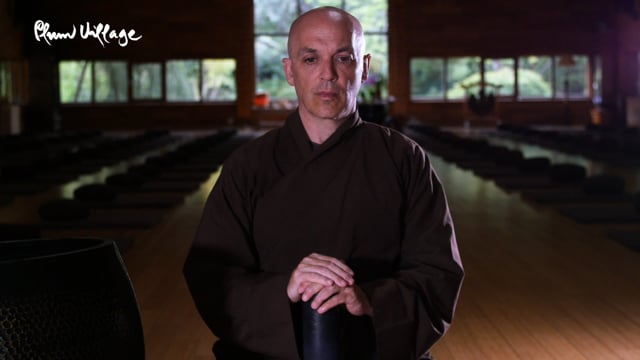
Our teacher, Thay’, Thich Nhat Hanh, died one year ago. Below are two links for more information on this fierce and gentle Zen Master.

I especially appreciate his poem displayed below which includes the phrase: “birth and death are a game of hide-and-seek”

May you experience his continued presence of peace and joy.

Contemplation on No-Coming and No-Going

by Thich Nhat Hanh

Read by Brother Phap Lai
This body is not me.
I am not limited by this body.
I am life without boundaries.
I have never been born,
and I have never died.

Look at the ocean and the sky filled with stars,
manifestations from my wondrous true mind.
Since before time, I have been free.

Birth and death are only doors through which we pass,
sacred thresholds on our journey.
Birth and death are a game of hide-and-seek.

So laugh with me,
hold my hand,
let us say good-bye,
say good-bye, to meet again soon.

We meet today.
We will meet again tomorrow.
We will meet at the source every moment.
We meet each other in all forms of life.
https://plumvillage.org/contemplation-on-no-coming-and-no-going/

Jan 24 – Animal Chaplain Blessings

Blessing of the Animals Today

One spiritual care service of an animal chaplain is to bless or thank a higher power for the non-human companion(s) in our life.

For some great examples see this book edited by Lynn L. Caruso:

A couple of quotes from this beautiful book that caught my attention are:

“There are two means of refuge from the miseries of life: music and cats.” Albert Schweitzer, p.31

“Deep peace of the running wave to you. Deep peace of the flowing air to you. Deep peace of the quiet earth to you. Deep peace of the shining stars to you. Deep peace of the infinite peace to you.” Celtic blessing, attributed to Fiona McLeod, p.163

“May all sentient beings be happy, may all sentient beings be peaceful, may all sentient beings be free from suffering.” Buddhist prayer, p.184

In this spirit, I wish you and your companions, human and non-human, many moments of love and joy today:

Bless you and yours, here

and now, may your love expand

like the universe

Jan 23 – Four Roles of an Animal Chaplain

Donna Rae Yuritic’s Compassion for Creatures Animal Ministry https://tucson.com/lifestyles/faith-and-values/animal-chaplain-brings-peace-to-many/article_026dfee4-b9ca-50e5-a4f7-165c63ad5b06.html

Yuritic estimated, as of 2008, there were “50 animal chaplains in the U.S. and Canada.” That number has grown significantly since due to her work and that of Reverend Sarah Bowen.

Sarah Bowen’s roadkill ministry http://www.modernreverend.com/about-rev-sarah.html

What does an animal chaplain do? Sarah Bowen identifies at least four roles in a Tricycle magazine article. https://tricycle.org/article/animal-chaplain/

Those roles are: “animal chaplains primarily help people with

  1. end-of-life care and the grieving process for the animals who often become an integral part of our families but whose deaths we tend to not process as fully. The job can also entail
  2. working with animals in shelters,
  3. addressing behavioral problems through interspecies spiritual practices, and
  4. animal advocacy.https://tricycle.org/article/animal-chaplain/

Or, stated another way on Sarah Bowen’s website, ModernReverend.com:

  1. Supporting animals
  2. Promoting human/animal bonds
  3. Sacred Sendoffs
  4. Advocating for non-human animals

If you’re interested in “honoring animal lives and healing human hearts” check out Sarah Bowen’s companion website Compassion Consortium: https://www.compassionconsortium.org/training

How I Became an Animal Chaplain by Sarah Bowen

Below is an article from Spirituality + Health magazine highlighting Sarah Bowen, Director of the Animal Chaplaincy Training Program offered through Compassion Consortium. I am a current student in this program and look forward to becoming a certified and ordained animal chaplain later this year. Please let me know if you have any questions and I will be happy to respond to you directly or in future blog posts.

May you and all sentient beings be happy, healthy and safe.

How I Became an Animal Chaplain

(And Why It Matters)

by  Sarah Bowen

Sarah Bowen shares ways humans can rebalance their relationship with the rest of the animal kingdom.

“You were real to the boy,” the fairy said,
“because he loved you.
Now you shall be real to everyone.”
—FROM THE VELVETEEN RABBIT

It’s possible the seeds for my call to animal chaplaincy were sown the first time I was read Margery Williams’ The Velveteen Rabbit. In this classic children’s story, a stuffed rabbit struggles with some of the life lessons we humans do: What does it mean to be real? How powerful is unconditional love? Are some lives valued over others?

As a result of the story, I formed rich relationships with my stuffed animals, concerned about their welfare, loving them as the boy in the story loved his rabbit. William’s tale deeply informed my beliefs about what might have a soul or spirit, causing me to treat seemingly inanimate objects with great compassion. One day, I was in the toy store checkout line with my mother, preparing to hand over my allowance in exchange for a fuzzy brown bear. Taking a long look at the bear and then at 7-year-old me, the cashier noted, “Hold on a minute, sweetie, I’ll get you a different one. This bear is missing an eye.”

I boldly announced, “I know he is. That’s why I want him.” The cashier suggested, “Well then let me call a manager so you can get a discount since he’s damaged.” I emphatically countered, “That is just the way he is, and I will pay full price. He’s worth it.”

Much to my mother’s dismay, my growing love of animals also included bringing home dead chipmunks. Raised as a preacher’s kid, I often visited funeral homes with my father. I deduced that these animals needed burial in our bushes, accompanied by a small service ending with “May the Force be with you, chipmunk.”

Decades later, I found myself explaining to my new husband why we could not allow the cats to catch any mice in our house, teaching him how to capture the mouse in Tupperware and return it outside. In the event the cats won the scramble, a backyard burial would ensue, ending in the blessing, “May you have a most auspicious next lifetime, mouse.”

In my 40s, I enrolled in a seminary program to learn about the world’s spiritual traditions—but with no desire to be a pulpit preacher like my father. About a year in, students were asked to share about what each might do for their ministry. I blurted out, “I’m going to have a roadkill ministry.” Silence and wide-eyed stares followed. I continued (as if I was in a pulpit), “Each year, human motorists kill nearly 400 million animals, leaving them to die on the road. It’s just one of the ways we have become careless, callous, and cruel to the other beings we share the planet with.”

Perhaps impressed by my homiletics, my academic advisor suggested, “Have you ever thought about animal chaplaincy?” Now it was my turn for wide eyes, paired with a gaping jaw, as I queried incredulously, “Wait … that’s a real thing?”

A Day in the Life of an Animal Chaplain

No, I do not have a church that animals attend. However, you might be surprised how many people ask me if I do. Instead, my ministry takes place where animals are.

First, there are the needs of the cats we share our home with, and myriad critters who occupy the land on which our house sits. From our cleaning products to the type of ice melt we use on the driveway, each choice is informed by the needs of all the beings we live with, not just the two-legged ones paying the mortgage.

Next, there are the 8 million dogs and cats surrendered to animal shelters each year in the US—more than 913 each hour. Each week, I spend time sitting, playing, or talking with some of these animals. I’m especially drawn to those who are hardest to place in new homes, the so-called special needs animals. Many needs are simply symptoms of being scared, lonely, or confused as the result of being abandoned.

Humans can also be scared and downright perplexed when it comes to decisions around medical care and end-of-life decisions regarding their companion animals. As a chaplain, I help people deal with these issues and the grief and loss that often follow.

Finally, animal advocacy takes an increasing amount of my time, as I sign petitions and educate people on animal-welfare issues and rights. For example, as our society continues to expand into what was once wild, we traumatize and displace millions of other creatures. In the book Ethics on the Ark, William Conway notes, “It is a paradox that so many humans agonize over the well-being of an individual animal yet ignore the millions daily brutalized by the destruction of their environments. … We are touched with sadness at the plight of vanishing species but much more readily brought to tears by the difficulties of E.T., Dumbo, or Mickey Mouse. … Poorly equipped to discern data from deceit, we populate our concepts with caricatures.”

Further, we seem oblivious to what is happening in our food, entertainment, and consumer-goods systems, which are clearly out of alignment with what our spiritual and religious traditions espouse. Dr. Richard Schwartz, president Emeritus of Jewish Vegetarians of North America, outlines the horror we face today. “The insanity of current policies towards animals can be summarized as follows: Firstly, millions of animals are killed to protect our livestock. Then billions of animals are slaughtered for your food. As a result of our flesh-centered diets, millions of additional animals are tortured and killed seeking cures for … diseases, which people generally wouldn’t get in the first places if we had more sensible diets.”

I profess, working to decrease the atrocities of our systems is hard some days. Our society’s collective denial, endless excuses, and senseless rationalizations abound as people tell me, “Stop. I don’t want to know. Leave me be.”

Luckily, two rebellious black cats named Deacon and Buba-ji, Picasso the rescued goldfish, Max the squirrel, a backyard full of yet-to-be-named critters, and my incredibly supportive husband await me at home. All greet me with unconditional love, reminding me what is real and inspiring me to continue working towards a world in which all lives matter.

Why It Matters

It turns out that what many of us were told as children is no longer real. Scientists continue to uncover plentiful evidence that many animals can empathize, communicate over long distances, complete complex tasks, and do all sorts of amazing things for which we historically have not given them credit.

Our food does not come from idyllic farms where the Farmer and his Wife treat animals well in the Dell. It’s heartbreaking to realize our species, which once had a deep reverence for life and consisted on a diet primarily of grains, now supports a system that abuses and kills six million animals each hour for food alone. Even for people unconcerned with animal welfare, there is a case for alarm: Animal farming is a major contributor to global warming. In fact, it’s the No. 1 cause of climate change.

Contrary to what many of us learned in Sunday School, religion does not unequivocally state that we can use animals as we please. Today’s theologians, including Andrew Linzey, Ken Stone, and Sarah Withrow King, have dug deeply into Jewish and Christian texts to expose solid academic cases that dominion was not intended to mean taking anything (or anyone) from the earth to satisfy our out-of-control desires.

Finally, sociologists who have begun to study the effects of speciesism suggest that as we privilege some animals over others, and humans over all animals, there is a relation- ship to other types of prejudice. A 2018 study published in the American Psychological Association’s Journal of Personality and Social Psychology notes, “speciesism is psychologically related to human-human types of prejudice such as racism, sexism, and homophobia.” In addition, people with speciesist views tend towards lower levels of empathy and prosociality.

The foundation of our inherited values about other sentient beings is cracking. In field after field, people are redefining what we now know as true. And they need your help.

What You Can Do

• Reflect. Take a few minutes to consider your relationships with beings other than humans. What feels in balance? What doesn’t?

• Watch Speciesism: The Movie.

• Listen to the audiobook A Plea for the Animals: The Moral, Philosophical, and Evolutionary Imperative to Treat All Beings with Compassion by Matthieu Ricard.

• Grow. Cultivate a humane backyard using animal- friendly landscaping methods from Nancy Lawson (humanegardener.com).

• Reduce. Pledge to eat fewer animal products for 30 days at reducetarian.org.

• Download. Check out the Happy Cow app to find cruelty-free food worldwide and the Bunny Free app to find out if a company tests on animals.

• Volunteer. Visit your local animal shelter. Pet a cat. Play with a dog. Chill with a rabbit.

• Advocate. Get involved with an organization such as World Animal Protection, Animal Equality, or Mercy for Animals.

• Love. Save a mouse. Bury a chipmunk. Meditate with squirrels.

• Read. Dust off The Velveteen Rabbit.

• Become real.


About the Author

Sarah Bowen is an animal chaplain, multifaith spiritual educator, and award-winning author of Spiritual Rebel: A Positively Addictive Guide to Finding Deeper Perspective & Higher Purpose. Her latest book is Sacred Sendoffs: An

Click for more from this author.

https://www.spiritualityhealth.com/articles/2020/03/04/how-i-became-an-animal-chaplain-and-why-it-matters

Jan 21 – A Poet More People Should Know – Goethe

Johann Wolfgang von Goethe

“One of the preeminent figures in German literature, poet, playwright, and novelist Johann Wolfgang von Goethe was born in Frankfurt, Germany, in 1749. … Goethe is most well-known for his epic poem Faust (1808) … The poem depicts a young scholar who, frustrated by the limits to his education, power, and enjoyment of life, engages the assistance of the devil at the cost of his soul. … Goethe had a profound impact on later literary movements, including Romanticism and expressionism, and made important contributions to philosophical and naturalist schools of thought.” https://www.poetryfoundation.org/poets/johann-wolfgang-von-goethe

For more information see https://en.wikipedia.org/wiki/Johann_Wolfgang_von_Goethe

Two of his lesser-known poems speak to me:

https://www.poetryfoundation.org/poetrymagazine/browse?contentId=51848

https://allpoetry.com/The-Misanthrope

Here’s today’s homage senryu: Danke Goethe

Metta man – Goethe

confusing lust for love and

breath for life again

Jan 20 – A Truth-Teller More People Should Know – Jacqui Lewis

Repost from the Center for Action and Contemplation Daily Meditations https://cac.org/daily-meditations/

Love Speaks the Truth

Truth-telling can be a very difficult journey on the way to freedom.
—Jacqui Lewis, Fierce Love

CAC friend Rev. Dr. Jacqui Lewis writes about the ways both prophetic and personal truth-telling challenge us and the systems to which we belong:

In my faith tradition we call that speaking the truth—in love. As a clergyperson, I have many truth-telling strategies. Sometimes I’m gentle, needing to take good care of the one who is listening. Sometimes I’ve got my fists in the air while marching for the truth, for justice and liberation. Always my intention is to free up the energy that’s caught in the story, to liberate myself and the other with whom I’m in relationship to find a way forward. Can we win this action? Will the politician change policy or give in to demands? Will the congregant or colleague hear my point of view, and can I hear theirs? Can I change the story in the public square in a compelling way and open eyes, hearts, and minds to new worldviews? Will [my husband] John and I become stronger because of this difficult talk? Telling the truth is an act of love, an act of resistance, an act of courage. Its end is liberation, freedom, and, if possible, reconciliation. But there can be no reconciliation without truth.…

The historian Howard Zinn wrote, “The most revolutionary act one can engage in is […] to tell the truth.” [1] Indeed! I think the revolutionary part of truth is that it can free us and those around us to live with greater certainty about what is real, even when it hurts, because we are no longer shackled to the energy lying requires of us. Lying demands the continuation of the lie and the amplification of the lie to keep the truth hidden.… Telling the truth creates ripples of authenticity that change the world.…

I believe truth is revolutionary; it’s part of the work of fierce love. Truth makes a personal, spiritual, ethical, and moral demand upon us. It wants to be said, known, told. It hurts and it’s inconvenient, but it’s essential to our well-being. It cleanses our spiritual palate and restores our souls. Truth is a drink of water to a parched traveler. It lubricates relationships. It liberates us from bondage. It builds trust and connections. It’s the beginning of authentic living and joy. Truth eludes us at times, and we have to pursue it. Truth invites us to be honest about who we are, about our flawed-but-beautiful, broken-but-healing selves. Truth leads to reconciliation and peace; without truth, there is no peace. In the light of truth, we are able to honor our journey and love ourselves. Truth-telling is a spiritual discipline that requires practice. We must not lie to others and, as Fyodor Dostoevsky suggested, we mustn’t lie to ourselves. Being honest with ourselves about ourselves is to love ourselves unconditionally, to love ourselves fiercely.

[1] Howard Zinn, “Marx in Soho: A Play on History,” in Three Plays: The Political Theater of Howard Zinn (Boston: Beacon Press, 2010), 115.

Jacqui Lewis, Fierce Love: A Bold Path to Ferocious Courage and Rule-Breaking Kindness That Can Heal the World (New York: Harmony Books, 2021), 58, 64, 65.

https://www.goodreads.com/book/show/56293867-fierce-love

Jan 19 – A Poet More People Should Remember – Langston Hughes

James Mercer Langston Hughes (February 1, 1901 – May 22, 1967) was an American poet, social activist, novelist, playwright, and columnist from Joplin, Missouri. One of the earliest innovators of the literary art form called jazz poetry, Hughes is best known as a leader of the Harlem Renaissance.

Like many African-Americans, Hughes had a complex ancestry. Both of Hughes’ paternal great-grandmothers were enslaved Africans, and both of his paternal great-grandfathers were white slave owners in Kentucky. According to Hughes, one of these men was Sam Clay, a Scottish-American whiskey distiller of Henry County, said to be a relative of statesman Henry Clay. The other putative paternal ancestor whom Hughes named was Silas Cushenberry, a slave trader of Clark County.” https://en.wikipedia.org/wiki/Langston_Hughes

Some critics thought he was a communist homosexual who spent time in Europe, Russia, China, Japan and Korea before returning to the United States. One biographer, Arnold Rampersad, saw him as a passive, asexual man who showed love and respect for black men and women. In addition to poetry, Hughes wrote plays, short stories, several nonfiction works and served as a weekly newspaper columnist for twenty years.

Here is one of his poems, reprinted from this month’s Monastic Way, along with a couple of follow-up discussion questions:

The Harlem Renaissance poet, Langston Hughes, wrote about dreams, how important it was to have them and what happens to dreams suppressed or deferred:


What happens to a dream deferred?
Does it dry up
Like a raisin in the sun?
Or fester like a sore––
And then run?
Does it stink like rotten meat?
Or crust and sugar over––
like a syrupy sweet?
Maybe it just sags
like a heavy load.
Or does it explode?

Write an answer to the poet’s question: What happens to a dream deferred? Try to use an example from your own life.” https://www.joanchittister.org/sites/default/files/monastic_way/2022-12/JanuaryMonasticWay2023.pdf