“We are living in a time of unprecedented danger, and the Doomsday clock time reflects that reality. 90 seconds to midnight is the closest the clock has ever been set to midnight, and it’s a decision our experts do not take lightly,” Rachel Bronson, the president and CEO of BAS, said at a news conference on Tuesday (Jan. 24).”
What comes to mind when you first realize it’s February? What memories, historical events or important people come to mind? What about February do you look forward to this year?
Personally, I first think of another Valentine’s Day that I won’t be celebrating. My partner doesn’t like this day and I became less interested myself when my beloved grandfather died on this day. This “holiday” has become more of a dirge than a celebration, a personal St. Valentine’s Day massacre.
Next, I think of Groundhog Day. A funny day and an even funnier movie. Did you know that the Groundhog Day movie is considered a great metaphor for life from a Buddhist perspective?
Then I remember the U.S. Presidential holidays which quite frankly are another mixed message, from my perspective. George Washington was a rich slave owner and Abraham Lincoln was a lawyer who used the Emancipation Proclamation as a war tactic. Fortunately, both of these thoughts remind me that February is Black History Month in the U.S. which is a very good thing to celebrate.
My life has benefited greatly from African American contributions and specific individuals who have demonstrated honor and nobility in their own lives. Many black Mindfulness practitioners have especially role-modeled the benefits of nonduality and nonviolent principles.
Now I’m looking forward to this month and the topics I will be blogging about.
Finally, this mixed-emotional month reminds me of a poem published last year in a self-published book Natural Beauty and Other Poems (c) 2022 Patrick J. Cole
Here’s the poem:
One Tree, One Lonely, February Afternoon
In the middle of a field, far apart from others, that lie in the woods to the West,
stands a tree, alone, exposed on every side; a tree looking different from the rest.
How did this tree end up here, all alone? Does a tree ever have a choice?
Perhaps our ancestral seeds blow where they will and all we have is our voice,
to tell what we know, however small it may be, in whatever field we find ourself.
Sometimes, what stands out, catches our eye, ends up on a mantle or a shelf.
Alone and lonely are two separate states but sometimes they’re intertwined,
like the branches of a tree, one lonely afternoon, in a late February state of mind.
Photo taken by the author in a nearby nature park.
Why pay attention to what’s in your mind? Why become more acquainted with your thoughts? Why practice Mindfulness?
Here’s a response from a poet for whom little is known yet his words from 1905 still inspire today.
Thinking by Walter D. Wintle
“If you think you are beaten, you are If you think you dare not, you don’t, If you like to win, but you think you can’t It is almost certain you won’t.
If you think you’ll lose, you’re lost For out of the world we find, Success begins with a fellow’s will It’s all in the state of mind.
If you think you are outclassed, you are You’ve got to think high to rise, You’ve got to be sure of yourself before You can ever win a prize.
Life’s battles don’t always go To the stronger or faster man, But soon or late the man who wins Is the man WHO THINKS HE CAN!” ― Walter D. Wintle – https://www.goodreads.com/quotes/tag/mindfulness
With thanks to Sister Joan Chittister, I am reminded of the life and legacy of Mohandas Karamchand Gandhi (2 October 1869 – 30 January 1948).
January 30:Mahatma Gandhi, the great Indian teacher of nonviolence, died on this day in 1948. One of the greatest pacifists of all time, in 1948 Gandhi was himself assassinated by religious conservatives who promoted the political division he sought to overcome. It would seem that Gandhi failed. Yet, multitudes around the world, including Martin Luther King, Jr., have followed his tenets. To allow your own life to seed another’s, is fruit enough to last a lifetime. —from A Monastery Almanac by Joan Chittister
Meditation and poetry, meditators and poets, like two hands coming together in namaste.
One of the most famous poets of all time is Rumi (full name Jalāl al-Dīn Muḥammad Rūmī). He wrote poetry in the 13th century in Persian, Turkish, Arabic and Greek. His poetry was influenced by his Sufi meditation.
“Rumi was a scholar and poet that lived in 13th century Persia (now modern-day Iran.) Like all extraordinary gifted and profound teachers, Rumi’s words have transcended time and place.
An Islamic scholar and Sufi mystic, Rumi wrote much of his thoughts down in the form of poems … it’s well-known that Rumi was a mystic, devoted to contemplation and self-surrender … Rumi certainly practiced Mur?qabah, an Arabic word that translates to observation in English. Mur?qabah is a form of Sufi meditation where the goal is to “watch over” their spiritual heart and to gain insight into the Ultimate truth.
Nearly every form of meditation practiced, across religious and spiritual traditions, emphasizes quietude of mind. Individuals who are adept meditators are well-aware that mental silence can lead to profound insight, … Please quiet your mind from time to time!” https://www.powerofpositivity.com/rumi-quotes-transform-your-life/
The professional animal chaplain, aka interspecies, interspiritual, care provider, is not known as a high-paying vocation. In fact, some people performing this community service do so for free. For example:
Here are a couple of comments from an article written about Sid Korpi last August 15, 2022 titled: Animal Ministry Career – What Does a Pet Loss Chaplain Do?
Since she often works for free, Korpi requests free-will offerings for services such as accompanying people and their pets to euthanasia appointments, doing group animal blessings, conducting pet loss support groups, speaking to groups about pet loss, and writing and delivering pet funeral or memorial services.
“Work with pets because your heart and soul compels you to, not because you’re hoping to get rich,” she says. “If you’re interested in animal chaplaincy, you must love animals above almost everything else. You must be seeking to live your life on a slightly higher plane of existence. That means the earthly rewards may be few, but the spiritual ones abound.”
This body is not me.
I am not limited by this body.
I am life without boundaries.
I have never been born,
and I have never died.

Look at the ocean and the sky filled with stars,
manifestations from my wondrous true mind.
Since before time, I have been free.

Birth and death are only doors through which we pass,
sacred thresholds on our journey.
Birth and death are a game of hide-and-seek.

So laugh with me,
hold my hand,
let us say good-bye,
say good-bye, to meet again soon.

We meet today.
We will meet again tomorrow.
We will meet at the source every moment.
We meet each other in all forms of life.
One spiritual care service of an animal chaplain is to bless or thank a higher power for the non-human companion(s) in our life.
For some great examples see this book edited by Lynn L. Caruso:
A couple of quotes from this beautiful book that caught my attention are:
“There are two means of refuge from the miseries of life: music and cats.”Albert Schweitzer, p.31
“Deep peace of the running wave to you. Deep peace of the flowing air to you. Deep peace of the quiet earth to you. Deep peace of the shining stars to you. Deep peace of the infinite peace to you.”Celtic blessing, attributed to Fiona McLeod, p.163
“May all sentient beings be happy, may all sentient beings be peaceful, may all sentient beings be free from suffering.” Buddhist prayer, p.184
In this spirit, I wish you and your companions, human and non-human, many moments of love and joy today:
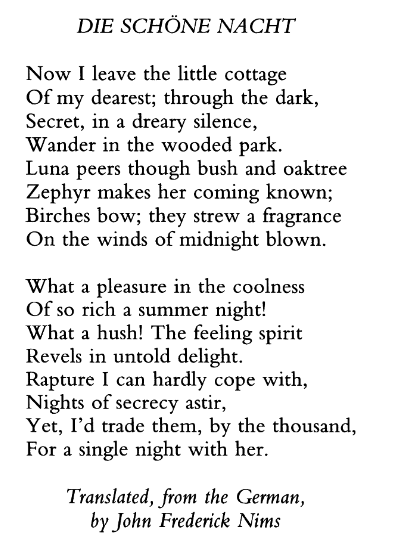
“One of the preeminent figures in German literature, poet, playwright, and novelist Johann Wolfgang von Goethe was born in Frankfurt, Germany, in 1749. … Goethe is most well-known for his epic poem Faust (1808) … The poem depicts a young scholar who, frustrated by the limits to his education, power, and enjoyment of life, engages the assistance of the devil at the cost of his soul. … Goethe had a profound impact on later literary movements, including Romanticism and expressionism, and made important contributions to philosophical and naturalist schools of thought.” https://www.poetryfoundation.org/poets/johann-wolfgang-von-goethe
“James Mercer Langston Hughes (February 1, 1901 – May 22, 1967) was an American poet, social activist, novelist, playwright, and columnist from Joplin, Missouri. One of the earliest innovators of the literary art form called jazz poetry, Hughes is best known as a leader of the Harlem Renaissance.
Like many African-Americans, Hughes had a complex ancestry. Both of Hughes’ paternal great-grandmothers were enslaved Africans, and both of his paternal great-grandfathers were white slave owners in Kentucky. According to Hughes, one of these men was Sam Clay, a Scottish-American whiskey distiller of Henry County, said to be a relative of statesman Henry Clay. The other putative paternal ancestor whom Hughes named was Silas Cushenberry, a slave trader of Clark County.” https://en.wikipedia.org/wiki/Langston_Hughes
Some critics thought he was a communist homosexual who spent time in Europe, Russia, China, Japan and Korea before returning to the United States. One biographer, Arnold Rampersad, saw him as a passive, asexual man who showed love and respect for black men and women. In addition to poetry, Hughes wrote plays, short stories, several nonfiction works and served as a weekly newspaper columnist for twenty years.
Here is one of his poems, reprinted from this month’s Monastic Way, along with a couple of follow-up discussion questions:
The Harlem Renaissance poet, Langston Hughes, wrote about dreams, how important it was to have them and what happens to dreams suppressed or deferred:
What happens to a dream deferred? Does it dry up Like a raisin in the sun? Or fester like a sore–– And then run? Does it stink like rotten meat? Or crust and sugar over–– like a syrupy sweet? Maybe it just sags like a heavy load. Or does it explode?


 Life Matters