Tag Archives: dharma

3.21.23 – Numbers Comfort Me

Today’s poem: Numbers Comfort Me

one, two, three: numbers comfort me

I watch them parade with perfect symmetry

I love how they add, subtract and multiply

consistently predictable, enough to make me cry

with tears of joy and calm security

numbers so reliable; perfect harmony …

(From my poem Seven Figures in I Am Furious (c) 2009)

http://www.amazon.com/Am-Furious-Yellow-Patrick-Cole

Feb 28 – The Art of Giving repost

The Art of Giving

lynnjkelly Feb 26
We learn less from what people tell us than we do from what we observe other people doing. If we’re interested in nurturing our generous tendencies, we would do well to observe others in the act of giving. It happens all the time, though we may not notice it unless we look for it. One person phones her mother overseas every day, not because she enjoys it, but because it keeps her mother mentally balanced. Another person regularly sends money for support to a family member who, in spite of doing their best, cannot make ends meet. Some will send postcards or make phone calls just to let others know they are not alone, that someone is thinking of them. Some people are such outstanding examples that they inspire others even after their deaths. One example was a relative of mine who welcomed victims of domestic violence into her home through a church-based service. The guests brought their children and pets and were often too traumatized to be gracious. And yet their host’s healing love was unstinting. She knew she was salving deep wounds and this was her calling. We can inspire ourselves by recalling people we’ve known who embodied generosity. The key feature is that they were uplifted by their own giving. Another way to look at generosity is to examine our assumptions. Do we believe that people are basically good, basically bad, or basically mixed? Quote from I May Be Wrong by Björn Natthiko Lindeblad (p. 228):…he told us about a BBC interview with the Thai king. The British journalist had asked the king what he thought of the western, Christian idea of original sin. And the king’s answer was lovely:
“As Buddhists, we do not believe in original sin. We believe in original purity.” What do we believe? We know that everyone makes mistakes, but do we attribute them to bad intentions or do we see them as best efforts that fail sometimes? This question of original sin or original purity can change our perspective on everything. If we believed that everyone, without exception, has the potential to fully awaken, wouldn’t we treat others with a fundamental respect? Cultivating generosity is the start of looking at everyone with the eyes of love, of forgiveness, of acceptance, kindness, and care. Traditionally, gifts of the Dharma are the most valuable gifts of all. Every time we consciously choose to behave virtuously, to support the growth of the Buddha’s teachings, to cultivate our inner calm, we are giving gifts of the highest value.
https://buddhasadvice.wordpress.com/

Feb 27 – Nhat Hanh, Rohr and Rumi

In the book, Interbeing – The 14 Mindfulness Trainings of Engaged Buddhism (Fourth Edition) by Thich Nhat Hanh (c) 2020 by Parallax Press, Thay’ says:

“The Fourteen Mindfulness Trainings were born in a sea of fire in 1966 in Vietnam. The situation of the war was extremely hot. And we know how hot the fire of fanaticism can be. That is why the very first precept is about nonattachment to views, openness, and tolerance, because we see that attachment to views, narrowness, and fanaticism is the ground of a lot of suffering.” p.30

The First Mindfulness Training – Openness

Aware of the suffering created by fanaticism and intolerance, we are determined to not be idolatrous about or bound to any doctrine, theory, or ideology, even Buddhist ones. We are committed to seeing the Buddhist teachings as a guiding means that help us learn to look deeply and develop our understanding and compassion. They are not doctrines to fight, kill, or die for. We understand that fanaticism in its many forms is the result of perceiving things in a dualistic or discriminative manner. We will train ourselves to look at everything with openness and the insight of interbeing in order to transform dogmatism and violence in ourselves and the world.” p.29

Similarly, Richard Rohr speaks of “solidarity instead of judgment.”

Richard Rohr from http://www.sightmagazine.com.au

In the book, The Universal Christ – How a Forgotten Reality Can Change Everything We See, Hope For, and Believe by Richard Rohr (c) 2019 by Center for Action and Contemplation, Inc., Richard says:

“A mature Christian sees Christ in everything and everyone else. That is a definition that will never fail you, always demand more of you, and give you no reasons to fight, exclude, or reject anyone.

Isn’t that ironic? The point of the Christian life is not to distinguish oneself from the ungodly, but to stand in radical solidarity with everyone and everything else. … Humans were fashioned to love people more than principles.” p.33

In the book, The Essential Rumi – Translations by Coleman Barks, New Expanded Edition (c) 2004 HarperOne, Rumi, 13th-Century Persian poet, Islamic scholar and Sufi mystic from Iran, says:

“Out beyond ideas of wrongdoing and rightdoing, there is a field. I’ll meet you there.

When the soul lies down in that grass, the world is too full to talk about. Ideas, language, even the phrase ‘each other’ doesn’t make any sense.” p.36

Here is my humble senryu to these great teachers: Nhat Hanh, Rohr and Rumi

Looking for the truth

I found love, then hope, then faith.

Thank you, dear loved ones.

Feb 26 – This First Sunday of Lent

It’s been many years since I attended parochial school or celebrated Lent for that matter. However, this year I have a poem to share that uses the word lent in perhaps a different way. May this Lent be a time of good reflection for all of us regardless of our faith tradition.

 What We Are Lent

sometimes we think too much

  sometimes not enough

sometimes it’s time to pause and breathe

         I think that’s the “right stuff”

or is it right view, right action

         or right effort

whatever it is

         let’s recognize the common hurt

then embrace and smile

and enjoy this moment

it’s a short ride after all

and life is what we are lent

From my latest book of poetry, Natural Beauty and Other Poems, (c) 2021

Feb 15 – Three Dharma Poets: Bouse, Brehm and Metters

Today’s senryu: Now and Zen

Ev’ry now and zen

we take pleasure from life’s puns,

with or without wine

Below are pictures and links for three dharma poets, three wise men, that inspire my spiritual and poetic path. Perhaps they will inspire you as well.

Ari Bouse helps you breathe fresh air into your soul so you may then exhale the dead air of old ways that no longer serve you. … Something to Chew On serves as a walking meditation that will help you align with nature as it unfolds during the spirit of the season to enable you to rekindle a sense of magic, mystery, and adventure in your life.” https://www.goodreads.com/book/show/45290399-something-to-chew-on

Photo by Tracy Pitts https://www.poetryfoundation.org/poets/john-brehm

“The experience of reading a poem is a meditative experience in and of itself. As author John Brehm writes in The Dharma of Poetry, to enter a poem is to ‘shift out of everyday consciousness. . . to step out of the ongoing flow of experience and look at it.’ A poem inspires a moment of pause in which we can ‘engage in an imaginative activity that has no practical value.’” https://tricycle.org/article/meditative-poems/

Brehm adds “a poet may be defined as one who stops, one who is inclined by temperament and training to step out of the ongoing flow of experience and look at it, and to help us do the same.” https://tricycle.org/article/poetry-meditation/

Dr. Brian Metters http://www.amazon.com/Its-Not-About-Wine-philosophy and https://thetwodoctors.uk/

“Read this slowly, take your time, just think about it. … Now that you’ve read it what are you going to do about it?” https://thetwodoctors.uk/2022/12/08/be-mindful-today-21-gradual-awakening/

Feb 10 – Free Will Lemmings

Lemmings and humans share the same scientific classifications of animal and mammal. Free Will is a debatable concept with many schools of thought. So, I’ve been thinking lately…..

Today’s senryu: Free Will Lemmings

lemmings on parade

intelligent design, huh,

over the edge now

For additional information on the creative leap above, check out the Wikipedia excerpts below.

“In popular culture, a longstanding myth holds that they exhibit herd mentality and jump off cliffs, committing mass suicide….

Lemmings have become the subject of a widely popular misconception that they are driven to commit mass suicide when they migrate by jumping off cliffs. It is not a deliberate mass suicide, in which animals voluntarily choose to die, but rather a result of their migratory behavior.

Driven by strong biological urges, some species of lemmings may migrate in large groups when population density becomes too great. They can swim and may choose to cross a body of water in search of a new habitat. In such cases, many drown if the body of water is an ocean or is so wide as to exceed their physical capabilities. Thus, the unexplained fluctuations in the population of Norwegian lemmings, and perhaps a small amount of semantic confusion (suicide not being limited to voluntary deliberation, but also the result of foolishness), helped give rise to the popular stereotype of the suicidal lemmings.” https://en.wikipedia.org/wiki/Lemming

“Free will as an illusion

Spinoza thought that there is no free will. “Experience teaches us no less clearly than reason, that men believe themselves free, simply because they are conscious of their actions, and unconscious of the causes whereby those actions are determined.” Baruch SpinozaEthics

David Hume discussed the possibility that the entire debate about free will is nothing more than a merely “verbal” issue. He suggested that it might be accounted for by “a false sensation or seeming experience” (a velleity), which is associated with many of our actions when we perform them. On reflection, we realize that they were necessary and determined all along….

Buddhists believe in neither absolute free will, nor determinism. It preaches a middle doctrine, ‘dependent origination’, ‘dependent arising’ or ‘conditioned genesis’. It teaches that every volition is a conditioned action as a result of ignorance. In part, it states that free will is inherently conditioned and not “free” to begin with.” https://en.wikipedia.org/wiki/Free_will

Assuming you, the reader, are human, do you think you have free will?

Jan 22 – In Remembrance of Thich Nhat Hanh

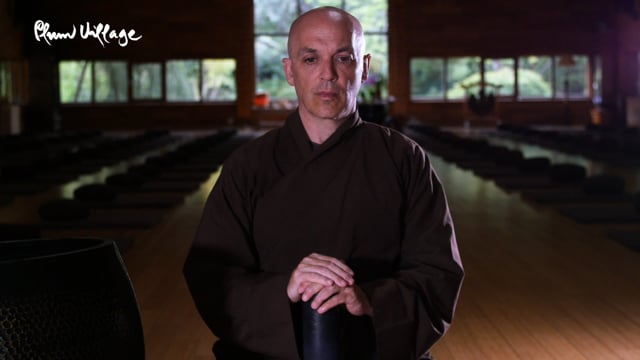
Our teacher, Thay’, Thich Nhat Hanh, died one year ago. Below are two links for more information on this fierce and gentle Zen Master.

I especially appreciate his poem displayed below which includes the phrase: “birth and death are a game of hide-and-seek”

May you experience his continued presence of peace and joy.

Contemplation on No-Coming and No-Going

by Thich Nhat Hanh

Read by Brother Phap Lai
This body is not me.
I am not limited by this body.
I am life without boundaries.
I have never been born,
and I have never died.

Look at the ocean and the sky filled with stars,
manifestations from my wondrous true mind.
Since before time, I have been free.

Birth and death are only doors through which we pass,
sacred thresholds on our journey.
Birth and death are a game of hide-and-seek.

So laugh with me,
hold my hand,
let us say good-bye,
say good-bye, to meet again soon.

We meet today.
We will meet again tomorrow.
We will meet at the source every moment.
We meet each other in all forms of life.
https://plumvillage.org/contemplation-on-no-coming-and-no-going/

Jan 7 – “Nothingness is Infinite Possibilities”

One last post on the excellent book by Cynthia Bourgeault, Centering Prayer and Inner Awakening, (c) 2004.

Centering Prayer (CP) might better be called the “path to your most interior self” or the “abiding prayer of silence.” The name itself is not important it is the practice of meditation that makes a difference.

CP is the creation of inter-religious and interspiritual dialogue. Based on Hindu, Zen Buddhism, Jain, Christian (Catholic, Protestant, Quaker), 12 Step Program for Recovery to Addiction, Transcendental Meditation and Ken Wilbur’s 9-Level Fallacy.

Ultimately, committed daily sitting in silence will encourage you to:

  1. Renew your own tradition (e.g., Buddhist meditation)
  2. Be of service to others in the community
  3. Engage in and appreciate interspiritual dialogue

I highly recommend reading or listening to the audiobook for Centering Prayer and Inner Awakening and/or watching the 1hr/17-minute YouTube video linked above with special attention on the last 17 minutes.

As Thomas Keating said, the nothingness (of sitting in silence) leads to infinite possibilities.

Jan 1, 2023 – Happy New Year

Every new year, new day, new breath is a new beginning. May we enjoy the present moment more often this year.

Below is a repost of today’s daily meditation from the Henri Nouwen Society. https://henrinouwen.org/meditation/

May we be inspired and re-energized for the moments to come.

“What makes us human is not our mind but our heart, not our ability to think but our ability to love.” Henri Nouwen (https://henrinouwen.org/)

A New Beginning!

We must learn to live each day, each hour, yes, each minute as a new beginning, as a unique opportunity to make everything new. Imagine that we could live each moment as a moment pregnant with new life. Imagine that we could live each day as a day full of promises.

Imagine that we could walk through the new year always listening to the voice saying to us: “I have a gift for you and can’t wait for you to see it!” Imagine. Is it possible that our imagination can lead us to the truth of our lives? Yes, it can!

The problem is that we allow our past, which becomes longer and longer each year, to say to us: “You know it all; you have seen it all, be realistic; the future will just be a repeat of the past. Try to survive it as best you can.”

There are many cunning foxes jumping on our shoulders and whispering in our ears the great lie: “There is nothing new under the sun… don’t let yourself be fooled.” When we listen to these foxes, they eventually prove themselves right: our new year, our new day, our new hour become flat, boring, dull, and without anything new.So what are we to do?

First, we must send the foxes back to where they belong: in their foxholes. And then we must open our minds and our hearts to the voice that resounds through the valleys and hills of our life saying: “Let me show you where I live among my people. My name is ‘God-with-you.’ I will wipe all the tears from your eyes; there will be no more death, and no more mourning or sadness. The world of the past has gone” (Revelation 21:2–5).
Let us go forth boldly with awe and wonder

High Coo – Dec 15 – A Benevolent Universe

Today’s senryu: A Benevolent Universe

what we see reveals

our perspective shapes belief

see good and enjoy

Below is a beautiful sharing from Richard Rohr‘s Daily Meditations referencing Satish Kumar‘s thoughts on A Benevolent Universe. (https://cac.org/daily-meditations/) Hope you enjoy this.

Satish Kumar, a former Jain monk, is an activist and educator who has studied both Eastern religions and Western economics and cultures. He writes that recognizing a benevolent universe helps us participate in the flow of generosity:   

We live in a benevolent universe. . . .  

The benevolence of the soil is endless; it helps one single seed to multiply into millions of seeds for hundreds of years, producing colourful, aromatic, juicy and delicious fruit, feeding birds, bees, humans and animals. The tree celebrates the benevolence of the soil and becomes benevolent in return, offering its fruit to whoever is in need, without condition and without judgement. . . .  

The benevolence of the sun is beyond the capacity of words to describe. It burns itself to maintain life. . . . It provides conditions for photosynthesis for the whole plant kingdom to nourish itself and give nourishment to bacteria, insects, birds and animals. 

The moon is benevolent. It maintains the cycle of life and cycle of time. Time and tide are sustained by its presence. . . .  

Rain is benevolent. It . . . delivers itself to every farm, field, forest, mountain and human habitat, free of charge, without needing any external supply of energy. It moistens the soil, quenches the thirst, fills rivers, ponds, lakes and wells and in partnership with the sun it feeds the world. . . .  

Air is benevolent. We breathe, therefore we are. Air is related to the spirit, to inspiration, to spirituality. . . . Air is breath of Brahman, breath of the universe, breath of God. In Sanskrit air is prana, which means life itself. . . . 

Space is benevolent. All and everything is held in space and by space. All movements, all changes and every kind of dynamism are sustained in the stillness of space. We always need to be mindful of reducing our clutter and maintaining spaciousness in order to be detached and free. 

Soul is benevolent. Compassion, kindness, generosity and inner luminosity are the qualities of the soul. Mind, intelligence, and consciousness are held in and processed by soul. Soul is the seed of life. Feelings, emotions, sentiments, intuition and reason pass through soul and manifest in the world. . . . It is not only humans who have soul; animals, birds, insects and microbes have soul. Soil, trees, rocks and rivers have soul. . . .

The world is how you see it and what you make of it. If you look at the world with benevolent eyes, the world reciprocates with benevolence. If you project suspicion and self-interest, you get the same in return. Trust begets trust and fear begets fear. Recognizing the benevolence of the universe is not to deny the shadow side, but seeing nature as red in tooth and claw and people as selfish and greedy makes us respond in similar vein. If we sow seeds of malevolence, malevolence will grow; if we sow seeds of benevolence, benevolence will grow.

Satish Kumar, Soil, Soul, Society: A New Trinity for Our Time (Brighton, UK: Leaping Hare Press, 2017), 160, 161–162, 163. 

Satish Kumar at The Convention on Modern Liberty, London, 28/2/2009 https://en.wikipedia.org/wiki/Satish_Kumar