Tag Archives: senryu

Feb 10 – Free Will Lemmings

Lemmings and humans share the same scientific classifications of animal and mammal. Free Will is a debatable concept with many schools of thought. So, I’ve been thinking lately…..

Today’s senryu: Free Will Lemmings

lemmings on parade

intelligent design, huh,

over the edge now

For additional information on the creative leap above, check out the Wikipedia excerpts below.

“In popular culture, a longstanding myth holds that they exhibit herd mentality and jump off cliffs, committing mass suicide….

Lemmings have become the subject of a widely popular misconception that they are driven to commit mass suicide when they migrate by jumping off cliffs. It is not a deliberate mass suicide, in which animals voluntarily choose to die, but rather a result of their migratory behavior.

Driven by strong biological urges, some species of lemmings may migrate in large groups when population density becomes too great. They can swim and may choose to cross a body of water in search of a new habitat. In such cases, many drown if the body of water is an ocean or is so wide as to exceed their physical capabilities. Thus, the unexplained fluctuations in the population of Norwegian lemmings, and perhaps a small amount of semantic confusion (suicide not being limited to voluntary deliberation, but also the result of foolishness), helped give rise to the popular stereotype of the suicidal lemmings.” https://en.wikipedia.org/wiki/Lemming

“Free will as an illusion

Spinoza thought that there is no free will. “Experience teaches us no less clearly than reason, that men believe themselves free, simply because they are conscious of their actions, and unconscious of the causes whereby those actions are determined.” Baruch SpinozaEthics

David Hume discussed the possibility that the entire debate about free will is nothing more than a merely “verbal” issue. He suggested that it might be accounted for by “a false sensation or seeming experience” (a velleity), which is associated with many of our actions when we perform them. On reflection, we realize that they were necessary and determined all along….

Buddhists believe in neither absolute free will, nor determinism. It preaches a middle doctrine, ‘dependent origination’, ‘dependent arising’ or ‘conditioned genesis’. It teaches that every volition is a conditioned action as a result of ignorance. In part, it states that free will is inherently conditioned and not “free” to begin with.” https://en.wikipedia.org/wiki/Free_will

Assuming you, the reader, are human, do you think you have free will?

Feb 9 – Rose, Tyre, Tic Tac and Manifest

Yesterday, in addition to walking The Supreme, I walked four new dogs downtown St. Louis, Missouri. Here’s how it went:

Firstly, Stray Rescue STL is 2 miles directly west of The Gateway Arch which is what I see every Wednesday morning when walking dogs. It’s a beautiful view although the road traffic can be quite busy and sometimes distracting for the dogs.

I met four new dogs this week and walked each a little over a mile for their morning exercise. I have an eight-to-12-mile block route that I vary based on the eagerness and pace of the dog. This distance takes 20 – 30 minutes and provides the staff time to refresh their apartments before we return.

The first dog was Rose Apothecary, a 3-year-old, Pit Bull Terrier. She weighs in at 60 pounds and could afford to lose a couple of pounds with someone eager to take her for multiple walks a day. Rose has a very sweet nature, yet can be a little skittish, perhaps due to her limited vision.

Next comes Tyre (pronounced tie-ree). He’s a large mixed breed 1-year old also weighing in at 60 pounds. He too is a little nervous on the busy downtown streets and hugs my side as we walk. Fortunately, he moves at a comfortable pace due to his size even if he’s a little hesitant at times.

Third comes Tic Tac. She’s a 7-year-old Terrier weighing in at 55 pounds. She’s loves going for walks and snuggling with her human companions. She likes kids and some other dogs but is not keen on cats; strong prey drive, you know.

Last, but not least, is Manifest. She’s a 7-month-old, medium-sized, mixed breed female full of energy and a real sweetheart eager to play and be by your side. She’s relatively new to the facility so there’s not a lot to share except she would be a wonderful companion for someone able to give and receive her love.

Today’s dogryu: Rose, Tyre, Tic Tac and Manifest

Better than the street

but a kennel’s not a home.

Can we live with you?

All dog photos taken by Stray Rescue STL staff. See http://www.strayrescue.org

Feb 7 – Racoon Reckoning

Today’s senryu: Racoon Reckoning

Momma and three kits

live under our deck with

hideaways galore

These small but fearless omnivores have decided to share our residence. While cleanliness is next to godliness, (See Exodus 30:17-21), however, they have been known to pass on diseases to nearby humans. So, we are keeping our distance.

Our house is surrounded by beauty betty bushes, hickory and oak trees which provide much of their diet we’re told. We also feed wild birds and they apparently enjoy some of the sunflower seeds we distribute.

Hmmm, wonder how long they might be here? What have your racoon experiences been? Any advice for us?

Feb 6 – Doomsday Clock Update – Just Another Monday

“We are living in a time of unprecedented danger, and the Doomsday clock time reflects that reality. 90 seconds to midnight is the closest the clock has ever been set to midnight, and it’s a decision our experts do not take lightly,” Rachel Bronson, the president and CEO of BAS, said at a news conference on Tuesday (Jan. 24).”

Today’s senryu: Just Another Monday

spy balloon shot down …

do you feel safer today?

proceed with caution

Jan 30 – Remembering Mahatma Gandhi

With thanks to Sister Joan Chittister, I am reminded of the life and legacy of Mohandas Karamchand Gandhi (2 October 1869 – 30 January 1948).

January 30: Mahatma Gandhi, the great Indian teacher of nonviolence, died on this day in 1948. One of the greatest pacifists of all time, in 1948 Gandhi was himself assassinated by religious conservatives who promoted the political division he sought to overcome. It would seem that Gandhi failed. Yet, multitudes around the world, including Martin Luther King, Jr., have followed his tenets. To allow your own life to seed another’s, is fruit enough to last a lifetime.
         —from A Monastery Almanac by Joan Chittister

Today’s senryu: Remembering Mahatma Gandhi

A man of extremes

you would not be ignored when

life’s demands beckoned

For more information on this great soul, see https://en.wikipedia.org/wiki/Mahatma_Gandhi

Jan 29 – “Quiet Your Mind from Time to Time”

Meditation and poetry, meditators and poets, like two hands coming together in namaste.

One of the most famous poets of all time is Rumi (full name Jalāl al-Dīn Muḥammad Rūmī). He wrote poetry in the 13th century in Persian, Turkish, Arabic and Greek. His poetry was influenced by his Sufi meditation.

“Rumi was a scholar and poet that lived in 13th century Persia (now modern-day Iran.) Like all extraordinary gifted and profound teachers, Rumi’s words have transcended time and place.

An Islamic scholar and Sufi mystic, Rumi wrote much of his thoughts down in the form of poems … it’s well-known that Rumi was a mystic, devoted to contemplation and self-surrender … Rumi certainly practiced Mur?qabah, an Arabic word that translates to observation in English. Mur?qabah is a form of Sufi meditation where the goal is to “watch over” their spiritual heart and to gain insight into the Ultimate truth.

Nearly every form of meditation practiced, across religious and spiritual traditions, emphasizes quietude of mind. Individuals who are adept meditators are well-aware that mental silence can lead to profound insight, … Please quiet your mind from time to time!” https://www.powerofpositivity.com/rumi-quotes-transform-your-life/

Today’s senryu: Quiet Your Mind from Time to Time

The slower I go

the more I realize, life

is love in motion

Jan 26 – Animal Chaplaincy – A Rich Vocation?

@ dreamstime.com

The professional animal chaplain, aka interspecies, interspiritual, care provider, is not known as a high-paying vocation. In fact, some people performing this community service do so for free. For example:

https://www.linkedin.com/in/sid-korpi-9ba52b15/

Here are a couple of comments from an article written about Sid Korpi last August 15, 2022 titled: Animal Ministry Career – What Does a Pet Loss Chaplain Do?

Since she often works for free, Korpi requests free-will offerings for services such as accompanying people and their pets to euthanasia appointments, doing group animal blessings, conducting pet loss support groups, speaking to groups about pet loss, and writing and delivering pet funeral or memorial services.

Work with pets because your heart and soul compels you to, not because you’re hoping to get rich,” she says. “If you’re interested in animal chaplaincy, you must love animals above almost everything else. You must be seeking to live your life on a slightly higher plane of existence. That means the earthly rewards may be few, but the spiritual ones abound.”

Read more about Sid Korpi and this profession at https://hopingfor.com/animal-ministry-career-what-does-a-pet-loss-chaplain-do/

Today’s vocational senryu: Must We Choose

one or another

or possible to have both

wealth and poverty

Jan 21 – A Poet More People Should Know – Goethe

Johann Wolfgang von Goethe

“One of the preeminent figures in German literature, poet, playwright, and novelist Johann Wolfgang von Goethe was born in Frankfurt, Germany, in 1749. … Goethe is most well-known for his epic poem Faust (1808) … The poem depicts a young scholar who, frustrated by the limits to his education, power, and enjoyment of life, engages the assistance of the devil at the cost of his soul. … Goethe had a profound impact on later literary movements, including Romanticism and expressionism, and made important contributions to philosophical and naturalist schools of thought.” https://www.poetryfoundation.org/poets/johann-wolfgang-von-goethe

For more information see https://en.wikipedia.org/wiki/Johann_Wolfgang_von_Goethe

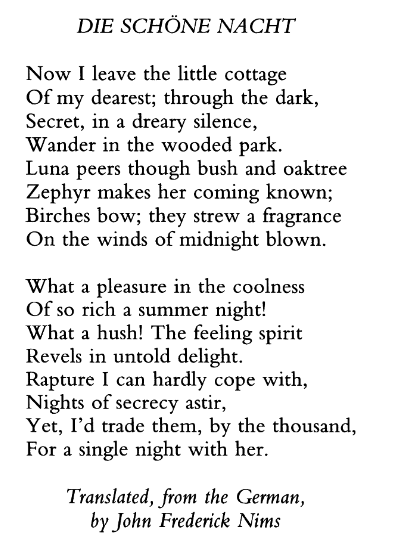
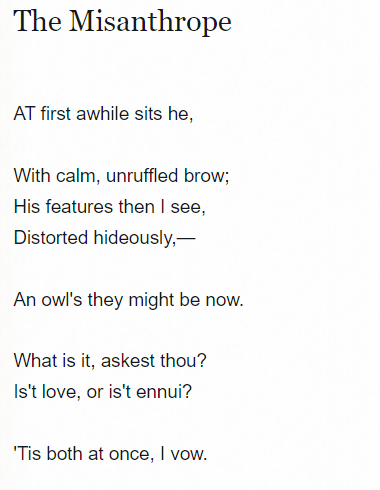
Two of his lesser-known poems speak to me:

https://www.poetryfoundation.org/poetrymagazine/browse?contentId=51848

https://allpoetry.com/The-Misanthrope

Here’s today’s homage senryu: Danke Goethe

Metta man – Goethe

confusing lust for love and

breath for life again

Jan 17 – A Poet More People Should Know – Mary Lou Kownacki

Sister Mary Lou Kownacki, OSB
November 29, 1941 ─ January 6, 2023

“Sister Mary Lou published several books of poetry as well as chapbooks of prayers and poems. Her writing appeared in National Catholic ReporterSojournersCommonweal, and others. She compiled and edited numerous books during her time at Pax Christi and later for other publishers including Orbis Books … Her book Between Two Souls: Conversations with Ryokan (Eerdmans) won a first place Independent Publisher Book Award (IPPY) in 2005.” https://eriebenedictines.org/story/memoriam-sister-mary-lou-kownacki-osb

“Of the hundreds of poems that Sister Mary Lou wrote, this one, published in her 2004 book, Between Two Soulsseems especially relevant now.

A Friend’s Funeral

She never gave in to weakness
The eulogist said.
And I prayed my mourners
Would hear a friend who preached:
She gave in to every weakness,
All commandments broken with abandon,
All vows stretched to the altar rail and
Pushed through the pews.
In this way
She immersed herself in the human condition.
Weakness was her strongest virtue.
       —Mary Lou Kownacki

from this week’s Vision and Viewpoint e-newsletter from Joan Chittister.

Here is my humble senryu in response: I Wish We’d Met Sooner

our paths crossed too late

to share a bright high noon – yet

sunsets still bring smiles

Thank you, Mary Lou Kownacki, Joan Chittister, and this week’s e-newsletter “compilers” Jacqueline Sanchez-Small, Anne McCarthy, and Benetvision Staff. See https://joanchittister.org/~joanchit/content/newsletters

Jan 15 – Tomorrow is Martin Luther King, Jr. Day

Change is difficult, for us and for the collective. Unfortunately, when we make progress, it’s easy to assume that it will continue without our continued effort. No, we must not give up. Our efforts to sustain the progress is needed today and everyday going forward. It takes all of us to make a Beloved Community.

Today’s senryu: Tomorrow is Martin Luther King, Jr. Day

listen to prophets,

become a prophet, and change

the future for good

Martin Luther King, Jr. and Thich Nhat Hanh statues in the Beloved Community Garden at Magnolia Grove Monastery https://magnoliagrovemonastery.org/photo-gallery/#bwg2/25

See today’s daily meditation from the Center for Action AND Contemplation below and here: https://cac.org/daily-meditations/disrupting-the-status-quo-2023-01-15/

Disrupting the Status Quo

Richard Rohr describes how speaking truth to power is an essential part of the prophet’s mission:

One of the gifts of the prophets is that they evoke a crisis where one did not appear to exist before their truth-telling. In the 1960s, Martin Luther King Jr. was blamed for creating violence—but those who had eyes to see and were ready to hear recognized, “My God, the violence was already there!” Structural violence was inherent in the system, but it was denied and disguised. No one was willing to talk about it. Martin Luther King Jr., Rosa Parks, and others said, “We’re going to talk about it.”

Prophets always talk about the untalkable and open a huge new area of “talkability.” For those who are willing to go there, it helps us see what we didn’t know how to see until they helped us to see it. That’s how we begin to recognize a prophet—there is this widening of seeing, this deepening of a truth that was always there.

Prophets generate a crisis, so it’s almost understandable why they’re usually called troublemakers and so often killed. They generate the crisis because while everybody else is saying the emperor is beautifully clothed, they are willing to say, “No, he’s naked.” We’re not supposed to say that the emperor has no clothes!

It’s the nature of culture to have its agreed-upon lies. Culture holds itself together by projecting its shadow side elsewhere. That’s called the “scapegoat mechanism.” René Girard, Gil Bailie, and others have pointed out that the scapegoat mechanism is the subtext of the entire biblical revelation. It’s the tendency to export our evil elsewhere and to hate it there, and therefore to remain in splendid delusion. If there isn’t a willingness to be critical of our country, our institution, and ourselves, we certainly can’t be prophets. [1]

When the prophet is missing from the story, the shadow side of things is always out of control, as in much of the world today, where we do not honor wisdom or truth.

It seems the prophet’s job is first to deconstruct current illusions, which is the status quo, and then reconstruct on a new and honest foundation. That is why the prophet is never popular with the comfortable or with those in power. Only a holy few have any patience with the deconstruction of egos and institutions.

The prophets are “radical” teachers in the truest sense of the word. The Latin radix means root, and the prophets go to the root causes and root vices and “root” them out! Their educational method is to expose and accuse with no holds barred. Ministers and religion in general tend to concentrate on effects and symptoms, usually a mopping up exercise after the fact. As someone once put it, we throw life preservers to people drowning in the swollen stream, which is all well and good—but prophets work far upstream to find out why the stream is swollen in the first place. [2]

[1] Adapted from Joan Chittister and Richard RohrProphets Then, Prophets Now (Albuquerque, NM: Center for Action and Contemplation, 2006). Available as MP3 download.

[2] Adapted from Richard Rohr, Soul Brothers: Men in the Bible Speak to Men Today (Maryknoll, NY: Orbis Books, 2004), 31, 39, 40.