Author Archives: Patrick Cole

Unknown's avatar

About Patrick Cole

Husband, parent and writer. Sharing stories with a little humor and wisdom along the way.

Jan 30 – Remembering Mahatma Gandhi

With thanks to Sister Joan Chittister, I am reminded of the life and legacy of Mohandas Karamchand Gandhi (2 October 1869 – 30 January 1948).

January 30: Mahatma Gandhi, the great Indian teacher of nonviolence, died on this day in 1948. One of the greatest pacifists of all time, in 1948 Gandhi was himself assassinated by religious conservatives who promoted the political division he sought to overcome. It would seem that Gandhi failed. Yet, multitudes around the world, including Martin Luther King, Jr., have followed his tenets. To allow your own life to seed another’s, is fruit enough to last a lifetime.
         —from A Monastery Almanac by Joan Chittister

Today’s senryu: Remembering Mahatma Gandhi

A man of extremes

you would not be ignored when

life’s demands beckoned

For more information on this great soul, see https://en.wikipedia.org/wiki/Mahatma_Gandhi

Jan 30 – Benefits of Mindfulness

There are many benefits to the practice of Mindfulness. The excerpts below come from a more comprehensive article, if you’re interested. Check it out here:(https://www.helpguide.org/harvard/benefits-of-mindfulness.htm). Hopefully this brief introduction will encourage you.

“Practices for Improving Emotional and Physical Well-Being

Mindfulness is the practice of purposely focusing your attention on the present moment—and accepting it without judgment. Mindfulness is now being examined scientifically and has been found to be a key element in stress reduction and overall happiness.

What are the benefits of mindfulness?

Professor emeritus Jon Kabat-Zinn helped to bring the practice of mindfulness meditation into mainstream medicine and demonstrated that practicing mindfulness can bring improvements in both physical and psychological symptoms as well as positive changes in health, attitudes, and behaviors.

Mindfulness improves well-being. 

Mindfulness improves physical health. 

Mindfulness improves mental health. In recent years, psychotherapists have turned to mindfulness meditation as an important element in the treatment of a number of problems, including depression, substance abuse, eating disorders, couples’ conflicts, anxiety disorders, and obsessive-compulsive disorder.

Mindfulness techniques

There is more than one way to practice mindfulness, but the goal of any mindfulness technique is to achieve a state of alert, focused relaxation by deliberately paying attention to thoughts and sensations without judgment. This allows the mind to refocus on the present moment. All mindfulness techniques are a form of meditation.

Basic mindfulness meditation – Sit quietly and focus on your natural breathing or on a word or “mantra” that you repeat silently. Allow thoughts to come and go without judgment and return to your focus on breath or mantra.

Body sensations – Notice subtle body sensations such as an itch or tingling without judgment and let them pass. Notice each part of your body in succession from head to toe.

Sensory – Notice sights, sounds, smells, tastes, and touches. Name them “sight,” “sound,” “smell,” “taste,” or “touch” without judgment and let them go.

Emotions – Allow emotions to be present without judgment. Practice a steady and relaxed naming of emotions: “joy,” “anger,” “frustration.” Accept the presence of the emotions without judgment and let them go.

Getting started

Mindfulness meditation builds upon concentration practices. Here’s how it works:

Go with the flow. In mindfulness meditation, once you establish concentration, you observe the flow of inner thoughts, emotions, and bodily sensations without judging them as good or bad.

Pay attention. You also notice external sensations such as sounds, sights, and touch that make up your moment-to-moment experience. The challenge is not to latch onto a particular idea, emotion, or sensation, or to get caught in thinking about the past or the future. Instead, you watch what comes and goes in your mind and discover which mental habits produce a feeling of well-being or suffering.

Stay with it. At times, this process may not seem relaxing at all, but over time it provides a key to greater happiness and self-awareness as you become comfortable with a wider and wider range of your experiences.

Practice acceptance

Above all, mindfulness practice involves accepting whatever arises in your awareness at each moment. It involves being kind and forgiving toward yourself.

Some tips to keep in mind:

Gently redirect. If your mind wanders into planning, daydreaming, or criticism, notice where it has gone and gently redirect it to sensations in the present.

Try and try again. If you miss your intended meditation session, simply start again.

By practicing accepting your experience during meditation, it becomes easier to accept whatever comes your way during the rest of your day.

Cultivate mindfulness informally

In addition to formal meditation, you can also cultivate mindfulness informally by focusing your attention on your moment-to-moment sensations during everyday activities. This is done by single-tasking—doing one thing at a time and giving it your full attention. As you floss your teeth, pet the dog, or eat an apple, slow down the process and be fully present as it unfolds and involves all of your senses.

Invest in yourself

The effects of mindfulness meditation tend to be dose-related — the more you do, the more effect it usually has. Most people find that it takes at least 20 minutes for the mind to begin to settle, so this is a reasonable way to start. If you’re ready for a more serious commitment, Jon Kabat-Zinn recommends 45 minutes of meditation at least six days a week. But you can get started by practicing the techniques described here for shorter periods.

Adapted with permission from Positive Psychology: Harnessing the Power of Happiness, Personal Strength, and Mindfulnessa special health report published by Harvard Health Publishing.

Last updated: December 5, 2022

Jan 29 – “Quiet Your Mind from Time to Time”

Meditation and poetry, meditators and poets, like two hands coming together in namaste.

One of the most famous poets of all time is Rumi (full name Jalāl al-Dīn Muḥammad Rūmī). He wrote poetry in the 13th century in Persian, Turkish, Arabic and Greek. His poetry was influenced by his Sufi meditation.

“Rumi was a scholar and poet that lived in 13th century Persia (now modern-day Iran.) Like all extraordinary gifted and profound teachers, Rumi’s words have transcended time and place.

An Islamic scholar and Sufi mystic, Rumi wrote much of his thoughts down in the form of poems … it’s well-known that Rumi was a mystic, devoted to contemplation and self-surrender … Rumi certainly practiced Mur?qabah, an Arabic word that translates to observation in English. Mur?qabah is a form of Sufi meditation where the goal is to “watch over” their spiritual heart and to gain insight into the Ultimate truth.

Nearly every form of meditation practiced, across religious and spiritual traditions, emphasizes quietude of mind. Individuals who are adept meditators are well-aware that mental silence can lead to profound insight, … Please quiet your mind from time to time!” https://www.powerofpositivity.com/rumi-quotes-transform-your-life/

Today’s senryu: Quiet Your Mind from Time to Time

The slower I go

the more I realize, life

is love in motion

Jan 28 – Animal Ministry – “Don’t Push the River”

Some people get it, some don’t. Some people need it, some don’t. Below are two more people who have dedicated their lives and their professions to animal ministry: Robert Gierka and Rebecca K. OConnor. See a brief introduction for each below and check out their websites for more information.

Robert Gierka, Ed.D., Founder and President of the Association for Veterinary Pastoral Education and Pet Chaplain®, Raleigh, NC, USA

Despite the ever growing popularity of pet keeping in America, there are still people who are indifferent to the agony of pet loss, who think a dog is just a dog, and if after two weeks you’re still upset about the dog dying you must be experiencing an irrational attachment. Typically, in an uninformed but well-meaning way, they may suggest, “You need to get another dog; that’ll make you feel better.” Culturally, this is still the norm in Western society, and in my lengthy interviews with pet lovers, there’s a tacit awareness that we have to be careful who we share our feelings with. The truth is that many people still misunderstand or deny the deep emotional and spiritual connections people enjoy with companion animals and the intense grief they can experience when those animals are lost.

My path with AVPE and Pet Chaplain® has been long and circuitous, and, though I strongly believe the mere existence of pet chaplaincy bodes well for the public good, especially for those who grieve for animals, I have run into skepticism about my work in some circles. A good friend of mine told me years ago that some people would “get it” and some would not. The also advised, “Don’t push the river, just go where it flows.” I have found this to be sage advice.” from the Robert Gierka bio at https://petchaplain.com/collaborators/

What is Animal Ministry and Why Does It Matter

Animal ministry is actually about people and how we interconnect with the animals around us. Most religions have traditions regarding the spirituality of animals and that intersects with human life in a positive way. Some would argue that in American culture, this reverence for feathered, furred and scaled creatures has disappeared. This is where animal ministries step in.

Jan 27 – Animal Chaplaincy – Rev. Chris Rothbauer

http://revchris.faith/about/

Currently serving as a Unitarian Universalist Minister in Auburn, Alabama, Rev. Chris Rothbauer professes:

“My calling is towards healing of the universe and her human and non-human creatures. Our interconnection to the rest of the universe is not just some lofty intellectual exercise, but a fact of existence. As the late Carl Sagan once remarked, “We are all stardust.” Modern society often alienates us from these interconnections. I feel a deep call to help restore this sense of relationship with the universe and nurture a deep sense of love for human and non-human life alike as well as the universe as a whole.

We live at a time when the universe itself is threatened by the consequences of decades of thoughtless actions that have damaged this one and only planet we call home. At a time when so much is at stake for the future of our planet, I feel a deep calling to heal this damage before it is too late. I am called to participate in the Great Turning, in the words of Joanna Macy, the emerging story of how we might yet reverse the effects of climate change precipitated by an attitude of human supremacy.”

Involved in multiple ministries, Rev. Chris is also a Registered Pet Chaplain who explains:

Animal chaplaincy is not a support for mental health services, but a multi-faith way to explore the spiritual and emotional issues surrounding our connection to our animal friends.

For much more information on animal chaplaincy and Rev. Chris’ approach and services check out his website: http://revchris.faith/animal-chaplaincy/

Jan 26 – Animal Chaplaincy – A Rich Vocation?

@ dreamstime.com

The professional animal chaplain, aka interspecies, interspiritual, care provider, is not known as a high-paying vocation. In fact, some people performing this community service do so for free. For example:

https://www.linkedin.com/in/sid-korpi-9ba52b15/

Here are a couple of comments from an article written about Sid Korpi last August 15, 2022 titled: Animal Ministry Career – What Does a Pet Loss Chaplain Do?

Since she often works for free, Korpi requests free-will offerings for services such as accompanying people and their pets to euthanasia appointments, doing group animal blessings, conducting pet loss support groups, speaking to groups about pet loss, and writing and delivering pet funeral or memorial services.

Work with pets because your heart and soul compels you to, not because you’re hoping to get rich,” she says. “If you’re interested in animal chaplaincy, you must love animals above almost everything else. You must be seeking to live your life on a slightly higher plane of existence. That means the earthly rewards may be few, but the spiritual ones abound.”

Read more about Sid Korpi and this profession at https://hopingfor.com/animal-ministry-career-what-does-a-pet-loss-chaplain-do/

Today’s vocational senryu: Must We Choose

one or another

or possible to have both

wealth and poverty

Jan 25 – Three Prayers for Three More-Than-Human Companions

“In the beginning, all creatures were hidden treasures – longing to be known, and brought into being. God then exhaled a sigh of compassion, and with that great sigh, the world was created.” Sufi parable, Blessing the Animals, Lynn L. Caruso, p.192

There’s something special about interspecies communication; something that transcends the superficial chatter between members of your own species. I’ve been fortunate to experience three friendships with three more-than-humans who are no longer alive, no longer in this physical realm that I still inhabit.

Below are belated goodbye prayers for each with gratitude to the higher power that brought us together.

Loving Creator, before Lexie, the cat, came to join our lives, you knew her, knew that she longed to be brought into this loving family. Thank you for making us relatives.

Oh, Compassionate One, with your breath you created Etta Pearl, the feisty canine, first came into being. We didn’t know Etta in her prime, but she shared much with us in her final months. Thank you for introducing us.

Eternal Life Force, you created Honey, the beautiful racehorse. Her snort and whinny, her sprints and quick stops were a joy for both of us. Thank you for letting us share her retirement years.

For all three, the opportunity to feed, clean up after, and stare deeply into each other’s eyes, was a treasure that still remains in my memory. I am grateful to have shared part of my life with a part of theirs.

Benediction

Warm summer sun, shine kindly here;

Warm western wind, blow softly here;

Green sod above, lie light, lie light –

Good-night, dear heart, good-night, good-night.”

Robert Richardson’s “Annette,” adapted by Mark Twain

Blessing the Animals, Lynn L. Caruso, p.193

https://www.goodreads.com/author/show/313559.Lynn_L_Caruso

Jan 22 – In Remembrance of Thich Nhat Hanh

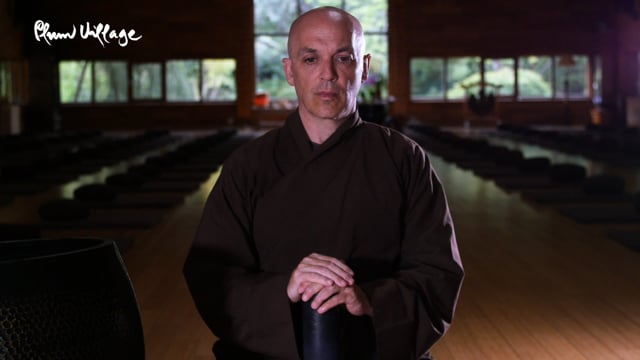
Our teacher, Thay’, Thich Nhat Hanh, died one year ago. Below are two links for more information on this fierce and gentle Zen Master.

I especially appreciate his poem displayed below which includes the phrase: “birth and death are a game of hide-and-seek”

May you experience his continued presence of peace and joy.

Contemplation on No-Coming and No-Going

by Thich Nhat Hanh

Read by Brother Phap Lai
This body is not me.
I am not limited by this body.
I am life without boundaries.
I have never been born,
and I have never died.

Look at the ocean and the sky filled with stars,
manifestations from my wondrous true mind.
Since before time, I have been free.

Birth and death are only doors through which we pass,
sacred thresholds on our journey.
Birth and death are a game of hide-and-seek.

So laugh with me,
hold my hand,
let us say good-bye,
say good-bye, to meet again soon.

We meet today.
We will meet again tomorrow.
We will meet at the source every moment.
We meet each other in all forms of life.
https://plumvillage.org/contemplation-on-no-coming-and-no-going/

Jan 24 – Animal Chaplain Blessings

Blessing of the Animals Today

One spiritual care service of an animal chaplain is to bless or thank a higher power for the non-human companion(s) in our life.

For some great examples see this book edited by Lynn L. Caruso:

A couple of quotes from this beautiful book that caught my attention are:

“There are two means of refuge from the miseries of life: music and cats.” Albert Schweitzer, p.31

“Deep peace of the running wave to you. Deep peace of the flowing air to you. Deep peace of the quiet earth to you. Deep peace of the shining stars to you. Deep peace of the infinite peace to you.” Celtic blessing, attributed to Fiona McLeod, p.163

“May all sentient beings be happy, may all sentient beings be peaceful, may all sentient beings be free from suffering.” Buddhist prayer, p.184

In this spirit, I wish you and your companions, human and non-human, many moments of love and joy today:

Bless you and yours, here

and now, may your love expand

like the universe

Jan 23 – Four Roles of an Animal Chaplain

Donna Rae Yuritic’s Compassion for Creatures Animal Ministry https://tucson.com/lifestyles/faith-and-values/animal-chaplain-brings-peace-to-many/article_026dfee4-b9ca-50e5-a4f7-165c63ad5b06.html

Yuritic estimated, as of 2008, there were “50 animal chaplains in the U.S. and Canada.” That number has grown significantly since due to her work and that of Reverend Sarah Bowen.

Sarah Bowen’s roadkill ministry http://www.modernreverend.com/about-rev-sarah.html

What does an animal chaplain do? Sarah Bowen identifies at least four roles in a Tricycle magazine article. https://tricycle.org/article/animal-chaplain/

Those roles are: “animal chaplains primarily help people with

  1. end-of-life care and the grieving process for the animals who often become an integral part of our families but whose deaths we tend to not process as fully. The job can also entail
  2. working with animals in shelters,
  3. addressing behavioral problems through interspecies spiritual practices, and
  4. animal advocacy.https://tricycle.org/article/animal-chaplain/

Or, stated another way on Sarah Bowen’s website, ModernReverend.com:

  1. Supporting animals
  2. Promoting human/animal bonds
  3. Sacred Sendoffs
  4. Advocating for non-human animals

If you’re interested in “honoring animal lives and healing human hearts” check out Sarah Bowen’s companion website Compassion Consortium: https://www.compassionconsortium.org/training