“too easily we are inclined to imagine that God created this world for a purpose. We are so caught up in purpose that we would feel more comfortable if God shared our preoccupation with work. But God plays.”
Are we a blank state? I disagree, there is no blank slate. We never start with nothing since we are all composites of what came before us. Today is the continuation of yesterday. My brain is a collection of neurons and the synapses that result. This moment is filled with energy from multiple sources.
As I sit here behind a laptop computer, I see a backyard with a row of beauty berry bushes attracting birds and many trees with squirrel nests and waving branches from the breeze blowing through and…..
In this office there are many books, pictures on the shelves, more pictures on the walls, a desk, two small file cabinets, three musical instruments and a music stand close by.
How many objects are needed for inspiration? Actually, none. Inspiration is our life force; we can’t help but think and ponder and dream and create and…..
We are co-creators in this cosmos. We are holograms of the life spark. We are “chips off the old block” and the Big Bang keeps banging away. Inspiration, change, creation are all words for the same thing: life.
As long as we keep breathing, we keep thinking, I think. I’m curious – what are you thinking right now?
My father was a carpenter who became a Skilled Trades Supervisor for a major US utility. He retired early to golf, fish and construct wood picture frames for fun.
My first father-in-law was a Welding Foreman for a global office furniture manufacturer who turned down a promotion to Production Superintendent to ensure he had time for the freshwater fishing and the golf that he loved.
My second father-in-law was a Production and Inventory Control Manager who went on to become CEO of the same global office furniture manufacturer. He retired and was recalled for a year before living another 25 years, many on the golf course and doing some occasional fishing.
So, what do these three men tell me; what can I learn from my “forefathers?” Is my life a journey from blue to white collar work and are my “golden years” to be spent enjoying fishing and golf?
My father told his four sons to retire earlier than he did at age 59 because retirement was the best time of life. My father died at age 77 and had only one regret that I know of which was agreeing to elective heart surgery to replace a pacemaker. He died one week after the surgery and told his sons at his hospital bedside what a mistake it was to agree to that final surgery.
My first father-in-law told me to get a couple of hobbies early in life to ensure I had a way to escape home life whenever I needed. He advised specifically joining him in fishing and golf, which I did for many years. He died at age 64 of medical complications from diabetes.
My second father-in-law advised world travel which was another hobby he had. Otherwise, he didn’t say that much to me as he was very active in his own pursuits and demonstrated his values more than spoke of them. He died at age 93 and unfortunately his last three years were using a walker and napping a lot. He had beaten colon cancer, multiple melanomas (from so much fishing and golf?), and finally the debilitation brought on from a stroke.
I gave up golf many years ago and haven’t fished in years. My full-time work life began as a spot welder and progressed to a Human Resources Director before moving on to my career as a Human Capital Consultant for the last 24 years. So, some similarities to my forefathers but some possible differences in my final life chapter.
I’m now focused on joining the Order of Interbeing as a Zen Christian practitioner and my goal this year is to begin an Animal Chaplaincy program, write a fourth book of poetry and become a Dharma Mentor in the next year or so.
Not sure how much longer I might live but want to live my “golden years” doing what I love. How about you?
Big dogs, little dogs, all dogs poop; ideally, outdoors, somewhere you can easily collect and dispose of it. Somedays aren’t ideal.
This morning, Zorro, our 7-pound Chihuahua, ate his breakfast and, before I could take him outdoors, he deposited his little pile of poop on one of our Oriental carpets. Fortunately, he returned to me and guided me to the location so I would know where it was. So, I would not step in it accidentally. So, I would collect it and clean the carpet. So, there would be no sign of his “accident” for anyone, especially Mom, to see, or smell, or step in it.
Fortunately, Zorro much prefers to poop outdoors. He doesn’t like poop in his living space, and he knows neither do I.
Not to anthropomorphize but, tangentially, my Zen Mindfulness teacher, Thich Nhat Hanh, has a short poem about “using the toilet” which goes like this:
Today is the first month of my animal chaplaincy program. I have acquired my textbooks, re-arranged my office and calendar, and am eager to attend the first class.
I will be journaling this 10-month program that leads to graduation in June ’23. Don’t hesitate to ask questions or offer commentary as your spirit moves.
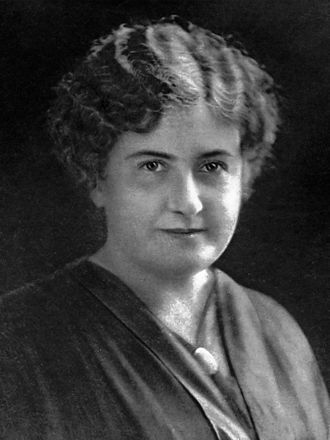
Maria Montessori (b. August 31, 1870 – d. May 6, 1952), portrait artist and date unknown
Maria Montessori was an Italian physician and educator best known for the philosophy of education that bears her name. “Her method was founded on the observation of children at liberty to act freely in an environment prepared to meet their needs.[102] Montessori came to the conclusion that the children’s spontaneous activity in this environment revealed an internal program of development, and that the appropriate role of the educator was to remove obstacles to this natural development and provide opportunities for it to proceed and flourish.”
A strong advocate for children’s rights and education focused on children’s natural talents, Maria was recognized by many including Alexander Graham Bell and UNESCO. See https://en.wikipedia.org/wiki/Maria_Montessori
Today’s haiku: Happy Birthday Maria Montessori
Learning how you feel
develop at your level
express your talent
While I never personally attended a Montessori school or a school using her method, I have benefited by knowing someone who has. Thank you, and happy birthday, Maria.
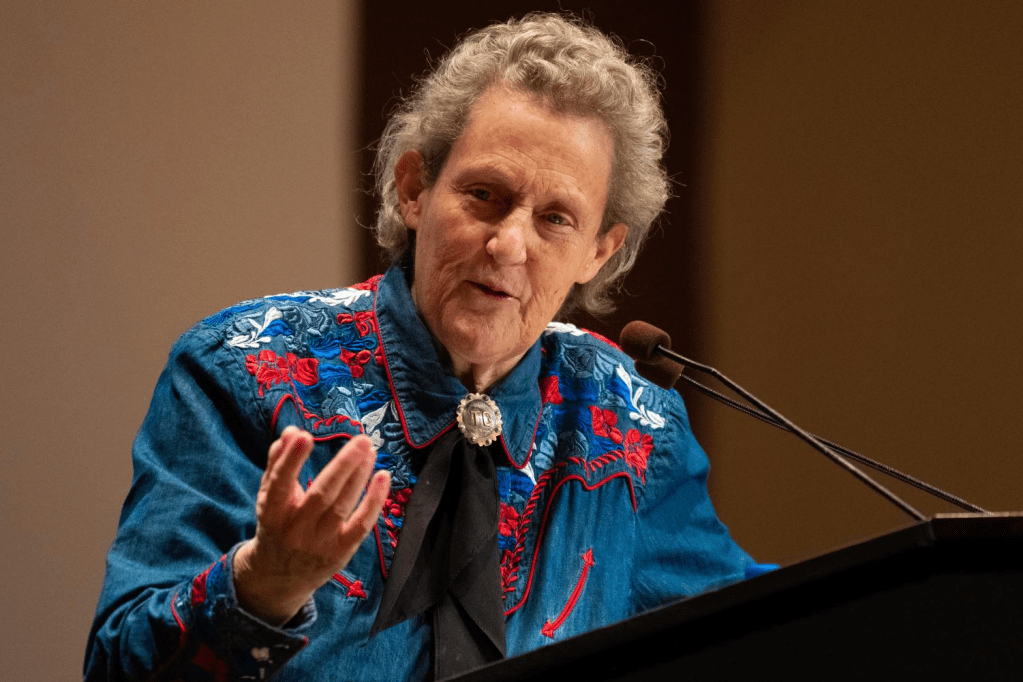
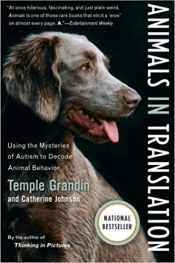
Temple Grandin was born today in 1947. She is known as an American animal behaviorist an autism spokesperson.
No one is perfect: no one. Perfection is a concept, while reality is messy, life is diverse and vive la difference.
There’s a provocative video where Temple describes her life as a person with autism and how she has learned to overcome bullying and be a contributor to society through her work for more humane treatment of animals. It’s inspiring, controversial and I encourage you to watch it if you can. See https://www.youtube.com/watch?v=C8xaW84b7U8
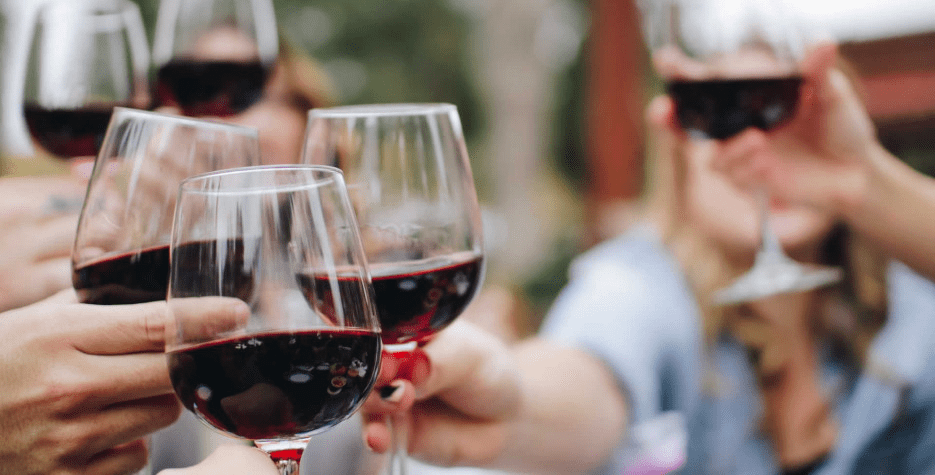
Why drink red wine? “A five-ounce glass of wine is fat-free, cholesterol-free, and only 100 calories. But other than helping to keep you slim and trim, red wine keeps your brain sharp. Resveratrol is in the skin of red grapes, and it’s the mortal enemy of beta-amyloid — a protein that’s a contributing factor to Alzheimer’s. So, a glass of wine here and there can slow down the formation of this baddie. Looks like they weren’t kidding when they said, ‘Let’s drink to your health.’” See https://nationaltoday.com/national-red-wine-day/
Genuinely holy people know… The Rule of Benedict, on which the lives of many religious women and men have been based for over 1500 years, was written by an Italian in sixth century Italy. I have always been secretly happy about that.
In that era, the commonplace image of a monk was still the recluse in a dry and barren desert. Benedict, however, created another kind of monasticism, of spirituality, of holiness. He presented the spiritual world with the concept of “community” as sanctifier, of “family” as a spiritual discipline. Rather than isolation from the components of life, his spirituality was about single-minded search for God, not singleness for its own sake.
To this day, Benedict wants those who follow his very moderate, very profound spiritual counsel to learn to live an ordinary life extraordinarily well. Chapter 40 of the Rule of Benedict, on “The Proper Amount of Drink,” demonstrates that core value with overwhelming simplicity. “We believe,” he writes, “that a hemina of wine is sufficient for each.” The hemina is an ancient liquid measure variously defined as between six and eight ounces. Wine, the fruit of the vine, was basic to the Italian diet—and still is. One thing that Italians understand better than many that there is a difference between a spiritual life and an ascetical life. Lots of people are highly spiritual but not necessarily known for their asceticism or self-denial. St. Nicholas, the model for the modern Santa Claus, for instance, gave gifts to everyone. Jesus, too, was not averse to parties and moments of relaxation. He went to the marriage feast at Cana and multiplied the wine. He celebrated the Passover meal even at the brink of death. He used a good many dinner parties as images of life in his parables. He was criticized for it but ignored the religious pressure to suck the joy out of life. And so, you see, to this day, in Italy, there is always wine served at mealtimes. And it is also served in monasteries, as well as in public restaurants and at family meals. There are simply some things in life that are meant to be enjoyed. There is something about joy, this monastic rule affirms, that is as holy as suffering can ever be. There is an asceticism that leads to sourness of attitudes, to negative judgments of normal and healthy things, as in, “You mean she’s going to take a day off when she could get paid for working overtime?” Or, better yet, “You mean that priests golf and sisters swim and religious communities do yoga?” Genuinely holy people know that life is to be enjoyed as well as disciplined, happy as well as controlled, full of the juice of life as well as stripped down in the name of holiness. Why? Because joy is hardwired into the human condition. More, we are meant to be joyful because life itself is good and also meant to be enjoyed. The wholesale attack on enjoyment of any kind came out of a period of time when avid extremists taught that the body was bad, humor was decadent, friends were a frivolous distraction, and partaking of the fruit of the vine was against sanctity. The body, that group insisted, was evil, bad, the site of sin. And that kind of holiness the church declared to be heresy.
Good for us. The philosophy of “extremism in nothing; moderation in all things,” claimed the day. And it should. Because if truth were known, moderation is far more difficult to achieve and follow than extremism in either direction.













.jpg)